


Chinese military drills encircling Taiwan have once again heightened tensions in East Asia, drawing international attention and renewed debate over regional security. Yet, amid growing concerns from Taipei and warnings from analysts, US President Donald Trump has publicly dismissed the exercises as routine, saying he is “not worried” about Beijing’s latest show of force.
Trump’s remarks come at a critical moment, as China conducts large-scale military drills simulating a blockade and possible seizure of key areas around Taiwan—just weeks after Washington announced an $11 billion arms sale to the self-governed island. While the drills have alarmed Taiwan and unsettled allies such as Japan, Trump’s relaxed tone has raised questions about the future direction of US policy toward Taiwan and China.
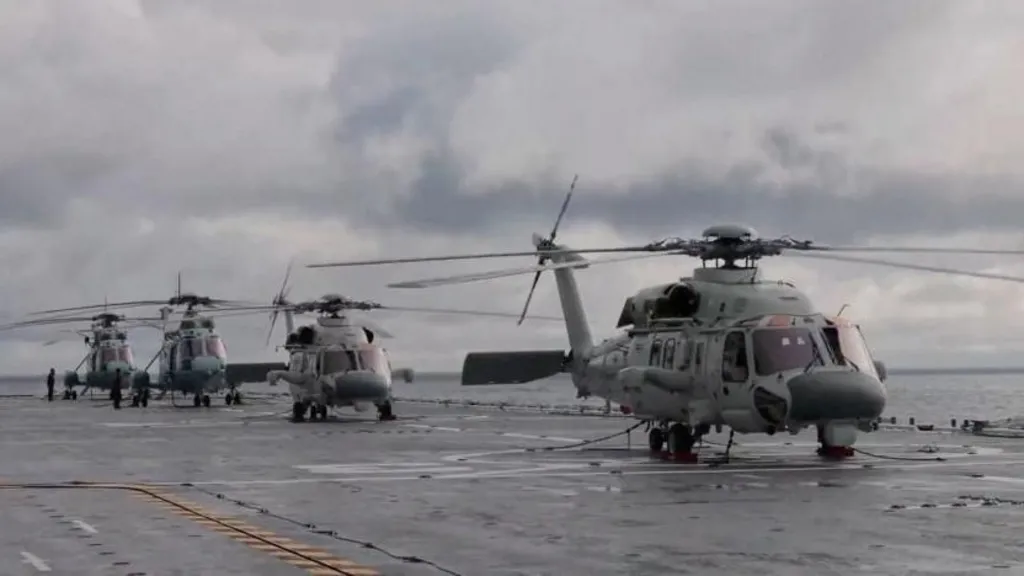
Trump Shrugs Off Chinese War Games
Speaking to reporters at a press conference on Monday, President Trump downplayed the significance of China’s ongoing military exercises near Taiwan.
“I have a great relationship with President Xi, and he hasn’t told me anything about it. I’ve certainly seen it,” Trump said.
“No, nothing worries me. They’ve been doing naval exercises for 20 years in that area.”
Trump’s comments suggest a deliberate attempt to project calm and continuity, framing the drills as part of China’s long-standing military activities rather than an immediate escalation.
However, his remarks stand in contrast to the serious tone adopted by Taiwan’s government, US security analysts, and regional observers, many of whom see the drills as a calculated warning by Beijing.
The Scope of China’s Military Drills
The two-day military exercises, which began on Monday, are among the most extensive in recent months. According to China’s Eastern Theatre Command, the drills are designed to simulate:
- A blockade of Taiwan
- Seizure of strategic areas
- Joint sea-air combat operations
- Integrated containment of the island
On Tuesday, China escalated the exercises further by conducting 10 hours of live-fire drills across five locations surrounding Taiwan, involving both airspace and maritime zones.
The People’s Liberation Army (PLA) deployed:
- Destroyers and frigates
- Fighter jets and bomber aircraft
- Amphibious assault ships
- Helicopters and missile units
Chinese military officials described the exercises as a test of “sea-air coordination” and “integrated combat capabilities,” reinforcing Beijing’s readiness to act if necessary.
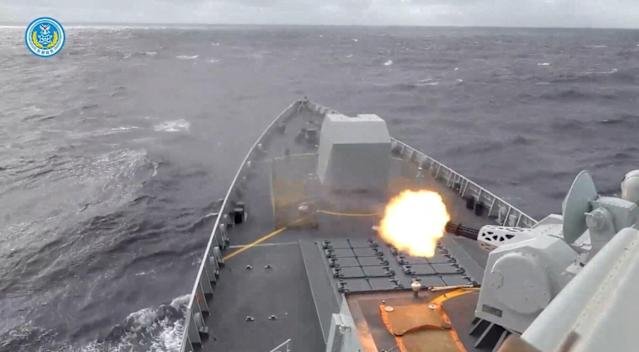
Taiwan Reports Large-Scale Chinese Incursions
Taiwan’s Ministry of National Defense confirmed a significant surge in Chinese military activity around the island.
According to official statements:
- 130 Chinese military aircraft were detected near Taiwan on Tuesday morning
- 90 aircraft crossed the so-called “median line”, an unofficial boundary in the Taiwan Strait
- More than a dozen Chinese navy vessels were spotted operating close to Taiwan
China does not recognize the median line, but Taiwan and its allies see repeated crossings as deliberate provocations.
In response, Taiwan deployed:
- Fighter aircraft
- Naval vessels
- Coastal missile defense systems
The ministry said Taiwan’s armed forces were closely monitoring developments and were prepared to respond to any escalation.
Taiwan Condemns the Drills
Taiwan’s presidential office strongly criticized Beijing’s actions, calling them a challenge to international norms and regional stability.
President Lai Ching-te, in a statement posted on social media Tuesday morning, said the Chinese Communist Party’s actions were irresponsible.
“The escalation of military pressure is not something that a responsible power should do,” Lai said.
“We will act responsibly and not escalate conflict or stir up disputes.”
He added that Taiwan’s military and national security teams would “do their best to ensure the safety of the country,” emphasizing restraint while reaffirming Taiwan’s right to self-defense.
Timing Linked to US Arms Sale
The drills come nearly two weeks after the United States announced an $11 billion arms package for Taiwan—one of the largest such deals in recent years.
The weapons package includes:
- Advanced rocket launch systems
- Self-propelled howitzers
- Air and coastal defense missiles
- Precision-guided munitions
China reacted angrily to the sale, accusing Washington of violating its sovereignty and emboldening pro-independence forces in Taiwan.
Beijing sees Taiwan as a breakaway province and has vowed to reunify it with the mainland—by force if necessary.
Who Is the Real Audience?
According to foreign policy experts, Taiwan may not be the primary target of China’s message.
Susan Shirk, former US Deputy Assistant Secretary of State, told the BBC that the drills are aimed more at Washington and its allies than at Taipei.
“The main audience really is the United States, Donald Trump, and Japan more than the people of Taiwan,” she said.
Shirk described the drills as an expression of Beijing’s anger over US arms sales, especially as the packages now include weapons capable of striking the Chinese mainland.
Concerns About Trump’s Commitment to Taiwan
Some analysts believe Trump’s casual response may signal a shift in Washington’s stance toward Taiwan.
Shirk noted that there are growing concerns in the US policy community that Trump may be less committed to Taiwan’s defense than his predecessors.
“He’s engaged in a transactional policy,” she said,
“where he might be willing to reduce America’s commitment to Taiwan in exchange for trade or economic benefits.”
Such views have unsettled officials in Taipei, which has long relied on US military backing as a deterrent against Chinese aggression.
China’s Long-Term Military Strategy
Alexander Neill, an adjunct fellow at the Pacific Forum, said the drills demonstrate China’s growing operational capability.
“This exercise is designed to show that the PLA can operate effectively at sea and in the air,” Neill said.
While Trump is correct that China has been conducting drills around Taiwan for decades, Neill warned against assuming personal diplomacy could influence Beijing’s strategy.
“If Trump thinks his rapport with Xi Jinping will change Xi’s approach to the Taiwan Strait, he’s deluding himself,” Neill added.
Why Taiwan Matters So Much
Taiwan occupies a critical position in:
- Global semiconductor supply chains
- US-China strategic competition
- Regional security architecture in East Asia
The island produces more than 60% of the world’s semiconductors and nearly 90% of advanced chips, making stability in the Taiwan Strait a global economic concern.
For China, reunification with Taiwan is framed as a historic mission tied to national identity and sovereignty.
China’s Official Response
China’s foreign ministry condemned the US arms sale and reiterated its stance on Taiwan.
Foreign Minister Wang Yi said Beijing must “firmly counter”:
- “Continuous provocations from pro-independence forces in Taiwan”
- “Large-scale arms sales” by the United States
He stressed that:
“The complete national reunification of Taiwan is a historical mission we must accomplish.”
China has also imposed sanctions on several US defense companies involved in supplying weapons to Taiwan.
A Delicate Diplomatic Balancing Act
The US does not formally recognize Taiwan as a sovereign state and maintains official diplomatic ties with Beijing. However, under the Taiwan Relations Act, Washington is obligated to help Taiwan maintain its ability to defend itself.
For decades, the US has followed a policy of “strategic ambiguity”, neither confirming nor denying whether it would intervene militarily in a conflict.
Trump’s comments, however, have raised questions about whether that ambiguity is shifting toward uncertainty.
Taiwan Prepares, but Public Remains Calm
While Taiwan’s government is preparing for worst-case scenarios, many citizens do not believe war is imminent.
Polls and public sentiment suggest:
- Awareness of rising risks
- Confidence in Taiwan’s defenses
- Hope that deterrence will prevent conflict
Taiwan has announced plans to increase defense spending and modernize its armed forces in response to growing pressure from Beijing.
What Comes Next?
As Chinese drills continue and US arms sales proceed, the Taiwan Strait remains one of the world’s most dangerous geopolitical flashpoints.
Key questions remain:
- Will China escalate beyond drills?
- How far is the US willing to go to defend Taiwan?
- Can diplomacy prevent miscalculation?
Trump’s dismissive tone may calm markets temporarily, but it has done little to ease anxieties in Taipei and among US allies.
Read More: After Saudi Arabia’s Yemen strike, UAE rejects support for separatists
FAQs
Why is China conducting military drills around Taiwan?
China says the drills are meant to deter “Taiwan independence forces” and respond to foreign interference, particularly US arms sales.
What did Trump say about the drills?
Trump said he was “not worried” and described the exercises as routine naval activities China has conducted for decades.
How has Taiwan responded?
Taiwan condemned the drills, deployed military assets, and accused China of undermining regional stability.
What weapons did the US sell to Taiwan?
The $11 billion package includes missiles, rocket systems, howitzers, and advanced defensive equipment.
Is war between China and Taiwan likely?
Most analysts believe war is not imminent, but risks are increasing due to heightened military pressure and potential miscalculations.
Why does the US support Taiwan?
The US sees Taiwan as a democratic partner and a key strategic asset in the Indo-Pacific region.
Does China recognize the median line?
No. China rejects the median line in the Taiwan Strait and regularly sends aircraft across it.
Who benefits from China’s drills politically?
Analysts say the drills are aimed primarily at the US, Japan, and domestic audiences in China.
Conclusion
President Trump’s assurance of “no worries” may project confidence, but it does little to change the strategic realities unfolding in the Taiwan Strait. China’s military drills are not merely symbolic—they are part of a long-term campaign to assert dominance, deter foreign involvement, and signal readiness.For Taiwan, the exercises underscore the urgency of preparedness and international support. For the United States, they test the credibility of its commitments.
