

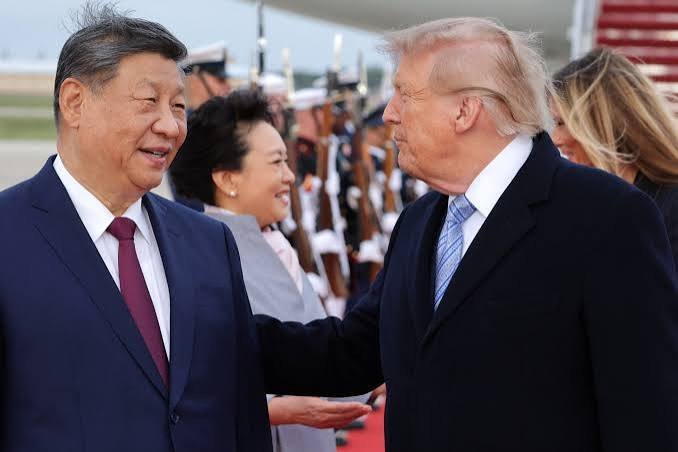
Trump and Xi Share Cordial Remarks at State Dinner as Major Issues Remain Unresolved, highlighting the gap between diplomatic presentation and progress. The reception projected stability in a relationship shaped by trade disputes, competition, technology controls, and regional security tensions.
Although both leaders emphasized cooperation, their meeting produced only a temporary extension of the trade-war pause. Divisions over Taiwan, artificial intelligence, rare-earth supplies, tariffs, technology restrictions, and Iran persisted, leaving investors to judge the visit by what happens next.
A Warm Reception With Limited Policy Progress
President Donald Trump welcomed Chinese President Xi Jinping to Washington for a state visit marked by ceremony, personal diplomacy, and positive public language. The occasion represented Xi’s first visit to Washington in more than a decade.
Trump personally greeted Xi at Joint Base Andrews before the formal White House welcome. The program included bilateral talks, ceremonial events, a tour of the White House grounds, and a state dinner attended by prominent political and business figures.
The public displays suggested that both governments wanted to prevent their rivalry from deteriorating into a wider confrontation. However, the closed-door meeting lasted about 90 minutes, and neither side announced a comprehensive agreement addressing the most difficult disputes in US-China relations.
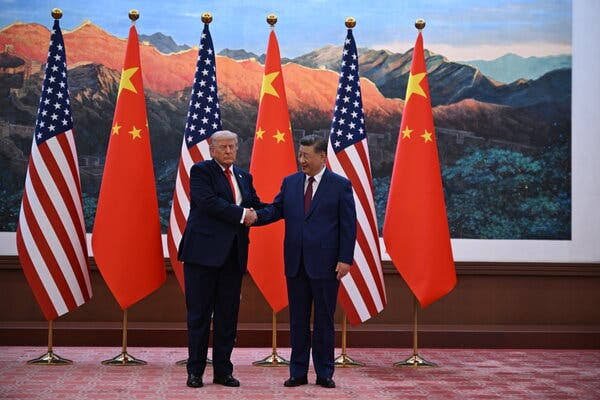
What Trump and Xi Said About Their Relationship
Both leaders used language centered on cooperation and stability rather than confrontation.
Trump described the meeting positively but offered few details about specific agreements. Xi emphasized that competition between an established power and a rising one does not inevitably have to lead to conflict. He encouraged cooperation between the world’s two largest economies.
These statements mattered because they helped lower the diplomatic temperature. Nevertheless, cordial remarks are not the same as enforceable policy commitments. The practical significance of the summit will depend on subsequent negotiations, implementation measures, and official agreements.
Read More: Costing Solutions Designed to Maximize Project Profitability
What the Summit Actually Achieved
The clearest reported result was an agreement to extend the existing pause in the US-China trade conflict until January 10.
That extension may provide businesses with temporary relief from the immediate risk of another tariff escalation. It also gives negotiators additional time to discuss market access, agricultural purchases, critical minerals, export restrictions, and other commercial disputes.
However, an extended pause does not permanently settle the trade conflict. It preserves negotiations without resolving the structural disagreements behind them.
| Area | Immediate outcome | Remaining challenge |
|---|---|---|
| Trade | Trade-war pause extended | Tariffs and market barriers remain |
| Artificial intelligence | AI risks were discussed | No major regulatory framework announced |
| Taiwan | Positions were restated | Arms sales and political status remain disputed |
| Rare earths | Continued diplomatic attention | Supply reliability remains a concern |
| Technology | Dialogue continued | Export controls and chip access remain contested |
| Iran | Discussed within wider strategic talks | No reported breakthrough |
| Bilateral relations | Cordial diplomatic tone | Strategic mistrust continues |
Trade Tensions Remain Unresolved
Trade continues to be one of the most consequential areas of disagreement between Washington and Beijing.
The United States has raised concerns about its trade imbalance with China, Chinese industrial subsidies, market-access restrictions, intellectual property protection, and the treatment of American companies. China, meanwhile, opposes US tariffs and technology restrictions that it considers discriminatory or politically motivated.
Earlier commitments involving agricultural imports, aircraft purchases, investment arrangements, and tariff reductions have faced slow or incomplete implementation. This history means that businesses will likely judge any new promise by measurable follow-through rather than ceremonial announcements.
Why the Trade-War Pause Matters
The extension reduces the short-term possibility of new retaliatory measures. That may help importers, exporters, manufacturers, farmers, and financial markets plan with slightly greater confidence.
Its value is limited, however, because it is temporary. Companies exposed to US-China commerce must still prepare for possible changes involving:
- Import tariffs
- Customs rules
- Export licensing
- Semiconductor restrictions
- Agricultural purchases
- Rare-earth supplies
- Investment screening
Taiwan Remains the Most Sensitive Dispute
Taiwan remains one of the most dangerous sources of tension between the United States and China.
According to China’s official account of the meeting, Xi urged Trump to oppose Taiwanese independence. Beijing considers Taiwan part of China and has not ruled out using force to bring the democratically governed island under its control.
Washington maintains unofficial relations with Taiwan and supplies it with defensive equipment. A proposed US arms package reportedly remained stalled at the time of the visit, keeping uncertainty around America’s future security support.
Neither side announced a significant change in policy. That means the central questions involving arms sales, military activity around Taiwan, and the risk of miscalculation remain unresolved.
Why Taiwan Affects Countries Beyond China and the United States
A confrontation in the Taiwan Strait could disrupt global shipping, semiconductor production, regional security, and financial markets. Taiwan plays an important role in advanced chip manufacturing, while nearby sea routes support a substantial volume of international commerce.
For US allies in Asia, any shift in Washington’s Taiwan policy may also raise questions about the reliability of broader American security commitments.
Artificial Intelligence Talks Produced No Clear Framework
Artificial intelligence was another major subject surrounding the summit.
Xi said AI development should remain under human control. Trump had indicated before the meeting that advanced AI would be discussed, but no detailed bilateral regulatory framework or enforceable AI safety agreement was announced.
Meaningful US-China cooperation on AI is difficult because the two countries are simultaneously:
- Competing for technological leadership
- Restricting access to advanced semiconductors
- Investing heavily in domestic AI infrastructure
- Addressing military and national-security applications
- Developing different regulatory approaches
Limited cooperation may still be possible in areas such as preventing unintended military escalation, improving communication during AI-related crises, and establishing basic safety principles. The summit, however, did not appear to produce a major breakthrough.
Rare Earths and Technology Controls Stay in Focus
China’s role in rare-earth processing gives it significant influence over supply chains serving automobiles, electronics, renewable energy, and defense industries. The United States wants more predictable access to these materials while reducing long-term dependence on Chinese suppliers.
China, in turn, wants fewer American restrictions on semiconductors, chipmaking equipment, and other advanced technologies.
These issues are closely connected. Washington views some technology exports as national-security risks, while Beijing can use its position in critical-mineral supply chains as economic leverage.
Without a durable arrangement, companies remain exposed to licensing delays, export restrictions, higher costs, and sudden policy changes.
State Dinner Highlights the Role of Major Technology Companies
The state dinner brought together senior officials and leading technology executives. Reported attendees included Apple CEO Tim Cook, Tesla CEO Elon Musk, Nvidia CEO Jensen Huang, Alphabet CEO Sundar Pichai, Amazon founder Jeff Bezos, and OpenAI CEO Sam Altman.
Their presence reflected the commercial importance of the US-China relationship. Major technology companies may depend on China as a market, manufacturing center, supplier, or source of regulatory approval.
At the same time, these companies operate within an intensifying competition over AI, semiconductor capabilities, data security, and advanced manufacturing. Their attendance demonstrated how closely diplomacy, national security, and corporate interests are now connected.
Why Cordial Diplomacy Still Matters
The absence of a major agreement does not mean the visit had no value.
Regular communication between the two governments can reduce misunderstanding and create channels for managing future crises. A stable relationship also gives officials more room to negotiate practical arrangements without presenting every compromise as a political defeat.
Diplomatic engagement can help both sides:
- Maintain direct communication between senior officials
- Prevent economic disputes from escalating unexpectedly
- Clarify intentions regarding Taiwan and regional security
- Continue technical negotiations on trade and technology
- Explore limited cooperation on global challenges
The weakness of symbolic diplomacy is that it may create the appearance of progress without changing policy. The real test will be whether working-level negotiations produce transparent and verifiable outcomes.
What Happens After the Trump-Xi State Dinner?
Several developments will show whether the meeting produced lasting progress.
First, negotiators must determine what happens when the extended trade-war pause expires. A further extension would preserve stability, while renewed tariffs could quickly reverse the summit’s positive tone.
Second, observers will watch for changes involving rare-earth exports, agricultural purchases, semiconductor controls, and market access.
Third, any decision regarding arms sales to Taiwan could reveal whether the meeting influenced US security policy.
Finally, follow-up talks on artificial intelligence will indicate whether the two countries can establish practical safeguards while remaining strategic competitors.
Frequently Asked Questions
What was the main outcome of the Trump-Xi meeting?
The most concrete reported outcome was an extension of the existing pause in the US-China trade conflict until January 10. No comprehensive agreement was announced on trade, Taiwan, AI, or other major disputes.
Why was the state dinner significant?
The dinner demonstrated that both governments wanted to project stable relations. It also brought together influential technology and business leaders whose companies have substantial interests connected to China.
Did Trump and Xi reach a new trade deal?
They did not announce a broad new trade settlement. Extending the trade-war pause created more negotiating time but left tariffs, export controls, purchases, and market-access disputes unresolved.
Was there progress on Taiwan?
No major policy breakthrough was reported. Xi reiterated China’s opposition to Taiwanese independence, while uncertainty remained around US arms sales and security assistance.
Did the leaders agree on artificial intelligence regulation?
No detailed bilateral AI agreement was announced. Both sides acknowledged the importance of AI, but strategic competition and disagreements over technology controls continue to limit cooperation.
Why are rare earths important in US-China relations?
Rare-earth materials are essential to electronics, vehicles, energy technologies, and defense equipment. China’s strong position in their processing gives Beijing leverage in trade and technology negotiations.
Could cordial relations prevent future conflict?
Positive personal diplomacy can support communication and lower immediate tensions, but it cannot eliminate structural disagreements. Preventing conflict requires consistent dialogue, crisis-management channels, and clear policy commitments.
What should businesses watch next?
Businesses should monitor tariff deadlines, export-control changes, semiconductor rules, rare-earth supplies, agricultural commitments, investment restrictions, and the implementation of any agreements announced after the summit.
Conclusion
The state dinner projected stability and opened space for continued dialogue, but ceremony did not resolve the most difficult disputes between Washington and Beijing. Trump and Xi Share Cordial Remarks at State Dinner as Major Issues Remain Unresolved ultimately describes a summit that improved the diplomatic atmosphere while leaving trade, Taiwan, AI, critical minerals, and technology policy dependent on future negotiations.
