


Prime Minister Shehbaz Sharif has strongly condemned reports alleging the targeting of Russian President Vladimir Putin’s residence, describing the incident as a “heinous act” and a grave threat to global peace and stability. His remarks come at a time of heightened tensions between Russia and Ukraine, amid fragile diplomatic efforts aimed at ending nearly three years of devastating conflict.
The prime minister’s statement reflects Pakistan’s consistent position against violence and attacks on civilian or leadership targets, particularly during sensitive diplomatic moments. The alleged incident—reportedly involving a large-scale drone attack—has sparked sharp exchanges between Moscow and Kyiv, while drawing reactions from major global powers, including the United States.
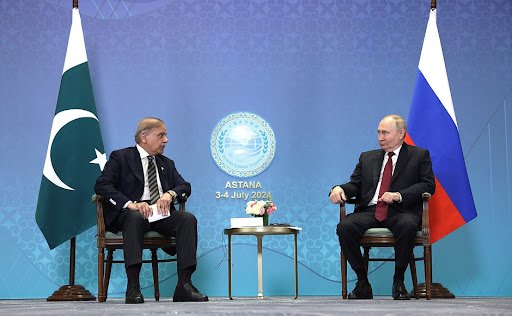
Pakistan’s Official Condemnation
In a post shared on X (formerly Twitter), Prime Minister Shehbaz Sharif expressed Pakistan’s unequivocal condemnation of the reported attack.
“Pakistan condemns the reported targeting of the residence of His Excellency Vladimir Putin, President of the Russian Federation,” the prime minister wrote.He further emphasized that such acts pose a serious danger not only to national leaders but also to broader international peace.
“This heinous act constitutes a grave threat to peace, security and stability, particularly at a time when efforts aimed at peace are underway.”The prime minister reiterated Pakistan’s longstanding policy of rejecting violence in all forms:
“We reiterate our firm rejection of all forms of violence and acts intended to undermine security and threaten peace.”Pakistan’s Broader Diplomatic Stance
Although Prime Minister Shehbaz Sharif did not explicitly name any country or actor in his statement, Pakistan’s response underscores its broader diplomatic principles:
- Opposition to targeted attacks on political leaders
- Support for peaceful conflict resolution
- Respect for international law and sovereignty
Pakistan has traditionally maintained a balanced approach in the Russia-Ukraine conflict, urging dialogue and diplomacy rather than escalation. Islamabad has repeatedly stressed that continued hostilities only deepen humanitarian suffering and global instability.
Russia’s Allegations Against Ukraine
The condemnation follows Russia’s accusation that Ukraine attempted to attack President Putin’s residence using long-range drones. According to Russian officials, the alleged incident occurred between December 28 and 29, at a residence located in the Novgorod region, west of Moscow.
Russian Foreign Minister Sergei Lavrov claimed that:
- Ukraine launched 91 long-range drones
- All drones were intercepted and destroyed by Russian air defenses
- There were no injuries or damage
- The attack constituted “state terrorism.”
Lavrov warned that such actions would not go unanswered and suggested that Russia had already identified potential targets for retaliation.
Ukraine Rejects the Claims
Ukraine swiftly rejected Russia’s allegations, dismissing them as “a complete fabrication.”
President Volodymyr Zelenskiy accused Moscow of:
- Manufacturing incidents to derail peace negotiations
- Justifying further military escalation
- Avoiding meaningful steps toward ending the war
Kyiv has consistently denied targeting Russian leadership residences and argued that Moscow’s claims lack evidence.
Notably, no independent verification of Russia’s claims has been provided, and international observers, including Reuters, have stated they were unable to confirm the allegations.
Timing Raises Global Concerns
The timing of the alleged incident has raised alarm among diplomats and analysts alike. It reportedly occurred during ongoing discussions about a potential peace deal, making it particularly sensitive.
Russia stated that the alleged attack had prompted it to review its stance in negotiations, dealing a fresh blow to already fragile peace prospects.
While Lavrov clarified that Russia would not quit negotiations entirely, his remarks signaled a potential hardening of Moscow’s position.
Trump Reacts to Putin’s Claims
US President Donald Trump revealed that President Putin personally informed him of the alleged attack during a phone call on Monday morning.
Trump said the news had angered him:
“It’s one thing to be offensive. It’s another thing to attack his house. It’s not the right time to do any of that.”
Trump emphasized that targeting a leader’s residence crossed a line, particularly when peace efforts were underway.
“I was very angry about it,” Trump told reporters.
Despite his reaction, Trump reiterated his belief that a peace deal between Russia and Ukraine might still be within reach.
Trump Balances Anger With Optimism
Later, speaking to reporters outside his residence in Palm Beach, Florida, Trump admitted he had no further intelligence confirming the alleged attack.
“I don’t like it, it’s not good,” Trump said.
When asked whether US intelligence agencies had evidence to support Russia’s claim, Trump replied:
“We’ll find out.”
Despite the uncertainty, Trump maintained that progress toward peace had been made, pointing to recent diplomatic engagements.
Trump–Zelenskiy Meeting Signals Progress
Just a day before his phone call with Putin, Trump met Ukrainian President Volodymyr Zelenskiy in Florida. Following the meeting, Trump said the two sides were:
“Getting a lot closer, maybe very close” to a deal to end the war.
However, he acknowledged that “thorny territorial issues”—particularly in eastern and southern Ukraine—remained unresolved.
Putin’s Defiant Message to His Military
While diplomatic discussions continued, President Putin struck a defiant tone in public remarks, instructing Russian forces to press ahead with operations in southern Ukraine.
Putin told the Russian military to intensify efforts to take full control of the Zaporizhzhia region, a strategically important area partially occupied by Russian forces since 2022.
The Kremlin also renewed its demand that Ukraine withdraw troops from the remaining parts of the Donbas region still under Kyiv’s control.
Russia Signals a Tougher Negotiating Position
Following the alleged attack, Russian officials suggested that Moscow’s approach to negotiations could change.
An aide to Putin said the Russian president informed Trump that Russia was reviewing its stance after the reported drone incident.
Although Russia did not announce a withdrawal from talks, analysts interpret these statements as a signal that Moscow may demand:
- Greater territorial concessions
- Security guarantees
- Limits on Western military support for Ukraine
Global Reactions and Diplomatic Implications
The alleged targeting of a sitting president’s residence—if confirmed—would represent a serious escalation in modern warfare norms. Such incidents risk:
- Triggering retaliatory attacks
- Undermining diplomatic efforts
- Normalizing attacks on political leaders
Pakistan’s condemnation aligns with concerns expressed by several countries that escalation at this stage could derail months of diplomatic groundwork.
Pakistan’s Role in Promoting Peace
Pakistan has consistently advocated:
- Dialogue over confrontation
- Respect for sovereignty
- Adherence to international humanitarian law
By condemning the alleged incident, Islamabad reaffirmed its commitment to peaceful resolution of conflicts and opposition to destabilizing actions.
Pakistan’s leadership has repeatedly warned that continued violence in Ukraine has:
- Disrupted global food supplies
- Increased energy insecurity
- Hurt developing economies
Information Gaps and Unanswered Questions
Several critical questions remain unanswered:
- Where exactly was President Putin at the time of the alleged attack?
- Why has no physical evidence been presented?
- Could the claims be part of information warfare?
The lack of independent verification has made it difficult for the international community to fully assess the situation.
The Shadow of Information Warfare
Analysts note that the Russia-Ukraine war has been accompanied by intense information warfare, with both sides seeking to shape global narratives.
Claims of attacks—especially those involving high-profile targets—can:
- Influence diplomatic negotiations
- Shift public opinion
- Justify military retaliation
This context makes independent verification crucial.
Risks of Escalation
If unverified claims lead to retaliatory strikes, the consequences could be severe:
- Expanded military confrontation
- Greater civilian casualties
- Breakdown of peace talks
World leaders have repeatedly warned that miscalculation could spiral into a broader regional or even global crisis.
The Road to Peace Remains Fragile
Despite diplomatic engagement by the US and other actors, the path to peace remains uncertain.
Key obstacles include:
- Territorial disputes
- Mutual distrust
- Domestic political pressures
- Continued military operations
The alleged attack—real or fabricated—has underscored how fragile the process remains.
Read More: Bangladesh’s first female prime minister Khaleda Zia dies aged 80
Frequently Asked Questions
What did Prime Minister Shehbaz Sharif condemn?
He condemned reports alleging the targeting of Russian President Vladimir Putin’s residence, calling it a heinous act.
Did Pakistan accuse any country directly?
No, Pakistan did not name any specific actor but reaffirmed its rejection of violence and threats to peace.
What does Russia claim happened?
Russia claims Ukraine attempted to attack Putin’s residence using 91 long-range drones, all of which were intercepted.
Has the attack been independently verified?
No. Independent agencies, including Reuters, could not verify Russia’s claims.
How did Ukraine respond?
Ukraine dismissed the allegations as fabricated and accused Russia of trying to derail peace talks.
What was Trump’s reaction?
Trump said the alleged attack angered him but maintained optimism that a peace deal could still be reached.
Did the incident affect peace talks?
Russia said it was reviewing its negotiating stance, raising concerns about a tougher approach.
Why is Pakistan’s condemnation significant?
It reflects Pakistan’s consistent diplomatic stance against violence and its support for peaceful conflict resolution.
Conclusion
Prime Minister Shehbaz Sharif’s condemnation of the reported targeting of President Vladimir Putin’s residence highlights the gravity of the current moment in global affairs. Whether the alleged incident proves true or not, its implications are profound. At a time when fragile peace efforts are underway, allegations of attacks on political leaders threaten to derail diplomacy and deepen mistrust.
