

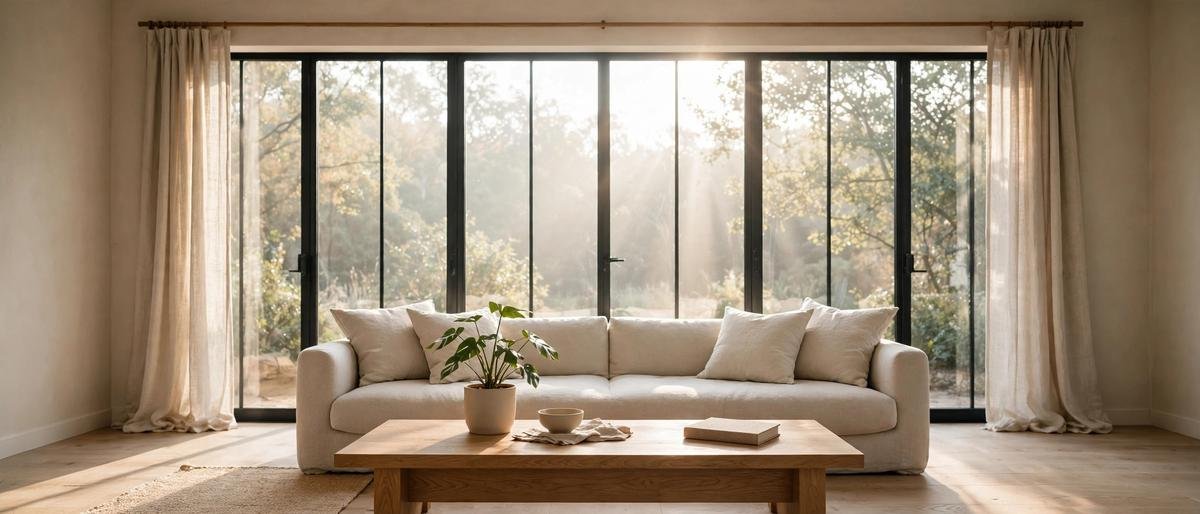
Minimalist Living 2026: A Beginner’s Guide to Simplify Your Life and Home
Cluttered rooms, crowded calendars, and phones buzzing with notifications have become the default background noise of modern life. Minimalist living 2026 is the growing movement of people pushing back against that noise — choosing fewer possessions, simpler routines, and more intentional time so they can focus on what actually matters. It is not about empty white rooms or giving away everything you own; it is about keeping what adds value and releasing what does not.
If you are feeling overwhelmed by stuff, subscriptions, and screen time, this beginner’s guide walks you through exactly how to start. You will learn the core principles of minimalist living, the 2026 trends shaping the movement, a room-by-room decluttering plan, and the mistakes most beginners make. And since digital clutter is half the battle, pair this guide with our guide to digital detox in 2026 to clear your screens as well as your shelves.
What Is Minimalist Living?
Minimalist living is the intentional practice of owning less and simplifying daily life so that your time, money, and attention go toward what you value most. At its heart, it is a question asked about everything you own and everything you do: does this add value to my life? If the answer is no, it goes.
Minimalism is often confused with stark, empty interiors, but the lifestyle is much broader than home decor. A minimalist might still own a well-stocked kitchen, a hobby they love, and a full social calendar — the difference is that every item and commitment was chosen deliberately rather than accumulated by default.
Two related ideas are worth distinguishing:
- Minimalism — focuses on reducing possessions and simplifying your physical and digital environment.
- Simple living — a broader philosophy that also simplifies routines, relationships, and obligations, not just things.
Most beginners practice both together, and in 2026 the two have largely merged into one cultural movement: less is more, applied to every corner of life.
Minimalist Living Benefits 2026
People do not give away half their belongings for aesthetic reasons alone. The real draw of minimalist living is what it gives back: time, money, focus, and calm. Here are the benefits beginners report most consistently.
- Less stress and mental clutter. A chaotic environment competes for your attention. Rooms with clear surfaces and organized storage tend to feel calmer, and many minimalists report that tidying stopped feeling like a second job once they owned less to maintain.
- More money kept. Buying fewer, better things naturally cuts spending. The 30-day rule for purchases, unsubscribing from marketing emails, and cancelling unused subscriptions are minimalist staples that can free up a surprising amount of cash each month.
- Better focus and productivity. Fewer possessions mean less cleaning, less searching for lost items, and fewer decisions. Simplifying your environment and your digital life frees mental energy for meaningful work — a point researchers studying decision fatigue have made for years.
- More time. The average home holds thousands of items, and every item demands time: cleaning, organizing, repairing, replacing. Owning less returns hours every week.
- Lower environmental impact. Reduced consumption means less waste, less packaging, and a smaller carbon footprint. Buying durable goods and repairing instead of replacing aligns minimalism with sustainability.
- Stronger relationships. When you stop chasing more stuff, many minimalists find they redirect energy toward experiences and people — dinner with friends over another shopping trip.
Minimalist Living Trends Shaping 2026
Minimalism in 2026 looks different from the stark all-white aesthetic of a decade ago. The movement has matured, and several clear trends define how people are practicing it this year.
The anti-haul movement
Instead of buying things and decluttering them later, the anti-haul mindset flips the script: choose not to buy in the first place. Social media creators now post “things I didn’t buy” lists, and the trend is reframing restraint as the real flex.
Warm minimalism
The cold, sterile version of minimalism is out. In its place is warm minimalism — uncluttered spaces softened with natural wood, linen, wool, and earthy neutrals. Fewer objects, but better ones: each with purpose and personality. The look proves a simple home can still feel inviting and lived-in.
Digital minimalism goes mainstream
Decluttering in 2026 is no longer just physical. Deleting unused apps, organizing cloud storage, limiting social media, and turning off non-essential notifications are now treated as core minimalist practice, not optional extras.
Minimalism as a mental health strategy
More people are adopting minimalism explicitly for stress management rather than style. Simplifying routines, commitments, and information intake is being discussed as a practical response to burnout — minimalism as self-care.
Slow living communities
Intentional consumption is increasingly a shared practice. Slow living groups — online and in real neighborhoods — encourage members to buy thoughtfully, repair together, and celebrate experiences over possessions.
How to Start Minimalist Living 2026
You do not need to overhaul your life in a weekend. The beginners who stick with minimalism start small, build momentum, and let the lifestyle compound. Follow these five steps in order.
Step 1: Define your “why” before touching anything
Before you donate a single shirt, write down what you want minimalism to give you: more savings, a calmer home, time for a hobby, less cleaning. Your “why” becomes the filter for every decision that follows, and it is what keeps you going when decluttering gets tedious. Revisit it weekly at first.
Step 2: Declutter one space at a time
Resist the urge to declutter everything in one day — marathon sessions lead to burnout and “decluttering regret.” Work room by room, and within rooms, zone by zone:
- Start with the easiest win. A junk drawer, a bathroom cabinet, or one closet shelf. Quick wins build momentum.
- Empty the zone completely, then clean it before anything goes back.
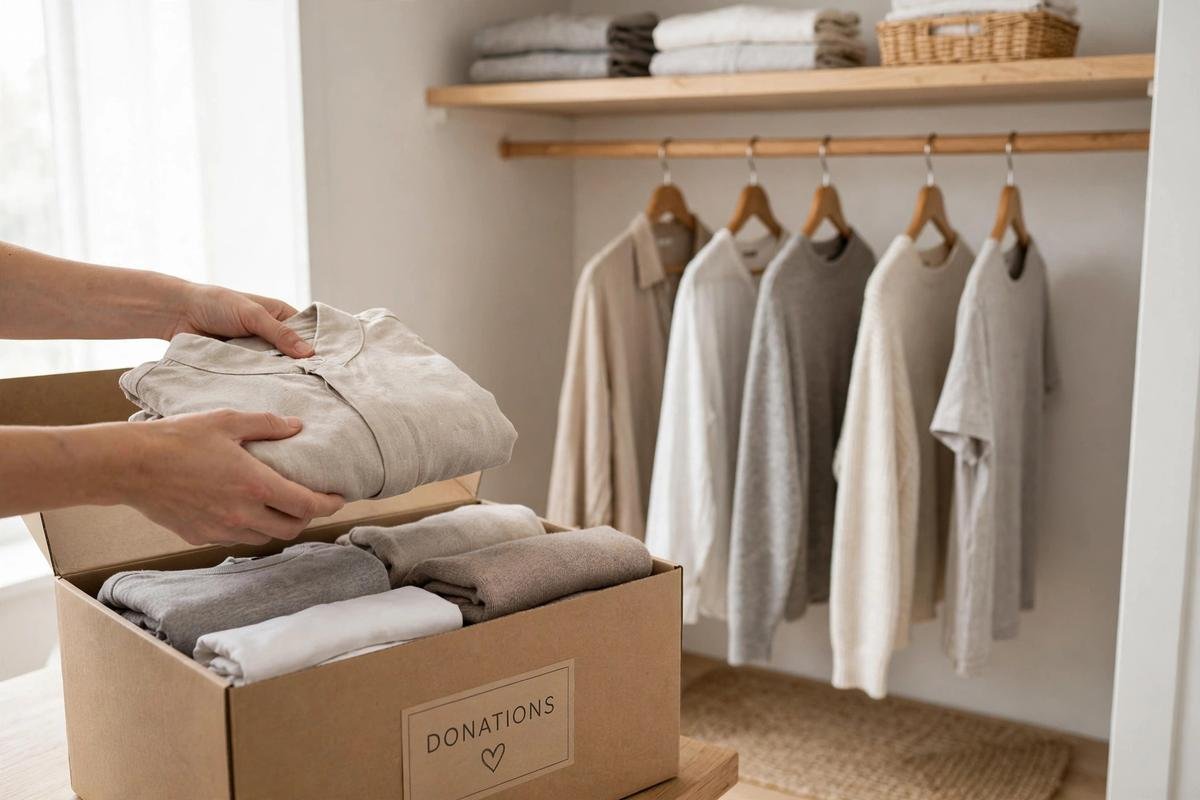
- Sort every item into four piles: keep, donate, sell, trash.
- Ask the hard questions: Have I used this in the last year? Would I buy it again today? Does it serve a purpose or bring genuine joy?
- Remove the “go” piles immediately. Donations sitting in bags for a month tend to creep back onto shelves.
Kitchen counters, wardrobes, and storage areas are the highest-impact zones for most homes. Storage areas especially: they hide the possessions that cost the most mental energy to ignore.
Step 3: Build a capsule wardrobe
Clothing is where many beginners see the fastest payoff. A capsule wardrobe — a small collection of versatile, mix-and-match pieces — eliminates daily decision fatigue. Aim for 25–40 items in neutral colors and timeless styles, excluding underwear, workout gear, and occasion wear. Sell or donate the rest. The result: getting dressed takes seconds, laundry cycles simplify, and seasonal trends stop dictating your spending.
Step 4: Simplify your digital life
Digital clutter is invisible but exhausting. Treat it with the same rigor as your closet:
- Delete apps you have not opened in 30 days.
- Unsubscribe from marketing emails — aim for ten a day until your inbox is quiet.
- Turn off all notifications except calls, messages from real people, and true emergencies.
- Organize cloud storage and delete duplicate photos.
- Set app limits or scheduled “phone-free” hours, especially the first hour of the morning.
Step 5: Redesign your spending and routines
Minimalism fails when old habits refill cleared spaces. Lock in the gains:
- Use the 30-day rule: wait 30 days before any non-essential purchase over a set threshold. Most urges expire.
- Cancel one subscription this week — then audit the rest monthly.
- Simplify routines: a short morning routine, a weekly meal plan with simple recipes, and fixed work/rest blocks beat chaotic multitasking.
- Repair before replacing — shoes, electronics, furniture. It is cheaper and keeps good items in service.
Minimalist Home Decor Ideas for 2026
A minimalist home does not have to feel empty. The 2026 approach — warm minimalism — keeps the uncluttered spirit while adding comfort through texture and natural materials.
- Choose a restrained palette: chalky neutrals, oatmeal, taupe, and soft earth tones instead of clinical white.
- Invest in fewer, better pieces: a solid wood coffee table with visible grain beats three disposable accent tables.
- Layer natural textures: linen, wool, bouclé, and jute add warmth without adding visual noise.
- Let light do the decorating: one oversized pendant or well-placed floor lamp can carry a whole room.
- Give every item a home: closed storage keeps surfaces clear; open shelves should hold only what you genuinely want to display.
- Add life, not stuff: a single healthy plant does more for a room than a shelf of small decor objects.
The trade-off to remember: minimal rooms reveal poor choices quickly, so material quality matters more than quantity. One well-made chair outperforms a set of flimsy ones in both looks and lifespan.
Minimalist Living on a Budget
A common myth is that minimalism is expensive — that you must replace everything with premium “minimalist” products. In reality, minimalism is one of the cheapest lifestyles to adopt, because its first move is buying less, not buying different.
| Habit | Maximalist approach | Minimalist approach |
|---|---|---|
| Shopping | Frequent impulse buys, fast fashion | 30-day rule, fewer but durable items |
| Subscriptions | Stacked and forgotten | Audited monthly, only what is used |
| Home goods | Constant redecorating | Repair and maintain what exists |
| Food | Takeout and food waste | Simple meal planning, less waste |
| Tech | Yearly upgrades | Use until it genuinely fails |
Budget-friendly minimalist moves that cost nothing: buy secondhand when you truly need something, cook at home more often, walk or use public transport where practical, and unsubscribe aggressively. Minimalism helps many people break the paycheck-to-paycheck cycle — not by earning more, but by needing less.
Common Minimalist Living Mistakes to Avoid
- Decluttering everything at once. Burnout leads to regret-donations and quitting. Pace yourself zone by zone.
- Copying someone else’s aesthetic. Minimalism is personal. Your version should reflect your life, not a social media feed.
- Throwing away useful things to rebuy them later. Be honest about what you actually use. Minimalism is intentional ownership, not deprivation.
- Forcing it on family members. Minimalism works by choice. Declutter only your own belongings and let others decide for themselves.
- Buying “minimalist” products to start. Special organizers and matching containers are just more stuff. Use what you have first.
- Ignoring the digital half. A spotless home with 200 unread notifications is not a calm life.
For a deeper look at the philosophy behind owning less, the Simple living article on Wikipedia traces the movement’s history from Thoreau to the present day.
Frequently Asked Questions
Is minimalist living expensive to start?
No. Minimalist living starts by removing things, not buying new ones. Most beginners spend nothing at all in the first month — the savings come from cancelled subscriptions, fewer impulse purchases, and the 30-day rule.
How many items should a minimalist own?
There is no official number. Some aim for under 100 personal possessions, but the count matters less than the principle: everything you own should serve a purpose or bring genuine value. A capsule wardrobe of 25–40 versatile pieces is a practical benchmark for clothing.
Can you be a minimalist with kids?
Yes. Family minimalism focuses on shared spaces, toy rotation instead of toy mountains, and teaching children to choose what they keep. Never declutter a child’s belongings without their involvement.
Does minimalism mean living in an empty white apartment?
Not anymore. The 2026 warm-minimalism trend proves simple spaces can be cozy: natural wood, linen textures, earthy tones, and good lighting create calm without sterility.
How long does it take to become a minimalist?
Most beginners see a noticeable difference within a month of steady zone-by-zone decluttering, but minimalism is an ongoing practice rather than a finish line. Habits like mindful spending and digital decluttering keep evolving.
Conclusion
Minimalist living 2026 is not about deprivation or design trends — it is about alignment. Every item you release and every commitment you simplify returns a little time, money, or attention to spend on what you actually value. Start with your “why,” clear one small zone, build a capsule wardrobe, quiet your phone, and let the momentum compound. The goal was never an empty home; it is a full life with less standing in the way.
