


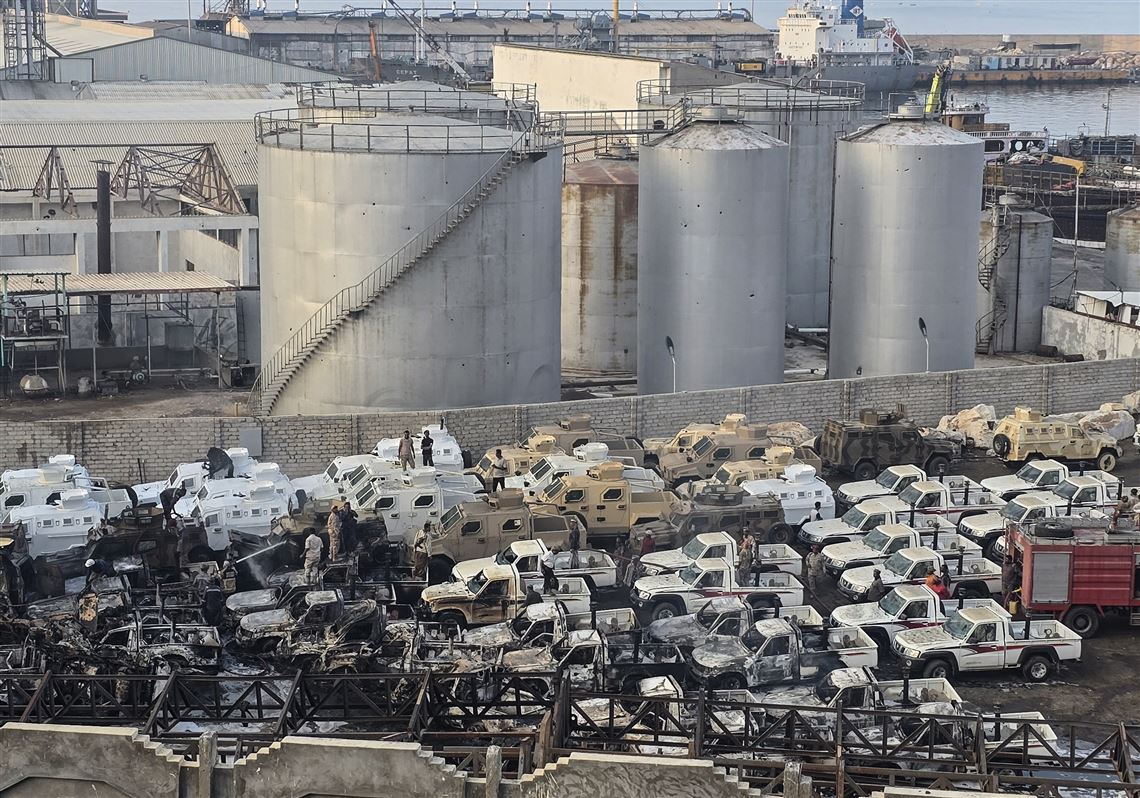
On December 30, 2025, the Saudi-led military coalition launched a precision airstrike on Yemen’s southern port of Mukalla in Hadramout province, targeting what it described as an unauthorized shipment of weapons and armored vehicles intended for the UAE-backed Southern Transitional Council (STC). The operation, deemed “limited” by coalition spokespersons, destroyed cargo unloaded from two vessels that arrived from the UAE’s Fujairah port over the weekend. Saudi authorities released surveillance footage showing the unloading process and subsequent damage, emphasizing no casualties or collateral effects.

Smoke rises over Mukalla port following the airstrike (left and center); damaged vehicles at the site (right).
The strike followed recent STC offensives that seized control of Hadramout and neighboring areas, expelling Saudi-backed government forces and crossing what Riyadh calls a “red line” for its national security.
In a swift escalation, Yemen’s Saudi-supported Presidential Leadership Council (PLC), headed by Rashad al-Alimi, responded with drastic measures in a televised address:
- Cancellation of the joint defense agreement with the UAE.
- Demand for all UAE forces to withdraw from Yemen within 24 hours.
- Imposition of a 72-hour blockade on air, land, and sea entries (with coalition exemptions).
- Declaration of a 90-day state of emergency.
Al-Alimi accused the UAE of directing separatist forces to undermine state authority, while praising Saudi intervention.
Damaged military vehicles post-strike (left); surveillance imagery of alleged unloading (right).
The UAE categorically denied supplying weapons to the STC, stating the shipment contained only vehicles coordinated with Riyadh and not destined for Yemeni parties. Abu Dhabi expressed disappointment over the strike and accusations, condemning any linkage to internal tensions. Later, the UAE announced a voluntary withdrawal of its remaining counterterrorism units after a “comprehensive assessment.”
Saudi officials reiterated that national security is non-negotiable, hoping for UAE actions to preserve Gulf ties. U.S. Secretary of State Marco Rubio urged restraint and diplomacy.
Coalition-released footage of vehicles being unloaded prior to the strike.
This confrontation exposes deepening divisions in the anti-Houthi alliance, where Saudi Arabia champions a unified Yemen under the recognized government, while the UAE has long supported southern separatists for strategic influence over ports and resources.
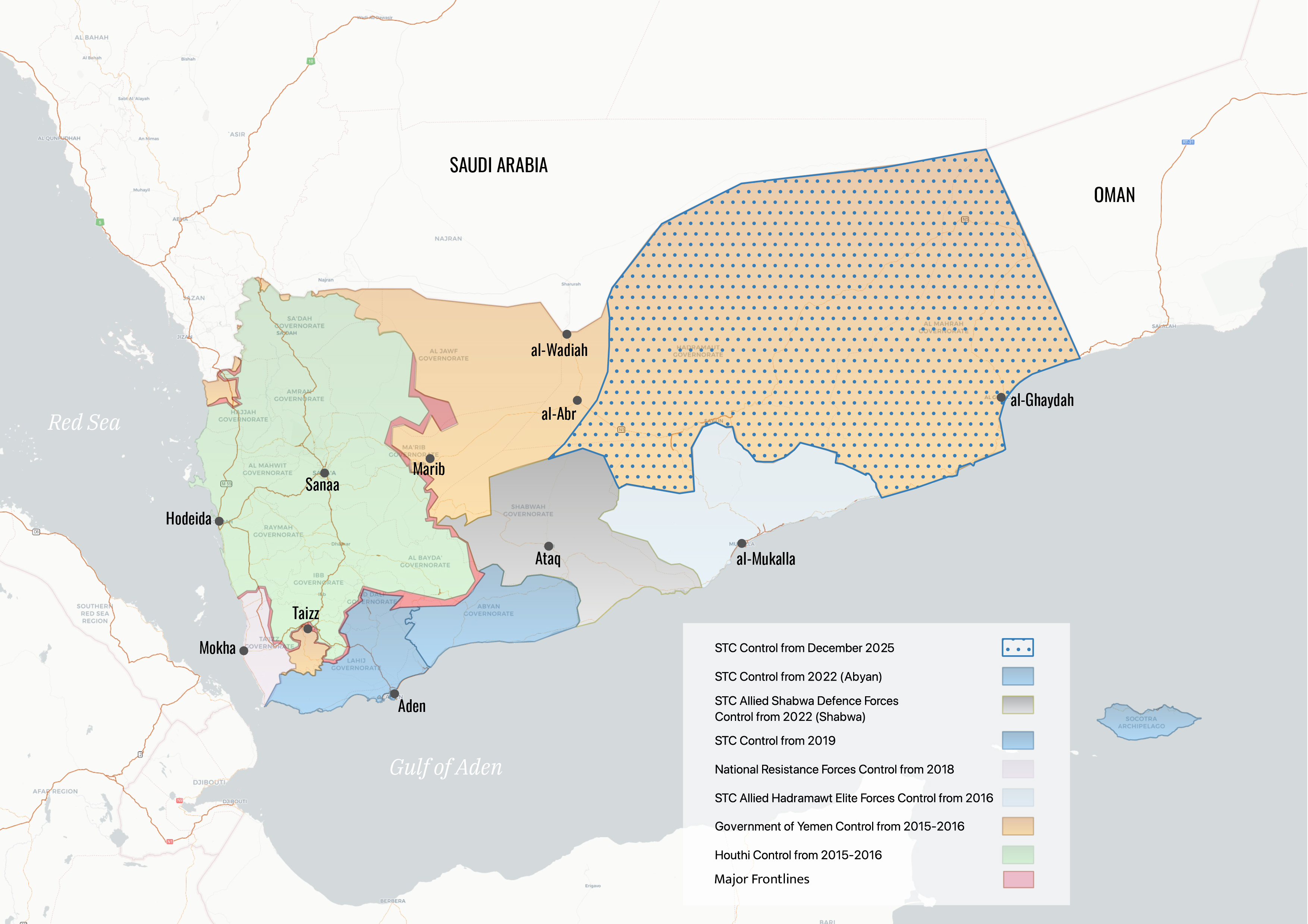

Maps illustrating territorial control in Yemen, highlighting STC advances in Hadramout and Mukalla (2025 updates).

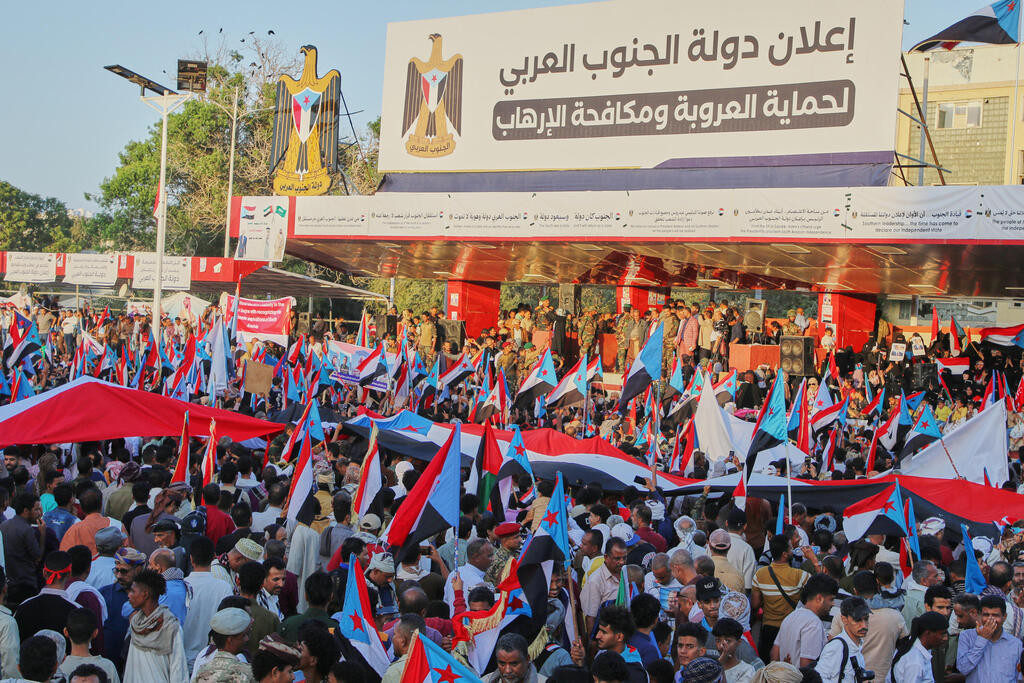
STC supporters rally in southern Yemen, waving flags of the former South Yemen.
Read More: No worries’: Trump downplays Chinese military drills around Taiwan
FAQ
What prompted the airstrike on Mukalla port?
The coalition alleged two ships from Fujairah delivered weapons and vehicles to bolster STC forces without authorization, viewing it as support for separatist advances threatening Saudi borders and Yemen’s unity.
Who is the Southern Transitional Council (STC)?
A UAE-backed militia advocating southern autonomy or independence. Initially allied against the Houthis, it has clashed with government forces, recently capturing oil-rich eastern provinces like Hadramout.
Why the Saudi-UAE rift in Yemen?
Diverging goals: Saudi Arabia seeks a centralized government to counter Iran-backed Houthis; the UAE prioritizes southern allies for control over trade routes, islands, and counterterrorism.
Were there casualties in the strike?
None reported; the operation targeted cargo specifically, per Saudi statements.
What measures did the PLC announce?
Cancellation of UAE defense pact, 24-hour UAE withdrawal demand, 72-hour blockade, and 90-day emergency to address separatist threats.
UAE’s response to allegations?
Denial of weapon supplies, condemnation of implications in Yemeni tensions, and voluntary pullout of remaining units to de-escalate.
Potential for further escalation?
High risk of proxy clashes in the south, though both Gulf states signal desire to avoid direct confrontation and preserve relations.
Impact on Yemen’s wider war?
Divisions weaken anti-Houthi efforts, prolonging a conflict causing massive humanitarian crisis, and complicating UN-mediated peace talks.
Conclusion
The Mukalla incident represents the most direct Saudi-UAE clash in Yemen since their 2015 intervention, crystallizing proxy rivalries that have simmered for years. While mutual de-escalatory steps—UAE withdrawal and diplomatic rhetoric—offer breathing room, unresolved competition over southern influence persists.
