


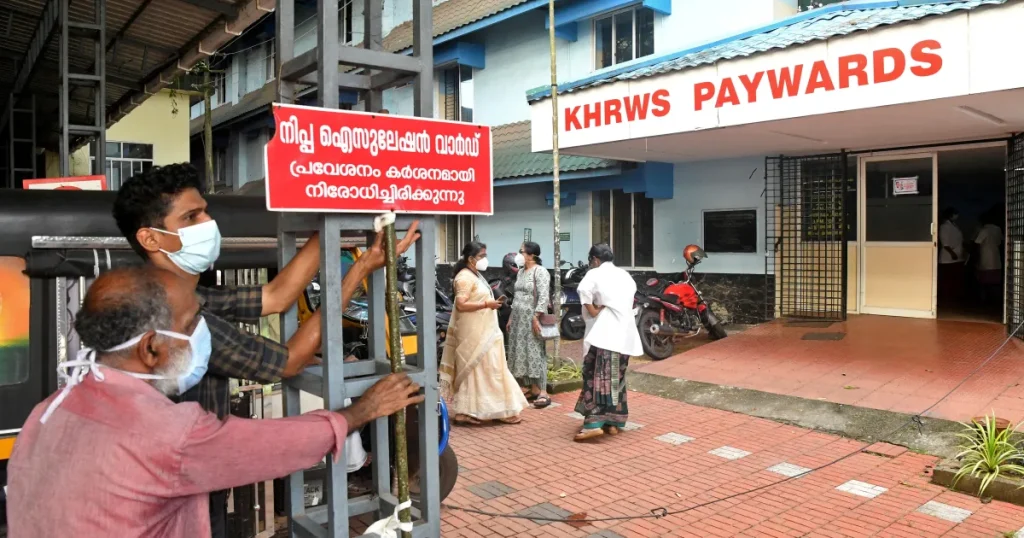
A limited Nipah virus (NiV) incident in West Bengal, India, has drawn regional attention, prompting heightened surveillance and airport screenings in several Asian countries. Indian authorities have declared the situation contained, with only two confirmed cases reported since December 2025. Both cases involved healthcare workers at a private hospital in Barasat, North 24 Parganas district, near Kolkata. Extensive contact tracing of 196 individuals showed no additional infections all tested negative and remained asymptomatic.
This marks West Bengal’s first confirmed Nipah cases since 2007, when five fatal infections occurred. No sustained community transmission has been detected, and the outbreak appears localized, primarily involving nosocomial (hospital-based) spread through close contact with bodily fluids.
While Nipah remains a high-priority pathogen due to its potential severity, experts emphasize that human-to-human transmission is rare outside prolonged, close exposure unlike highly contagious viruses such as COVID-19. No cases have spread beyond India, but precautionary measures reflect global vigilance against zoonotic threats.

What Is Nipah Virus?
Nipah virus is a zoonotic RNA virus from the Henipavirus genus in the Paramyxoviridae family. Fruit bats (Pteropodidae family, particularly Pteropus species) serve as the natural reservoir. The virus can spill over to humans directly from bats, via intermediate animals like pigs, or through contaminated food.
It was first identified during a major outbreak in 1998–1999 among pig farmers in Malaysia (village of Sungai Nipah) and Singapore, causing nearly 300 human cases and over 100 deaths. That event led to mass pig culling and economic losses. Since then, outbreaks have occurred almost annually in Bangladesh (often linked to raw date palm sap contaminated by bats) and sporadically in India, with occasional cases in the Philippines.
In India, prior outbreaks include:
- West Bengal (2001 and 2007)
- Kerala (2018: 19 cases, 17 deaths; 2019 and later sporadic cases)
Globally, as of late 2025, around 750 confirmed human infections and 415 deaths have been recorded, per sources like the Coalition for Epidemic Preparedness Innovations (CEPI).
How Does Nipah Virus Spread?
Transmission routes include:
- Animal-to-human: Direct contact with infected bats, their saliva, urine, or feces; consumption of raw date palm sap or fruits contaminated by bats; or contact with infected pigs/other animals (e.g., cats, goats, horses, sheep in past events).
- Human-to-human: Close contact with an infected person’s bodily fluids (respiratory droplets, saliva, urine), often in healthcare settings or households. Casual contact does not typically transmit the virus.
- Foodborne: Contaminated raw foods, especially in endemic areas.
Human-to-human spread is not highly efficient and requires prolonged exposure. In the current West Bengal cases, transmission occurred in a hospital environment.
Symptoms of Nipah Virus Infection
The incubation period is usually 4–14 days (up to 45 days in rare cases). Infections range from:
- Asymptomatic or mild (fever, headache, muscle pain, vomiting, sore throat).
- Acute respiratory illness (cough, difficulty breathing).
- Severe encephalitis (brain inflammation): drowsiness, confusion, seizures, coma.
Severe cases often progress to fatal encephalitis. Respiratory symptoms increase transmission risk.
Fatality Rate and Complications
The case fatality rate (CFR) is estimated at 40–75%, varying by outbreak, strain, surveillance, and medical care quality. Survivors may face long-term neurological issues like seizures or personality changes.
Treatment and Prevention
No approved vaccine or specific antiviral treatment exists for the Nipah virus. Management relies on supportive care: intensive monitoring for neurological/respiratory complications, seizure control, ventilation if needed, and infection prevention.
Early diagnosis and isolation improve outcomes, as seen in past cases with prompt care.
Prevention focuses on:
- Avoid contact with bats, pigs, or bat roosting areas.
- Not consuming raw date palm sap or fallen fruits in endemic zones.
- Eating only thoroughly cooked food and peelable/washable fruits.
- Strict infection control in healthcare (PPE, hand hygiene).
- Avoiding close contact with symptomatic individuals.
Travelers to affected areas should follow local advisories, seek immediate medical help for severe headache, confusion, breathing difficulty, or encephalitis signs.
Symptoms of Nipah Virus Infection
Incubation: Typically 4–14 days (rarely up to 45 days).
Spectrum:
- Mild/asymptomatic: Fever, headache, fatigue, muscle pain, sore throat, vomiting.
- Moderate: Acute respiratory illness (cough, breathing difficulty).
- Severe: Encephalitis (brain inflammation)—drowsiness, confusion, seizures, coma; often fatal if it progresses.
Respiratory involvement increases transmission potential. Survivors may experience long-term issues like persistent seizures, personality changes, or neurological deficits.
Fatality Rate and Complications
Case fatality rate (CFR): 40–75% (varies by outbreak, strain, early detection, and care quality).
Higher in some Indian/Bangladeshi events due to rapid encephalitis progression.
Early supportive care improves survival odds.
Read More: Key Gulf Allies Say They Won’t Aid U.S. in an Iran Strike, Limiting Trump’s Options
Treatment and Prevention
No approved vaccine or specific antiviral exists yet.
Treatment: Supportive only intensive care for respiratory/neurological complications (ventilation, seizure management, fluid balance, infection control). Early diagnosis/isolation key to better outcomes.
Prevention strategies:
- Avoid bat habitats/roosts, sick animals (pigs/horses in endemic zones).
- Do not consume raw date palm sap, unwashed/peeled fruits, or potentially bat-contaminated items.
- Cook food thoroughly; wash/peel fruits.
- Strict hospital infection control: PPE, hand hygiene, isolation of encephalitis/respiratory cases.
- Travelers: Follow advisories—hygiene, avoid raw foods/animal contact; seek prompt care for severe symptoms (worst-ever headache, confusion, breathing issues)
FAQs
Is the Nipah virus highly contagious like COVID-19?
No. Experts describe it as not very contagious. Human-to-human transmission is rare, requires close/prolonged contact (e.g., bodily fluids), and no casual spread (e.g., brief encounters) has been documented.
How many cases are there in the current West Bengal outbreak?
Officially, only two confirmed cases (healthcare workers) since December 2025. Indian health authorities have clarified this amid media speculation, with all traced contacts negative.
Has the virus spread outside India?
No reported cases beyond West Bengal. Asian countries (Thailand, Malaysia, Singapore, etc.) have ramped up airport screenings (thermal checks, health declarations) as a precaution.
Is there a vaccine in development?
Several candidates are in trials. Notably, Oxford University launched the world’s first Phase II trial in Bangladesh in late 2025 using a ChAdOx1-based vaccine. No licensed vaccine yet.
Why is Nipah a WHO priority pathogen?
High fatality rate, no treatments/vaccines, zoonotic potential, and epidemic risk if it mutates for easier spread.
Can pets or livestock spread it now?
Pigs were key in the 1998 outbreak, but current risks center on bats and human close contact. Avoid sick animals in endemic areas.
What should I do if traveling to or from affected regions?
Follow advisories: practice hygiene, avoid raw foods/bat areas, monitor for symptoms, and seek care promptly if ill.
Conclusion
The current Nipah incident in West Bengal is small, contained, and limited to two cases among healthcare workers, with no evidence of wider spread. India’s swift response—contact tracing, testing, surveillance, and public health measures—has prevented escalation, underscoring the value of early detection in managing high-threat pathogens.
Nipah remains a serious concern due to its lethality and lack of specific countermeasures, but it is not easily transmissible in everyday settings. Ongoing research into vaccines and treatments offers hope for the future. Vigilance, hygiene, and awareness are key to minimizing risks in endemic regions like parts of South Asia.
