


Recent developments in Middle Eastern geopolitics have seen a stark diplomatic turn: key Gulf allies of the United States, notably Saudi Arabia and the United Arab Emirates, have publicly declared they will not support or facilitate any U.S. military strike against Iran. This shift represents a significant limitation on what had been a cornerstone of U.S. operational planning in the region access to Gulf airspace, territory, and logistical support for military action against Tehran.
This article explores the background, causes, implications, and wider strategic consequences of this refusal, analyzing how it limits U.S. options, impacts regional alliances, and underscores a deeper geopolitical recalibration in the Middle East.
Background: U.S.–Iran Tensions and the Gulf Context
The Trump Administration and Iran
Since taking office, former U.S. President Donald Trump has pursued a hard-line policy toward Iran, intensifying pressure over Tehran’s nuclear program, regional proxies, and human rights record. This approach is rooted in longstanding U.S. concerns about Iran’s nuclear ambitions and destabilizing activities across the Middle East.
The Trump administration has repeatedly said that military action remains on the table if Iran continues what it sees as destabilizing or threatening actions, including enrichment of uranium beyond internationally agreed limits, support for armed groups, and suppression of domestic protests. As tensions escalated recently following Iran’s violent crackdown on protests, the U.S. moved additional military assets to the region, including a carrier strike group.
The Strategic Importance of the Gulf
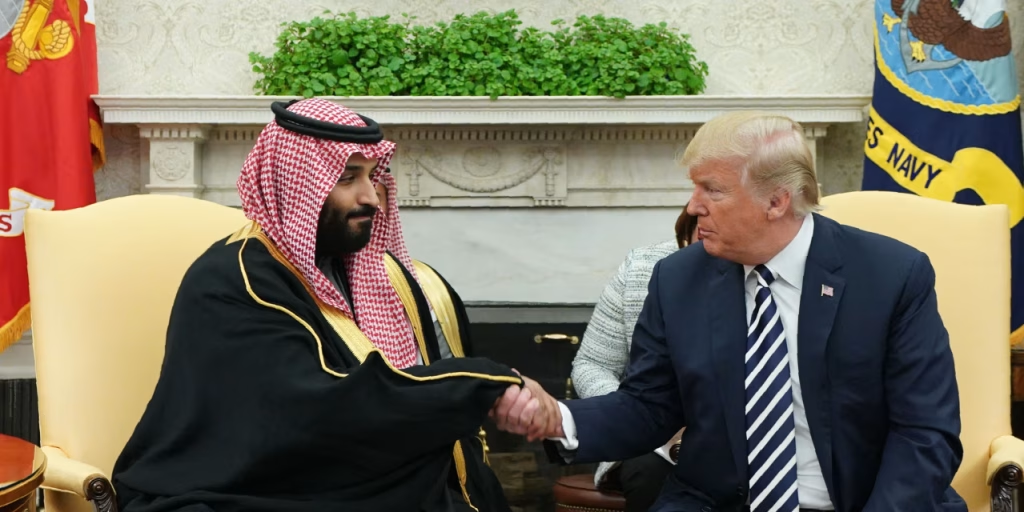
For decades, the Gulf Cooperation Council (GCC) countries — including Saudi Arabia, the UAE, Qatar, Kuwait, Oman, and Bahrain have been critical U.S. partners in security, energy, and regional diplomacy. The GCC hosts U.S. bases and facilitates logistical access vital for operations in the Middle East, from the 1991 Gulf War to campaigns in Iraq and Syria.
Given their geographic proximity to Iran, these countries have traditionally supported a strong stance against Tehran particularly when it comes to Iran’s nuclear program and influence. However, their reluctance to support any U.S. strike signals both a recalibration of priorities and growing concern about being drawn into a wider conflict.
The Gulf Refusal: What Was Said and Why It Matters
Official Statements from Saudi Arabia and the UAE
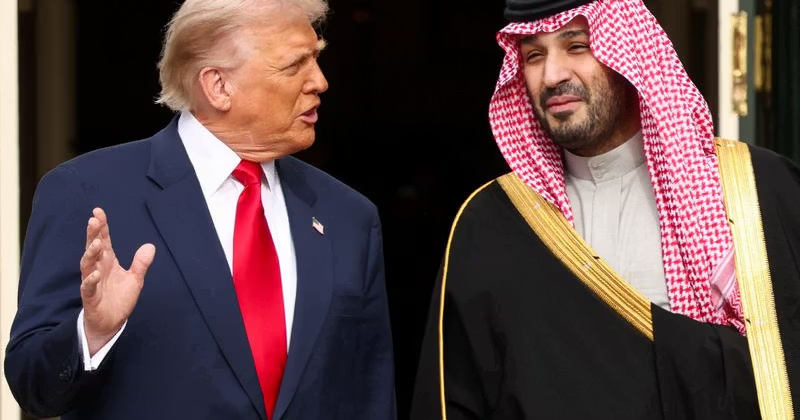
In late January 2026, Saudi Arabia and the United Arab Emirates publicly ruled out allowing the United States to use their airspace or territory for any military action against Iran. Riyadh formally rejected U.S. requests for overflight rights, while Abu Dhabi reiterated that it would not allow attacks on Iran to be launched from its soil, airspace, or waters.
These declarations mark a significant departure from previous cooperation, notably because U.S. military planners have long depended on Gulf access to extend reach, shorten flight paths, and gain strategic advantages in potential regional operations.
Motivations Behind the Decision
The refusal from Gulf allies is driven by a combination of strategic, economic, and security considerations:
Fear of Escalation
Gulf states are acutely aware that joining or facilitating any U.S. strike on Iran could provoke direct retaliation from Tehran. Iran has warned that any nation seen as supporting a military attack on its territory could be treated as hostile, potentially facing missile strikes on bases or infrastructure.
Regional Stability and Economic Interests
Arab states, especially in the Gulf, have grown cautious about conflicts that could disrupt the region’s relative stability, vital for energy markets and economic diversification. Middle Eastern oil producers are particularly sensitive to disruptions at the Strait of Hormuz — a chokepoint through which a significant portion of global oil supplies passes.
Diplomatic Priorities and Mediation Efforts
Countries like Oman and Qatar have long served as intermediaries between Tehran and Western powers. These nations favor diplomatic engagement over military confrontation and worry that war could undo years of cautious channel-building and negotiation.
Public and Domestic Opinion
Public opinion across the Gulf is wary of new conflicts that might put local populations at risk. Governments must balance foreign policy decisions with domestic expectations for stability, prosperity, and minimal entanglement in wars that could have devastating consequences.
Operational and Strategic Implications for the U.S.
Loss of Access and Increased Complexity
Without access to Gulf airspace or bases, the U.S. military would face new challenges in planning any strike on Iran. Key implications include:
- Longer Flight Routes: U.S. aircraft would need to operate from more distant bases such as in Europe, East Africa, or aircraft carriers at sea, increasing transit times and reducing operational flexibility.
- Increased Logistical Costs: Refueling, reconnaissance, and support operations become more complex and costly.
- Reduced Intelligence Support: Regional basing facilitates real-time intelligence, surveillance, and reconnaissance; losing this hampers operational awareness.
Former military officials note these factors complicate though do not entirely preclude, U.S. military action against Iran.
Unilateral versus Coalition Action
A unilateral strike by the U.S. without regional support would appear more isolating diplomatically. Coalition support from Gulf states would lend legitimacy and share the burden of conflict, but without it, Washington could face criticism both internationally and within American political circles.
Such a unilateral posture risks weakening U.S. diplomatic leverage and could isolate the U.S. from regional powers that prefer negotiations over conflict.
Broader Strategic Repercussions
The Gulf refusal may have lasting impacts beyond the Iran crisis:
- U.S. Global Leadership: Allies questioning U.S. decision-making on security matters could recalibrate their reliance on Washington.
- Realignment of Regional Partnerships: Gulf states might deepen ties with other powers (e.g., European countries, China, Russia) as hedges against instability.
- Energy Security Risks: Prolonged tensions and loss of regional cooperation could impact oil markets and global energy security.
Reactions From Tehran and the Wider Middle East
Iran’s Response
Iran has seized on Gulf reluctance as evidence that its regional stance and deterrence are effective. Tehran’s official rhetoric remains combative, warning of severe repercussions for nations that facilitate attacks, and underscoring its readiness to defend its sovereignty.
Officials in Tehran have even put armed forces on high alert in response to U.S. threats.
Regional Reactions
Reactions across the Middle East vary, largely reflecting the diverging interests of regional actors:
- Moderate Voices: Countries like Qatar and Oman continue pushing for diplomatic channels and de-escalation.
- Neutral or Cautious States: Some nations, while not openly siding with Iran, emphasize restraint and call for international mediation.
- Countries Closer to the U.S.: A few states may privately express support for strong U.S. actions but publicly avoid statements that could escalate tensions.
Additionally, incidents such as missile exchanges and Iranian strikes on U.S. bases in the region — including at Al Udeid Air Base have reinforced fears of a broader conflict.
Diplomatic and Economic Stakes
Diplomatic Channels and Mediation Efforts
In response to mounting tensions, various diplomatic efforts have been underway:
- Oman and Qatar as Mediators: These nations have offered themselves as back-channels between Washington and Tehran.
- International Pressures: European powers and United Nations officials have called for de-escalation and pursued dialogue initiatives.
The Gulf refusal underscores the importance of these diplomatic routes, suggesting that negotiation not military pressure might be the only viable path to avoid widespread conflict.
Economic Risks
The threat of conflict in the Gulf could disrupt global oil markets, supply chains, and international trade. The region’s economies are increasingly interconnected with global markets, meaning instability could have far-reaching effects beyond military theaters.
Energy markets, already sensitive to risks at the Strait of Hormuz, would likely react sharply to any escalation, potentially triggering price spikes and economic instability.
International Perspectives and Responses
United Nations and Global Opinion
International institutions, including the United Nations, have voiced alarm over any escalation. The UN Secretary-General and other global leaders have urged restraint, emphasizing the need for negotiation over military confrontation.
European and Asian Views
Many European countries advocate for a diplomatic resolution and express concern over unilateral military actions that could destabilize the region further. Asian countries, while more cautious in their commentary, are also attentive to the economic fallout that any conflict could trigger.
Implications for International Law
Questions of legality surround military strikes without UN Security Council authorization or clear self-defense justification under international law. Such considerations — coupled with the refusal of regional partners to participate place additional constraints on unilateral action.
What This Means for Future U.S. Policy
Strategic Reassessment
The U.S. must now reassess how it approaches Iran policy, balancing deterrence with the diplomatic realities of limited regional support. Possible policy options include:
- Diplomatic Engagement: Renewed talks, potentially mediated by regional or global powers.
- Multilateral Pressure: Coordinated sanctions or international resolutions.
- Defensive Posture: Strengthening regional defenses rather than offensive measures.
Domestic U.S. Political Factors
Domestic opinion in the United States is divided on military action against Iran. With memories of previous wars in Iraq and Afghanistan, many U.S. citizens and lawmakers are wary of new conflicts, potentially reinforcing political pressure to pursue diplomatic rather than military paths.
Read More: Who is on Trump’s ‘Board of Peace’ for Gaza?
FAQs
Which Gulf countries have refused to aid the U.S. in an Iran strike?
Saudi Arabia and the United Arab Emirates have publicly stated they will not allow their airspace, territory, or waters to be used for attacks on Iran. Other Gulf states, such as Qatar and Oman, have expressed concerns about military action and emphasized restraint.
Why is Gulf cooperation important for U.S. military action?
Gulf cooperation provides shorter flight paths, logistical support, and regional bases that enhance operational effectiveness and reduce costs. Without this access, military operations become more difficult, longer, and potentially more risky.
Does this mean the U.S. cannot strike Iran?
No. It means the U.S. would face greater operational challenges and would likely have to rely on distant bases or naval assets like aircraft carriers. However, it complicates planning and reduces political legitimacy.
What are Gulf states’ main concerns about a strike on Iran?
Gulf states fear regional escalation, retaliation from Iran, disruption to their own security and economies, and the potential for broader conflict that could destabilize the Middle East.
Are there any diplomatic solutions being pursued?
Yes. Diplomatic efforts involve mediators such as Oman and Qatar, as well as international actors advocating negotiation, restraint, and dialogue to de-escalate tensions.
Conclusion
The refusal of key Gulf allies to support or facilitate U.S. military action against Iran represents a pivotal moment in Middle Eastern geopolitics. It underscores a broader regional shift — one where Gulf states prioritize stability, economic interests, and diplomatic avenues over participation in potentially costly military conflicts.
