


The Nipah virus (NiV) is a highly infectious and potentially deadly virus that poses a serious threat to human and animal health. First identified in Malaysia in 1998, it has since caused multiple outbreaks in South and Southeast Asia, particularly in Bangladesh and India. Belonging to the Henipavirus genus and closely related to the Hendra virus, the Nipah virus is zoonotic, meaning it can spread from animals to humans. Due to its high mortality rate and ability to transmit between humans, understanding the virus, its symptoms, transmission methods, and preventive measures is crucial for public health.
This article provides a comprehensive overview of the Nipah virus, its history, outbreaks, symptoms, diagnosis, treatment, and prevention strategies. It also addresses frequently asked questions to help individuals and communities stay informed and safe.
Introduction
Emerging infectious diseases are a global concern, particularly those that originate from animals and can spread to humans. Among these, the Nipah virus stands out because of its high fatality rate, potential for human-to-human transmission, and the risk of epidemic outbreaks. Although outbreaks are relatively rare, they can be devastating, particularly in regions with limited healthcare infrastructure.
Nipah virus infection can affect both humans and animals, including pigs, which played a key role in early outbreaks. The virus can cause respiratory illness, brain inflammation (encephalitis), and death. This makes early detection, strict hygiene measures, and public awareness critical.
In the following sections, we explore the virus in detail, including its origins, modes of transmission, symptoms, treatment, and prevention strategies.
History and Origin of the Nipah Virus
The Nipah virus was first identified during a 1998–1999 outbreak in Malaysia. Pig farmers were primarily affected, as pigs acted as an intermediate host. The virus was named after the Malaysian village of Sungai Nipah, where the first human cases were documented.
Key Historical Events:
- 1998–1999, Malaysia: First recognized outbreak; 265 people infected, over 100 deaths.
- 2001–2015, Bangladesh: Several outbreaks; human-to-human transmission observed.
- 2018–2021, India: Kerala reported multiple outbreaks with high fatality rates.
Natural Reservoir:
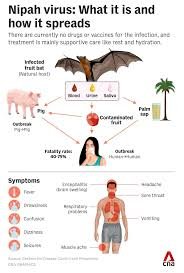
Fruit bats of the Pteropus genus are the primary carriers of the virus. These bats typically do not show signs of illness but can shed the virus in their saliva, urine, and feces. Human infection usually occurs through direct contact with infected bats, contaminated food, or intermediate animal hosts like pigs.
The emergence of the Nipah virus illustrates the dangers of zoonotic diseases and the importance of monitoring wildlife and human interactions, particularly in regions where humans, domestic animals, and wildlife co-exist.
How Nipah Virus Spreads
Understanding the transmission pathways of the Nipah virus is essential to prevent its spread. The virus can transmit from animals to humans, humans to humans, and, in rare cases, via contaminated food or environmental sources.
Animal-to-Human Transmission
- Direct contact with infected animals, especially pigs and bats.
- Consumption of food contaminated by bats, such as raw date palm sap, fruits, or vegetables.
- Handling infected animals without protective equipment.
Human-to-Human Transmission
- Close contact with bodily fluids of infected individuals (saliva, urine, blood, respiratory secretions).
- Caregivers, family members, and healthcare workers are at the highest risk.
- Outbreaks in Bangladesh and India have demonstrated sustained human-to-human transmission in hospital and household settings.
Environmental Transmission
- Contaminated surfaces, fruits, or materials exposed to bat secretions.
- Poor sanitation and hygiene can facilitate the spread of the virus.
Important Note: Nipah virus is not airborne in the same way as COVID-19, but can spread through droplets and close contact. This makes protective measures like masks, gloves, and isolation essential during outbreaks.
Symptoms of Nipah Virus Infection
The symptoms of Nipah virus infection can range from mild to severe and may progress rapidly. Early detection is critical for reducing mortality.
Early Symptoms:
- Fever
- Headache
- Sore throat
- Muscle pain
- Vomiting and nausea
Severe Symptoms:
- Dizziness and altered mental status
- Encephalitis (inflammation of the brain)
- Seizures
- Respiratory distress
- Coma in extreme cases
Mortality Rate:
Fatality rates vary by outbreak and available healthcare but range from 40% to 75%. Rapid progression to severe illness highlights the need for immediate medical attention if infection is suspected.
Diagnosis and Testing
Accurate and timely diagnosis of Nipah virus infection is crucial for outbreak control and patient care. Common diagnostic methods include:
- Polymerase Chain Reaction (PCR): Detects viral RNA in blood, urine, throat swabs, and cerebrospinal fluid.
- Serological Tests: Identify antibodies against the Nipah virus, useful for confirming past exposure.
- Virus Isolation: Conducted in specialized laboratories with biosafety level 4 (BSL-4) containment.
Healthcare Protocol:
Patients suspected of having Nipah virus infection should be isolated immediately. Healthcare providers must use strict infection control protocols, including personal protective equipment (PPE), to prevent nosocomial (hospital-acquired) transmission.
Treatment and Management
Currently, there is no specific antiviral treatment for Nipah virus infection. Management focuses on supportive care to reduce complications and improve survival chances.
Supportive Treatments Include:
- Hospitalization in intensive care units for severe cases
- Mechanical ventilation for patients with respiratory distress
- Hydration, nutrition, and treatment of secondary infections
- Medications to control fever, seizures, and other symptoms
Experimental Treatments:
Some antiviral drugs, such as ribavirin, have been used experimentally, but their effectiveness remains uncertain. Researchers are also exploring monoclonal antibodies and vaccines, but none are yet widely available.
Prevention Strategies
Preventing Nipah virus infection requires a combination of personal, community, and environmental measures.
Personal Hygiene:
- Wash hands regularly with soap and water.
- Avoid contact with sick animals and humans showing symptoms.
- Use masks and gloves if exposure is likely.
Food Safety:
- Avoid consuming raw date palm sap, fruits contaminated by bats, or unpasteurized animal products.
- Wash fruits and vegetables thoroughly.
Protective Equipment for Health Workers:
- PPE, including gloves, masks, and protective gowns.
- Proper disinfection of medical instruments and hospital areas.
Community Measures:
- Isolate suspected or confirmed cases immediately.
- Educate communities about avoiding contact with bats and pigs.
- Monitor livestock for illness during outbreaks.
Outbreak Case Studies
Understanding past outbreaks helps improve preparedness for future incidents.
Malaysia (1998–1999):
- Outbreak linked to pig farms in Perak state.
- 265 human cases, 105 deaths.
- Containment achieved through culling pigs, quarantining humans, and restricting movement.
Bangladesh (2001–2015):
- Multiple outbreaks reported.
- Human-to-human transmission observed in families and healthcare settings.
- High mortality rates of 70–75% in some outbreaks.
India (Kerala, 2018–2021):
- Rapid response limited spread.
- 21 deaths reported in 2018 outbreak.
- Highlighted the importance of early detection and strict hospital infection control.
Global Impact and Public Health Concerns
Although outbreaks are localized, the Nipah virus poses a global health threat because of:
- High fatality rate: Makes every outbreak potentially deadly.
- Potential for human-to-human transmission: Risk of wider epidemic if containment fails.
- Limited treatment options: No widely available vaccines or antivirals.
- International concern: WHO lists Nipah virus as a priority pathogen for research and preparedness.
Global cooperation, surveillance, and research are crucial to prevent future pandemics originating from zoonotic viruses like Nipah.
Living Safely in High-Risk Areas
Residents of regions prone to Nipah virus outbreaks can take precautions:
- Avoid contact with bats and pigs, especially sick animals.
- Do not consume raw date palm sap or partially eaten fruits.
- Practice good hand hygiene and respiratory etiquette.
- Report sick animals or suspected human cases to local health authorities immediately.
Future Research and Vaccine Development
Global health organizations and researchers are actively working to develop:
- Effective vaccines for humans and livestock.
- Antiviral treatments to reduce mortality.
- Rapid diagnostic tests for early detection.
- Public health strategies to prevent zoonotic spillover events.
Ongoing research aims to reduce the threat of the Nipah virus and ensure communities are better prepared for future outbreaks.
Read More: Late-night snacking linked to higher risk of liver disease
FAQs
Is the Nipah virus contagious?
Yes. It can spread from animals to humans and between humans through close contact with bodily fluids.
Can the Nipah virus be prevented with a vaccine?
Currently, there is no widely available vaccine. Research is ongoing to develop safe and effective vaccines.
What is the incubation period of the Nipah virus?
Symptoms typically appear 4–14 days after exposure, but in rare cases, it may extend up to 45 days.
What should I do if I suspect Nipah virus infection?
Seek immediate medical attention, avoid contact with others, and follow isolation guidelines provided by health authorities.
How deadly is the Nipah virus?
Fatality rates range from 40% to 75%, depending on the outbreak and healthcare availability. Prompt medical intervention can improve survival.
Conclusion
The Nipah virus is a highly dangerous zoonotic virus with significant public health implications. Although outbreaks are sporadic, they can be devastating due to the virus’s high mortality rate and potential for human-to-human transmission. Awareness, early diagnosis, and preventive measures are critical to controlling the spread of Nipah virus.
