

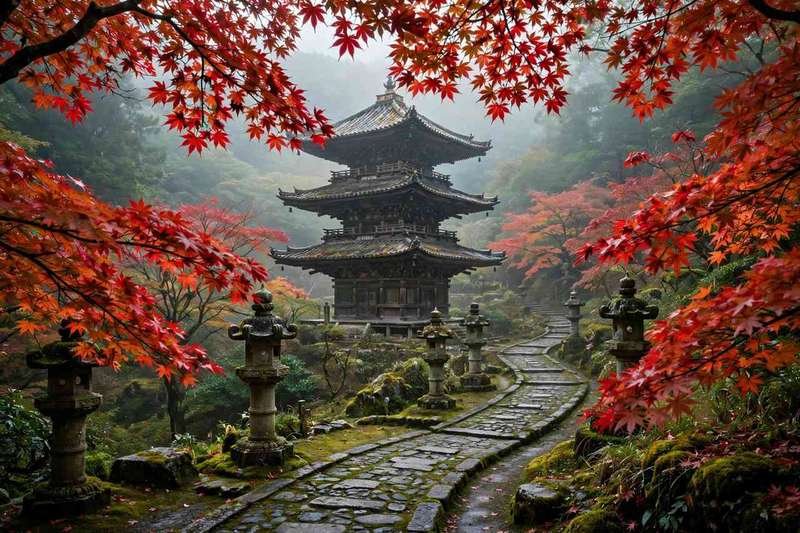
Every autumn, Japan trades its summer green for one of the most photographed color shows on Earth. The Japan autumn foliage 2026 season is officially forecast, and this year the timing is close to average in Tokyo and slightly delayed in Kyoto, Hokkaido, and Fukuoka thanks to lingering summer heat. From the first red maples of Hokkaido’s mountains in September to the last golden ginkgo avenues of Kyushu in December, the koyo front sweeps the country for nearly three months — which means almost any autumn trip can catch peak color somewhere, if you plan around the dates.
This guide covers the official 2026 forecast dates from the Japan Meteorological Corporation, the best places to see autumn foliage in Japan from north to south, night illuminations, photography tips, and a practical step-by-step planning checklist. If Japan’s autumn gets you thinking about cold-season travel in general, our Winter Travel 2026 guide to warm destinations covers where to go once the leaves have fallen — but first, let us find your perfect koyo window.
Read More: Digital Detox in 2026: A Practical Guide to Reclaim Your Time and Focus
A momijigari trip is the perfect excuse to look up from your phone — pair the fall colors with a practical plan to unplug and be present.
Japan Autumn Foliage 2026: Official Forecast and Peak Dates
The Japan Meteorological Corporation released its second 2026 autumn foliage forecast on October 1, 2026, with a further update expected in early November. Unlike cherry blossoms, which bloom from south to north, the autumn foliage front (koyo zensen) moves in the opposite direction: it starts at Hokkaido’s highest elevations in mid-September and travels south, reaching Tokyo and Kyoto by late November. Here are the headline 2026 forecast dates for red maple (momiji) foliage:
| City | 2026 Forecast (Red Leaves) | Seasonal Average |
|---|---|---|
| Sapporo | November 4 | October 28 |
| Sendai | November 24 | November 21 |
| Tokyo | November 28 | November 28 |
| Kanazawa | November 30 | November 24 |
| Nagano | November 21 | November 12 |
| Osaka | December 4 | December 1 |
| Hiroshima | November 28 | November 22 |
| Kyoto | December 11 | December 5 |
| Fukuoka | December 7 | December 1 |
| Kagoshima | December 10 | December 15 |
Yellow ginkgo foliage peaks a few days earlier than red maples — for example, Tokyo’s ginkgo avenues are expected to turn around November 26. Peak color in any given area typically lasts about two weeks, though mountain slopes and sheltered gardens can stretch it longer. A crucial caveat from the forecasters: these city dates are measured on sample trees, so a mountain viewpoint, a temple garden, and a street avenue in the same city can peak on different weeks. Always check live foliage reports in the final days before you go.
How the Koyo Front Moves Across Japan
Think of koyo as a moving front, not a single national season. Elevation matters as much as latitude: high ground colors first, cities last.
- Late September – early October: Northern Hokkaido’s high elevations, especially Daisetsuzan National Park — the first color in Japan.
- Mid to late October: Central Hokkaido, Tohoku mountains, the Japanese Alps, Nikko highlands.
- Early to mid-November: Lower Nikko, Hakone highlands, Lake Kawaguchi and the Fuji Five Lakes.
- Late November – mid-December: Central Tokyo, Osaka, Kyoto, Nara, Hiroshima and lower-elevation gardens.
- Mid-December: Southern Kyushu and parts of Shikoku bring the season to a close.
Best Places to See Autumn Foliage in Japan
Below are the standout destinations, ordered from north to south along the koyo front. Each combines spectacular color with something extra — temples, lakes, or mountain scenery that frames the foliage.
1. Daisetsuzan National Park, Hokkaido
Japan’s earliest foliage. Vast alpine landscapes turn crimson and gold by late September, and the hiking trails through the park offer the country’s most dramatic early-autumn scenery. Go here if your trip is in September or early October, when the rest of Japan is still green.
2. Lake Shikotsu, Hokkaido
A crystal-clear caldera lake ringed by colorful forest, with reflections that double the impact. Peak around mid to late October — easier to reach than Daisetsuzan and perfect for a day trip from Sapporo.
3. Lake Towada and Oirase Stream, Aomori/Akita
The Oirase mountain stream, flanked by moss-covered rocks and waterfalls, is one of Tohoku’s great autumn walks. Late October to early November. Combine with the lakeside views of Lake Towada for a full day of color.
4. Nikko, Tochigi
World Heritage temples and shrines set against blazing fall color — Nikko is the classic autumn day trip from Tokyo. Higher elevations peak in late October; the lower town and Toshogu Shrine area follow into early November.
5. Fuji Five Lakes, Yamanashi
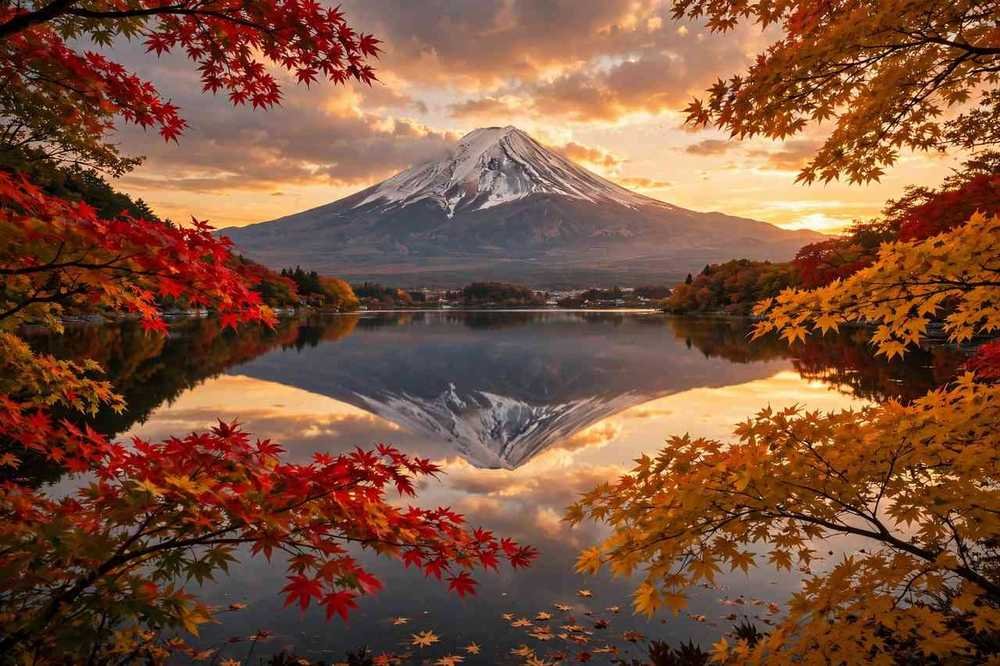
Mount Fuji framed by red maples is the single most iconic autumn photograph in Japan. Lake Kawaguchi peaks from late October to mid-November, and the Momiji Corridor — a maple-lined walkway with a festival and illuminations — is the headline spot.
6. Hakone, Kanagawa
Mountain scenery, hot springs, and foliage in one package. The Hakone highlands color in early to mid-November, and the combination of onsen steam, lake views, and red maples is hard to beat. The Hakone Open-Air Museum’s gardens are a sleeper pick.
7. Tokyo’s Ginkgo Avenues
Tokyo is a ginkgo city — its official tree. Meiji Jingu Gaien’s golden tunnel of ginkgo, Shinjuku Gyoen’s mixed maple and ginkgo gardens, and Rikugien’s illuminated evening maples are the essential stops. City parks peak from November 25 to December 10.
8. Kyoto’s Temples and Gardens
The crown jewel of momijigari. Kiyomizu-dera’s wooden stage above a sea of maples, Tofuku-ji’s valley of red, Arashiyama’s riverside color, and Eikando’s legendary maples draw visitors from around the world. Peak runs late November to early December; go early in the morning to beat the worst crowds.
9. Nara Park, Nara
Ancient temples, roaming deer, and golden canopies — Nara’s park is Kyoto’s quieter autumn sibling. Late November to early December, and the deer with autumn foliage backdrop photographs beautifully.
10. Miyajima, Hiroshima
The floating torii gate of Itsukushima Shrine with maple-covered Mount Misen behind it. Momijidani Park — literally “Maple Valley” — lives up to its name from late November. A superb day trip from Hiroshima or Osaka.
Kyoto’s Illuminated Temples: Night Viewing
Many temples and gardens hold evening light-ups during peak season, when maples are floodlit against the night sky. Kiyomizu-dera, Eikando, and Kodai-ji are the most famous. These are genuinely magical — and genuinely crowded. Lines can stretch for hours, and some venues cap entry. Buy tickets in advance where offered, arrive before the lighting starts, and treat it as a full evening rather than a quick stop.
What Is Momijigari and Why Does It Matter?
Momijigari literally means “red-leaf hunting” — the Japanese tradition of visiting scenic areas to view autumn foliage, parallel to hanami (cherry-blossom viewing) in spring. It is centuries old, rooted in Heian-period aristocratic outings, and today it is one of Japan’s biggest domestic travel seasons. Understanding momijigari explains the crowds, the festivals, the special sweets, and the illumination events: this is not just pretty trees, it is a cultural season with its own calendar and etiquette. Locals plan trips around it the way others plan around holidays.
When Should You Visit Japan for Fall Colors?
Match your travel window to the front — there is no single best week, only the best week for your destination:
| Your Travel Period | Best Regions to Target | Usually Too Early or Late |
|---|---|---|
| Mid-September – early October | Daisetsuzan and high Hokkaido | Tokyo, Kyoto, Osaka still green |
| October | Hokkaido, Tohoku, Nikko highlands, Japanese Alps | Central Tokyo and lowland Kyoto |
| Late October – mid-November | Nikko, Karuizawa, Fuji Five Lakes, Hakone | Hokkaido’s highest areas past peak |
| Mid-November – early December | Tokyo, Kyoto, Osaka, Nara, Hiroshima | High mountain routes closed or bare |
| Early – mid-December | Warm lowlands: parts of Tokyo, Kyoto, Kamakura | Most northern foliage finished |
Planning Your Momijigari Trip: 7 Practical Steps
- Pick your week from the forecast, then a region. Start with the JMC forecast dates above and choose one region — chasing the front across the country wastes travel days.
- Book accommodation early. Kyoto and Nikko hotels fill months ahead for peak weekends. Weekday stays are cheaper and calmer.
- Build in weather slack. Two or three buffer days around your key viewing stop protect against a rainy peak weekend.
- Check live foliage reports before you go. The official forecast is a planning signal; live trackers and webcams show what is actually turning.
- Plan transport passes. A JR Pass or regional pass covers the long hops (Tokyo–Kyoto, Tokyo–Nikko); local buses and ropeways handle the last mile to mountain viewpoints.
- Go early or stay late. Famous temples are calmest at opening time and during evening illuminations; midday is peak crowd.
- Pack for temperature swings. Mountain mornings in November can be near freezing while city afternoons stay mild — layers are essential.
Autumn Foliage Photography Tips
Planning your shots around the Japan autumn foliage 2026 forecast dates above gives you the best chance at peak color. These field-tested tips help you capture it well once you are there.
- Shoot backlit leaves. Morning or late-afternoon sun shining through maples makes the reds glow; overcast light works too, but avoid harsh midday sun.
- Include water. Lakes (Kawaguchi, Shikotsu, Towada) and temple ponds double the color with reflections.
- Go wide, then go close. A wide temple-in-foliage shot establishes the scene; a macro of a single backlit maple leaf is the detail shot that sells it.
- Night illuminations need a tripod. Handheld shots at light-ups blur; many venues allow small tripods early in the evening.
- Respect the gardens. Stay on paths, never shake branches or pick leaves — temple gardens are sacred spaces, not photo studios.
Crowds, Costs, and Booking Windows
Honesty first: peak momijigari in Kyoto is one of Japan’s busiest travel seasons. Hotel prices in Kyoto spike on late-November weekends, popular temples queue for entry, and the Shinkansen fills on Friday evenings. Mitigations that actually work: travel on weekdays, stay in nearby Osaka or Nara and day-trip into Kyoto, book the famous illuminations as early as tickets release, and consider second-tier spots (Tofuku-ji over Kiyomizu-dera at midday, or Hikone and Kurama for quieter Kyoto-area color). None of this ruins the trip — it just means the planning matters as much as the packing.
Frequently Asked Questions
When is the best time to see autumn foliage in Japan in 2026?
It depends on where you go. Hokkaido’s mountains peak from late September, Tohoku and Nikko from mid-October, the Fuji area and Hakone in early to mid-November, and Tokyo, Kyoto, and Osaka from late November into early December. The official 2026 forecast puts Tokyo at November 28 and Kyoto at December 11.
What is the difference between koyo and momijigari?
Koyo is the phenomenon — the changing of the leaves. Momijigari is the activity: “red-leaf hunting,” the tradition of traveling to view them. You go momijigari to see the koyo.
Is Kyoto or Tokyo better for autumn leaves?
Kyoto wins for temple gardens and sheer density of famous spots, but it is far more crowded. Tokyo wins for ginkgo avenues, easier logistics, and excellent day trips (Nikko, Hakone, Mt. Takao). First-timers with limited days often do better basing in Tokyo; repeat visitors tend to choose Kyoto.
How long does peak foliage last in one place?
About one to two weeks at peak color, though the broader coloring period can stretch over a month on mountain slopes. That is why checking live reports in the final week matters more than any forecast.
Do I need to book illuminations in advance?
For the most famous ones in Kyoto — yes, where advance tickets exist, buy them. Walk-up entry is possible at many venues but expect long waits on weekends. Arrive before the lights switch on for the shortest lines.
Conclusion
The Japan autumn foliage 2026 season rewards one thing above all: timing your trip to the koyo front instead of fighting it. Pick your week from the official forecast, commit to one region, book early, and leave slack for weather. Whether it is the alpine reds of Daisetsuzan, the Fuji-framed maples of Lake Kawaguchi, or the floodlit temples of Kyoto, the 2026 season offers nearly three months of color somewhere in the country. Plan around the dates in this guide, check the live reports before you fly, and Japan’s autumn will do the rest.
