


ChatGPT has emerged as one of the most transformative artificial intelligence products of the 21st century. Its influence stretches far beyond casual conversations. Today, the AI platform powers enterprise automation, content generation, customer support, software development, research assistance, and educational applications. Major organizations across finance, healthcare, technology, and media integrate ChatGPT into core operations, demonstrating its global impact on productivity and creativity.
The widespread adoption of ChatGPT has prompted a series of important questions. Who actually owns the platform? Does Microsoft control its direction? What role, if any, does Elon Musk still play? These questions are especially relevant given the multibillion-dollar investments, strategic partnerships, and the rapid commercialization of generative AI technology. Understanding ChatGPT’s ownership structure provides insight into its development, governance, and future trajectory.
This in-depth guide explores the legal and operational ownership of ChatGPT, OpenAI’s organizational structure, Microsoft’s strategic investment, Elon Musk’s historical involvement, and how the company has positioned itself as a global leader in artificial intelligence. Readers will gain a full understanding of the forces shaping ChatGPT’s growth, its governance model, and its broader impact on the technology industry.
Who Owns ChatGPT
OpenAI as the Sole Legal Owner
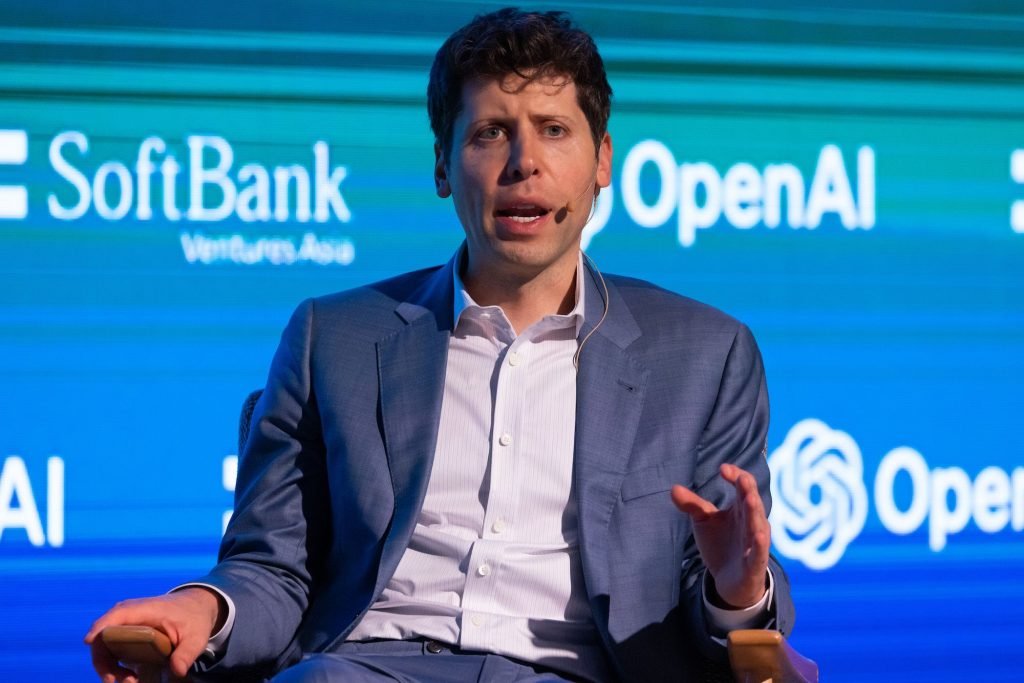
ChatGPT is fully owned and operated by OpenAI. It is not a standalone company, and ownership has never been shared with external corporations or individuals. OpenAI holds full intellectual property rights to ChatGPT, including the underlying GPT models, training data, algorithms, and user-facing platforms. This centralized ownership ensures consistency in governance, ethical oversight, and strategic direction.
While OpenAI collaborates with external partners for funding and infrastructure, ownership authority and operational control remain firmly within the organization. This structure allows OpenAI to determine ChatGPT’s roadmap, release schedules, and safety guidelines without external interference.
Founding Vision of OpenAI
It was founded in December 2015 with a mission to advance artificial general intelligence responsibly. The founders aimed to prevent monopolization of AI technologies by any single entity while ensuring that innovations in AI benefit society broadly. Early contributors included prominent technology and venture capital figures such as Sam Altman, Elon Musk, Greg Brockman, Ilya Sutskever, Peter Thiel, Reid Hoffman, Jessica Livingston, Wojciech Zaremba, and John Schulman.
The organization’s philosophy focused on transparency, collaboration, and safety. This approach influenced both the creation of ChatGPT and OpenAI’s overall governance framework. Even as the company transitioned to include a capped for-profit model, the founding mission continues to guide strategic decisions.
Sam Altman’s Role in Ownership and Leadership
Sam Altman serves as OpenAI’s CEO and is the central figure in ChatGPT’s global expansion. While not an owner in the traditional sense, Altman exercises significant influence over the platform’s strategic direction, partnerships, and public positioning. Under his leadership, OpenAI transitioned from a nonprofit research lab into a globally recognized AI technology platform while retaining control over product development and intellectual property.
Altman’s approach emphasizes responsible AI deployment, long-term safety considerations, and collaboration with governments and industry leaders. His guidance ensures that ChatGPT development aligns with the company’s original mission while scaling to meet global demand.
What Is OpenAI
OpenAI’s Evolution and Milestones
OpenAI began as a nonprofit research organization focused on advancing artificial intelligence for experimentation, gaming, and simulations. Its early work included reinforcement learning, robotics, and neural network research. In 2018, OpenAI released its first Generative Pre-Trained Transformer (GPT) model, showcasing the potential of AI to generate human-like text and understand complex language patterns.
The success of GPT led to the development of ChatGPT, which allowed interactive and user-friendly conversational experiences. Subsequent iterations—GPT-2, GPT-3, GPT-4, and GPT-5—refined the technology, improving contextual understanding, accuracy, and application scalability.
OpenAI Product Ecosystem
OpenAI’s offerings extend beyond ChatGPT to include:
- DALL·E: An AI model capable of generating images from textual prompts.
- Whisper: A multilingual speech recognition system that transcribes, identifies, and translates over 99 languages.
- Sora: An AI-powered video generation platform enabling users to create dynamic videos from textual inputs.
These products collectively expand OpenAI’s influence across text, audio, visual, and video AI applications, positioning the company as a multi-format generative AI leader.
The Capped For-Profit Model Explained
OpenAI operates under a hybrid structure, combining a nonprofit parent with a capped for-profit subsidiary. This model allows the company to raise large-scale investment while capping returns for investors, ensuring that mission-driven objectives remain central. Excess profits are reinvested into research, infrastructure, and safety initiatives rather than distributed disproportionately.
The capped for-profit structure enables OpenAI to attract billions in funding, maintain independence from public market pressures, and prioritize ethical AI deployment. This governance model directly impacts how ChatGPT evolves and scales globally.
Is OpenAI Publicly Traded
Private Company Status
OpenAI is privately held and not publicly traded. Individual investors cannot purchase shares on stock exchanges. Remaining private allows OpenAI to focus on long-term AI research and deployment rather than responding to quarterly shareholder demands.
This private status also provides flexibility to address ethical and safety considerations before releasing products to the public, a critical factor for technologies with societal impact.
Investment Access and Strategic Control
Investment in OpenAI is limited to large institutional partners, such as Microsoft and select venture firms. Retail investors cannot access shares, and outside influence over operational decisions is restricted. This exclusivity ensures that funding aligns with OpenAI’s strategic and ethical priorities, while operational control remains centralized.
Implications for ChatGPT
Because OpenAI is private, ChatGPT’s development is guided by long-term strategic priorities rather than short-term profitability. This enables:
- Incremental rollout of new features
- Careful evaluation of ethical and security implications
- Rapid adaptation to regulatory and technological changes
Ownership stability ensures the platform can scale responsibly while retaining oversight and control.
Who Is on OpenAI’s Board
Board Composition
OpenAI’s board includes experts from technology, finance, healthcare, law, and national security. Current members include:
- Bret Taylor (Chair)
- Adam D’Angelo
- Dr. Sue Desmond-Hellmann
- Dr. Zico Kolter
- Retired U.S. Army General Paul M. Nakasone
- Adebayo Ogunlesi
- Nicole Seligman
- Sam Altman
This multidisciplinary approach reflects the broad societal impact of AI technologies and ensures diverse perspectives in governance decisions.
Board Oversight Responsibilities
The board oversees strategic direction, ethical compliance, and executive accountability. While it does not manage day-to-day operations, it plays a crucial role in reviewing major decisions, evaluating risk, and maintaining alignment with OpenAI’s mission.
Leadership Stability
Board membership has evolved over time, including the departure of Larry Summers in late 2025. Despite changes, OpenAI maintains strategic continuity, and governance structures continue to safeguard independent decision-making. Stability reinforces confidence among investors, regulators, and industry partners.
Does Elon Musk Own ChatGPT
Early Contribution and Co-Founding Role
Elon Musk was a co-founder and initial financial supporter of OpenAI. His involvement reflected concerns about AI safety and monopolization. Musk’s vision aligned with the original nonprofit mission of fostering responsible AI development for public benefit.
Full Separation From OpenAI
In 2018, Musk left OpenAI’s board and terminated financial involvement due to conflicts with Tesla’s AI projects and strategic disagreements with leadership. He holds no ownership stake, voting power, or operational influence over OpenAI or ChatGPT.
Competing Ventures
Since leaving, Musk has pursued independent AI initiatives, including Grok, integrated with X. Despite publicly warning about risks of AI development, Musk has actively engaged in developing generative AI independently. These efforts demonstrate a complete separation from OpenAI’s ChatGPT.
Does Microsoft Own ChatGPT
Strategic Partnership Overview
Microsoft does not own ChatGPT or OpenAI. However, it is the largest investor and strategic partner. Investments include:
- $1 billion in 2019
- $10 billion in 2023
- Total investment approximately $13 billion
Microsoft’s stake is approximately 27% of OpenAI’s valuation, estimated at $135 billion as of 2025. Despite the significant investment, Microsoft does not control operations or product decisions.
Benefits for OpenAI and Microsoft
Microsoft provides cloud infrastructure through Azure, enabling OpenAI to train and deploy models efficiently. In return, Microsoft integrates AI into enterprise solutions, including Microsoft 365, Azure AI services, and Copilot.
This partnership enhances scale and adoption for both entities while preserving OpenAI’s operational independence.
Ownership vs Influence
Ownership and strategic influence are distinct. While Microsoft gains early access to AI innovations, all governance, intellectual property rights, and product development authority remain with OpenAI. The partnership is collaborative rather than controlling.
Impact of OpenAI Ownership Structure
Ethical AI Deployment
OpenAI’s private, capped for-profit structure ensures that ChatGPT is deployed with ethical considerations as a priority. Product releases undergo careful testing and evaluation to prevent misuse and mitigate risks, a flexibility public companies often lack.
Accelerating Innovation
By maintaining centralized ownership, OpenAI can pursue ambitious AI research without shareholder pressure. This allows continuous improvement of GPT models, integration of multimodal AI features, and experimentation in novel AI applications such as video generation and advanced reasoning.
Global Reach and Responsibility
OpenAI’s governance model allows global deployment while maintaining accountability. Policies, compliance measures, and strategic oversight ensure that ChatGPT serves educational, business, and consumer applications responsibly.
FAQs
Who legally owns ChatGPT?
ChatGPT is fully owned and operated by OpenAI.
Does Microsoft control OpenAI?
No, Microsoft is a minority investor and strategic partner.
Does Elon Musk still own ChatGPT?
No, Musk exited OpenAI in 2018 and holds no stake.
Can the public invest in OpenAI?
OpenAI is private and does not offer public shares.
What other AI products does OpenAI operate?
OpenAI develops ChatGPT, DALL·E, Whisper, and Sora.
How does OpenAI ensure ethical AI use?
Through governance, board oversight, internal policies, and safety-focused deployment strategies.
Conclusion
ChatGPT is owned and controlled entirely by OpenAI, a private, mission-driven artificial intelligence organization. Elon Musk, a co-founder, no longer holds any ownership or influence, while Microsoft functions as a strategic partner and minority investor without control. OpenAI’s hybrid capped for-profit structure allows for large-scale innovation, global deployment, and ethical oversight, positioning ChatGPT as a sustainable and responsible AI platform. Centralized governance ensures long-term growth, safety, and impact in the rapidly evolving AI landscape.
