


US shoots: The United States military shot down an Iranian drone on Tuesday after it “aggressively” approached the USS Abraham Lincoln, a nuclear-powered aircraft carrier operating in the Arabian Sea, according to US officials. The incident, which involved an advanced American F-35 fighter jet intercepting and destroying the unmanned aerial vehicle, marks another flashpoint in a period of heightened tensions between Washington and Tehran.
While no American personnel were injured and no US equipment was damaged, the shootdown underscores the increasingly volatile military environment in the Middle East. It also comes at a delicate diplomatic moment, as US and Iranian officials prepare for renewed nuclear talks aimed at easing years of hostility and preventing further escalation.
The episode highlights the razor-thin margin between deterrence and confrontation in a region where military assets from rival powers operate in close proximity, often amid unclear intentions and conflicting strategic objectives.
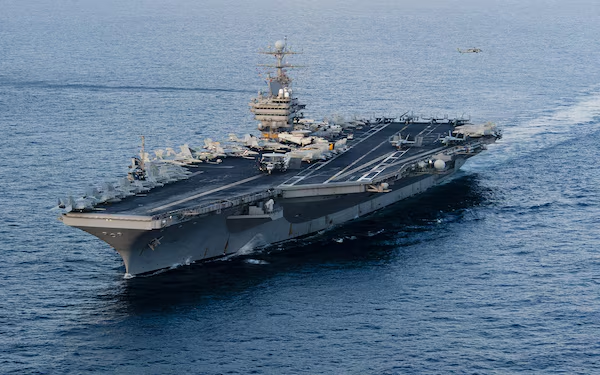
The Incident: What Happened Near the USS Abraham Lincoln
According to the US military’s Central Command (CENTCOM), the incident occurred when an Iranian Shahed-139 drone began flying toward the USS Abraham Lincoln carrier strike group while it was operating in international waters of the Arabian Sea.
US officials described the drone’s behavior as “aggressive” and said it approached the carrier “with unclear intent.” After assessing the situation, US commanders determined the drone posed a potential threat to the aircraft carrier and its crew.
An F-35C fighter jet launched from the USS Abraham Lincoln intercepted and shot down the drone in what the US military described as an act of self-defense.Navy Captain Tim Hawkins, a spokesperson for CENTCOM, said the decision to engage was made to protect US forces and ensure the safety of the carrier strike group.
“An F-35C fighter jet from Abraham Lincoln shot down the Iranian drone in self-defence and to protect the aircraft carrier and personnel on board,” Hawkins said.The US military emphasized that the drone was destroyed without incident and that no American service members were harmed.
The Drone: Iran’s Shahed-139
The drone involved in the incident was identified as an Iranian Shahed-139, part of a family of unmanned aerial vehicles developed and deployed by Iran over the past decade.
Capabilities and Role
While US officials did not release detailed technical assessments, the Shahed series is known for:
- Long-range reconnaissance capabilities
- Potential strike or surveillance missions
- Use in both regional conflicts and maritime monitoring
Iran has increasingly relied on drones as a cost-effective means of projecting power, gathering intelligence, and testing adversaries’ defenses. These systems allow Tehran to operate below the threshold of traditional military confrontation while still signaling resolve.
US military officials have previously warned that Iranian drones operating near US ships increase the risk of miscalculation, especially when intent is unclear and reaction times are short.
The USS Abraham Lincoln: A Floating Symbol of Power
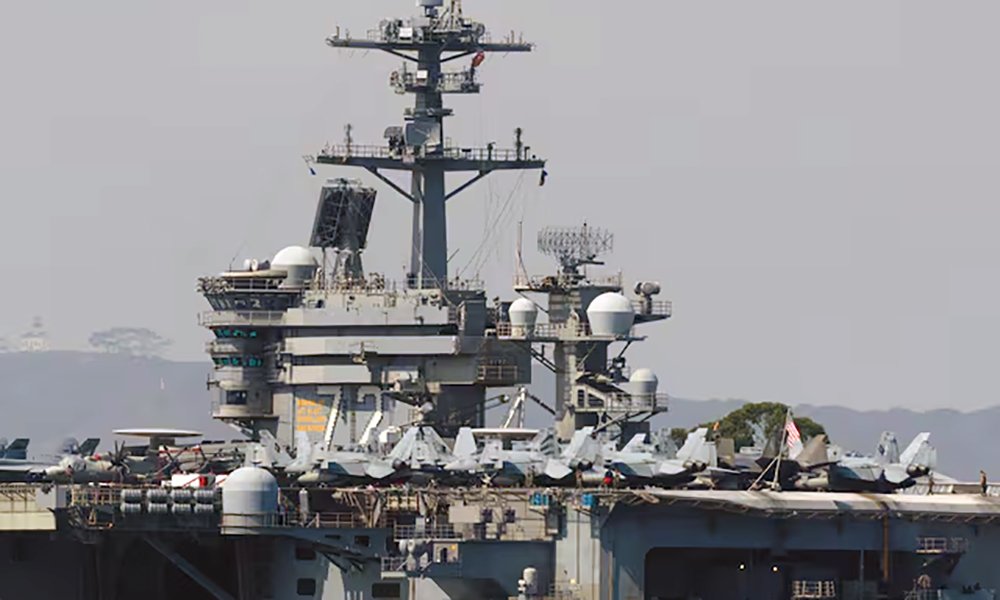
The USS Abraham Lincoln (CVN-72) is one of the US Navy’s Nimitz-class aircraft carriers and represents one of the most powerful military assets in the world.
Key Facts About the Carrier
- Class: Nimitz-class nuclear-powered aircraft carrier
- Length: Over 1,000 feet
- Crew: Approximately 5,000 sailors and aircrew
- Aircraft: F-35C Lightning II, F/A-18 Super Hornets, surveillance and support aircraft
Aircraft carriers like the Abraham Lincoln are designed to project power far from US shores and serve as mobile airbases capable of launching sustained combat operations.
In the Middle East, the presence of such a carrier is both a military asset and a political message — signaling US commitment to regional security and its readiness to respond to threats.
A Broader Military Buildup in the Middle East
The drone shootdown comes amid a visible US military buildup in the Middle East following recent unrest in Iran and rising tensions across the region.
Why US Forces Are Increasing Their Presence
According to US officials, the buildup is intended to:
- Deter potential Iranian aggression
- Protect commercial shipping lanes
- Reassure US allies in the Gulf
- Maintain freedom of navigation
The Abraham Lincoln carrier strike group is the most prominent component of this deployment, accompanied by guided-missile cruisers, destroyers, and support vessels.
US officials have stressed that these deployments are defensive in nature, but Tehran has repeatedly criticized them as provocative.
Political Context: Diplomacy and Warnings from Washington
The military incident occurred against the backdrop of renewed diplomatic efforts to revive talks over Iran’s nuclear program — efforts that have been intermittent and fragile for years.
Trump’s Warning
US President Donald Trump, who returned to office earlier this year, has taken a harder public line toward Iran while leaving the door open to negotiations.
Speaking recently about the growing US naval presence near Iran, Trump warned that:
“Bad things” would probably happen if a nuclear deal could not be reached.While Trump stopped short of authorizing military intervention during last month’s crackdown on anti-government demonstrations in Iran, he has since demanded significant nuclear concessions from Tehran.
At the same time, the administration has sought to pressure Iran diplomatically by moving US naval assets closer to its coastline.
Iran’s Internal Unrest and Regional Calculations
The current standoff cannot be separated from Iran’s internal political situation.
Recent Crackdown
Last month, Iranian authorities carried out a crackdown on anti-government protests, prompting international criticism and raising questions about the regime’s stability.
US officials have accused Tehran of attempting to divert attention from domestic unrest by adopting a more confrontational posture abroad.
Iranian leaders, for their part, have argued that foreign powers are exploiting internal challenges to undermine the Islamic Republic.
Signs of Diplomacy: Nuclear Talks Still Planned
Despite the drone incident, both Washington and Tehran signaled that diplomatic channels remain open.
US Position
The White House said talks between US and Iranian officials were still scheduled to take place later this week.
White House Press Secretary Karoline Leavitt confirmed that US envoy Steve Witkoff is expected to engage in discussions with Iranian representatives.
“He is set to have conversations with the Iranians later this week; those are still scheduled as of right now,” Leavitt said in an interview.Iranian Signals
Iran’s top security official, Ali Larijani, said arrangements for negotiations were underway, suggesting that both sides are seeking to prevent military incidents from derailing diplomatic efforts.
A Second Incident: Harassment in the Strait of Hormuz
CENTCOM also reported a separate incident occurring just hours after the drone shootdown, highlighting the broader pattern of maritime tension.
What Happened
In the Strait of Hormuz, one of the world’s most critical oil shipping routes, Iranian Islamic Revolutionary Guard Corps (IRGC) forces reportedly harassed a US-flagged merchant vessel, the M/V Stena Imperative.
According to the US military:
- Two IRGC boats approached the vessel at high speeds
- An Iranian Mohajer drone flew nearby
- The tanker was threatened with boarding and seizure
No seizure ultimately occurred, but US officials described the behavior as dangerous and destabilizing.
The Strait of Hormuz: A Strategic Chokepoint
The Strait of Hormuz is a narrow waterway through which roughly a fifth of the world’s oil supply passes. Any disruption there has immediate global economic consequences.
Iran has repeatedly threatened to restrict traffic through the strait in response to sanctions or military pressure, making incidents like this particularly concerning to global markets and US allies.
Military Risk and the Danger of Escalation
Analysts warn that the growing frequency of close encounters between US and Iranian forces increases the risk of miscalculation.
Why These Incidents Are Dangerous
- Drones and fast boats reduce reaction time
- Intent is often ambiguous
- Political pressure limits commanders’ flexibility
Even when both sides seek to avoid war, localized incidents can spiral rapidly if misinterpreted or mishandled.
International Reactions and Global Implications
While immediate reactions were muted, allies and observers are closely monitoring the situation.
Concerns Among Allies
- Gulf states worry about becoming battlegrounds
- European governments fear derailment of diplomacy
- Energy markets remain sensitive to Hormuz disruptions
The shootdown reinforces concerns that military and diplomatic tracks are running in parallel — and sometimes in conflict.
Read More: Iran weighs nuclear diplomacy with US, but gaps over missiles remain
FAQs
Why did the US shoot down the drone?
US officials said the drone approached the aircraft carrier aggressively and with unclear intent, posing a potential threat.
Was the drone armed?
The US did not confirm whether the drone was armed, but said its behavior justified defensive action.
Did Iran respond militarily?
There were no immediate reports of a military response, though Iran has criticized US naval deployments.
Are the US and Iran at war?
No. While tensions are high, both sides say they are still pursuing diplomacy.
Why is the Strait of Hormuz so important?
It is a critical route for global oil shipments, and disruptions there affect global energy prices.
Could this incident derail nuclear talks?
So far, both sides say talks will proceed, but such incidents add strain to negotiations.
Conclusion
The downing of an Iranian drone near the USS Abraham Lincoln is a stark reminder of how quickly tensions can flare in the Middle East, even as diplomats work behind the scenes to reduce them. For the United States, the incident reinforces its commitment to protecting its forces and maintaining freedom of navigation. For Iran, it highlights the risks of testing US defenses at a moment when political and economic pressures are already intense.
