


Escalating tensions between the world’s two largest nuclear powers the United States and Russia are intensifying at a dangerous moment. Only a few months remain before the New Strategic Arms Reduction Treaty (New START), the last surviving nuclear arms control agreement between the two countries, is set to expire. Its lapse could remove the final structural restraint preventing an unconstrained nuclear arms race. Russia and the US put nuclear testing back on the table.
Russia’s Nuclear Announcements: A Strategic Warning?
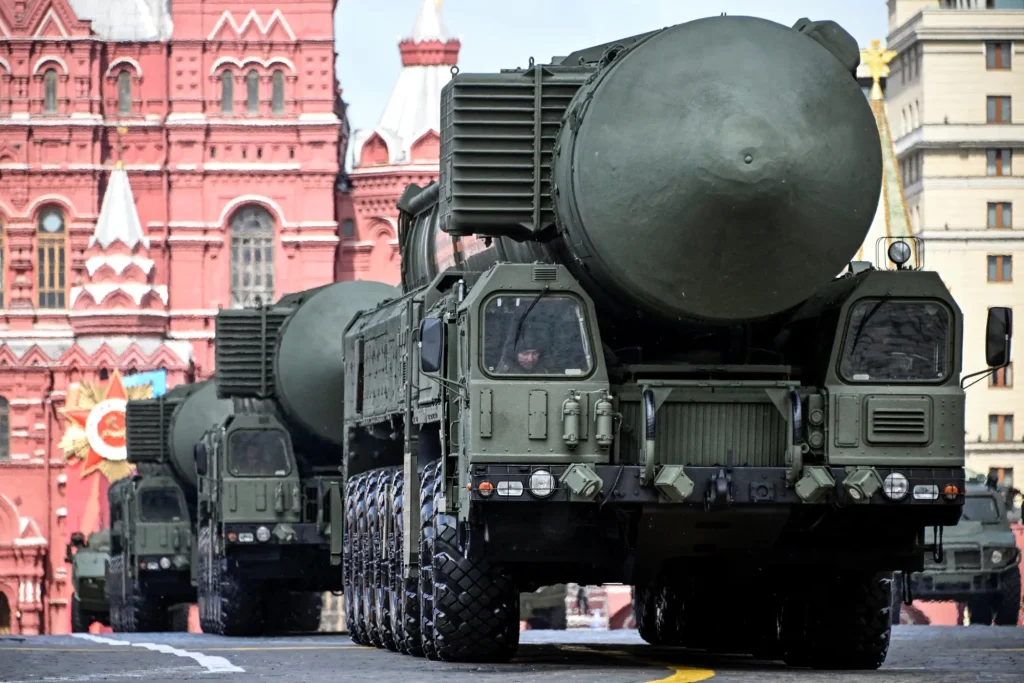
In early November, Russia claimed it had successfully tested two of its most controversial nuclear-capable systems the Burevestnik nuclear-powered cruise missile and the Poseidon underwater nuclear drone. This announcement comes at a critical time: New START is set to expire in February 2026, and without renewal, the world’s two largest nuclear arsenals may become fully unconstrained for the first time in decades.
New START currently caps the number of deployed strategic nuclear warheads and delivery systems, serving as a crucial stabilizing mechanism. Its expiration risks the collapse of transparency, predictability, and restraint between Washington and Moscow and raises fears of a renewed arms race.
These developments unfold in an era marked by weakened diplomacy, mistrust, and heightened geopolitical friction. Even a minimal level of restraint is now more critical than ever.
The Reality Behind Russia’s Tests
Western observers widely view Russia’s announcement as a display of rapid nuclear modernization and strategic assertiveness. Moscow insists that the new systems can evade detection and missile defenses, enhancing Russia’s retaliatory capabilities.
However, no independent verification supports these claims. Both systems have long featured in Russia’s weapons development pipeline and have suffered repeated setbacks. Many experts note that these modernized designs originate from Soviet-era concepts that never became operational due to fundamental engineering challenges.
Given this context, Russia’s claims likely serve as strategic signaling a deliberate attempt to project strength during a time of rising nuclear posturing.
The U.S. Reaction: Testing Threats and Confusion
Following Russia’s announcement, U.S. President Trump instructed the State Department to restart nuclear testing “on an equal basis” with other nations. The statement triggered significant confusion because no nuclear-armed state other than North Korea has conducted a nuclear explosive test since the 1990s.
The U.S. Department of Energy later clarified that any upcoming activities would consist of non-critical explosions not nuclear detonations. Congress has also introduced legislation to ensure no president can authorize a nuclear test unilaterally.
But the ambiguity has had real consequences. President Putin promptly ordered officials to develop plans for resuming Russian nuclear testing, citing uncertainty regarding U.S. intentions.
This cycle of unclear signaling and retaliatory rhetoric increases instability and undermines decades of efforts to reduce nuclear risks.
The Fragile Global Moratorium on Nuclear Testing
The current dispute threatens to break the three-decade-long moratorium on nuclear explosive testing. While renewed testing would offer limited value to the United States, countries like Russia and China with evolving systems and fewer historical tests might gain more.
However, the more dangerous trend is not the potential resumption of testing, but the weaponization of nuclear rhetoric. In an environment of mistrust, even ambiguous statements can erode confidence and undermine the fragile nuclear order.
The Uncertain Future of New START
New START cannot legally be extended again under its current terms. Although Russia suspended participation in 2023, both nations have so far adhered to the treaty’s key limits.
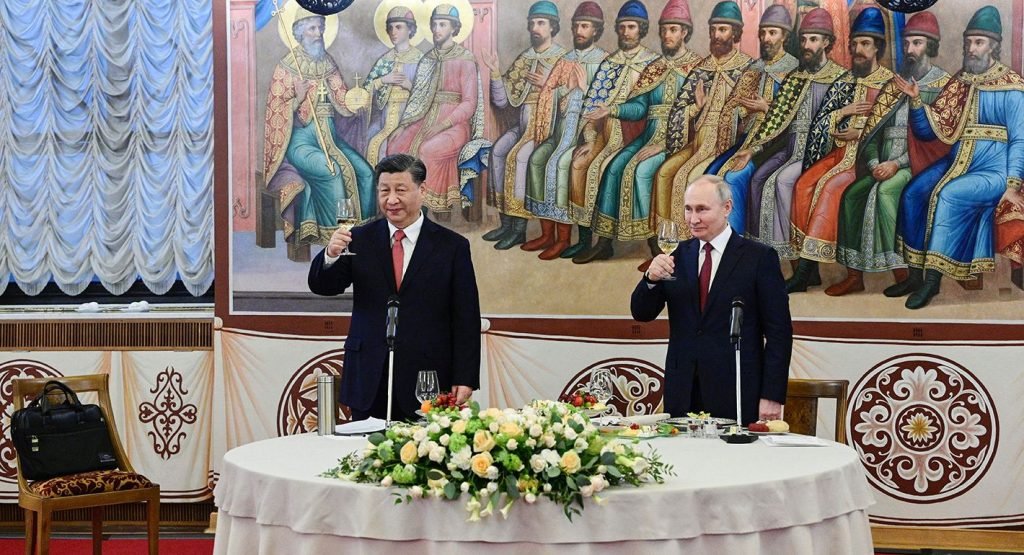
Russia has proposed a voluntary one-year extension in which both countries agree to continue observing the caps on deployed warheads and delivery systems. President Trump expressed tentative interest, but negotiations have stalled.
Importantly, Russia’s newly claimed systems if operational would still fall under New START limits.
The Trump administration previously advocated for trilateral nuclear negotiations involving China. However, pushing China into a New START extension would likely derail progress entirely, as China’s arsenal remains far smaller than those of the U.S. and Russia, giving it little incentive to accept restrictions.
If New START expires without any extension, several consequences may follow:
- The U.S. and Russia could expand their deployed nuclear arsenals without limits.
- Strategic stability would deteriorate.
- The Nuclear Non-Proliferation Treaty (NPT) would suffer a major credibility blow.
- Global concerns about nuclear competition would intensify.
Given current geopolitical tensions and reduced capacity for diplomacy, even a symbolic one-year extension is the most realistic path to prevent further deterioration.
Steps Toward Stabilization
A full-scale treaty overhaul is unrealistic today. But stabilizing the nuclear environment is both possible and necessary. Steps that can be taken immediately include:
A One-Year Voluntary Extension of New START
Even without formal legal renewal, both countries can mutually agree to continue observing treaty limits. This would:
- Maintain transparency
- Lower the risk of miscalculation
- Prevent sudden expansion of nuclear arsenals
- Signal that neither nation benefits from unconstrained competition
Reinforcing the Global Nuclear Testing Moratorium
The Comprehensive Test Ban Treaty (CTBT) still awaits ratification by key nuclear powers including the U.S. and Russia. Ahead of next year’s NPT Review Conference, all nuclear-armed states including China, India, Pakistan, the U.K., and France should reaffirm support for the moratorium.
Rebuilding U.S. Arms Control Infrastructure
Washington must restore professional capacity and fill long-vacant roles in arms control diplomacy. This includes articulating a coherent nuclear policy and rebuilding institutions weakened by funding cuts and staff shortages.
Reducing Dangerous Nuclear Rhetoric
Stability depends on disciplined communication. Nuclear threats whether explicit or ambiguous increase the risk of misinterpretation and escalation.
The global nuclear order is weakened but not destroyed. Maintaining it requires patience, discipline, and an understanding that no state benefits from the collapse of restraint.
FAQs
What is New START and why is it important?
New START is a bilateral treaty between the U.S. and Russia that limits deployed strategic nuclear warheads and delivery systems. It provides transparency, inspections, and predictability all crucial for preventing an arms race.
Can New START be legally extended again?
No. Under its current terms, it cannot be extended further. However, both nations can voluntarily agree to keep observing its limits for a year without formal legal action.
Why are Russia’s recent weapons tests controversial?
Russia claims to have tested nuclear-powered and nuclear-capable systems like Burevestnik and Poseidon. But independent verification is lacking, and the systems have a history of technical challenges. Many believe the announcement is strategic posturing.
Is the U.S. planning to resume nuclear testing?
No nuclear explosive tests are planned. Recent statements created confusion, but U.S. officials have clarified that upcoming activities involve non-critical, non-nuclear experiments.
Could a new nuclear arms race actually happen?
Yes. Without treaties like New START, both the U.S. and Russia could expand their nuclear forces. The absence of transparency increases mistrust, raising the risk of miscalculations.
What role does China play in these negotiations?
While China is expanding its arsenal, it remains much smaller than that of the U.S. or Russia. Forcing China into New START-related negotiations would likely stall progress rather than contribute to meaningful arms control.
Conclusion
The global nuclear order stands at a crossroads. With New START set to expire and both the U.S. and Russia engaging in increasingly provocative rhetoric, maintaining restraint is more urgent than ever. A voluntary extension of New START, renewed commitment to the nuclear testing moratorium, and the rebuilding of diplomatic capacity are essential first steps.
