


In the ever volatile world of high stakes investing, few names carry as much weight as Michael Burry. The enigmatic hedge fund manager, immortalized in the 2015 film The Big Short for his prescient bet against the U.S. housing market in 2008, has once again stepped into the spotlight. This time, his focus is Tesla, the electric vehicle giant led by Elon Musk.
In a sharply worded Substack post published in early December 2025, Burry labeled Tesla’s market capitalization as “ridiculously overvalued,” warning that shareholders face continued dilution stemming from Musk’s controversial $1 trillion compensation package. The critique aligns with Burry’s broader assault on high flying tech stocks and the artificial intelligence boom, which he views as a speculative bubble.
The Origins of Burry’s Contrarian Reputation
Michael Burry rose to fame in the mid 2000s as the founder of Scion Capital, where he identified deep structural weaknesses within the subprime mortgage market. By shorting collateralized debt obligations using credit default swaps, Burry positioned himself against mainstream optimism long before the housing market collapsed.
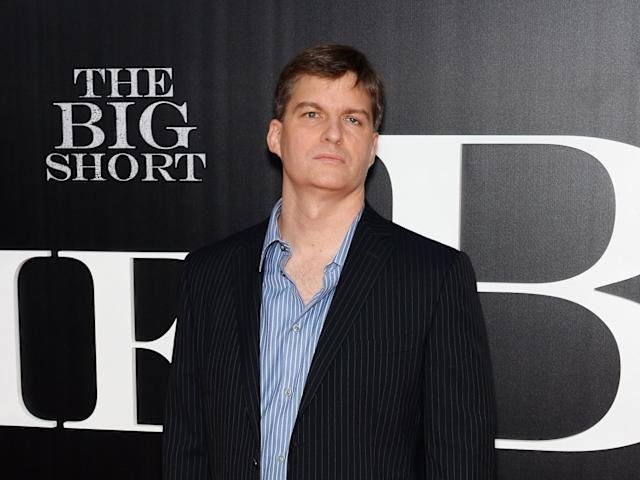
His strategy generated billions in profits and cemented his reputation as a fearless contrarian. Portrayed by Christian Bale in The Big Short, Burry became symbolic of investors willing to challenge consensus thinking. Following the 2008 crisis, he closed Scion Capital and retreated from public attention, managing his own funds and surfacing only occasionally with bold market predictions.
A Shift Toward Public Commentary in 2025
Burry’s late 2025 Substack post represents a notable shift in his approach. After deregistering Scion Asset Management in November 2025, he appears to be embracing a more public facing role as a market commentator.
This transition comes alongside the disclosure of massive short positions against Nvidia, with a notional value near $187 million, and Palantir, totaling approximately $912 million. These positions highlight Burry’s skepticism toward AI-driven valuations. Public disagreements with executives, including Palantir CEO Alex Karp, underscore how contentious Burry’s stance has become.
Tesla as the Centerpiece of Burry’s Critique
Turning his attention directly to Tesla, Burry delivered an uncompromising assessment. He argued that the company’s market capitalization has been detached from fundamentals for an extended period. According to his estimates, Tesla dilutes shareholders by roughly 3.6% annually through stock based compensation alone.
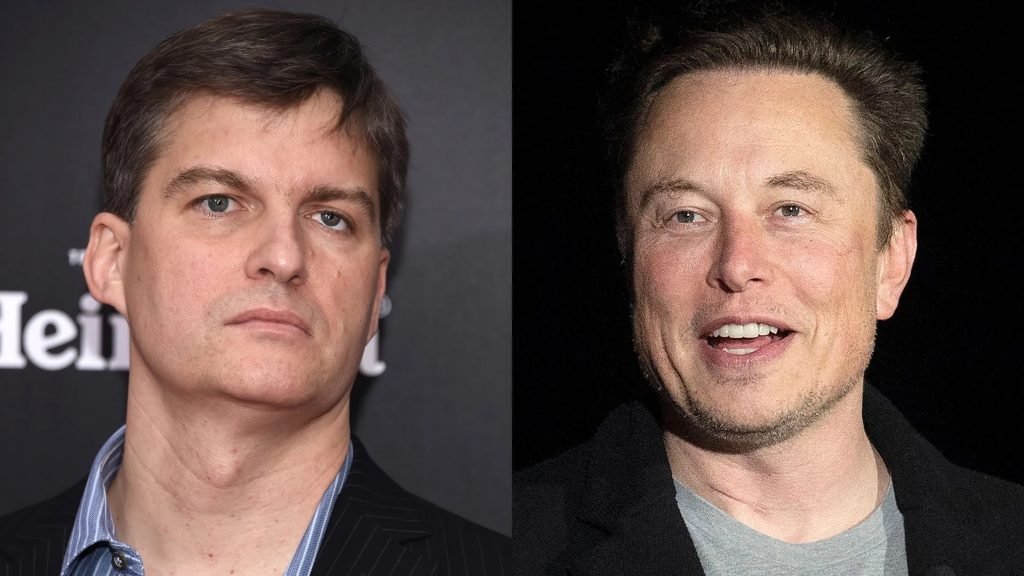
Burry contends that Elon Musk’s $1 trillion compensation package, approved in June 2025, will significantly accelerate this dilution. The package ties compensation to aggressive market capitalization targets up to $8.5 trillion, potentially triggering massive share issuance if those milestones are achieved.
The “Elon Cult” and Shifting Narratives
Beyond financial metrics, Burry criticized what he described as the “Elon cult.” He accused loyal investors of constantly shifting narratives to justify Tesla’s valuation from electric vehicles to full self driving technology, and now to humanoid robotics.
In Burry’s view, each narrative fades when competitive pressures intensify, only to be replaced by the next bold vision. This cycle, he argues, masks structural weaknesses and inflates expectations beyond what Tesla’s current fundamentals can support.
A History of Skepticism Toward Tesla
Burry’s doubts about Tesla are not new. In 2021, he disclosed a $530 million short position against Tesla shares, which he later closed, describing it as a short term trade.
By 2025, Tesla’s valuation metrics had become even more stretched. Shares trade at more than 250 times earnings, far exceeding legacy automakers such as Ford and General Motors. Investors justify this premium by betting on Tesla’s expansion into software, energy storage, robotaxis, and robotics, but Burry sees these expectations as excessive.
Tesla’s 2025 Performance: Growth Amid Pressure
Tesla’s stock performance in 2025 presents a mixed picture. As of December 2, shares closed at $429.24, remaining near record highs despite increased volatility. Initial declines linked to regulatory uncertainty were followed by renewed optimism around the robotaxi announcement.
Operational metrics, however, reveal mounting pressure. Q3 2025 deliveries rose 7.4% year over year, yet full year global sales are projected to decline by 7%. Revenue fell 11% year over year in Q3, and profit margins tightened. Tesla’s U.S. EV market share dropped to 41%, down sharply from its early 2022 peak.
Intensifying Competition in the EV Market
Competition represents one of Tesla’s biggest challenges. Legacy automakers such as Ford and General Motors have expanded affordable EV offerings, while Chinese manufacturers like BYD are rapidly scaling production and undercutting prices.
Although Tesla remains a dominant brand, its once commanding lead is shrinking. Aggressive pricing strategies by competitors are putting pressure on margins and forcing Tesla to defend market share rather than expand it effortlessly.
Elon Musk’s Vision for Autonomy and Robotics
Elon Musk continues to dismiss short sellers, maintaining that Tesla is on the path to becoming the world’s most valuable company. Central to this vision are autonomy and robotics.
Tesla’s robotaxi initiative, unveiled in October 2025, aims to offer unsupervised ride hailing services by 2026. If successful, this could unlock high margin recurring revenue. Meanwhile, the Optimus humanoid robot is positioned as a solution to labor shortages, with Musk envisioning mass production beginning in 2026.
Challenges Facing Full Self Driving Technology
Despite bold claims, Tesla’s full self driving ambitions remain controversial. While the FSD software has accumulated vast amounts of real world data, regulatory scrutiny and safety concerns persist following multiple incidents.
Competitors such as Alphabet’s Waymo already operate commercial robotaxi services in several cities, raising questions about Tesla’s ability to catch up quickly. Analysts argue that regulatory approvals and technical hurdles could delay meaningful revenue from autonomy for years.
Optimus and the Cost of Ambition
The Optimus robot represents Tesla’s most speculative bet. Although prototypes have improved and now perform basic tasks, large scale deployment remains uncertain.
Critics point to the financial implications of funding such ambitious projects. Burry emphasizes that heavy reliance on stock based compensation and capital intensive research leads to shareholder dilution. Over the past decade, Tesla’s share count has already increased by more than 20%, eroding per share value.
Wider Market Warnings and Allied Skeptics
Burry’s Tesla critique aligns with warnings from other prominent investors. Jim Chanos previously described Tesla as overvalued amid slowing EV demand. Analysts frequently cite Tesla’s near 300x price to earnings ratio as evidence of excessive speculation.
Burry’s broader bearish outlook includes short positions against Bitcoin, which he famously labeled the “tulip bulb of our time.” His stance suggests concern about systemic risk across speculative asset classes.
The Psychological Dimension of Market Bubbles
Beyond balance sheets, Burry focuses on investor psychology. He argues that hype driven cycles distort rational analysis, allowing narratives to overpower fundamentals.
In Tesla’s case, he believes each new innovation story delays a reckoning with slowing growth, rising competition, and shareholder dilution. This behavioral pattern, in his view, mirrors past bubbles where optimism endured until reality intervened.
What Tesla’s Valuation Implies for the Future
Tesla’s $1.43 trillion market capitalization implies extraordinary earnings growth. To justify this valuation at a more moderate multiple, profits would need to increase several times over.
Supporters argue that Tesla is a technology ecosystem rather than a traditional automaker. Skeptics counter that history is filled with companies whose visions exceeded execution, resulting in painful corrections.
A Market Debate Far From Over
As 2025 comes to an end, Tesla stands at a crossroads. Upcoming quarters will test delivery growth, regulatory progress for FSD, and real world applications of Optimus robots.
Elon Musk’s track record of defying expectations clashes with Michael Burry’s legacy of identifying market cracks early. Whether Burry’s warning proves prophetic or premature, the debate over Tesla’s true value remains one of the defining investment discussions of the modern tech era.
FAQ’s
Who is Michael Burry?
Michael Burry is a hedge fund manager famous for predicting the 2008 financial crisis by betting against the housing market, as depicted in the film The Big Short.
Why does Burry think Tesla is overvalued?
Burry argues that Tesla’s market cap is detached from fundamentals, with high dilution from stock compensation and Musk’s pay package exacerbating the issue.
What is Elon Musk’s $1 trillion pay package?
Approved in 2025, it’s a performance based plan tying compensation to market cap milestones up to $8.5 trillion, potentially leading to significant share dilution.
Has Burry shorted Tesla before?
Yes, in 2021 he bet against $530 million in Tesla shares but closed the position shortly after, calling it “just a trade.”
What other companies has Burry bet against recently?
Burry has disclosed large put options against Nvidia and Palantir, criticizing the AI boom as a bubble.
How has Tesla’s stock performed in 2025?
Shares experienced volatility, with an 11% rebound after an early dip, closing around $429 in early December amid robotaxi excitement.
What is Tesla’s U.S. EV market share in 2025?
Tesla holds about 41%, down from higher levels due to increased competition from GM, Ford, and Chinese brands.
Who are Tesla’s main competitors in autonomous driving and robotics?
In autonomy: Waymo and Cruise. In robotics: Unitree and Boston Dynamics.
Why does Burry criticize the ‘Elon cult’?
He accuses Musk’s fans of blindly shifting focus from EVs to autonomy to robots whenever competition arises.
What could justify Tesla’s high valuation?
Success in robotaxis, Optimus robots, and energy storage could unlock massive revenue, but these remain unproven and face significant hurdles.
Conclusion
Michael Burry has thrown down the gauntlet again, declaring Tesla’s trillion dollar valuation a house of cards built on hype, dilution, and shifting narratives. Yet Elon Musk has spent two decades turning “overvalued” into “undeniably dominant,” defying bears with relentless execution. The decisive battleground is now 2026–2027.
