


December 2025, one of the world’s most recognizable brands found itself at the center of an unexpected controversy, not over a new menu item, a pricing change, or a promotional deal, but over a Christmas advertisement so unusual and unsettling that it prompted widespread criticism and forced McDonald’s to take it down entirely. What should have been a festive promotional push instead became a viral case study in how not to leverage artificial intelligence in advertising. The ad’s removal highlighted deep tensions between creativity, technology, and cultural expectations around advertising, especially during the holiday season.
This article explores the origins of the ad, why it was perceived as creepy, the nature of the public backlash, responses from McDonald’s and the ad’s creators, broader conversations about AI in advertising, and what this incident means for the future of brand marketing. By the end, you’ll understand not only what happened and why, but also how this spectacle sheds light on consumer expectations, corporate responsibility, and the evolving role of technology in creative industries.
The Ad That Nobody Wanted to See
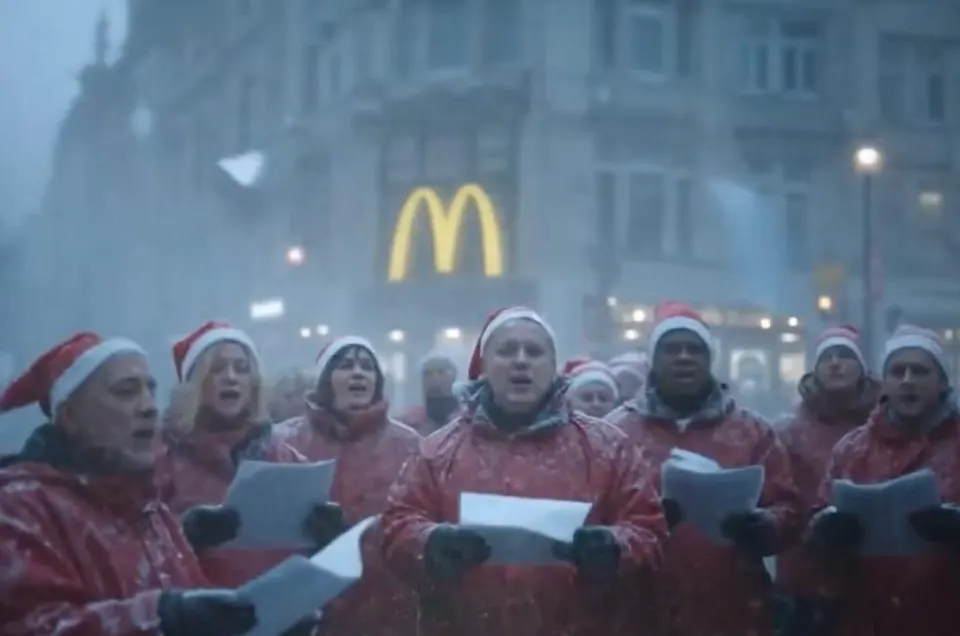
On December 6, 2025, McDonald’s Netherlands quietly released a 45‑second Christmas commercial on its YouTube channel. The catch? It was entirely generated using artificial intelligence and featured a bizarre, unsettling montage of holiday scenes that appeared more nightmarish than festive.
Instead of depicting warm family gatherings, joyful traditions, and cozy winter memories, the ad presented a chaotic series of loosely connected vignettes that many viewers described as creepy, soulless, and emotionally off‑putting. People struggled with holiday tasks, Santa got caught in a traffic jam, gifts fell awkwardly, and the AI-generated visual style produced strangely distorted figures that did not resemble real human beings.
Adding to the discomfort was the soundtrack. The ad used a distorted version of the classic Christmas song “It’s the Most Wonderful Time of the Year,” but with altered lyrics calling it “the most terrible time of the year.” The commercial concluded with the suggestion that people should “hide out in McDonald’s until January’s here,” presenting the fast‑food restaurant as a refuge from holiday stress.
Immediate Backlash: Creepy, Soulless, Too Realistic?
Almost immediately after the release, viewers reacted strongly and negatively. Comments poured in across social media platforms, describing the commercial as:
- “Creepy and unsettling.”
- “Soulless and inauthentic.”
- “Depressing and awkward.”
- “More nightmare fuel than holiday cheer”
Some cultural commentators joked that the only thing more real than the visuals was the burgers, claiming to be “as real as their hamburgers,” sarcastically referencing the ad’s uncanny valley style and McDonald’s food branding.
Users said the visuals looked glitchy and unfinished, and that the tone was counterproductive to what a Christmas advert should do: evoke warmth, nostalgia, generosity, and holiday spirit. Instead, the ad emphasized holiday chaos, frustration, and discomfort, hardly the feelings people associate with joyful celebrations.
What McDonald’s Said?
As the backlash intensified, McDonald’s took swift action. Within a few days of posting the ad, the company first disabled comments on YouTube and thenmade the commercial private, effectively pulling it offline. McDonald’s Netherlands issued a statement acknowledging the situation, saying the intent behind the ad was to reflect the stressful moments that can occur during the holidays, but that the company recognized many people view the season as “the most wonderful time of the year.”
In its communication, McDonald’s said the ad’s removal was a learning experience as it explores the “effective use of AI.” The company emphasized its commitment to creating positive holiday experiences for customers, indicating the negative public reaction made it clear the message had misfired.

The Creators’ Defense (and Missteps)
Behind the ad stood TBWA\Neboko, a Dutch advertising agency, and The Sweetshop, a production company with an AI‑focused division known as The Gardening Club. Once the criticism escalated, The Sweetshop’s CEO, Melanie Bridge, defended the creative process, not the final product.
Bridge stated that the production involved weeks of intensive work, with a team spending significant hours guiding the generative AI, refining prompts, and shaping the footage. She stressed that it wasn’t a simple “AI trick,” but a labor‑intensive project meant to combine technology and creative craft. According to one report, she emphasized that “AI didn’t make this film, we did.”
However, many viewers saw this defense as tone‑deaf. Critics pointed out that the entire point of using AI was supposed to improve efficiency or creativity, yet the result was widely mocked and removed within days. Social media users took aim at the idea that a rushed AI process, no matter how many hours were spent, could produce anything meaningful or emotionally resonant for audiences.

Why the Ad Struck a Nerve
So why did this particular ad generate such a backlash? Several factors contributed:
Uncanny Valley and Visual Oddities
Generative AI still struggles to be consistent in human figures, facial features, and believable body movement. Long sequences often produce artifacts or distortions that look unsettling rather than artistic. In a Christmas ad, this created an eerie effect rather than a heartwarming one.
Negative Messaging
Christmas ads typically focus on joy — family, giving, warmth, nostalgia. By portraying Christmas as “terrible” and suggesting people flee to a fast‑food restaurant, the ad contradicted deeply held cultural expectations about the season.
Technological Backlash
Many people are already skeptical or critical of the increasing use of AI in creative fields, including advertising, art, and entertainment. When a beloved global brand leans heavily on AI, it can be perceived as eroding authenticity and replacing human artistry with algorithmic output.
Poor Emotional Resonance
Viewers said the ad felt emotionally flat and lacked the human warmth needed to make them care about McDonald’s as a comforting holiday destination. Instead, it felt like corporate cynicism masquerading as holiday humor.
Read More: Do You Know What Christmas Tree You’re Getting This Year?
Broader Implications for AI in Advertising
This incident sparked a larger conversation about the role of AI in commercial creativity. While generative tools have opened new possibilities for rapid ideation and low‑cost production, they also raise questions about:
- Authenticity: Can AI convey genuine emotion or cultural meaning?
- Creative Labor: Does using AI devalue human artists, actors, and storytellers?
- Consumer Expectations: Are audiences ready to accept AI‑generated content from major brands?
- Brand Reputation: What risks do companies take when experimenting publicly with new technology?
McDonald’s wasn’t the only brand exploring AI holiday content. Other major companies, including Coca‑Cola, released AI‑generated ads in recent years and faced related criticism, though not always as intensely. This suggests a crossroads for corporate marketing: technology can enhance creativity, but misapplication can backfire.

Public Reaction: Humor, Outrage, and Memes
Across platforms like X (formerly Twitter), Reddit, and Instagram, netizens responded with a blend of humor, ridicule, and criticism. Memes comparing the ad to horror scenes, comments mocking the visuals, and jokes about McDonald’s burgers being more real than the human figures in the ad circulated widely. The phrase “as real as their hamburgers” became a sarcastic shorthand for how hyper‑artificial the commercial felt.
Even beyond humor, many commenters expressed genuine concern about corporate reliance on AI at the expense of human creativity. Some questioned the ethics of replacing actors, directors, and set designers with generative tools, while others argued that innovation inevitably leads to missteps as industries adapt to new technology.
Lessons for Brands and Creative Teams
What should marketing and creative teams learn from McDonald’s Christmas ad fiasco?
- Understand Audience Expectations: Holiday campaigns require emotional intelligence and cultural sensitivity. Even experimental ideas must respect the emotional context of the season.
- Balance Innovation with Tradition: AI can be a powerful tool, but pairing it with human judgment and artistic vision is essential.
- Test and Iterate: Soft launches or controlled focus groups might have revealed the ad’s weaknesses before public release.
- Transparent Messaging: When using AI, honesty about its role without boasting about technical effort may build trust.
Ultimately, this episode reinforces that technology alone doesn’t guarantee effective communication. Creativity still needs human empathy, storytelling skills, and cultural insight.
Read More: Who Owns ChatGPT and OpenAI?
FAQs
Why did McDonald’s pull the Christmas ad?
McDonald’s Netherlands removed the AI‑generated Christmas commercial after widespread criticism from viewers who found it creepy, poorly made, and inconsistent with holiday messaging.
What was so unsettling about the ad?
The ad’s use of generative AI led to visuals that looked distorted or uncanny, a negative portrayal of holiday stress, and an overall emotional tone that many found depressing rather than festive.
Did McDonald’s defend the ad?
Yes. The production company and ad creators defended the effort, saying the project involved extensive work and human guidance, but these arguments did little to quell criticism.
Are other brands facing similar issues?
Yes. Other major brands, like Coca‑Cola, have experimented with AI in holiday advertising and faced mixed reactions, sparking broader debates about AI’s role in creative industries.
Does this mean AI is bad for advertising?
Not necessarily. AI can be a helpful tool, but this incident shows it must be used thoughtfully and in ways that respect audience expectations and emotional context.
Conclusion
The McDonald’s “creepy Christmas ad” episode serves as a cautionary tale at the intersection of technology, creativity, and culture. What began as an ambitious attempt to experiment with AI in advertising turned into a viral embarrassment for one of the world’s biggest brands. The backlash highlighted deep expectations people have for holiday marketing warmth, tradition, and emotional resonance, and how easily those can be undermined by content that feels artificial or tone‑deaf.
