


Pakistan’s military leadership entered a historic phase as Field Marshal Asim Munir delivered his first address as the country’s inaugural Chief of Defence Forces (CDF). Speaking at General Headquarters in Rawalpindi, the Chief of the Army Staff outlined a decisive shift toward institutionalised tri-services integration aimed at strengthening national defence readiness.
The establishment of the CDF Headquarters marks the most significant transformation of Pakistan’s military command structure in decades. Designed to enhance coordination among the army, navy, and air force, the new framework reflects changing security realities shaped by technological advancement and multi-domain conflict.
Field Marshal Munir’s address positioned Pakistan’s armed forces for future warfare, regional deterrence, and strategic cohesion. Emphasis on unity, modernisation, and constitutional reform underscored the depth of change embedded in the new defence architecture.
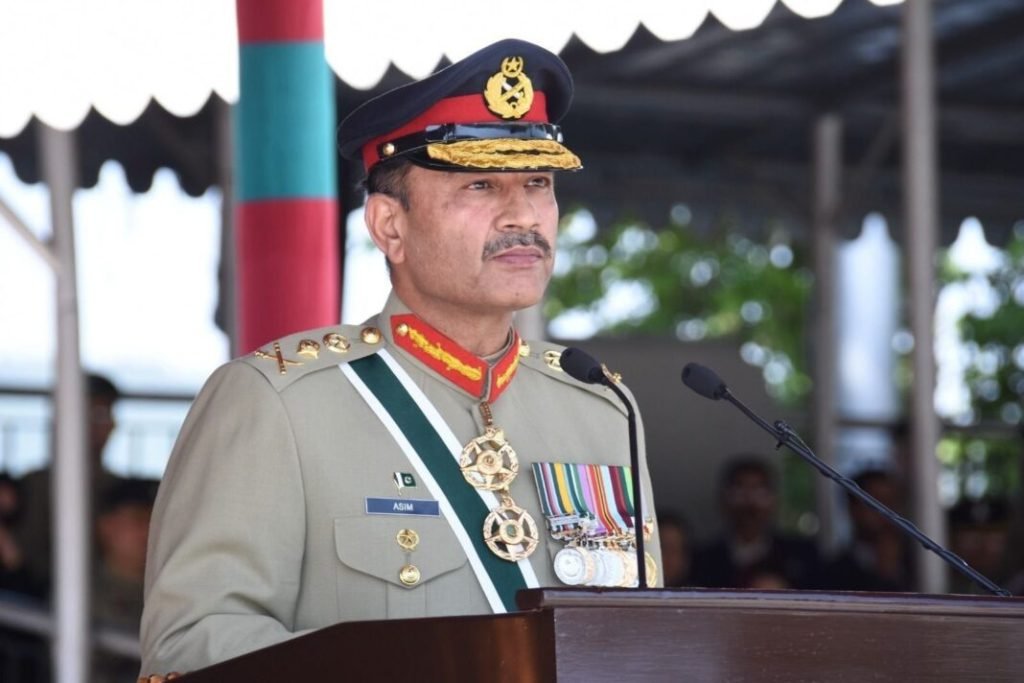
Establishment of the Chief of Defence Forces Headquarters
A Historic Shift in Military Command
The CDF Headquarters has been described as a milestone in Pakistan’s defence evolution. Field Marshal Munir characterised the institution as a necessary response to contemporary security challenges requiring integrated operational decision-making across services.
Centralised command under the CDF allows faster coordination during crises while maintaining each service’s operational effectiveness. This structure replaces fragmented command layers with a unified strategic vision.
The reform represents continuity with global military models where joint command structures dominate modern defence planning.
Purpose Behind Tri-Services Integration
Tri-services integration ensures seamless coordination between land, sea, and air operations. Field Marshal Munir highlighted that warfare now demands synchronised planning rather than independent service-level responses.
Joint intelligence, logistics, and operational planning enhance battlefield efficiency. Unified command also minimises duplication of resources while strengthening real-time response capability.
Such coordination improves deterrence by presenting adversaries with cohesive and decisive defence readiness.
Retaining Organisational Autonomy
Despite integration, each service retains its internal autonomy and organisational identity. The CDF clarified that readiness, training, and service-specific doctrines remain intact.
Operational individuality strengthens effectiveness while strategic coordination occurs at the Defence Forces Headquarters level. This balance ensures unity without dilution of institutional expertise.
Autonomy within integration forms the foundation of sustainable joint command execution.
Modern Warfare and Emerging Domains
Expanding Beyond Conventional Battlefields
Field Marshal Munir emphasised that warfare has expanded well beyond traditional kinetic operations. Cyberspace, information warfare, and electronic dominance now shape conflict outcomes.
Emerging domains require continuous adaptation of doctrine, training, and command structures. Armed forces unable to integrate these dimensions face strategic vulnerability.
Pakistan’s defence planning aims to synchronise traditional combat power with non-kinetic capabilities.
Technology-Driven Operational Priorities
Key technological domains highlighted in the address included:
- Cyberspace operations and digital defence architecture
- Electromagnetic spectrum and electronic warfare control
- Artificial intelligence for intelligence and battlefield analytics
- Quantum computing for secure communications and encryption
Strategic investment in these sectors strengthens decision superiority. Integration ensures all services benefit from shared technological capability.
Modern warfare rewards adaptability rather than numerical superiority.
Multi-Domain Warfare Readiness
Multi-domain operations merge land, air, sea, cyber, and space theatres into a unified engagement concept. Field Marshal Munir described recent operations as practical demonstrations of such warfare.
Joint planning enhances coordination across operational levels. Real-time information flow ensures precision and rapid force deployment.
This approach prepares Pakistan’s military for complex future conflicts.
Lessons from Recent Conflict Experience
Marka-i-Haq as a Strategic Benchmark
Operations conducted during the brief conflict with India in May were cited as a model for future warfare. Field Marshal Munir labelled the campaign a textbook case study in integrated defence execution.
Inter-service coordination ensured situational dominance. Limited conflict escalation highlighted effective deterrence without strategic overreach.
These operations reinforced confidence in joint operational doctrine.
Professionalism of Armed Forces
The CDF commended the professionalism, discipline, and resolve displayed by Pakistan’s armed forces during the conflict. Each service demonstrated operational efficiency within a unified command vision.
Coordination under high-pressure conditions showcased institutional maturity. The successful outcome validated long-term investment in joint training frameworks.
Professional execution strengthens national deterrence credibility.
National Unity and Sacrifice
Recognition was extended to the Pakistani nation for unity and resolve during Marka-i-Haq. Field Marshal Munir paid homage to martyrs who sacrificed their lives in service of national defence.
Civil-military cohesion amplifies strategic resilience. Collective resolve remains a critical component of national security.
Such unity reinforces defence deterrence beyond battlefield metrics.
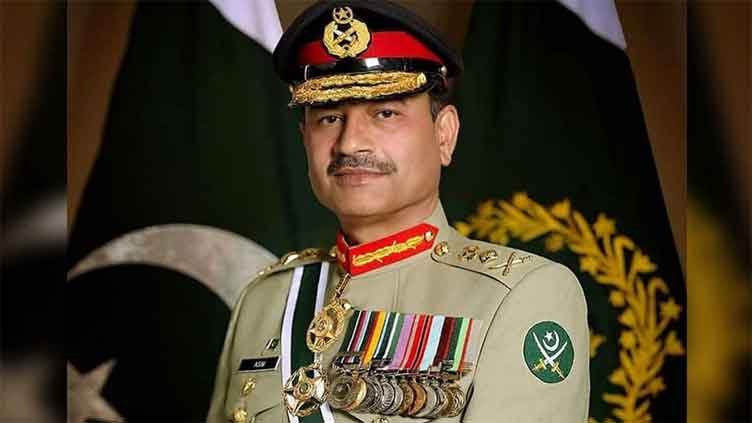
Constitutional and Legal Framework Reforms
27th Constitutional Amendment Explained
The creation of the CDF role followed amendments to Article 243 of the Constitution under the 27th Amendment. Authority to appoint the Chief of the Army Staff serving concurrently as CDF now rests with the president on the prime minister’s advice.
This reform consolidates operational, administrative, and strategic authority under one office. The amendment modernises command efficiency.
Structural clarity strengthens institutional accountability.
Abolition of CJCSC Office
The chairman joint chiefs of staff committee position was abolished as part of the restructuring. Responsibilities for tri-service integration now fall exclusively under the CDF framework.
Joint command coordination shifted from a committee-based system to a singular leadership model. This change eliminates bureaucratic fragmentation.
Streamlined authority improves crisis responsiveness.
Amendments to Pakistan Army Act
Revisions to the Pakistan Army Act of 1952 aligned military law with constitutional changes. Article 8A now defines tenure, reappointment, and conditions of service for the COAS concurrently serving as CDF.
Terms are determined by presidential approval on prime ministerial advice. Legal alignment ensures continuity and institutional stability.
Law now reflects modern command requirements.
Leadership Continuity and Tenure Structure
Field Marshal Munir’s Appointment Timeline
Field Marshal Asim Munir assumed command as the 17th chief of army staff on Nov 29, 2022. His elevation to the newly created CDF role followed formal notification in 2025.
This appointment reflects continuity rather than disruption. Institutional experience underpins leadership confidence.
Stable command supports long-term strategic planning.
Changes to Service Chiefs’ Tenure
Amendments introduced in November 2024 extended tenure for all service chiefs from three to five years. Reappointment or extension up to five years is now permitted.
This structure provides leadership continuity during long-term strategic initiatives. Predictable tenure improves institutional planning cycles.
Continuity enhances reform implementation.
Long-Term Command Stability
Under current legal provisions, the president may reappoint or extend the COAS plus CDF tenure until December 2035. This framework ensures sustained leadership through evolving security landscapes.
Strategic reforms require consistency rather than short-term transitions. Stability supports joint command institutionalisation.
Leadership continuity strengthens deterrence posture.
Regional Security and Strategic Messaging
Warning Against External Miscalculations
Addressing regional dynamics, the CDF warned India against any misperception regarding Pakistan’s response capability. Any aggression would invite swift and decisive action.
Clear deterrent messaging prevents strategic miscalculations. Readiness signals reduce escalation risk.
Firm posture supports regional stability.
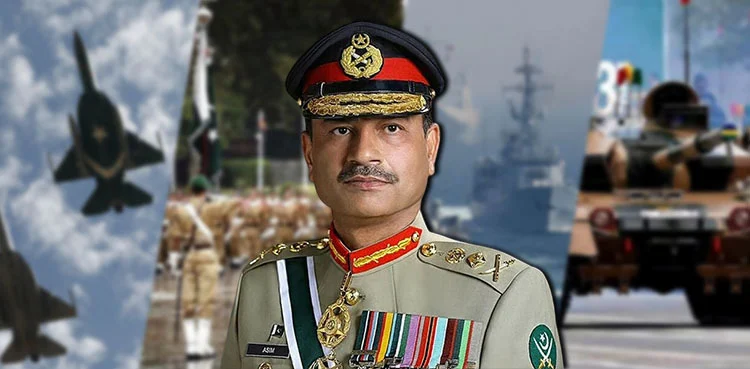
Policy Toward Afghanistan
The CDF stated that the Taliban-led administration must choose between dismantling militant networks or facing consequences. Pakistan’s security concerns remain non-negotiable.
Border stability depends on regional accountability. Militant safe havens threaten national security.
Clear communication reinforces sovereignty.
Commitment to Peace With Strength
Pakistan’s stance as a peace-seeking nation was reaffirmed. Territorial integrity and sovereignty remain absolute red lines.
Deterrence underpins peace through strength rather than rhetoric. Integrated defence ensures credible national security posture.
Peace remains strongest when defence readiness is unquestionable.
FAQs
What is the role of Pakistan’s Chief of Defence Forces
The CDF oversees integrated operational, strategic, and administrative coordination of all three armed services.
Why was the CDF position created
The role was introduced to improve joint command efficiency and modernise military decision-making.
Does the army retain dominance under the new system
Each service retains autonomy while operating within a unified strategic framework.
What amendment enabled the CDF role
The 27th Amendment to Article 243 of the Constitution established the position.
Has the CJCSC office been abolished
Yes, its responsibilities were transferred to the Chief of Defence Forces.
How long can the CDF serve
Tenure may extend up to five years with possible reappointment under revised military law.
Conclusion
Field Marshal Asim Munir’s maiden address as Chief of Defence Forces marks a decisive transformation in Pakistan’s military command philosophy. Institutionalised tri-services integration, modern warfare readiness, constitutional reform, and leadership continuity collectively shape a future-oriented defence framework. The new structure balances autonomy with unity, tradition with innovation, and deterrence with restraint, reinforcing Pakistan’s strategic resilience in an increasingly complex security environment.
