


Pakistan entered a historic phase as General Asim Munir assumed office as the country’s Chief of Defence Forces (CDF). Delivering his first address at the Defence Forces Headquarters in Rawalpindi, General Asim Munir highlighted the strategic importance of tri-services integration and modernised military command. His remarks reflected Pakistan’s commitment to regional security, joint operations, and deterrence against internal and external threats.
The creation of the Defence Forces Headquarters marks a structural shift, combining army, navy, and air force operations under a unified command. This framework enhances responsiveness, strengthens cyber and information capabilities, and ensures that Pakistan’s armed forces remain adaptable to emerging security challenges.
During his address, General Asim Munir issued a direct message to Afghanistan’s Taliban government, urging the Kabul administration to choose between maintaining ties with Pakistan or supporting the outlawed Pakistani Taliban (TTP). The announcement underscores Pakistan’s strategic stance on regional stability and cross-border militancy.
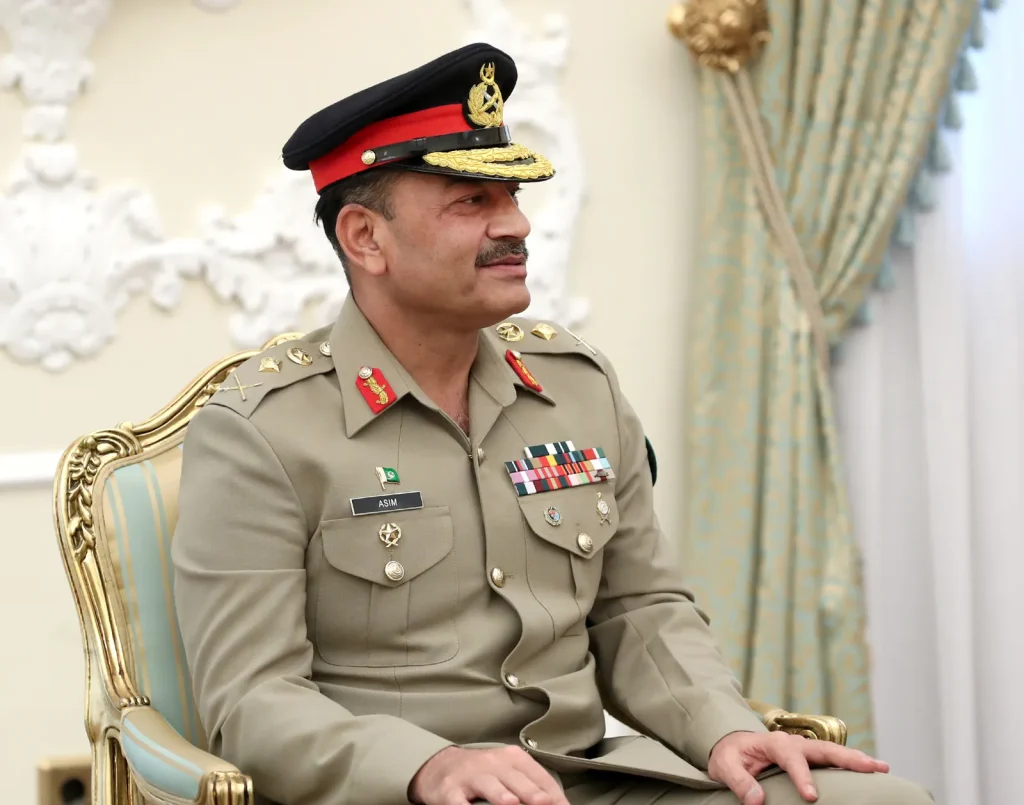
Formation of Pakistan’s Defence Forces Headquarters
Historic Milestone in Military Command
The Defence Forces Headquarters represents a milestone in Pakistan’s military evolution. General Asim Munir described the institution as essential for ensuring operational cohesion among the army, navy, and air force.
Centralised command under the CDF enables faster decision-making during crises, enhancing coordination across land, sea, and air domains. Unified command ensures resource efficiency and eliminates operational duplication.
This development mirrors global military practices where integrated joint commands dominate strategic planning and execution, preparing the nation for modern multi-domain threats.
Tri-Services Coordination Objectives
Tri-services integration ensures seamless collaboration across operational, tactical, and strategic levels. General Asim Munir emphasised that modern warfare demands synchronised action rather than isolated service operations.
Joint planning, intelligence sharing, and logistical cooperation increase battlefield effectiveness. Integration ensures quick deployment of resources and enhances deterrence against potential adversaries.
Operational synergy between the army, navy, and air force establishes a robust defence posture, strengthening national resilience.
Maintaining Service Autonomy
While integration enhances coordination, each service retains its operational autonomy. Training, doctrine, and organisational identity remain intact, ensuring readiness.
Operational individuality enables specialised capabilities to flourish. The Defence Forces Headquarters focuses on strategic coordination without diluting service strengths.
This balance allows Pakistan to maintain an effective deterrent while fostering innovation within each branch.
Modern Warfare and Emerging Domains
Expanding Beyond Traditional Battlefields
General Asim Munir highlighted that contemporary conflict extends beyond conventional battlefields. Cyber operations, electronic warfare, and information dominance now shape strategic outcomes.
Adapting to new warfare domains ensures that Pakistan remains operationally agile. Investment in technology-driven defence enhances situational awareness.
Failing to integrate emerging domains could weaken national security and limit response options in future conflicts.
Technological Priorities
Key areas highlighted by General Asim Munir included:
- Cybersecurity and digital battlefield operations
- Control of electromagnetic spectrum for operational advantage
- Artificial intelligence for strategic planning and intelligence analysis
- Information dominance and quantum computing
Leveraging technology ensures the armed forces maintain decision superiority in multi-domain warfare. Integration across services allows optimal use of resources and capabilities.
Multi-Domain Operations
Recent operations demonstrated the effectiveness of multi-domain strategies combining land, sea, air, and cyber warfare. General Asim Munir described the May conflict with India as a textbook example.
Multi-domain coordination improved real-time situational awareness and precision response. Lessons learned inform future military planning.
This approach ensures Pakistan can respond efficiently to conventional and non-conventional threats.
Message to Afghanistan and TTP
Clear Diplomatic Warning
General Asim Munir sent a direct message to Afghanistan’s Taliban government: it must choose between Pakistan and “Fitna al-Khawarij,” a term referring to the TTP.
The TTP, closely aligned with the Afghan Taliban, has carried out deadly attacks in Pakistan. The CDF emphasised that continued support for militants will strain bilateral relations.
Pakistan’s stance underlines the importance of regional security and counterterrorism cooperation.
Historical Context of TTP Threats
The TTP has escalated attacks since the Taliban’s takeover in 2021. Cross-border militancy threatens peace and stability in Pakistan.
Coordination with Afghanistan is critical to controlling the flow of insurgents and preventing safe havens.
Stable relations depend on Kabul prioritising regional security over militant allegiances.
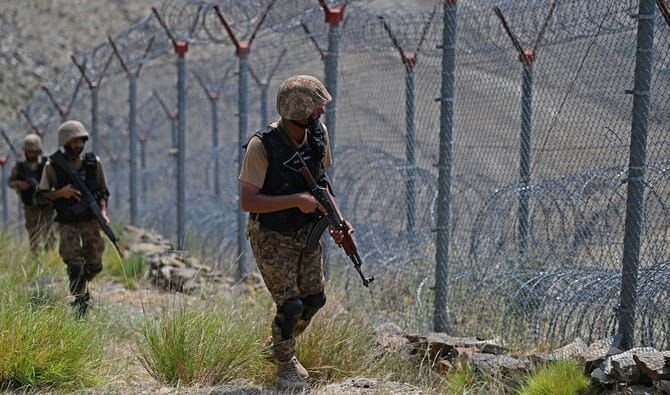
Regional Diplomatic Implications
Pakistan-Afghanistan relations have deteriorated after border clashes in October that killed dozens. Explosions in Kabul were blamed on Pakistan, prompting a Qatar-mediated ceasefire.
Repeated talks in Istanbul failed to produce a permanent agreement. General Asim Munir’s remarks reinforce Pakistan’s demand for clear accountability.
Strategic clarity from Afghanistan is vital for long-term peace and stability.
Pakistan-India Relations and Defence Posture
Recent Conflict Overview
In May, Pakistan repelled Indian strikes following attacks in Kashmir. The four-day conflict demonstrated the effectiveness of coordinated operations under General Asim Munir’s command.
Both nuclear-armed nations exchanged tactical strikes. U.S. mediation helped achieve a ceasefire and prevent escalation.
Lessons from these engagements inform Pakistan’s deterrence strategy and multi-domain operational readiness.
Strengthening National Deterrence
General Asim Munir stressed that India must not misjudge Pakistan’s response capability. Future retaliation would be swift and decisive.
A robust defence posture ensures peace through credible deterrence. National security planning now incorporates lessons learned from previous confrontations.
Strengthened deterrence contributes to long-term regional stability and national sovereignty.
Honouring Armed Forces’ Contribution
The CDF presented awards to navy and air force personnel for exemplary service during the conflict.
Acknowledgement of frontline contributions reinforces morale and institutional pride. Recognising operational excellence ensures continued preparedness.
Professionalism and coordination of all three branches are central to Pakistan’s strategic strength.
Structural and Legal Reforms
27th Constitutional Amendment
The 27th Amendment to Article 243 created the CDF role, allowing the army chief to serve concurrently as head of the Defence Forces.
The amendment consolidates administrative, strategic, and operational authority under a single office. This reduces bureaucratic layers and enhances rapid decision-making.
Modern command frameworks align with global defence standards.
Abolishment of CJCSC Office
The Chairman Joint Chiefs of Staff Committee office was removed. Responsibilities for tri-service coordination now fall under the CDF.
Streamlined authority eliminates delays and ensures cohesive operational planning. Efficiency improves during multi-domain engagements.
Unified command reduces operational friction and enhances response speed.
Pakistan Army Act Revisions
Amendments to the Pakistan Army Act of 1952 define tenure, reappointment, and service terms for the COAS serving as CDF.
Presidential approval on prime ministerial advice governs appointments. Legal reforms ensure consistency with constitutional changes.
Law now supports long-term leadership stability and joint operational planning.
Leadership Continuity and Tenure
General Asim Munir’s Career Milestones
As the 17th army chief since November 2022, General Asim Munir’s rise coincides with structural reforms. His appointment as CDF consolidates strategic leadership under one command.
Experience from previous operational engagements strengthens credibility and institutional confidence.
Consistent leadership ensures smooth implementation of tri-service strategies.
Extended Service Tenure
November 2024 reforms extended service chiefs’ tenure from three to five years. Reappointments and extensions provide continuity for strategic initiatives.
Predictable tenure supports long-term defence planning and multi-domain readiness. Stability underpins institutional effectiveness.
Revised terms allow for sustained reform execution and policy continuity.
Future Leadership Stability
Under current provisions, General Asim Munir may hold the COAS-plus-CDF position until December 2035.
Long-term leadership ensures implementation of integrated military doctrine. Strategic reforms gain durability.
Consistency strengthens national deterrence and operational preparedness.
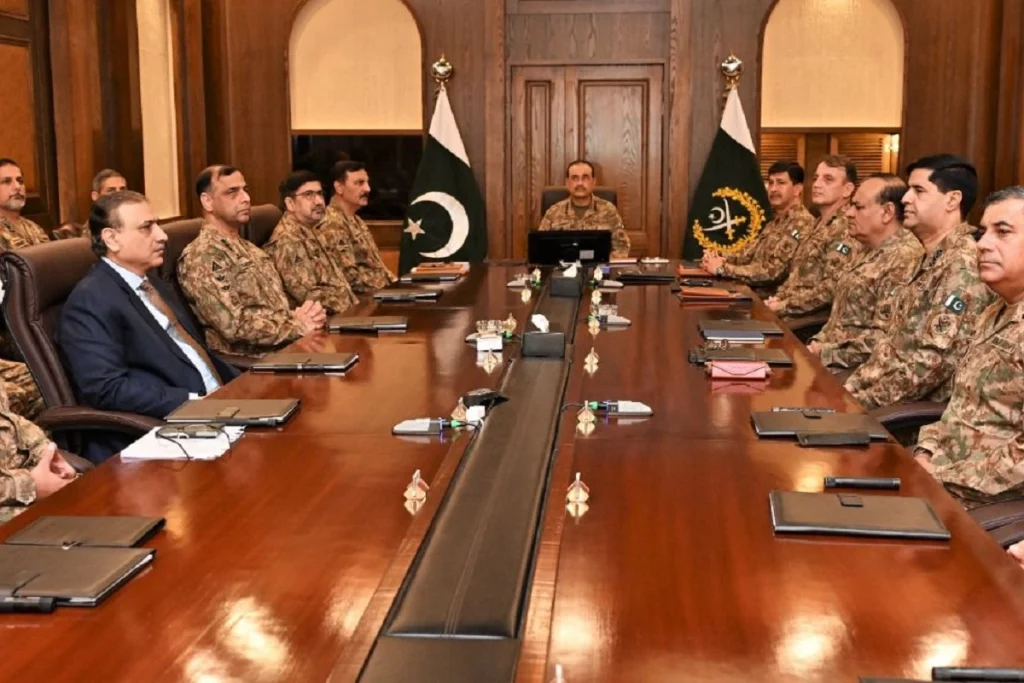
Regional Security Strategy
Maintaining Peace with Strength
Pakistan reiterates commitment to peace while ensuring territorial integrity and sovereignty are protected.
Deterrence ensures adversaries respect boundaries. Integrated military capabilities reinforce national resilience.
Peace is secured through readiness and operational credibility.
Clear Warnings to India
General Asim Munir stated that any aggression from India would provoke swift, decisive response.
Consistent messaging maintains strategic clarity and reduces risk of miscalculation.
Preparedness supports regional balance and prevents escalation.
Counterterrorism Coordination
Afghanistan must act against TTP elements, ensuring cross-border militancy is controlled.
Cooperation is essential for long-term stability. Pakistan’s operational readiness remains unwavering.
Strategic alignment with Kabul is critical to neutralising threats.
FAQs
What is Pakistan’s Defence Forces Headquarters?
It is a unified command integrating army, navy, and air force operations for strategic coordination.
Why was the CDF position created?
To improve tri-service integration, operational efficiency, and multi-domain readiness.
Does each service retain autonomy?
Yes, operational and training independence remains intact within the integrated structure.
Which amendment enabled the CDF role?
The 27th Amendment to Article 243 of Pakistan’s Constitution established the position.
Has the CJCSC office been abolished?
Yes, its responsibilities are now under the Chief of Defence Forces.
What is the CDF’s tenure?
Up to five years, with reappointment or extension possible, allowing continuity until 2035.
Conclusion
General Asim Munir’s appointment as Chief of Defence Forces establishes a historic framework for Pakistan’s military. Tri-services integration, multi-domain readiness, and regional deterrence form the foundation of modern defence strategy. Constitutional reforms, leadership continuity, and operational coordination reinforce national sovereignty and stability. Direct engagement with Afghanistan and firm messaging to India signal Pakistan’s commitment to peace through strength. The unified command ensures the armed forces remain adaptive, resilient, and strategically robust.
