


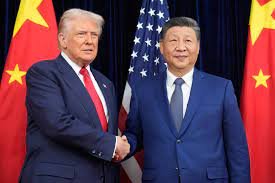
Chinese President Xi Jinping warned the United States to exercise “prudence” in supplying weapons to Taiwan during a phone call with U.S. President Donald Trump, underscoring once again that Taiwan remains the most sensitive and consequential issue in the complex and often fragile relationship between the world’s two largest powers.
The call, which took place on Wednesday, came at a moment of heightened geopolitical uncertainty, with tensions simmering across the Taiwan Strait, war continuing in Ukraine, instability in the Middle East, and renewed competition between Washington and Beijing over trade, technology, and global influence.
Chinese state media reported that Xi described Taiwan as “the most important issue” in China–U.S. relations and emphasized that Beijing would not compromise on what it considers its sovereignty and territorial integrity. Trump, for his part, described the conversation as “excellent” and “long and thorough,” presenting it as a sign of stability and personal rapport between the two leaders.
Yet beneath the cordial language lies a strategic rivalry that continues to shape global politics — and nowhere is that rivalry more pronounced than over Taiwan.
The Taiwan Question: Core of China–U.S. Tensions
For Beijing, Taiwan is not simply another diplomatic dispute. It is a matter of national identity, historical legacy, and regime legitimacy. Xi told Trump during the call that Taiwan is “China’s territory” and that the Chinese government “must safeguard sovereignty and territorial integrity,” according to the state-run Xinhua news agency.
China has long vowed to “reunify” with Taiwan, which it considers a breakaway province, and has refused to rule out the use of force to achieve that goal. Military pressure on the island has steadily increased in recent years, with frequent air and naval maneuvers near Taiwan’s airspace and surrounding waters.
The United States, meanwhile, maintains formal diplomatic relations with Beijing rather than Taipei, adhering to the “One China” policy. At the same time, Washington remains Taiwan’s most important international backer and its largest supplier of defensive weapons a delicate balancing act that has defined U.S. policy for decades.
Xi’s warning to Trump about arms sales reflects Beijing’s long-standing view that U.S. military support emboldens pro-independence forces in Taiwan and raises the risk of conflict.
“The United States must handle the issue of arms sales to Taiwan with prudence,” Xi said, a message that Chinese officials have delivered repeatedly to successive U.S. administrations.
The Arms Sales That Triggered Beijing’s Warning
The issue took on renewed urgency in December, when the Trump administration announced a major arms package for Taiwan worth approximately $11 billion (£8.2 billion). The deal included advanced rocket launch systems, self-propelled howitzers, and a wide array of missiles designed to bolster Taiwan’s ability to deter or repel a potential Chinese invasion.
Beijing reacted angrily at the time, accusing Washington of undermining regional stability and interfering in China’s internal affairs.
Chinese officials said the arms sale was an “attempt to support Taiwan independence” and warned that it would “accelerate the push toward a dangerous and violent situation across the Taiwan Strait.”
From Washington’s perspective, the weapons are defensive in nature and intended to preserve the status quo by making any military action against Taiwan prohibitively costly.
This fundamental disagreement over whether arms sales stabilize or destabilize the region — lies at the heart of the Taiwan dispute.
Trump and Xi: A Personal Dynamic Amid Strategic Rivalry
Despite sharp differences, both Trump and Xi have consistently emphasized the importance of maintaining open lines of communication.
Trump portrayed Wednesday’s call in positive terms, writing on Truth Social that his relationship with Xi — and the broader U.S.China relationship remains “extremely good.”
“We both realize how important it is to keep it that way,” Trump said.The two leaders last met in person in October on the sidelines of the Asia-Pacific Economic Cooperation (APEC) summit in South Korea. That meeting was widely seen as an effort to stabilize ties after months of tension over trade, security, and technology restrictions.
Trump is also expected to visit China in April, a trip he has said he “very much looks forward to,” signaling a desire to keep diplomacy active even as rivalry intensifies.
For Xi, maintaining a functional relationship with Washington is crucial as China navigates slowing economic growth, demographic challenges, and increasing pressure from Western governments.
Trade and Soybeans: Economics as a Stabilizing Force
Beyond Taiwan, the phone call touched on economic issues — a reminder that trade remains a key pillar of the bilateral relationship.
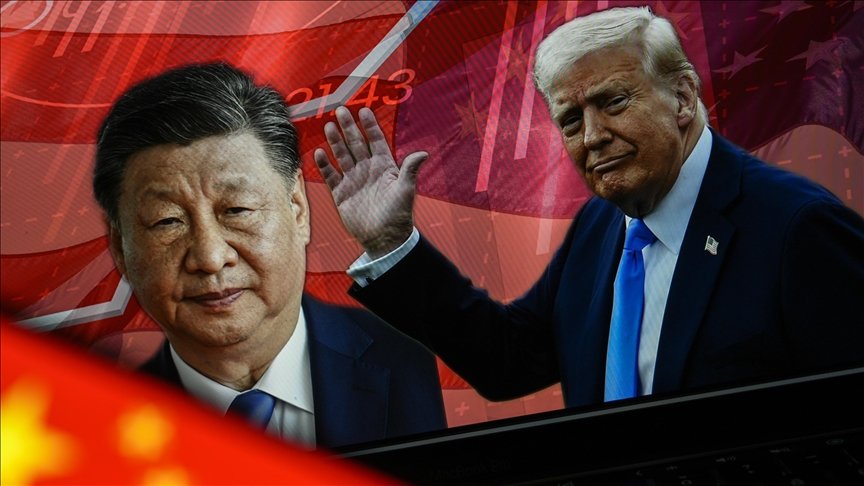
Trump said Beijing is considering purchasing 20 million tonnes of U.S. soybeans, up from the current 12 million tonnes. Soybean exports are politically significant in the United States, particularly for farmers in Midwestern states, and have frequently featured in U.S.–China negotiations.
Agricultural purchases have often served as a pressure-release valve during periods of diplomatic strain, allowing both sides to demonstrate cooperation even as disagreements persist elsewhere.
For China, securing reliable food imports is a matter of national security. For the United States, exports to China support domestic industries and help narrow the trade imbalance.
A Broad Agenda: Ukraine, Iran, and Energy
According to Trump, the call also covered a wide range of global issues, including:
- Russia’s war in Ukraine
- The situation in Iran
- China’s purchase of U.S. oil and gas
- Fentanyl and illicit drug flows
The breadth of topics underscores how deeply intertwined U.S.–China relations have become — and how difficult it is to compartmentalize disputes.
On Ukraine, Washington has repeatedly urged Beijing to use its influence over Moscow to push for an end to the war. China, while claiming neutrality, has strengthened ties with Russia and resisted Western sanctions.
Just hours before his call with Trump, Xi held a virtual meeting with Russian President Vladimir Putin, during which both leaders praised the deepening partnership between Beijing and Moscow — a development that continues to worry U.S. and European officials.
Taiwan’s Strategic Importance
Taiwan occupies a critical position in the global economy and security architecture.
- It sits at the center of key shipping lanes in the western Pacific.
- It produces the majority of the world’s most advanced semiconductors.
- It plays a vital role in U.S. and allied defense planning in Asia.
For Beijing, reunification with Taiwan is tied to the “national rejuvenation” Xi has promised by mid-century. For Washington and its allies, Taiwan’s security is closely linked to the credibility of U.S. commitments across the Indo-Pacific.
Any conflict over Taiwan would have far-reaching consequences, potentially drawing in Japan, South Korea, Australia, and other regional powers.
Strategic Ambiguity: The U.S. Tightrope
For decades, U.S. policy toward Taiwan has rested on strategic ambiguity, neither confirming nor denying whether the U.S. would militarily defend Taiwan in the event of an attack.
This ambiguity is designed to deter both sides:
- Discouraging China from using force
- Discouraging Taiwan from declaring formal independence
Arms sales play a central role in this approach, allowing Taiwan to defend itself without crossing Beijing’s red lines.
However, as China’s military capabilities grow and its rhetoric hardens, maintaining that balance has become increasingly difficult.
Regional and Global Context
The Xi–Trump call comes amid a broader diplomatic push by China to improve ties with Western countries. In recent months, leaders, including UK Prime Minister Keir Starmer,r have visited Beijing, seeking to stabilize relations with the world’s second-largest economy.
These outreach efforts reflect China’s desire to counter growing U.S.-led efforts to limit its technological and strategic influence.
At the same time, Washington is strengthening alliances across Asia, including with Japan, the Philippines, and Australia movesthat Beijing views as containment.
Domestic Pressures on Both Leaders
Both Xi and Trump face domestic considerations that shape their foreign policy choices.
In China:
- Economic growth has slowed
- Youth unemployment remains high
- Nationalism has become a key source of legitimacy
Taking a firm stance on Taiwan plays well with domestic audiences and reinforces Xi’s image as a strong leader.
In the United States:
- China policy has become one of the few areas of bipartisan consensus
- Supporting Taiwan is popular in Congress
- Any perception of weakness toward Beijing carries political risks
These pressures limit the room for compromise, even when both sides express a desire for stable relations.
Read More: Iran and the U.S. will hold nuclear talks Friday in Oman as tensions remain high
FAQs
Why is Taiwan such a sensitive issue for China?
Taiwan is viewed by Beijing as part of its sovereign territory and a legacy of China’s civil war. Reunification is tied to national pride and the legitimacy of the Communist Party.
Why does the U.S. sell weapons to Taiwan?
The U.S. aims to help Taiwan defend itself and deter aggression, maintaining stability in the region without formally recognizing Taiwan as an independent state.
Does the U.S. recognize Taiwan as a country?
No. The U.S. recognizes the government in Beijing but maintains unofficial relations with Taiwan under the Taiwan Relations Act.
Could arms sales lead to war?
China argues that they increase the risk of conflict, while the U.S. believes they deter it. Most analysts agree that miscalculation is the greatest danger.
What role does trade play in U.S.–China relations?
Trade remains a stabilizing factor, even during periods of political tension, providing incentives for dialogue.
Conclusion
Xi Jinping’s call for U.S. “prudence” in supplying arms to Taiwan highlights the central paradox of modern U.S.–China relations: both sides seek stability, yet both continue actions the other sees as deeply threatening. The cordial tone of the call between Xi and Trump suggests a mutual recognition that open confrontation would be disastrous. Yet words alone cannot bridge the profound differences over Taiwan, security, and the future of the international order.
