


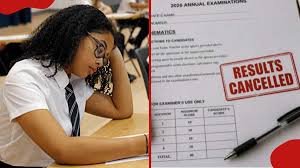
Tanzania’s National Examinations Council has cancelled the results of 58 candidates following an investigation into cheating during the 2026 national examinations. The reported violations included carrying unauthorized notes, working with other candidates and using mobile phones to access ChatGPT for answers inside examination rooms.
The case has renewed concerns about how schools should manage artificial intelligence as tools such as ChatGPT become easier for students to access. AI can support research and revision outside the examination hall, but using it to answer questions during a restricted test gives candidates an unfair advantage and breaks examination rules.
NECTA Cancels Results After Exam Malpractice
The National Examinations Council of Tanzania, commonly known as NECTA, announced the penalties while releasing the 2026 Advanced Certificate of Secondary Education Examination results.
NECTA Executive Secretary Professor Said Mohamed said that 58 candidates had their results cancelled after being found guilty of examination malpractice. The methods used were not limited to artificial intelligence. Some candidates reportedly entered examination rooms with prohibited notes, while others communicated with fellow students or carried mobile phones. Some of those phones were allegedly used to search ChatGPT for answers.
Cancelling a result means the affected candidate loses the examination outcome for that sitting. The punishment also sends a warning to other students that digital tools are covered by the same rules as traditional forms of cheating.
Results of Another 190 Candidates Withheld
NECTA also withheld the results of 190 other candidates. According to the reported breakdown, 184 were Advanced Certificate of Secondary Education Examination candidates, five were taking the Diploma in Primary Education Examination and one was enrolled in the Diploma in Secondary Education Examination.
The withheld cases were connected to different circumstances and should not all be described as confirmed ChatGPT cheating. Reports said the affected candidates would be permitted to sit the examinations again in 2027 under NECTA regulations.
This distinction is important. A cancelled result follows a confirmed penalty, while a withheld result may remain under review or involve other administrative and personal circumstances.
How ChatGPT Was Used During the Exams
The reported cases involved students bringing mobile phones into examination rooms and using ChatGPT to search for answers.
A student can enter an examination question into an AI chatbot and receive a response within seconds. This creates a serious challenge for exam supervisors because the tool can generate complete paragraphs, explanations and possible solutions instead of simply displaying stored notes.
However, ChatGPT responses are not always correct. The system can produce inaccurate information, misunderstand a question or create an answer that sounds confident without being supported by reliable evidence. Using it during an examination is therefore both dishonest and academically risky.
The problem is not the existence of artificial intelligence itself. The violation occurs when a student uses an unauthorized tool to complete work that is supposed to measure personal knowledge and ability.
Why the Incident Matters for Education
National examinations influence university admission, employment opportunities and access to professional training. Their results must represent the ability of each candidate under the same conditions.
When one student secretly uses a mobile phone or AI chatbot, the advantage affects everyone competing honestly. A candidate who receives outside assistance may obtain a result that does not reflect their real understanding of the subject.
The Tanzania case also shows that existing examination rules must now cover more than handwritten notes and copied answers. Schools must consider smartphones, smartwatches, wireless devices, AI applications and other digital services that can provide information during a test.
Research into generative AI and examinations has warned that tools such as ChatGPT can create convincing responses and may threaten the integrity of unsupervised assessments. Researchers have suggested stronger invigilation, oral assessment and redesigned examination methods as possible responses, while also noting that no single detection method is completely reliable.
Should Schools Ban ChatGPT Completely?
A complete ban may not be the most useful long-term response. ChatGPT can support education when students use it responsibly and teachers provide clear rules.
Outside examinations, students may use AI to simplify a difficult topic, create practice questions, compare explanations or receive feedback on early ideas. The student should still verify the information, complete the real thinking and follow the institution’s academic-integrity policy.
The use becomes unacceptable when AI completes an assignment that must be independent, produces work submitted without disclosure or provides answers during a closed examination.
Schools therefore need rules that explain where AI is allowed, where disclosure is required and where its use is completely prohibited.
Clear AI Policies Are Necessary
Students should not be expected to guess whether a particular use is acceptable. Every school or examination body should provide simple written instructions.
A strong policy should explain whether AI can be used for brainstorming, grammar support, research, coding, homework or examination preparation. It should also describe the penalties for using AI during restricted assessments.
Rules should be communicated before the examination period instead of only after a violation occurs.
How Examination Bodies Can Reduce AI Cheating
Examination councils can strengthen security without treating every student as a suspected offender.
The first step is controlling unauthorized devices. Candidates should receive clear instructions to leave mobile phones, smartwatches and connected devices outside the examination room. Supervisors must also check that these rules are applied consistently.
Seating arrangements and active invigilation can reduce opportunities for collaboration. Examination centres may also need procedures for reporting, collecting and documenting prohibited devices.
Assessment design can provide another layer of protection. Questions requiring personal reasoning, calculations, source evaluation or oral explanation are more difficult to outsource completely.
Schools may also use supervised written tasks, practical demonstrations and short oral discussions to confirm that students understand the work they submit.
AI Detection Alone Is Not Enough
AI-detection software should not be treated as final proof of cheating. These systems may produce incorrect results and can wrongly flag human writing.
Decisions should be based on several forms of evidence, such as device records, examination-room reports, unusual answer patterns, student interviews and clear violations of published rules.
A fair process protects examination integrity while also preventing unsupported accusations.
Responsible Ways Students Can Use AI
Students can use ChatGPT as a study assistant without allowing it to replace genuine learning.
A responsible approach is to ask the tool for an explanation and then confirm the answer through textbooks, teachers or reliable educational sources. Students can also use AI to generate practice exercises and solve those exercises independently.
They should avoid copying complete answers without understanding them. Depending too heavily on AI may improve the appearance of written work while leaving the student unable to explain the subject in an examination or real-life setting.
The purpose of education is not only to produce a correct-looking answer. It is to develop knowledge, judgment, communication and problem-solving ability.
Frequently Asked Questions
How many students had their results cancelled?
NECTA cancelled the results of 58 candidates after confirmed examination-malpractice cases. The violations included unauthorized notes, collaboration and the use of mobile phones to access ChatGPT.
Did all 58 candidates use ChatGPT?
Available reports do not establish that every one of the 58 candidates used ChatGPT. The confirmed malpractice involved several methods, including notes, collaboration and mobile-phone access to the AI chatbot.
Why were 190 additional results withheld?
The 190 results were withheld for different reported circumstances. They should not all be presented as confirmed AI-cheating cases. The candidates were expected to receive an opportunity to retake their examinations in 2027.
Is using ChatGPT always considered cheating?
No. Its use depends on the rules of the activity. Using AI for permitted revision may be acceptable, while secretly using it during a closed examination is academic misconduct.
Can schools detect answers written by ChatGPT?
Detection tools may provide warning signs, but they are not completely reliable. Schools should examine additional evidence before taking disciplinary action.
How can students use AI without breaking school rules?
Students should follow their institution’s policy, disclose AI assistance when required and use the technology to support understanding rather than replace their own work.
Conclusion
Tanzania’s decision to cancel 58 examination results shows that AI-assisted cheating can carry serious consequences. Candidates were found using different prohibited methods, including mobile phones that provided access to ChatGPT during national examinations.
The incident should not lead educators to reject all educational uses of AI. Instead, schools need clearer policies, stronger examination security and teaching methods that reward genuine understanding. Students must also recognize that AI can support preparation, but it cannot ethically replace their own knowledge during an exam.
