


In the heart of West London, where period architecture meets contemporary urban living, a quiet design revolution is taking place inside a thoughtfully reimagined family home. At first glance, the house appears effortlessly stylish layered textures, sculptural furniture, bespoke joinery, and carefully curated art. But look closer, and a more compelling story emerges: one of ingenuity, restraint, and a deeply resourceful approach to high-low interiors.
This is not a home driven by excess or trend-chasing. Instead, it reflects a growing design philosophy that blends high-end craftsmanship with affordable, repurposed, and vintage elements. It is a space where designer lighting coexists with flea-market finds, custom cabinetry sits alongside flat-pack furniture, and sustainability informs nearly every decision.
In an era where rising costs and environmental awareness are reshaping how people design their homes, this West London house offers a blueprint for a more thoughtful, meaningful approach to modern interiors.
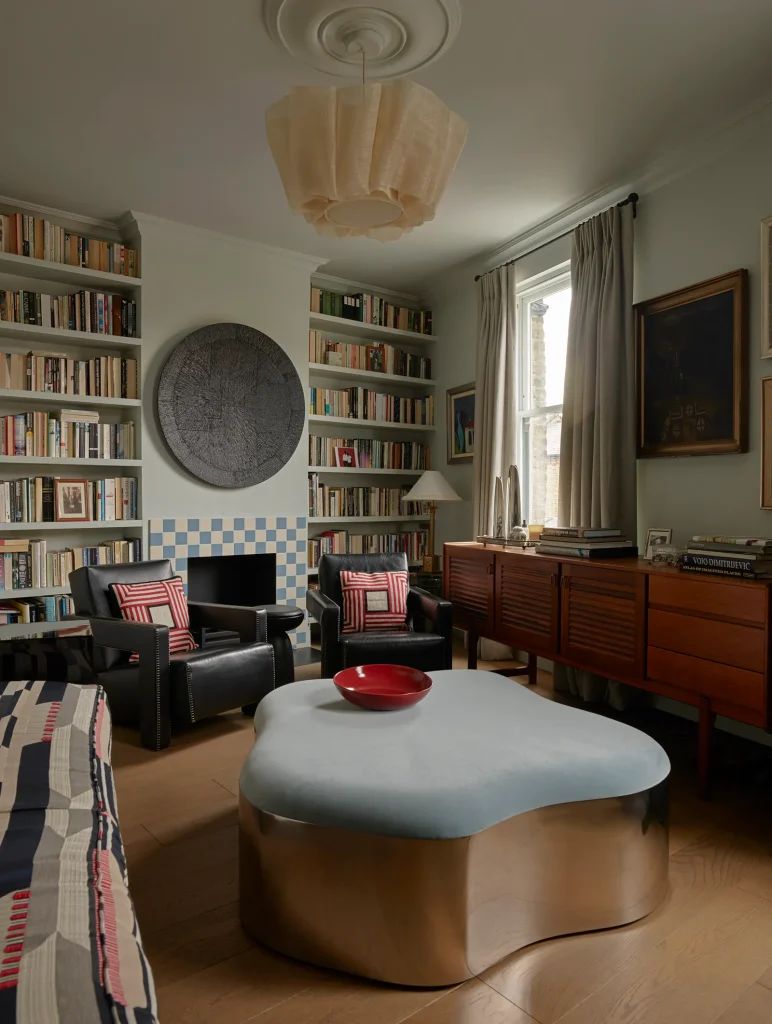
Understanding the High-Low Interior Design Philosophy
What Does “High-Low” Mean in Interior Design?
High-low design is the art of mixing premium, investment pieces with budget-friendly, secondhand, or DIY elements to create a cohesive and characterful interior. Rather than relying solely on luxury brands or expensive finishes, the approach prioritizes balance, personality, and storytelling.
In this West London home, high-low design is not a stylistic gimmick—it’s a guiding principle.
Why the High-Low Approach Is Gaining Popularity
Several cultural and economic shifts have fueled the rise of high-low interiors:
- Increased awareness of sustainability and waste
- Rising material and labor costs
- Greater access to vintage markets and online resale platforms
- A move away from overly polished, showroom-style homes
Homeowners today want spaces that feel lived-in, layered, and authentic, not uniform or disposable.
The Setting: A Classic West London Property Reimagined
Architectural Roots
The house is a traditional West London terrace, dating back to the late 19th century. Original features—high ceilings, sash windows, cornicing, and fireplaces—form the architectural backbone of the home.
Rather than stripping these elements away, the design embraces them, allowing old and new to coexist in harmony.
A Renovation With Restraint
Instead of a full-scale overhaul, the renovation focused on strategic interventions:
- Improving light flow between rooms
- Upgrading insulation and energy efficiency
- Restoring original features rather than replacing them
- Reworking layouts to support modern family life
This restrained approach minimized waste while maximizing impact.
Design Vision: Creating Depth Without Excess
A Home Designed to Evolve
One of the defining goals was to create a home that could evolve over time. Rather than committing to fixed trends or overly bespoke solutions, the design allows for change art can move, furniture can be swapped, and spaces can adapt as the family grows.
This flexibility is central to the high-low ethos.
Prioritizing Feeling Over Perfection
The homeowners and designer agreed early on that the house should feel warm, personal, and slightly imperfect. Scuffs, patina, and visible history are embraced rather than concealed.
The Living Room: Layered Comfort With Character
Anchoring the Space With Investment Pieces
The living room centers around a few key high-end elements:
- A well-made sofa in a neutral, durable fabric
- A handcrafted oak coffee table
- Custom shelving designed to fit the proportions of the room
These pieces provide structure and longevity.
Balancing With Low-Cost and Vintage Finds
To offset these investments, the room incorporates:
- Secondhand armchairs reupholstered in affordable textiles
- Vintage rugs sourced from local markets
- Art collected over time, including prints, children’s drawings, and found objects
The result is a space that feels curated but never contrived.
The Kitchen: Function First, Style Second—and That’s the Point
A Practical, Budget-Conscious Approach
Rather than opting for an expensive bespoke kitchen, the homeowners chose a modular system, upgrading only where it mattered most:
- Solid worktops for durability
- High-quality taps and hardware
- Energy-efficient appliances
Cabinet fronts were customized with paint and handles to elevate their appearance.
Sustainability at the Core
Several decisions in the kitchen reflect a commitment to sustainability:
- Retained existing plumbing to reduce construction waste
- Refurbished rather than replaced cabinets where possible
- Chose materials with low environmental impact
The kitchen proves that sustainability and good design are not mutually exclusive.
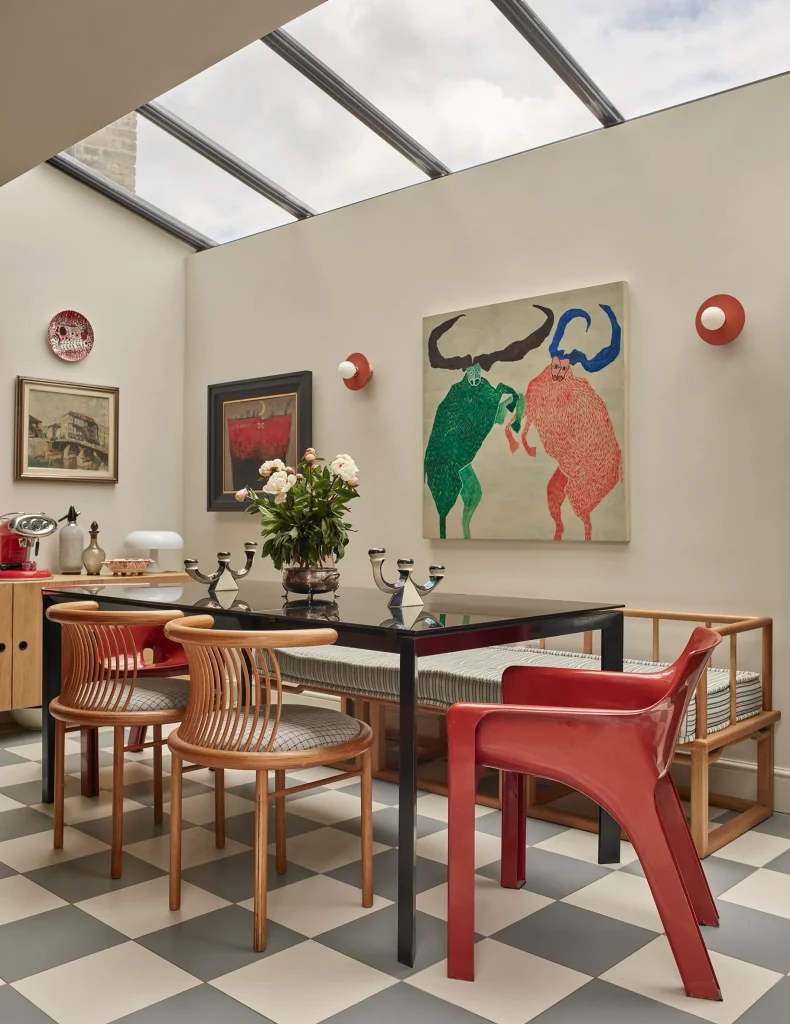
Dining Space: Informal, Flexible, and Welcoming
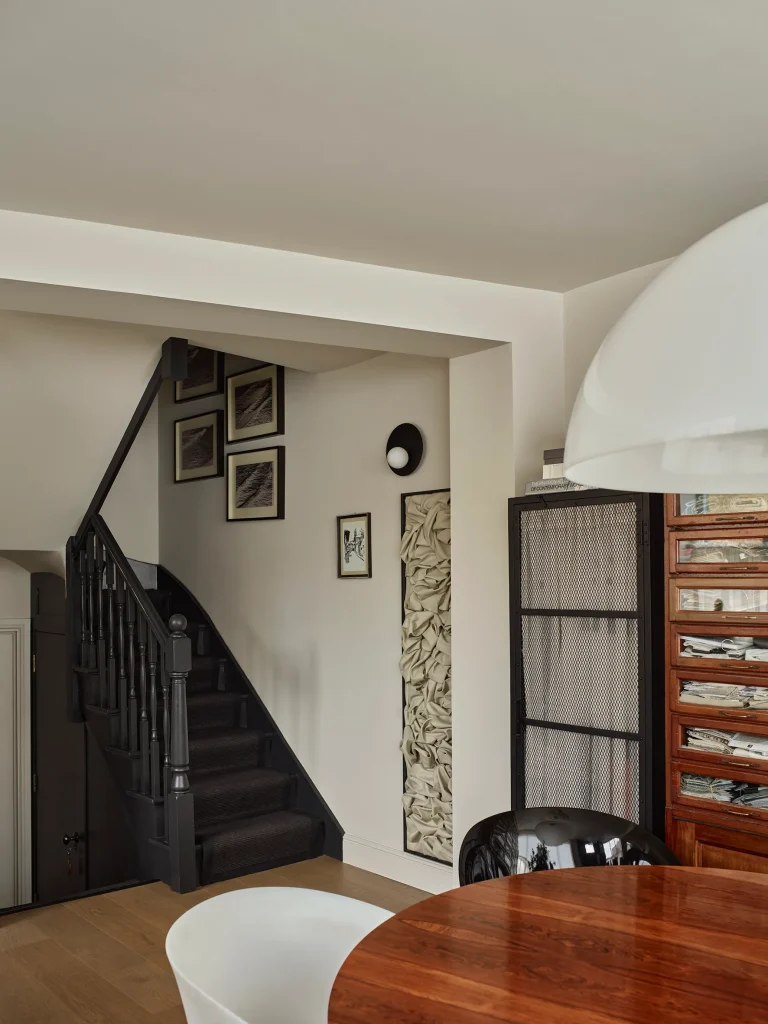
Mixing Old and New Around the Table
The dining area features a reclaimed wood table paired with mismatched chairs collected over several years. Some are designer pieces, others cost next to nothing.
This mix creates a relaxed, convivial atmosphere—perfect for both family meals and entertaining.
Lighting as a Design Statement
Above the table hangs a statement pendant light—a deliberate splurge. Its sculptural presence anchors the space and elevates the more modest elements around it.
Bedrooms: Calm, Personal, and Purposeful
The Primary Bedroom: Understated Elegance
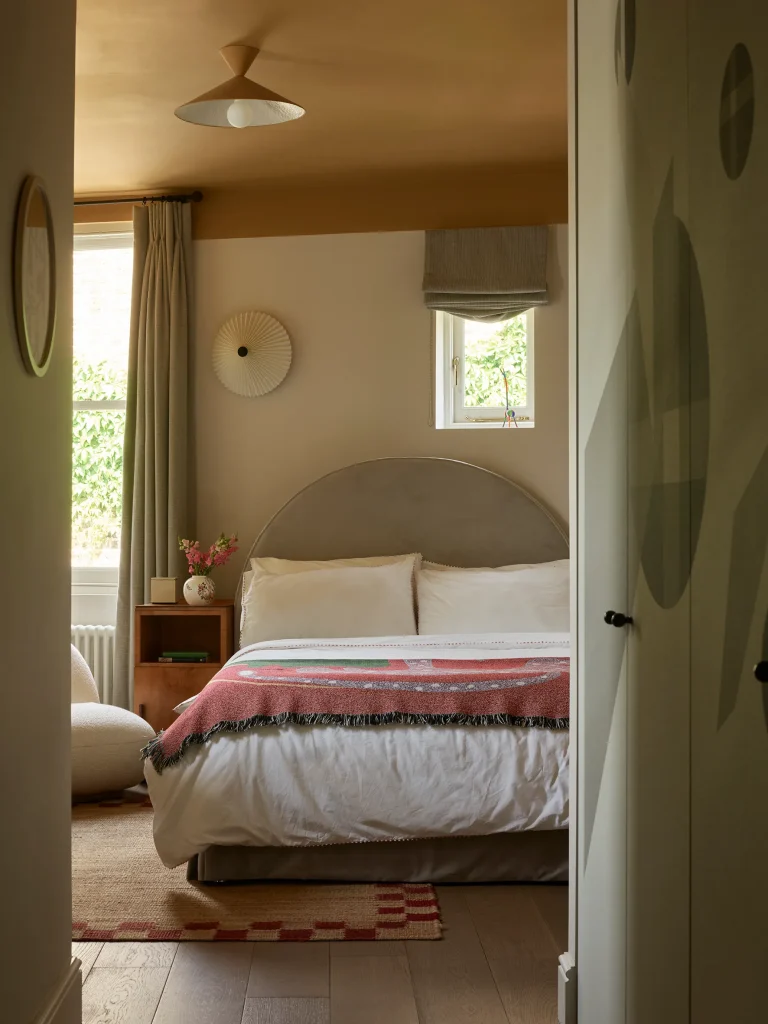
The main bedroom avoids unnecessary decoration, focusing instead on comfort and texture:
- Neutral walls
- Layered linens in natural fibers
- Vintage bedside tables
- Soft, ambient lighting
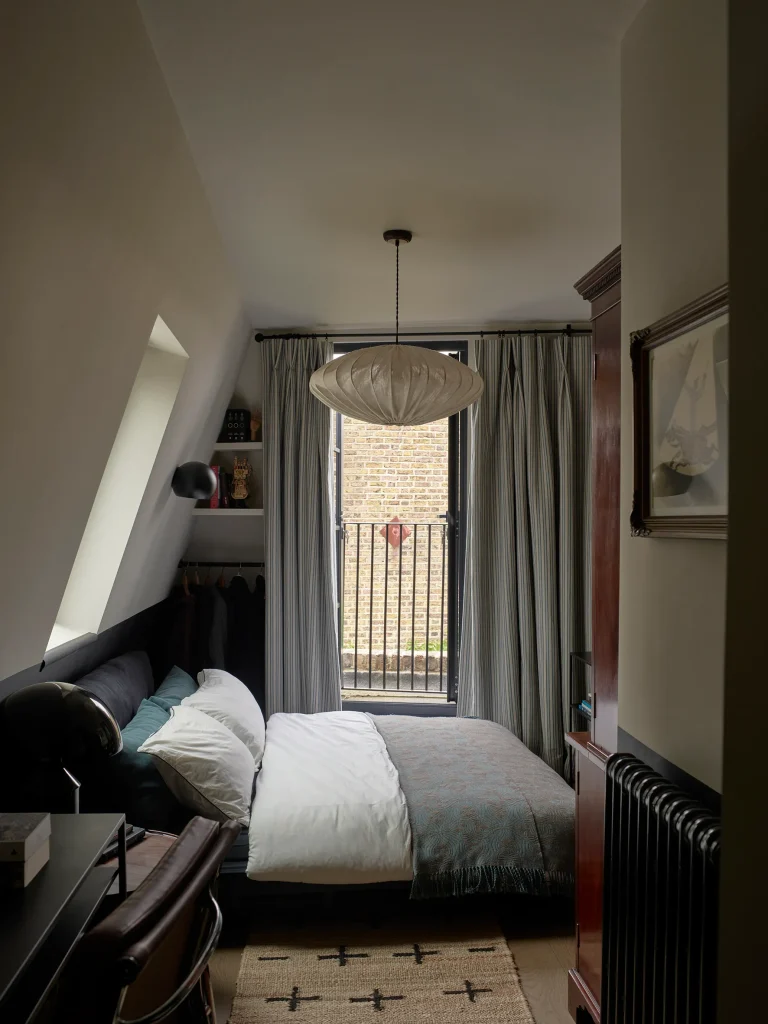
The result is a restful retreat that feels timeless rather than trendy.
Children’s Rooms: Creativity on a Budget
The children’s bedrooms embrace color, flexibility, and affordability:
- IKEA furniture adapted with paint and hardware
- Wall decals and removable wallpaper
- Open shelving for books and toys
These rooms are designed to evolve without costly overhauls.
Bathrooms: Small Spaces, Smart Choices
Spending Where It Counts
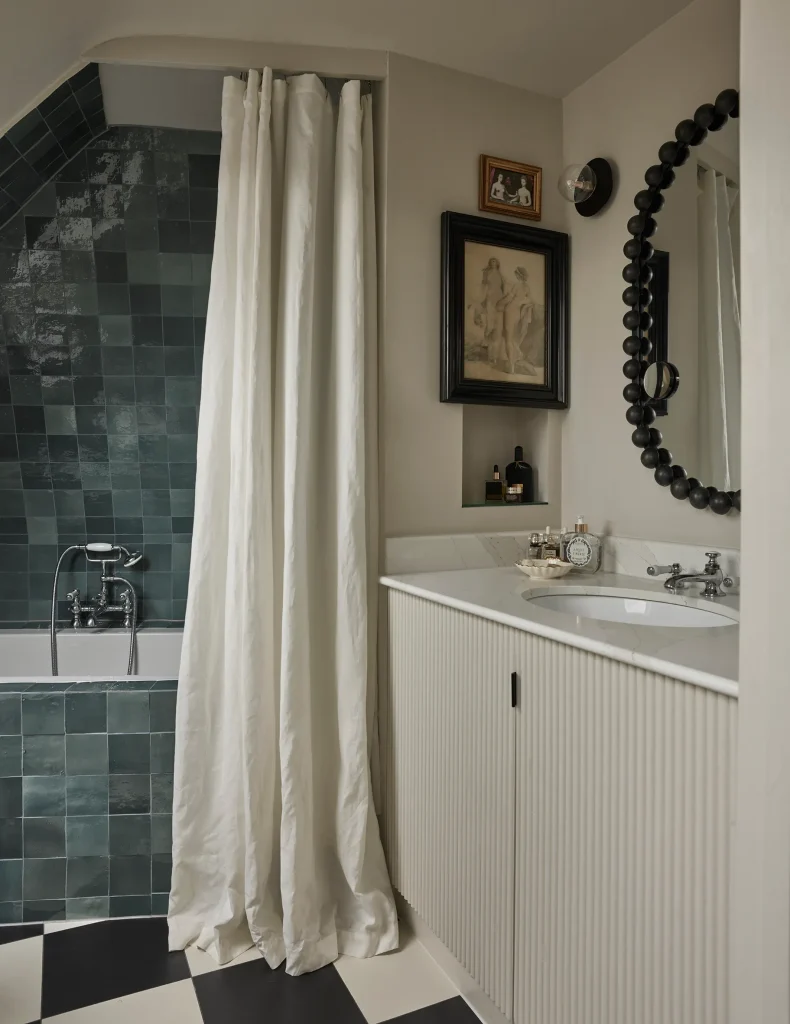
In the bathrooms, budget was allocated strategically:
- Quality sanitaryware for longevity
- Simple tiles used creatively
- Minimal built-in storage
Instead of expensive finishes, the design relies on proportion, light, and restraint.
Vintage Details for Character
Reclaimed mirrors, antique hooks, and secondhand lighting add personality without inflating costs.
Materials and Textures: The Secret to High-Low Harmony
Layering for Depth
A successful high-low interior depends on thoughtful layering:
- Rough and smooth surfaces
- Old and new materials
- Matte and glossy finishes
This West London house excels at combining these contrasts seamlessly.
Letting Materials Age Gracefully
Natural materials wood, linen, stone were chosen for their ability to age well. Wear and patina are seen as assets, not flaws.
Sustainability as a Design Driver
Reducing Waste Through Reuse
A significant portion of the home’s furniture and fittings were reused, restored, or repurposed. This approach reduced environmental impact and added depth to the interiors.
Energy Efficiency and Longevity
Behind the scenes, upgrades included:
- Improved insulation
- Double glazing
- Efficient heating systems
These choices ensure the home performs as well as it looks.
Art and Objects: Telling a Personal Story
Collecting Over Time
Rather than purchasing art in one go, the homeowners collected pieces gradually—travel souvenirs, gifts, and local artwork.
This slow approach results in a home that feels deeply personal.
Display Without Overcrowding
Careful curation ensures that objects have space to breathe, avoiding visual clutter.
Lessons From the House: Why High-Low Works
More Personality, Less Pressure
High-low interiors remove the pressure to “get everything right” immediately. They allow homes to grow organically.
Better Value Over Time
By investing selectively and saving elsewhere, homeowners achieve better long-term value—both financially and emotionally.
Read More: Modern Modular Kitchens Functional, Stylish Spaces for Every Home
FAQs
Design Philosophy
What are high-low interiors?
They combine high-end investment pieces with budget-friendly or vintage items to create balance and character.
Is high-low design suitable for small homes?
Yes. It’s especially effective in smaller spaces where thoughtful choices matter most.
Does mixing price points look messy?
Not if done intentionally. Cohesion comes from color, proportion, and texture.
Budget and Sustainability
Can high-low interiors save money?
Absolutely. Strategic spending reduces overall costs without sacrificing quality.
Are high-low interiors more sustainable?
Yes, particularly when reuse, vintage sourcing, and durability are prioritized.
Where should I invest the most?
In items you use daily—sofas, beds, flooring, and lighting.
Practical Application
How do I start a high-low interior project?
Begin with a clear vision and build around key investment pieces.
Can rented homes use this approach?
Definitely. Furniture, lighting, and soft furnishings are ideal high-low tools.
Do trends matter in high-low design?
Trends can inspire, but timeless choices create longevity.
Styling and Longevity
How do I avoid a mismatched look?
Stick to a consistent palette and repeat materials across rooms.
Is DIY part of high-low design?
Often, yes. DIY adds personality and reduces costs.
Will this style age well?
High-low interiors tend to age better than trend-led designs.
Conclusion
This West London house demonstrates that great design is not about unlimited budgets or flawless finishes it’s about intention, creativity, and balance. By embracing a resourceful high-low approach, the homeowners have created a space that feels warm, lived-in, and deeply personal.
