


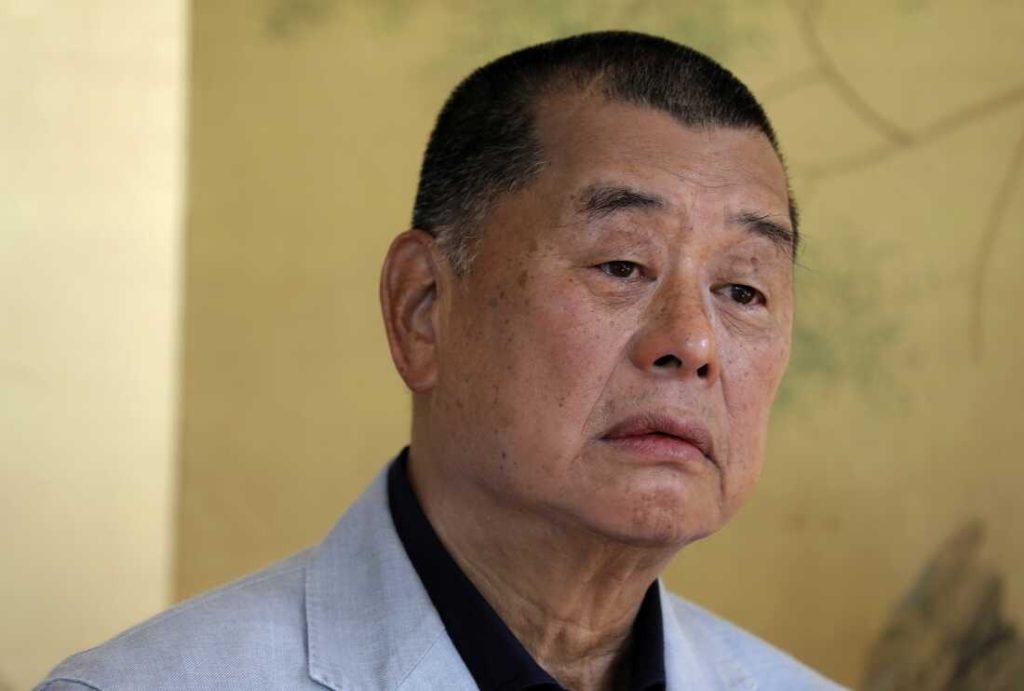
On 9 February 2026, a Hong Kong court sentenced media tycoon and pro-democracy activist Jimmy Lai to 20 years in prison, marking one of the most consequential legal decisions in the city’s recent history. The sentencing, delivered under the national security law introduced by Beijing in 2020, has drawn international attention and sparked fierce debate about freedom of speech, judicial independence, and the future of civil liberties in Hong Kong.
Lai, 78 years old and a British citizen, is one of Hong Kong’s most prominent critics of the Chinese Communist Party (CCP) and the founder of the now-defunct Apple Daily newspaper, once a leading voice for democratic reforms and press freedom in the city. His sentencing comes after a prolonged legal battle that began with his arrest in August 2020, soon after Beijing imposed the national security law in response to the 2019 pro-democracy protests.
This article explores the background, charges, reaction, and implications of this watershed case.
Who Is Jimmy Lai? A Brief Profile
Early Life and Rise to Prominence
Born in Guangzhou in 1947, Jimmy Lai Chee-ying fled to Hong Kong as a young teenager. He built a business empire that included the fashion brand Giordano and later became one of Asia’s most influential media figures. In 1995, Lai launched Apple Daily, a tabloid-style newspaper that combined investigative journalism with critical commentary on the Hong Kong and Chinese governments.
Apple Daily and Political Activism
Under Lai’s leadership, Apple Daily became synonymous with outspoken support for free speech, democratic activism, and government accountability. It gained a large following for its coverage of the Umbrella Movement in 2014 and the massive anti-government protests of 2019. These movements challenged Beijing’s influence in Hong Kong and demanded greater democratic reforms.
Lai’s dual role as a businessman and political activist made him a focal point of tension between pro-democracy advocates and Beijing. This tension ultimately culminated in his arrest and prosecution under the national security law.
The National Security Law and Lai’s Arrest
Context of the National Security Law
In June 2020, Beijing imposed a sweeping national security law on Hong Kong, criminalizing acts of secession, subversion, terrorism, and colluding with foreign forces. Critics argued the law dramatically expanded mainland China’s power over the semi-autonomous city and posed a direct threat to civil liberties, including freedom of speech and press freedom.
Lai was among the first high-profile figures arrested under this law — a move widely seen as symbolic of Beijing’s tightening grip on dissent and opposition voices in Hong Kong.
Arrest and Legal Proceedings
Lai’s initial arrest came in August 2020. Over the next several years, he faced a series of charges, culminating in his conviction in December 2025 on:
- Two counts of conspiracy to collude with foreign forces, and
- One count of conspiracy to publish seditious materials.
Prosecutors accused Lai and associates of using his newspaper and international connections to lobby foreign governments to impose sanctions and other hostile measures against China — allegations Lai’s defense rejected as exaggerated and politically motivated.
The Sentence: 20 Years in Prison
Details of the Sentencing
On 9 February 2026, the Hong Kong High Court delivered its verdict, sentencing Lai to 20 years’ imprisonment, one of the harshest sentences under the national security law to date. The court described Lai as the “mastermind” behind the alleged conspiracies, justifying the severity of the punishment.
The judges also ruled that two years of Lai’s sentence would overlap with a separate fraud sentence he was already serving, resulting in an effective additional 18 years behind bars.
Lai’s Response and Health Concerns
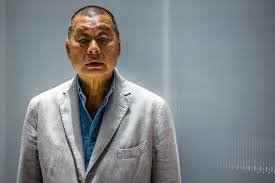
Lai, already in poor health, suffering from heart palpitations, high blood pressure, and diabetes, stood in court expressionless as the sentence was read. His age and medical condition have led many observers to warn that the sentence could amount to a de facto life imprisonment.
Co-Defendants and Related Sentences
Lai was not the only figure convicted in the case. Several former Apple Daily staff members and activists were also sentenced for their roles:
- Cheung Kim-hung (publisher): around 6 years 9 months
- Chan Pui-man (associate publisher): about 7 years
- Ryan Law (editor-in-chief): 10 years
- Lam Man-chung, Fung Wai-kong, Yeung Ching-kee (senior editors): various terms between 7 and 10 years
- Activists Andy Li and Chan Tsz-wah: 6 years 3 months and 7 years 3 months respectively
Some defendants received reduced sentences, partly due to cooperation with prosecutors.
Reaction: Local and International Responses
Hong Kong and Beijing’s Stance
Authorities in Hong Kong and Beijing defended the verdict. They maintain that the case was a legitimate application of the law to uphold national security and order. Officials argued that Lai’s actions went beyond journalism and crossed into activities that threatened Hong Kong’s stability.
Condemnation from Rights Groups and Foreign Governments
The sentencing has provoked strong condemnation from multiple quarters:
- Human Rights Watch described the 20-year sentence as cruel and unjust.
- Committee to Protect Journalists called it a major blow to press freedom.
- The UK Foreign Secretary called the prosecution “politically motivated” and tantamount to a life sentence for Lai.
- The European Union, Australia, and Taiwan also criticized the ruling and urged greater respect for civil liberties.
These international statements emphasize concerns about the erosion of freedom of expression and judicial independence in Hong Kong.
Broader Implications for Hong Kong’s Civil Liberties
Press Freedom in Decline
Many analysts see Lai’s sentencing as part of a broader trend of shrinking press freedom in Hong Kong. Since the national security law was enforced in 2020, numerous media outlets have closed, and journalists have faced arrests, prosecutions, or intimidation.
Hong Kong’s ranking in global press freedom indices has slipped dramatically — a stark contrast to its status before the law’s implementation.
Impact on Political Dissent
The Lai case exemplifies the tightening space for political dissent in the city. Activists, academics, and civil society organizations now operate under heightened scrutiny and legal risk, affecting Hong Kong’s reputation as an international financial and cultural hub.
The Legal Right to Appeal
Lai retains the right to appeal the sentence within 28 days. His legal team has not publicly confirmed whether an appeal will be filed, though such a move is anticipated by supporters and international observers.
An appeal could prolong the legal process and further highlight differences in legal interpretation between Hong Kong’s judiciary and international legal norms.
Read More: Trump says US talks with Iran ‘very good,’ more negotiations expected
FAQs
What specific laws did Jimmy Lai violate?
Jimmy Lai was convicted under Hong Kong’s national security law for:
- Conspiracy to collude with foreign forces, and
- Conspiracy to publish seditious materials.
These charges relate to allegations that he engaged in lobbying foreign governments for sanctions, as well as publishing content interpreted by authorities as seditious.
Why is this sentence controversial internationally?
The sentence is controversial because many human rights groups and foreign governments see it as political persecution rather than a standard criminal conviction. Critics argue it undermines freedom of speech and press freedom, core elements of Hong Kong’s legal and cultural traditions.
Will Jimmy Lai serve the full 20-year term?
It is unclear whether Lai will serve the full term. At 78 years old and with existing health issues, many analysts believe the sentence could effectively keep him imprisoned for the remainder of his life.
Can Jimmy Lai appeal his conviction?
Yes. Lai has 28 days from the sentencing date to file an appeal with a higher court in Hong Kong, though such appeals under national security cases often face high legal hurdles.
How has this verdict affected Hong Kong’s press freedom?
The verdict is widely viewed as a significant blow to press freedom in Hong Kong. Major media outlets have shut down, leading to a chilling effect on journalism and free expression in the city.
Conclusion
The 20-year prison sentence handed down to Jimmy Lai represents a defining moment in Hong Kong’s legal and political evolution. It underscores the profound shift that has taken place since the imposition of the national security law, marking a decisive end to an era when the city was known for robust political debate and press freedom.
