


Amid one of the most turbulent periods in Iran’s recent history, U.S. President Donald Trump said on Thursday that he had been informed the violent crackdown on protests in Iran appeared to be easing, and that there was no current plan for large-scale executions. His remarks signaled a shift toward a wait-and-see approach, following days of sharply worded statements in which he had openly threatened potential intervention.
The comments came as Iranian authorities denied claims that protesters would face mass executions, with state media reporting that a 26-year-old man arrested during unrest in Karaj would not receive the death penalty. The developments briefly eased global tensions, triggering a decline in oil prices, though uncertainty remains high as Washington continues to impose new sanctions and refuses to fully rule out military action.
Together, these events underscore the fragile balance between diplomacy, deterrence, domestic unrest, and global economic consequences—at a moment when Iran, the United States, and the wider Middle East are all navigating deep instability.
Protests That Shook Iran: Economic Pain Meets Political Anger
The protests sweeping Iran in recent weeks were sparked primarily by severe economic hardship, including runaway inflation, high unemployment, and declining purchasing power. While Iran has experienced waves of demonstrations over the years, observers describe the current unrest as broader, more sustained, and more volatile.
Images broadcast by Iranian state media and later distributed internationally by news agencies showed burnt vehicles, damaged infrastructure, and blocked roads, particularly in Tehran and surrounding cities. Authorities described the unrest as being fueled by organized violence, while protesters and activists said security forces used excessive force.
The unrest has once again highlighted the economic toll of decades-long U.S. and international sanctions, compounded by domestic policy challenges and limited access to global markets.
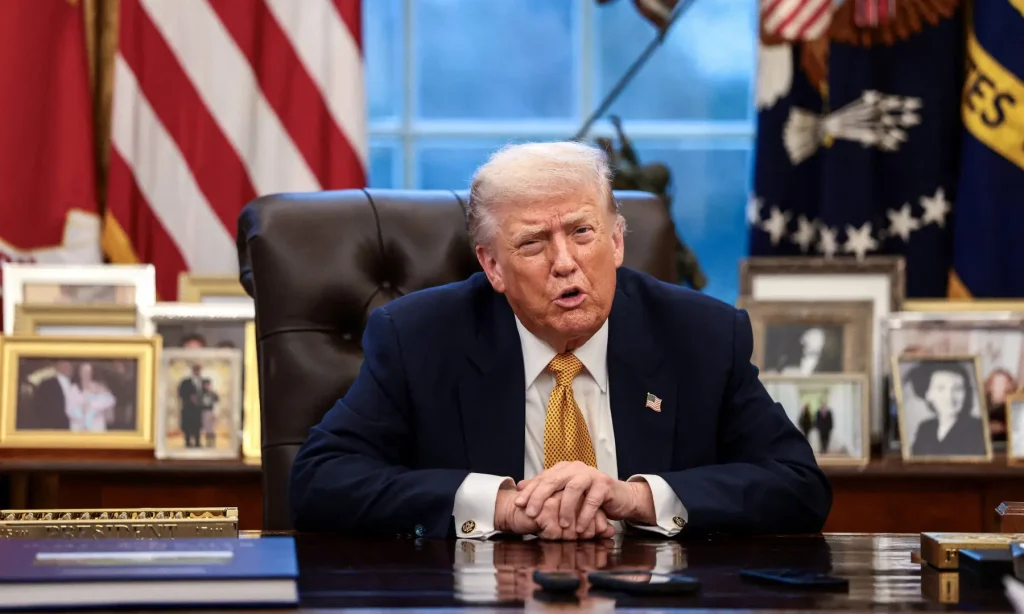
Trump’s Assessment: “Killings Are Easing”
Speaking to reporters in Washington, President Trump said he had been informed that killings related to the crackdown on protests had slowed or stopped, and that Iranian authorities were not planning mass executions.
“I’ve been told the situation is easing,” Trump said, adding that he believed there was no plan for large-scale executions at this time.The statement marked a notable shift from earlier rhetoric, when Trump had issued blunt warnings to Tehran and suggested the U.S. could intervene in support of protesters.
While the president emphasized he was still closely monitoring the situation, his remarks reflected a more cautious posture one that markets, diplomats, and regional governments interpreted as a temporary cooling of tensions.
Tehran Pushes Back: “No Plan to Hang People”
Iran’s foreign minister strongly denied allegations that the government planned to execute protesters en masse.
“There is no plan to hang people,” the minister said, dismissing such claims as misinformation amplified by foreign media and hostile governments.Shortly afterward, Iranian state media reported that a 26-year-old man arrested during protests in Karaj would not face the death penalty, contradicting earlier speculation circulating on social media and some international outlets.
Iranian officials argue that such rumors are part of a psychological and information war, designed to inflame unrest and justify external pressure on Tehran.
The Karaj Case: Why It Matters
The case of the 26-year-old detainee became a focal point of international concern, particularly among human rights groups who feared the revival of harsh judicial measures against demonstrators.
Iran’s confirmation that the man would not be executed served multiple purposes:
- Domestic reassurance aimed at calming public anger
- International signaling to counter accusations of mass repression
- Diplomatic damage control amid rising global scrutiny
Still, rights organizations remain cautious, pointing out that Iran’s judiciary retains wide discretionary powers and that legal outcomes can change rapidly.
Oil Markets React: Prices Slide on De-Escalation Signals
Trump’s comments had an immediate impact on global energy markets. Oil prices fell, reflecting investor belief that the immediate risk of war or major supply disruption had diminished.
Iran sits at the heart of one of the world’s most sensitive energy corridors, and any escalation involving Tehran, Washington, or Israel could send oil prices sharply higher.
The price dip underscored how political rhetoric alone without concrete action can move global markets, particularly at a time of fragile economic recovery worldwide.
Sanctions Continue: Pressure Without War
Despite the softer tone, the Trump administration announced new sanctions on Iran, targeting individuals and entities accused of involvement in human rights abuses and destabilizing activities.
U.S. officials framed the sanctions as a measured response, designed to apply pressure without triggering military confrontation.
This dual-track strategy, economic pressure paired with rhetorical restraint, has become a hallmark of Washington’s Iran policy, though critics argue it often deepens hardship for ordinary Iranians without changing government behavior.
Military Action Still on the Table
Crucially, Trump did not rule out the use of force.
“We’ll watch and see,” he said, leaving open the possibility of military action should the situation deteriorate or U.S. interests be threatened.This ambiguity serves as both a deterrent and a risk factor. While it may discourage escalation by Tehran, it also keeps regional actors on edge, increasing the potential for miscalculation.
Iran’s Security Narrative: Order Restored
Iranian authorities maintain that the unrest is now under control, blaming armed groups and foreign-backed agitators for violence during the protests.
Officials say security forces acted to protect public order and religious sites, alleging attacks on mosques, imambargahs, and government buildings.
Independent verification remains difficult due to internet restrictions and limited media access, a recurring feature of unrest in Iran.
Media War: Competing Narratives
The crisis has unfolded alongside an intense information battle:
- Western media emphasize human rights concerns and repression
- Iranian state media highlight foreign interference and sabotage
- Social media spreads both firsthand accounts and unverified claims
This clash of narratives complicates diplomatic decision-making and fuels mistrust on all sides.
Regional Implications: A Delicate Balance
Iran’s internal unrest has wide-reaching consequences:
- Israel remains on high alert, wary of Iranian retaliation
- Gulf states fear instability spilling across borders
- Pakistan and Turkey urge restraint and dialogue
- Europe calls for de-escalation and respect for human rights
Any escalation could ignite a broader regional crisis involving multiple actors.
Historical Context: Protest and Power in Iran
Iran has weathered numerous protest movements since the 1979 Islamic Revolution. Each wave reflects evolving tensions between economic realities, political authority, and public expectations.
What distinguishes the current unrest is its economic intensity and the degree to which sanctions have amplified everyday hardship.
Strategic Calculations in Washington
For the Trump administration, Iran presents a complex challenge:
- Avoid war while projecting strength
- Support human rights without destabilizing the region
- Apply sanctions without collapsing diplomacy
Trump’s remarks suggest a tactical pause rather than a policy shift.
Strategic Calculations in Tehran
Iranian leaders face their own dilemmas:
- Restore order without alienating the population
- Resist foreign pressure without triggering war
- Preserve regime stability amid economic strain
The denial of execution plans may reflect an effort to reduce international backlash while maintaining internal control.
Human Rights Concerns: Scrutiny Intensifies
International organizations continue to monitor arrests, trials, and reports of abuse. Even as Tehran denies execution plans, pressure is mounting for greater transparency and due process.
The Bigger Picture: Crisis Without Resolution
While immediate tensions appear to have eased slightly, the underlying drivers of sanctions, economic hardship, regional rivalry, and mutual distrust remain unresolved.
Read More: Trump informed Iran he does not intend to attack, asked Tehran to exercise restraint
FAQs
Did Trump confirm the crackdown in Iran has ended?
No. He said he was told it was easing, not that it had fully stopped.
Is Iran planning mass executions of protesters?
Iranian officials deny this, and state media says at least one detainee will not face the death penalty.
Why did oil prices fall?
Markets reacted to reduced fears of immediate military escalation.
Has the U.S. lifted sanctions?
No. The U.S. imposed additional sanctions despite the softer tone.
Could the U.S. still attack Iran?
Yes. Trump explicitly did not rule out military action.
Conclusion
President Trump’s assertion that Iran’s crackdown is easing and Tehran’s denial of execution plans have offered the world a brief moment of cautious relief. Oil markets responded, rhetoric softened, and fears of immediate escalation receded. Yet this moment should not be mistaken for resolution. The structural forces driving the crisis, economic pressure, political repression, regional rivalries, and decades of mutual hostility remain firmly in place.
