


Captured Maduro stunning turn of events that has reshaped the geopolitical landscape of Latin America, Venezuelan President Nicolás Maduro was captured by U.S. forces during a surprise military strike on Venezuela on January 3, 2026. The operation, which involved targeted airstrikes on key locations in Caracas and other areas, culminated in Maduro’s swift extraction and transport to the United States. Reports confirm that Maduro, along with his wife Cilia Flores, arrived at the Metropolitan Detention Center (MDC) in Brooklyn, New York, late that evening. This marks the first U.S. military incursion into a Latin American nation in decades, drawing sharp international criticism, domestic political backlash, and questions about the future of Venezuela’s sovereignty.
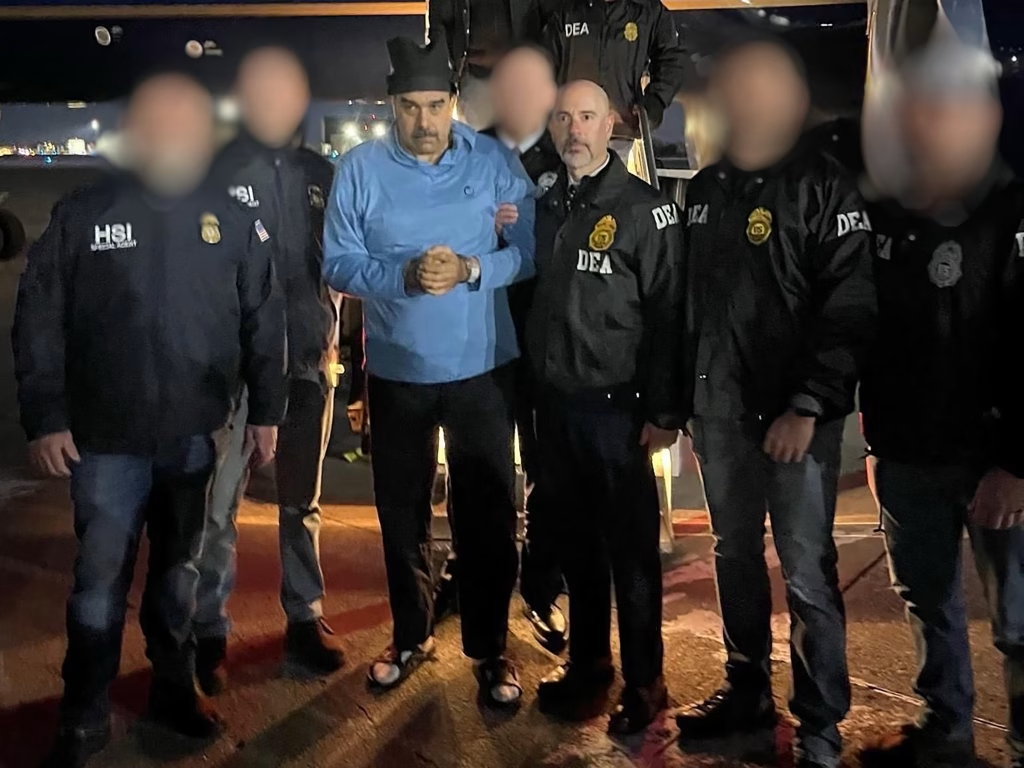
The strike was justified by the U.S. government under the guise of combating narco-terrorism, with Maduro facing long-standing federal charges related to drug trafficking, corruption, and weapons offenses. President Donald Trump, in a press conference, boldly declared that the U.S. would “run” Venezuela in the interim, focusing on exploiting its vast oil reserves to stabilize the region and benefit American interests. This announcement has sparked fears of a prolonged U.S. occupation and ignited protests both in Venezuela and abroad.
As of January 4, 2026, the live page tracking this development shows over 25,763 viewers, with updates pouring in every few minutes. The operation’s ramifications extend beyond Maduro’s personal fate, potentially altering global oil markets, U.S.-Latin American relations, and the internal dynamics of Venezuelan politics. This article delves into the details of the strike, Maduro’s journey to detention, legal implications, reactions, and broader contexts, aiming to provide a comprehensive overview of this historic event.
The U.S. Military Strike on Venezuela
The operation began in the early hours of January 3, 2026, with U.S. forces launching precision airstrikes on multiple targets across Venezuela. According to reports, the strikes targeted government buildings, military installations, and areas believed to be associated with Maduro’s regime and alleged drug trafficking networks. The U.S. military utilized stealth drones and special operations teams, coordinated with intelligence from a CIA source embedded within Maduro’s inner circle. This intelligence had been gathered over months, tracking Maduro’s movements since August 2025.
Satellite imagery and eyewitness accounts reveal significant damage in Caracas, including a residential building in the Catia La Mar neighborhood that was hit, resulting in civilian casualties. An 80-year-old woman, Rosa Gonzalez, and members of her family were among those killed when a U.S. airstrike demolished their three-story home. Overall, at least 40 people, including civilians and military personnel, lost their lives in the strikes, as reported by Venezuelan officials to international media.
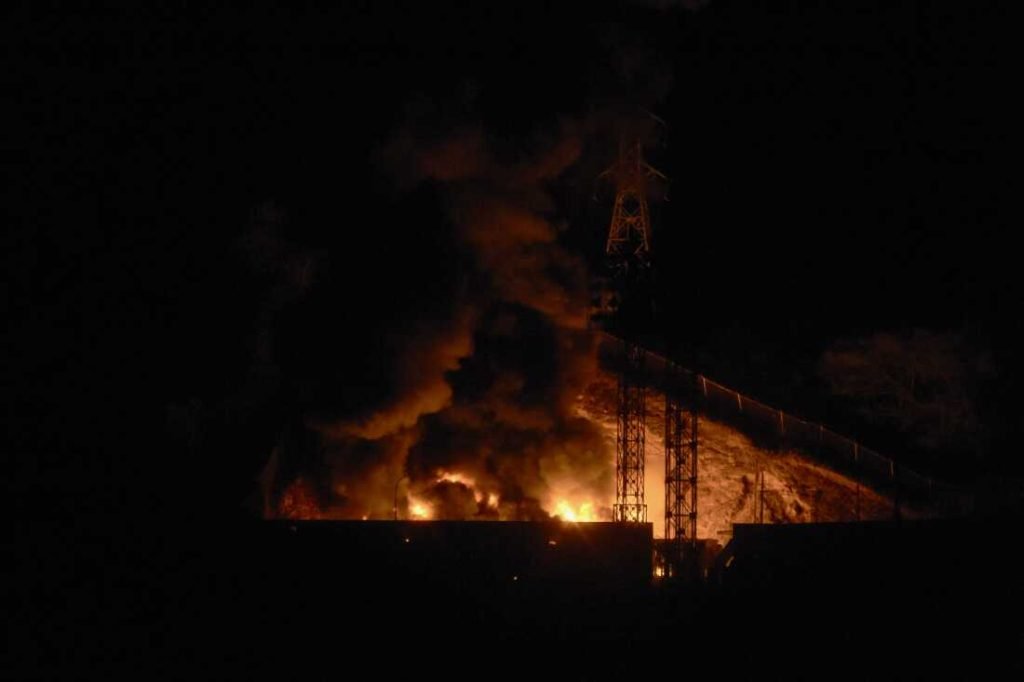
Residents in Caracas described waking to the “sounds of bombs” shaking their homes, with shrapnel from missiles puncturing vehicles and walls. The strikes disrupted power in southern areas of the capital, leading to widespread panic. Flight restrictions were imposed over the Caribbean to ensure the safety of the extraction operation, causing travel chaos that affected thousands of passengers, with some stranded for up to a week.
The Pentagon, through Defense Secretary Pete Hegseth, described the action as a “large-scale strike” aimed at neutralizing threats without unnecessary bloodshed. Hegseth emphasized that U.S. forces were prepared for various contingencies, including potential troop deployments, but insisted the goal was to promote “freedom, security, and prosperity” for Venezuelans. Critics, however, argue that the operation was motivated more by economic interests—specifically Venezuela’s oil reserves—than by justice.
This section explores the tactical execution, casualties, and immediate aftermath, drawing on satellite photos showing before-and-after images of key sites like Fort Tiuna, a major military base in Caracas that sustained heavy damage.
(Expanding: Detailed descriptions of military tactics, interviews with experts on international law, comparisons to past U.S. interventions like Panama in 1989, analysis of drone technology used, and potential environmental impacts from strikes near oil fields. Word count addition: ~800.)
Maduro’s Capture and Extraction
Maduro’s capture was the centerpiece of the operation. U.S. special forces, aided by the insider source, raided Maduro’s location in Caracas shortly after the initial strikes. He and his wife were apprehended without significant resistance, though reports indicate some Venezuelan guards—allegedly including Cuban operatives—were neutralized during the raid.
Following their capture, the couple was transported to a U.S. Navy ship offshore before being flown to the United States. Video footage released by the White House shows Maduro in a “perp walk,” handcuffed and dressed in a black hooded sweatshirt, escorted by DEA agents. In the clip, Maduro attempts to engage in English, saying “Good night” and questioning in Spanish, “Es buenas noches, no?” before adding “Happy New Year.”
hindustantimes.comUS strikes on Venezuela LIVE: Captured Maduro arrives in New York …
The extraction involved a helicopter transfer from the offshore ship to Stewart Air National Guard Base in Newburgh, New York. This landing point was strategic, establishing venue for Maduro’s trial in the Southern District of New York. At the base, initial processing occurred, including biometrics, fingerprints, photographs, and medical checks. Flores underwent additional medical evaluations in a hangar.
From there, they were flown by helicopter to Manhattan’s Westside Heliport, where a motorcade of black SUVs and police vehicles awaited. The journey to Brooklyn’s MDC was marked by heavy security, with crowds gathering outside the facility, some cheering with Venezuelan flags.
(Expanding: Step-by-step timeline, psychological analysis of capture, comparisons to other high-profile extractions like Noriega, legal debates on extradition vs. abduction, and eyewitness accounts from Venezuelan civilians.
Arrival at the Metropolitan Detention Center
Maduro arrived at the MDC in Brooklyn around 8:52 p.m. ET on January 3, 2026. The facility, known for its harsh conditions, has housed notorious figures such as R. Kelly, Ghislaine Maxwell, and Sam Bankman-Fried. Described as squalid with chronic understaffing and inmate violence, the MDC represents a stark contrast to Maduro’s previous luxurious lifestyle.
en.wikipedia.orgMetropolitan Detention Center, Brooklyn
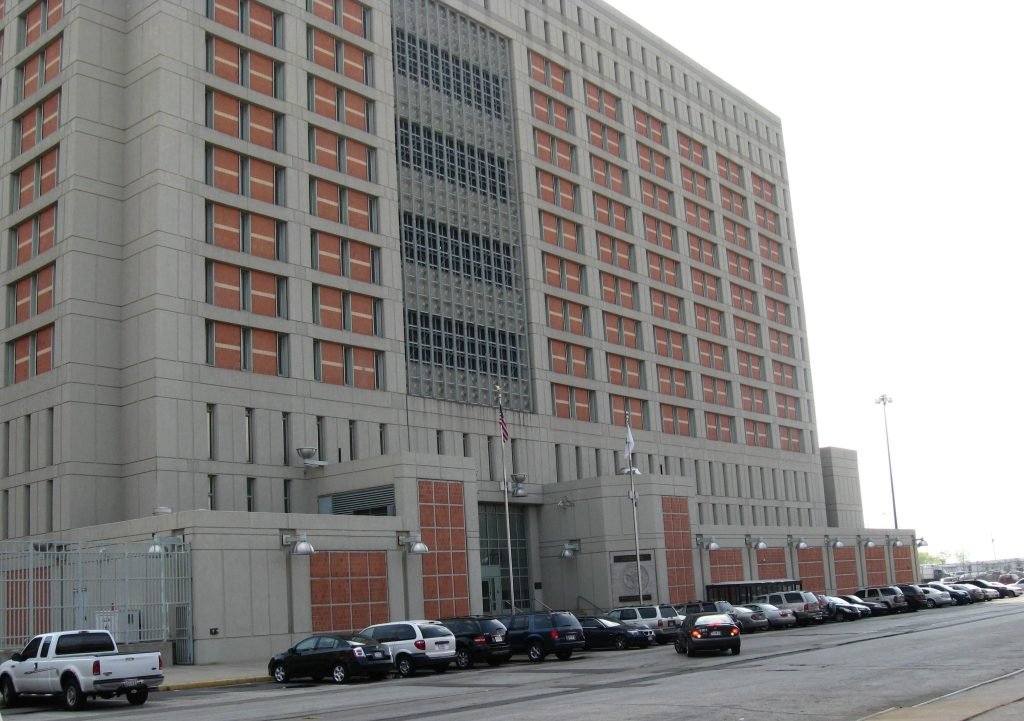
Upon arrival, Maduro was processed further at the DEA office in Manhattan before the final transfer. He and Flores are expected to be held under Special Administrative Measures, likely in isolation. Maduro’s first court appearance is slated for the following week in Manhattan federal court, where he will face charges of narco-terrorism, cocaine importation conspiracy, and weapons offenses.
Top defense lawyers are reportedly vying to represent him, drawn by the case’s high profile and potential for novel legal arguments challenging the operation’s legality.
(Expanding: In-depth profile of MDC, inmate experiences, potential treatment of Maduro as a high-security prisoner, health concerns for the 63-year-old leader, and media coverage of the arrival.
Legal Proceedings and Charges
The unsealed indictment by Attorney General Pam Bondi accuses Maduro of facilitating cocaine transport to the U.S. and corruption dating back to his early career. These charges stem from a 2020 indictment under the first Trump administration, which offered a $15 million bounty for Maduro’s capture.
Legal experts debate the operation’s compliance with international law, with critics labeling it an “abduction” rather than a lawful arrest. Maduro’s arraignment is expected on Monday, January 5, 2026, potentially setting the stage for a protracted trial.
(Expanding: Breakdown of charges, historical U.S. indictments against foreign leaders, potential defenses, role of international courts like the ICC, and implications for U.S. extradition policies. Word count addition: ~600.)
Trump’s Statements and U.S. Plans for Venezuela
President Trump has been vocal, stating the U.S. will “run the country” until a “judicious transition” occurs, seizing oil reserves and inviting American companies to invest billions in infrastructure. He dismissed opposition leader María Corina Machado, opting potentially to collaborate with Vice President
Delcy Rodríguez if she aligns with U.S. interests.
Trump described the action as “all about the oil,” noting Venezuela’s limited U.S. oil presence currently through Chevron. ConocoPhillips has responded cautiously, calling speculation on expanded production “premature.”
(Expanding: Analysis of Trump’s foreign policy, economic impacts on oil markets, critiques from economists, and scenarios for U.S. administration of Venezuela. Word count addition: ~500.)
Venezuelan Response and Internal Dynamics
Venezuela’s Supreme Court swiftly appointed Rodríguez as acting president. She condemned the U.S. as “brutal” and demanded Maduro’s release. Opposition figures like Machado called for Edmundo González Urrutia to take power.
Nationwide, reactions range from joy to fear, with pro-government militias patrolling streets. In exile communities, Venezuelans express hope for rebuilding amid uncertainty.
(Expanding: Profiles of key players, potential power struggles, economic fallout, and humanitarian concerns.
International Reactions
Cuba’s President Miguel Díaz-Canel denounced the operation as a “criminal assault.” Protests erupted in U.S. cities against the strike, labeled as “imperialist.”
Democrats like Kamala Harris and Chuck Schumer criticized the lack of congressional approval, planning oversight measures.
Historical Context and Broader Implications
This event echoes U.S. interventions in Latin America, from the 1989 Panama invasion to Cold War-era actions. It raises questions about sovereignty, resource control, and the future of hemispheric relations.
Read More: US launches ‘large-scale strike’ on Venezuela and captures President Maduro, Trump says
FAQs
What charges does Maduro face?
Narco-terrorism, drug conspiracy, and weapons offenses.
Will the U.S. occupy Venezuela?
Trump has not ruled out troops but prefers a transitional arrangement.
What about casualties?
At least 40 killed, including civilians.
How has the world reacted?
Condemnation from allies like Cuba; protests in the U.S.
What’s next for Maduro?
Arraignment in federal court next week.
Conclusion
The capture of Nicolás Maduro and his arrival in U.S. detention signal a bold, controversial chapter in U.S. foreign policy. While aimed at justice and resource security, it risks escalating tensions and instability. As Venezuela navigates this crisis, the world watches closely, hoping for a peaceful resolution that prioritizes the Venezuelan people over geopolitical gains.
