


US President Donald Trump has warned that “bad things” could happen if Washington and Tehran fail to reach a deal on Iran’s nuclear programme, even as Iranian President Masoud Pezeshkian confirmed he has ordered the launch of negotiations with the United States.
The sharp rhetoric from Trump comes amid heightened regional tensions, ongoing unrest inside Iran, and renewed diplomatic efforts led by regional powers to prevent a military escalation that could destabilise the Middle East.
Trump Balances Threats With Hope for Diplomacy
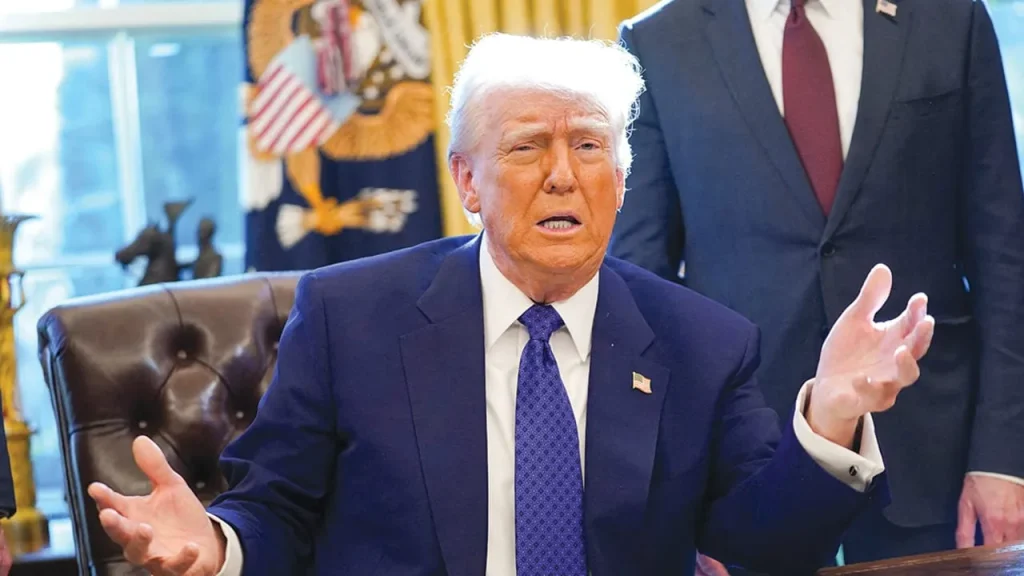
Speaking late Monday, Trump said he remained hopeful that the two sides could “work something out,” but issued a stark warning that time was running out.
“Bad things would happen” if no agreement is reached, he said, echoing earlier statements in which he suggested military action remains an option should diplomacy fail.
The warning follows Washington’s decision to dispatch an aircraft carrier strike group to the Middle East, a move widely seen as a signal of pressure amid growing concerns over Iran’s nuclear activities and its response to recent domestic protests.
The United States and its allies have long accused Iran of seeking to develop nuclear weapons — a claim Tehran has repeatedly denied, insisting its nuclear programme is strictly for peaceful purposes.
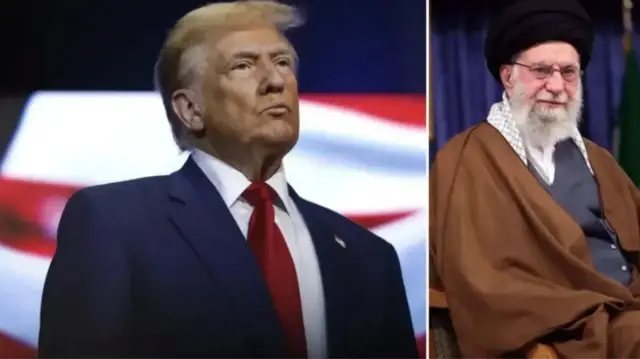
Iran Orders Nuclear Talks With Conditions
Iranian state media reported on Monday that President Masoud Pezeshkian had instructed his government to begin preparations for nuclear talks with Washington. Pezeshkian confirmed the move publicly on Tuesday.
“I have instructed my Minister of Foreign Affairs, provided that a suitable environment exists, one free from threats and unreasonable expectations to pursue fair and equitable negotiations,” Pezeshkian said in a post on X.
He stressed that any discussions would take place strictly “within the framework of our national interests,” signalling that Tehran will not negotiate under pressure or coercion.
Iranian officials have repeatedly said diplomacy remains their preferred path, while warning that any military aggression would be met with a strong and unrestrained response.
Possible Istanbul Meeting This Week
According to an Arab official speaking to AFP on condition of anonymity, a high-level meeting could take place in Turkiye as early as Friday, following mediation efforts by Egypt, Qatar, Turkiye, and Oman.
US news outlet Axios reported that Iranian Foreign Minister Abbas Araghchi is expected to meet with US envoy Steve Witkoff in Istanbul to explore a potential framework for reviving or replacing previous nuclear agreements.
Messages between Washington and Tehran have reportedly been exchanged through regional intermediaries, as both sides attempt to test the possibility of renewed talks without direct confrontation.
Iran Signals Willingness But Demands Sanctions Relief
In an interview with CNN on Sunday, Araghchi appeared to align with Trump on one key point: opposition to nuclear weapons.
“President Trump said no nuclear weapons, and we fully agree,” Araghchi said. “That could be a very good deal.”
However, he made clear that Iran expects concrete concessions in return, particularly the lifting of economic sanctions, which have severely impacted Iran’s economy.
Foreign ministry spokesman Esmaeil Baqaei said Tehran was finalising a framework for negotiations that would be ready in the coming days, suggesting talks could move quickly if conditions allow.
Regional Diplomacy Intensifies
Turkiye has taken a leading role in attempting to de-escalate tensions. Araghchi visited Istanbul last week and held talks with regional counterparts, including officials in Egypt, Saudi Arabia, and Jordan.
Jordan’s foreign minister, Ayman Safadi, assured Iran on Monday that his country would not allow its territory to be used as a staging ground for military action against Tehran.
Iran’s Supreme Leader Ayatollah Ali Khamenei has warned that any US attack would trigger a regional war, a prospect that has alarmed neighbouring states already dealing with instability and conflict.
Domestic Unrest Casts a Long Shadow
The diplomatic manoeuvring comes against the backdrop of Iran’s most intense protests in years. Demonstrations erupted in late December over economic hardship and surged in early January, with authorities responding with a sweeping security crackdown.
Iranian officials have described the protests as “riots” orchestrated by foreign enemies, including the United States and Israel. Khamenei has likened the unrest to an attempted coup.
The presidency acknowledged on Sunday that 3,117 people were killed during the protests, publishing the names of 2,986 of the dead. Authorities insist most victims were security personnel or civilians caught in violence attributed to “terrorist acts.”
Human rights groups dispute the official narrative, estimating that at least 40,000 people have been detained since the unrest began.
Voices From the Street
In Tehran, reactions remain mixed.
“I’m not afraid of war,” said Ali Hamidi, a 68-year-old war veteran. “But America should mind its own business. Why does it want to police the world?”
At the same time, Hamidi criticised Iran’s leadership for failing to ease economic suffering. “The economic troubles are back-breaking. Officials should do something tangible, not just talk,” he said.
Others have chosen to flee. Selina, a 25-year-old Iranian who declined to give her full name, told AFP she had travelled to Iraqi Kurdistan to escape what she described as constant fear.
“We don’t even dare to go out after 6:00 pm,” she said. “Soldiers are everywhere.”
International Fallout and Sanctions
The crackdown has triggered a wave of international condemnation. The European Union designated the Islamic Revolutionary Guard Corps (IRGC) as a terrorist organisation, prompting Iran’s parliament to retaliate by branding European armies as terrorists.
The EU also imposed fresh sanctions on Iranian officials, including the interior minister. Britain followed suit on Monday, sanctioning 10 individuals over what it described as the “brutality against protesters.”
In response, Iran summoned ambassadors from all EU member states in Tehran and warned of further retaliatory measures.
Iranian state television also announced the arrest of four foreign nationals accused of participating in the unrest, without disclosing their nationalities.
Read More: Iran weighs nuclear diplomacy with US, but gaps over missiles remain
FAQs
Why is the US pressuring Iran now?
The US says Iran’s nuclear programme is advancing rapidly and fears it could lead to nuclear weapons development, while Iran’s internal unrest has added urgency to diplomatic and security concerns.
Is Iran actually willing to negotiate?
Yes, Iranian leaders say they support diplomacy, but insist talks must be free from threats and include sanctions relief.
What role is Turkiye playing?
Turkiye is acting as a mediator, hosting potential talks and coordinating with regional powers to prevent escalation.
Could this situation lead to war?
Both sides say they prefer diplomacy, but threats, military deployments, and regional instability mean the risk of escalation remains real.
How do sanctions factor into the talks?
Iran has made it clear that any nuclear agreement must include significant sanctions relief to ease its economic crisis.
Conclusion
The renewed push for nuclear talks between the United States and Iran comes at a moment of extreme tension, marked by domestic unrest in Iran, international sanctions, and mounting military signals from Washington. While President Trump’s warning of “bad things” underscores the risks of failure, Tehran’s decision to authorise negotiations suggests both sides recognise that diplomacy may still be preferable to confrontation.
