


Trump says Iran volatile period for Middle East geopolitics, US President Donald Trump has said that the United States and Iran are in communication to try to avert military escalation, even as both sides build up military postures and tensions remain high. Trump’s comments come at a time of heightened rhetoric, deployments of naval forces to the region, Iranian warnings of a wider conflict, and continuing domestic unrest inside Iran.
Trump’s remarks that Iran is “seriously talking” with the United States and that there is potential to reach an agreement have drawn global attention, fuelling both hope for a diplomatic solution and fears of an impending confrontation.
This article explores the background of these developments, analyzes the implications of the reported talks, examines official positions from both Washington and Tehran, discusses the regional and global context, weighs expert assessments, and answers frequently asked questions around this critical moment.
Background: Rising US-Iran Tensions in 2026
A Legacy of Conflict and Sanctions
The United States and Iran have had a fraught relationship for more than four decades, shaped by the 1979 Iranian Revolution, US sanctions on Iranian oil exports, and disputes over Iran’s nuclear ambitions. The US withdrawal from the 2015 nuclear deal under Trump’s earlier presidency deepened mistrust between the two nations.
Escalation Following Iranian Domestic Crackdown
In late 2025 and early 2026, Iran experienced widespread protests against economic conditions and political repression. The government’s harsh response drew global condemnation, and President Trump threatened potential US action in response to human rights abuses and what Washington describes as threats from Iran’s nuclear and missile programs.
Deployment of US Military Assets
Against this backdrop, the United States has moved significant naval forces into the Middle East. A carrier strike group led by the USS Abraham Lincoln and additional destroyers were deployed to the region in what US officials describe as a deterrent to instability but which Iranian leaders view as provocative.
Trump’s Announcement: “Serious Talks” with Iran
What the President Said
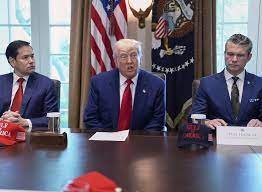
In remarks to reporters aboard Air Force One, President Trump indicated that Iran and the United States were in communication and that discussions were underway to avert military confrontation. He reiterated that a deal with Tehran could be possible if acceptable terms were agreed upon.
Trump emphasized that Iran was “seriously talking” with the United States and expressed hope that negotiations could lead to “something that’s acceptable.” However, he also kept the option of military action on the table, saying that forces in the region were prepared if negotiations failed.
When asked whether he had shared US military plans with regional allies, Trump stated he had not, adding that revealing such details would be counterproductive.
Combatting Escalation While Signalling Strength
Trump’s comments struck a blend of diplomatic openness and hardline deterrence. By asserting that talks were in progress, he projected a willingness to pursue diplomacy. At the same time, by stressing the strength of US forces and retaining the military option, he sought to maintain pressure on Iran to negotiate.
Tehran’s Response: Caution and Conditions
Iranian Officials Signal Negotiation Interest
Iranian Foreign Minister Abbas Araghchi has acknowledged that Iran is open to “fair and equitable” negotiations, but he also stressed that dialogue could not occur under the shadow of threats. He told reporters that Iran was willing to engage, provided discussions were conducted on mutually respectful terms.
Araghchi also reiterated that Iran would not negotiate away its defensive capabilities, particularly missile systems, which Tehran considers essential to its security.
No Formal Talks Yet Arranged
Despite these statements, Iranian officials clarified there were no concrete plans in place for direct talks with the United States at the time of reporting. They reiterated that lines of communication remain open while underlining Iran’s readiness for all eventualities, including war if provoked.
Supreme Leader’s Warning
Iran’s Supreme Leader Ayatollah Ali Khamenei warned that any US military strike would escalate into a broader regional conflict, asserting that Iran does not seek war but will vigorously defend itself if attacked.
These positions highlight Tehran’s attempt to balance openness to negotiation with a firm refusal to be coerced by military threats.
The Regional and Global Context
Gulf States and Regional Dynamics
Neighboring countries in the Gulf have expressed concern over the possibility of conflict. Some states, such as Saudi Arabia and the UAE, have been cautious in their support for US pressure on Iran, emphasizing the need to avoid military escalation that could destabilize energy markets and regional security.
European Involvement
European nations have also been drawn into the broader disputes. In response to Iran’s crackdown on protests and the deployment of US forces, the European Union designated elements of Iran’s paramilitary forces as terrorist organizations, prompting reciprocal Iranian actions.
Global Economic Stakes
The Strait of Hormuz, through which a significant percentage of the world’s oil supply transits, lies at the heart of potential escalation risks. Any conflict that disrupts shipping through the strait could have major global economic consequences. Analysts warn that even rhetoric around closure of the strait can trigger volatility in oil markets.
Why Talks Matter: Diplomacy and Military Risk
The Human and Economic Cost of Conflict
A direct conflict between the United States and Iran could have devastating human costs, both in the region and beyond. Previous confrontations, such as the 12-day conflict in 2025 involving broader Middle East tensions, demonstrated how quickly localized fights can spiral into wider clashes.
Beyond human lives, military conflict could cripple regional economies, trigger refugee flows, and disrupt global trade — particularly energy supplies that are vital to economies worldwide.
Averting the Worst Through Dialogue
If communication channels remain open and negotiations proceed in good faith, there is potential to address key disputes — including Iran’s nuclear program, missile development, and regional conduct — without resort to force.
The prospect of negotiations has been buoyed by diplomatic efforts from third-party actors such as Turkey, Qatar, and Oman, who have offered to facilitate dialogue between Tehran and Washington.
Contentions and Competing Narratives
US Position: Negotiations Under Duress
In Trump’s framing, Iran is considering dialogue because it faces overwhelming US pressure and the real possibility of military action. He has characterized Iran’s engagement as serious but contingent on acceptable terms.
Iran’s Position: Talks With Conditions
Iran, meanwhile, insists that negotiations must be free of threats and must respect its sovereign rights. Iranian leaders have rejected the notion of ceding defensive capabilities or being coerced into agreements that diminish national security.
Analysts’ Assessments
Regional analysts caution that diplomatic overtures may be fragile, given deep mistrust on both sides and competing strategic interests in the Middle East. Many observers note that while talks are a positive signal, they do not guarantee a breakthrough absent concessions from both parties.
Read More: Starmer and Xi hail a reset in ties, helped by large AstraZeneca investment
FAQs
Are the United States and Iran officially in talks?
According to President Trump, Iran is “seriously talking” with the United States to try to avert military escalation, though Iranian officials say there are no formal negotiations arranged yet.
What is the main issue under negotiation?
Key sticking points include Iran’s nuclear program, missile development, regional influence, and conditions tied to reducing sanctions although Tehran insists that defensive capabilities like missiles are not up for discussion.
Why is the US building up forces in the Middle East?
The United States has deployed a significant naval presence to deter instability and to prepare for any potential conflict if diplomacy fails.
What does Iran say about military threats?
Iran’s Supreme Leader has warned that any US strike would trigger a regional war, signaling strong resistance to outside military pressure.
Are other countries involved?
Countries such as Turkey, Qatar, and Oman have voiced support for diplomatic engagement and, in some cases, offered to mediate between the US and Iran.
Conclusion
The recent statements by Trump that Iran and the United States are talking to avert military escalation reflect a nuanced moment in global geopolitics. On the one hand, diplomatic engagement — even informal offers a potential avenue to resolve long-standing disputes and to prevent the disastrous consequences of war. On the other, entrenched mistrust, military preparations, and contradictory public rhetoric underscore how fragile any progress might be.
