


Thousands March Worldwide in Solidarity With Palestine and Iran on Al-Quds Day
Tens of thousands of people across the globe took to the streets to mark International Quds Day, demonstrating support for Palestinians and, this year, also voicing solidarity with Iran amid the ongoing regional conflict.
The annual event, held on the final Friday of Ramadan, witnessed large rallies in countries across the Middle East and Asia, including Iran, Malaysia, Indonesia, Kashmir, Yemen, and Pakistan.
The 2026 observance took place against the backdrop of a rapidly escalating conflict in the Middle East involving Israel, Iran, and the United States, adding a heightened political and emotional tone to demonstrations worldwide.
Massive Demonstrations in Tehran
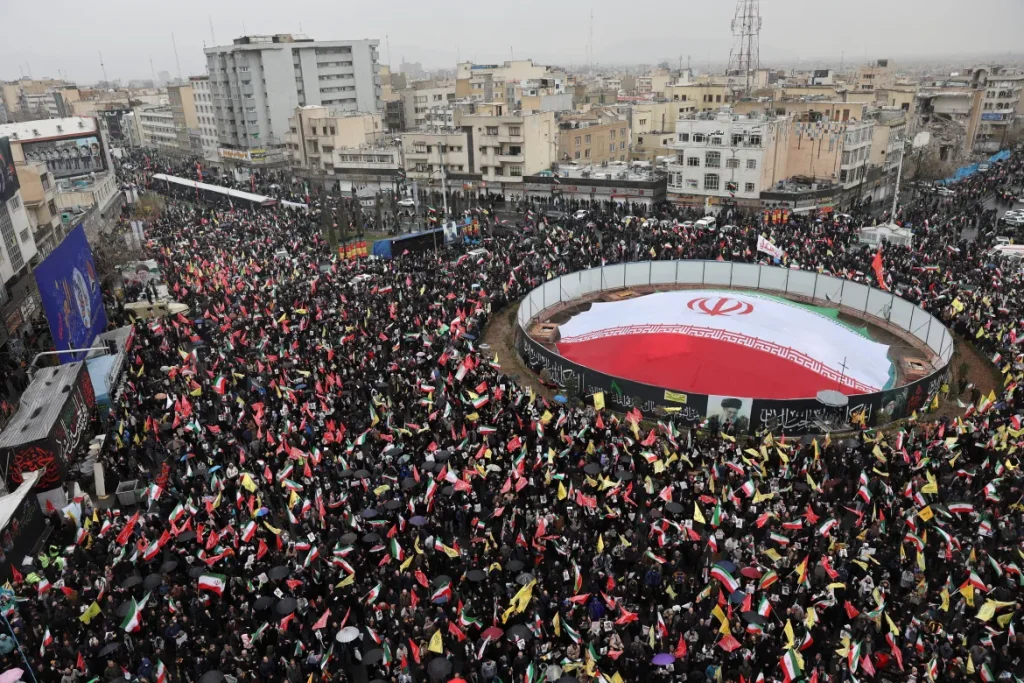
The largest demonstrations occurred in Tehran, where thousands gathered despite the ongoing military strikes affecting parts of the country.
Participants marched through major streets waving Palestinian flags, carrying banners, and chanting slogans against Israel and the United States. Iranian state media reported a strong turnout across multiple cities, even as tensions and security concerns remained high.
The marches came just days after escalating military exchanges between Iran and a U.S.-Israeli coalition, a conflict that has already caused significant casualties.
According to Iran’s Health Ministry, at least 1,444 people have been killed and more than 18,500 injured since the fighting intensified in late February.
Among those killed was Iran’s Supreme Leader Ali Khamenei, whose death has further intensified national emotions and political tensions.
Global Demonstrations Show Solidarity
Outside Iran, demonstrations also took place in major cities across Asia and the Middle East.
In Kuala Lumpur, large crowds marched toward the U.S. embassy carrying Palestinian flags and chanting slogans in support of Gaza and Iran.
Similarly, protesters gathered outside diplomatic missions in Jakarta, expressing anger at U.S. and Israeli military actions.
In Sanaa, thousands of supporters associated with the Houthi movement joined rallies condemning Israel and Western powers.
Meanwhile, demonstrations also occurred in Islamabad, where Shia communities and pro-Palestinian activists gathered for annual marches highlighting the importance of Jerusalem to Muslims.
Protests in Kashmir Turn Fiery
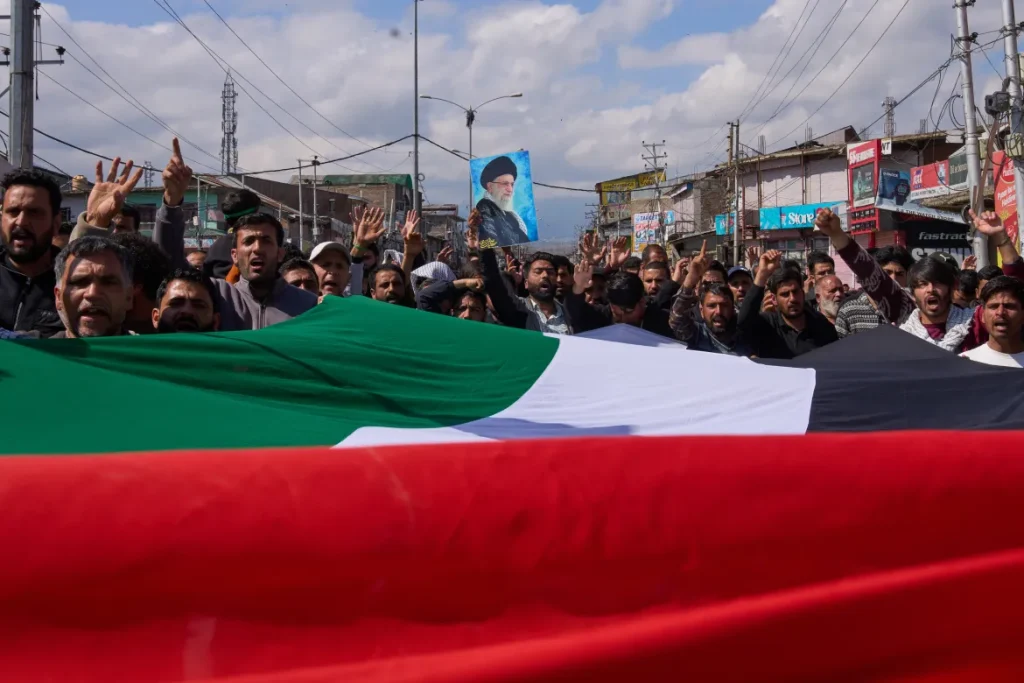
In Indian-administered Kashmir, protesters gathered in several towns and villages to observe Al-Quds Day.
During rallies in the Srinagar region, demonstrators burned symbolic coffins bearing images of Donald Trump and Benjamin Netanyahu.
Participants chanted slogans condemning U.S. and Israeli policies while expressing support for Palestinians in Gaza.
Security forces monitored the demonstrations closely, though reports indicated that most events concluded without major violence.
London March Banned for the First Time in Decades
In a significant development, authorities in the United Kingdom banned the annual Al-Quds Day march in London.
Officials cited concerns about potential clashes between opposing protest groups due to the volatile situation in the Middle East.
The ban marks the first time in nearly 40 years that London’s Al-Quds Day march has been prohibited.
The last comparable protest ban occurred in 2012 when British authorities blocked demonstrations organized by the English Defence League.
Government officials said the decision was made purely on public safety grounds.
Origins of Al-Quds Day
Al-Quds Day was first established in 1979 by Ruhollah Khomeini shortly after the Iranian Revolution.
Khomeini called for Muslims around the world to dedicate the final Friday of Ramadan to expressing solidarity with Palestinians and opposing Israeli control over East Jerusalem.
The word “Al-Quds” is the Arabic name for Jerusalem, which holds deep religious significance for Muslims, Christians, and Jews.
Over the decades, Al-Quds Day has evolved into an international event with demonstrations held in dozens of countries each year.
Supporters and Critics of the Event
Supporters say the event provides a global platform to advocate for Palestinian rights and raise awareness about the situation in Gaza and the occupied territories.
Critics, however, argue that the event is often used by Iran and allied political groups to promote anti-Western rhetoric and expand geopolitical influence in the region.
Despite these criticisms, participation in Al-Quds Day events continues to grow in several parts of the world.
Jerusalem’s Symbolic Importance
Jerusalem remains one of the most contested cities in the world.
- For Muslims, the city is home to the Al-Aqsa Mosque, the third holiest site in Islam.
- For Jews, it contains the Western Wall, part of the ancient Temple complex.
- For Christians, the city holds religious landmarks such as the Church of the Holy Sepulchre.
This deep religious significance makes Jerusalem central to both political and spiritual debates in the region.
Read More: Iran’s Supreme Leader Mojtaba Khamenei says Strait of Hormuz should remain shut
FAQs
What is Al-Quds Day?
Al-Quds Day is an annual international event held on the final Friday of Ramadan to express solidarity with Palestinians and oppose Israeli control over Jerusalem.
Who started Al-Quds Day?
The event was established in 1979 by Iranian leader Ruhollah Khomeini after the Iranian Revolution.
Why is Jerusalem important in the protests?
Jerusalem, known as Al-Quds in Arabic, is considered a holy city in Islam, Judaism, and Christianity, and remains a central issue in the Israeli-Palestinian conflict.
Where are Al-Quds Day demonstrations held?
Demonstrations take place worldwide, including in Iran, Pakistan, Malaysia, Indonesia, Yemen, and parts of Europe and North America.
Why was the London march banned in 2026?
Authorities in the United Kingdom banned the London march due to concerns about possible clashes between rival protest groups amid heightened Middle East tensions.
Conclusion
The 2026 Al-Quds Day demonstrations unfolded during one of the most volatile moments in recent Middle Eastern history. As tensions between Iran, Israel, and the United States escalate, the annual event has taken on even greater political significance. For supporters, the marches serve as a global call for Palestinian rights and international attention to the ongoing conflict. For critics, the demonstrations reflect the growing geopolitical divisions shaping the region. Regardless of perspective, the large crowds seen across cities from Tehran to Kuala Lumpur highlight how deeply the issue of Jerusalem and Palestinian statehood resonates with millions of people worldwide.
