

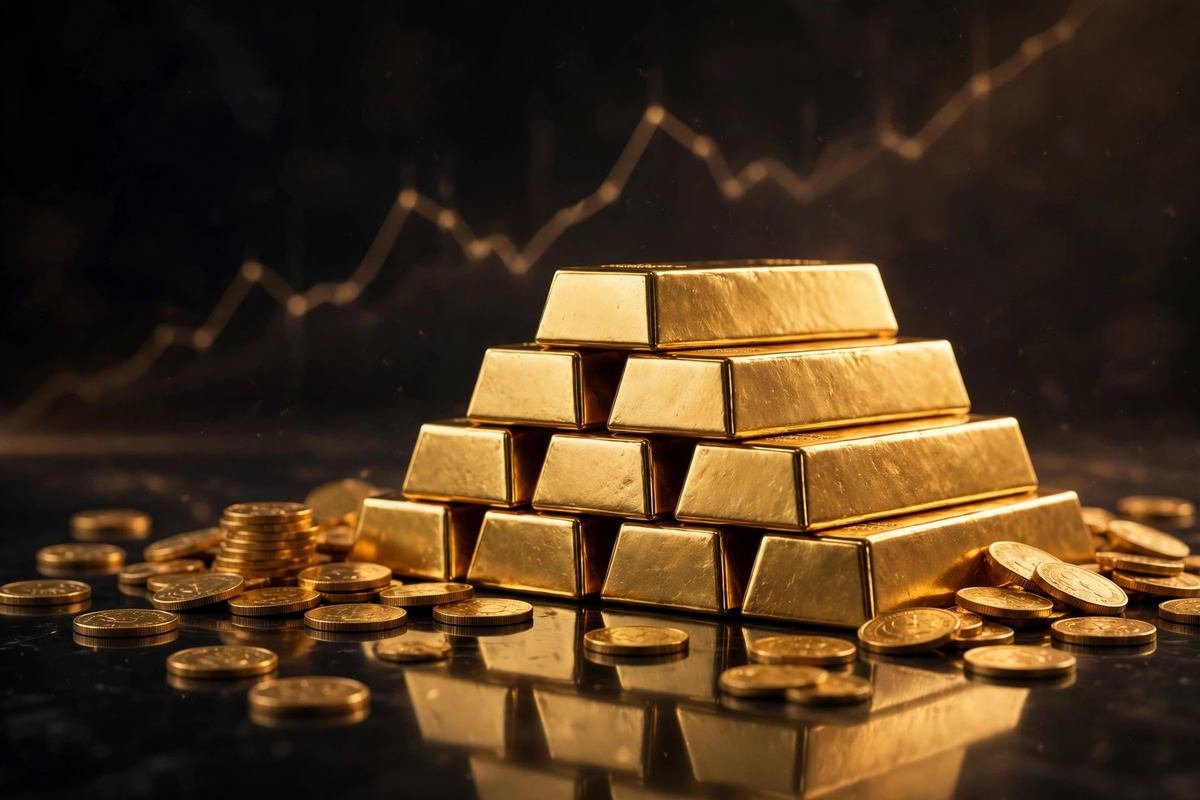
Gold Price 2026: Why Gold Crossed $4,000 and What Comes Next
The gold price 2026 rally has done something no one in the market expected at the start of the year: it smashed through $4,000 an ounce, set an all-time record of $4,381.21 on October 20, and is still trading above $4,000 as the US Federal Reserve announces its latest policy decision on October 28. Spot gold traded near $4,058.20 an ounce on October 27, up $42, or 1.05 percent, on the day, while silver held above $54.
The gold price 2026 rally is not a one-day spike. It is the result of central banks buying at a historic pace, investors seeking safety from trade wars and a weaker dollar, and a market that has learned to live with higher interest rates. This guide explains the gold price in 2026 in plain terms — how high it has gone, why it is rising, what the Federal Reserve’s decision means for it, and the risks that could still push it down. The Fed’s decision matters so much for gold because interest rates set the cost of holding a metal that pays no yield, as covered in our Fed rate decision October 2026 analysis.
Read More: Oracle Stock Climbs 7% on Q1 Results — how strong earnings are lifting US stocks while investors also pile into gold as a hedge.
Gold Price 2026: How High Has Gold Gone?
Gold’s 2026 rally has been relentless. Spot gold reached a record high of $4,381.21 an ounce on October 20, 2026, according to Reuters data, before pulling back about 5 percent in the days that followed. The metal fell to around $3,975 on Friday, October 23, its lowest level in more than three months, as higher oil prices stoked inflation worries and pushed expectations that US monetary policy could stay restrictive.
The recovery was fast. Spot gold rose 0.6 percent to $4,018.81 on Monday, October 26, with December gold futures gaining 0.7 percent to $4,033.60, and by Tuesday, October 27, spot gold was trading near $4,058.20, up 1.05 percent on the session. Silver tracked the move, trading near $54.20, up 0.66 percent. The key question for investors now is whether gold can hold above the psychologically important $4,000 level.
For context, gold traded below $2,700 an ounce at the start of 2025. The metal has climbed more than 60 percent since then, a move driven less by speculation and more by structural buying from the world’s central banks.
| Date | Gold price (spot, per ounce) | What happened |
|---|---|---|
| October 9, 2026 | About $4,204 (December futures) | Gold futures pushed above $4,200 on COMEX |
| October 20, 2026 | $4,381.21 | All-time record high |
| October 23, 2026 | About $3,975 | Three-month low after oil-driven inflation fears |
| October 26, 2026 | $4,018.81 | Rebounded above $4,000 as oil prices eased |
| October 27, 2026 | $4,058.20 | Up 1.05% after strong US consumer confidence data |
Why Is the Gold Price 2026 Rising?
The gold price 2026 surge is happening for several reasons at once, and that combination is what makes this rally different from a short-lived spike. The main drivers are central bank buying, trade and geopolitical tension, a weaker dollar, and gold’s role as a hedge against inflation and currency risk.
Central banks are buying gold at a historic pace
The single biggest force behind the gold price 2026 rally is official-sector buying. Central banks bought 288.9 metric tons of gold in the second quarter of 2026 alone, according to World Gold Council data, while exchange-traded fund holders were selling. China has increased its gold reserves for an 18th consecutive month as part of a shift away from the dollar, and a World Gold Council survey found that a record 43 percent of 73 global monetary authorities expect their own gold reserves to rise over the next year.
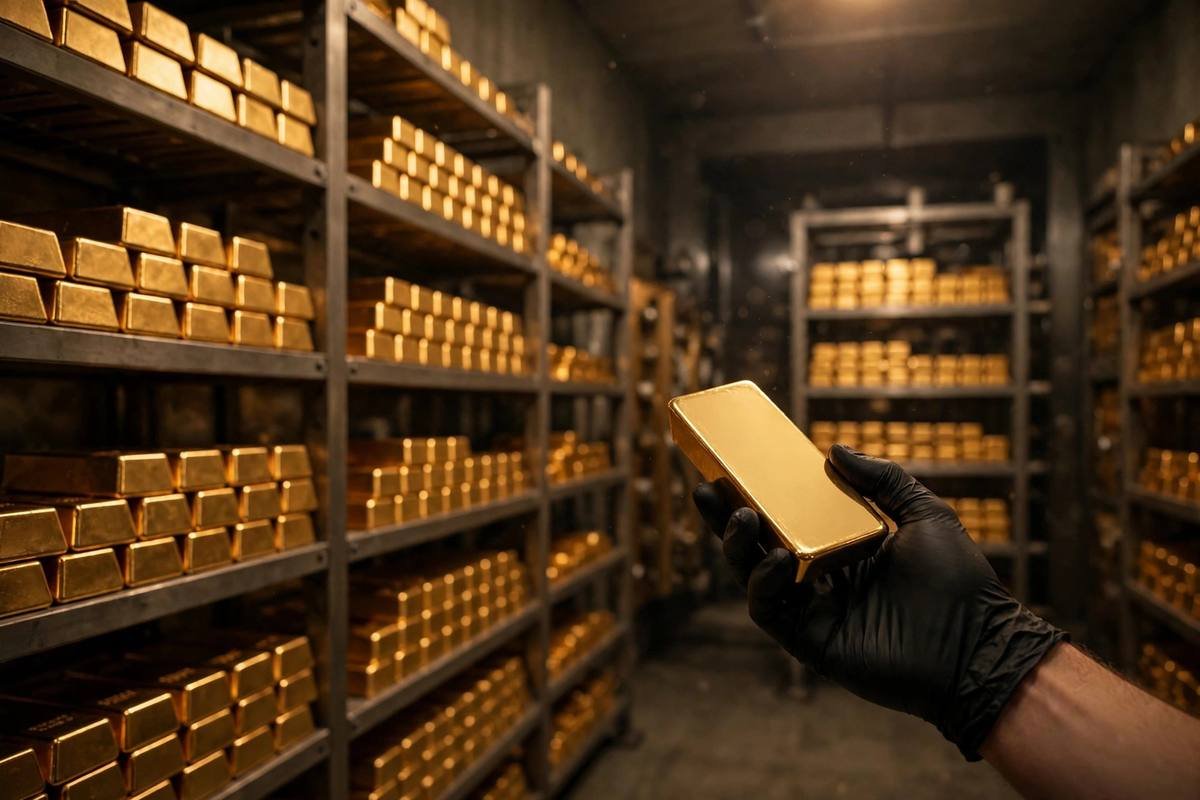
The scale of the shift is striking: gold’s share of global central bank reserves has risen from roughly 14 percent in 2023 to nearly 25 percent, according to Bundesbank President Joachim Nagel, speaking at an LBMA conference. Countries are buying for two reasons. Some, with strained ties to Washington, want protection against the risk that the US and its allies could freeze dollar reserves held in the international banking system — physical bullion cannot be frozen. Others, such as Poland, are buying to strengthen confidence in their own currency amid regional instability. The Dutch central bank even moved roughly 86 tonnes of gold from the US and Canada to London between March and August 2026, cutting the share of Dutch gold held in the US from 31.3 percent to 18.5 percent.
Trade wars and tariff threats shake markets
President Donald Trump’s aggressive trade stance has turned gold into a geopolitical escape hatch. Sweeping tariff threats and disputes such as the Greenland row have raised concerns that the US dollar itself has become a political risk for foreign governments. That apparent weaponisation of the currency has triggered a historic pivot, as central banks and investors reduce exposure to US assets and build up holdings of neutral, physical bullion.
A weaker dollar lifts gold
As trade tensions and political risks have grown, confidence in the US dollar has wobbled. Gold typically moves in the opposite direction to the greenback: a softer dollar makes bullion cheaper for foreign buyers and reinforces its role as a hedge against currency risk. Doubts about the dollar push gold higher, and gold’s rise in turn signals deepening unease about the currency.
Safe-haven demand in uncertain times
Gold’s traditional role is as a safe haven — the asset investors buy when they fear inflation, currency devaluation or geopolitical instability. With diplomatic tensions involving Iran and several regional powers moving energy markets, and with public debt at or near post-war highs in advanced economies, that safe-haven demand has stayed strong even when other factors pointed the other way.
Gold Price 2026 and the Federal Reserve Decision
The Federal Reserve announces its monetary policy decision on Wednesday, October 28, and the gold market is watching closely. Gold pays no interest, so higher interest rates raise the cost of holding it and usually push the price down. Lower rates do the opposite. That is why every Fed meeting moves the gold price.
The signals heading into this decision are mixed. On Tuesday, October 27, the Conference Board reported that US consumer confidence rose to 91.7 in October, well above the consensus forecast of 81 and above the upwardly revised 84.2 reading from September. The Present Situation Index increased by 8.6 points to 120.4, and the Expectations Index recovered by 6.9 points to 72.6. Gold still rose after the data, hitting a session high of $4,048.48 an ounce — a sign that safe-haven demand is currently outweighing rate worries.
Other US data pointed the same way. September durable goods orders rose 1.8 percent, orders excluding transportation increased 0.5 percent, and business investment — nondefense capital goods orders excluding aircraft — also advanced 0.5 percent. September new-home sales slipped to a seasonally adjusted annual rate of 676,000 units from a revised 680,000 in August, but still beat expectations of about 650,000. Meanwhile, Brent crude fell around 2 percent to approximately $114 per barrel on Monday, easing immediate inflation concerns and supporting gold.
Market expectations for the Fed’s decision are divided. Some reports put the central bank as widely expected to leave interest rates unchanged, while futures markets had priced a nearly 60 percent probability of an October 28 hike. What matters for gold is not just the decision itself but the Fed’s message about the path ahead: a hawkish signal that rates will stay high would cap gold’s upside, while any hint of future cuts would likely lift it.
Gold Price 2026 vs Other Assets: A Comparison
The gold price 2026 performance stands out against other major assets. Stocks have been strong — Wall Street rallied ahead of the Fed decision — but gold has matched or beaten them while offering protection that equities cannot. Silver has tracked gold higher, staying above $54 an ounce, and oil has swung sharply on geopolitical news, falling back as diplomatic engagement reduced the near-term risk premium.
| Asset | Position in late October 2026 | Main driver |
|---|---|---|
| Gold (spot) | About $4,058 per ounce | Central bank buying, safe-haven demand |
| Silver (spot) | About $54.20 per ounce | Tracking gold; industrial demand support |
| US stocks | Rallying ahead of Fed decision | Strong earnings, resilient consumer demand |
| Brent crude oil | About $114 per barrel | Geopolitical tensions easing after diplomatic engagement |
| US dollar | Firmer, but confidence wobbling | Trade tensions, Fed rate expectations |
One important contrast: while central banks bought 288.9 tons of gold in the second quarter, US-listed gold exchange-traded funds shed 61 metric tons in the first half of 2026 — the second-largest first-half outflow by value on record. That split tells the story of this rally: rate-sensitive investors are selling gold funds because higher cash yields weaken demand for non-yielding assets, while sovereign buyers who care less about interest rates keep buying. Physical buyers purchased about 1,200 metric tons of bars and coins in 2025, and that demand has continued.
What Could Push the Gold Price 2026 Higher or Lower?
The gold price 2026 outlook depends on the balance between structural demand and interest-rate pressure. Analysts at Société Générale describe it as a dual-driver market: official-sector demand provides a price floor, while real yields cap the ceiling. The bank remains strategically bullish, arguing that the post-2022 regime shift has seen gold trade near record highs despite positive real yields — something that would have been unlikely in earlier cycles.
Factors that could push gold higher
- More central bank buying: With 43 percent of monetary authorities expecting to add to reserves, official demand looks durable rather than temporary.
- A dovish Fed: Any signal that US rates have peaked or will fall would lower the cost of holding gold and likely lift the price.
- Escalating trade or geopolitical tension: Fresh tariff threats or conflict would drive more safe-haven buying.
- A weaker dollar: Further loss of confidence in the dollar would make gold cheaper for foreign buyers and reinforce the rally.
- Debt and inflation worries: With public debt near post-war highs, the historical resolutions — financial repression, inflation or currency depreciation — all favour gold.
Factors that could push gold lower
- A hawkish Fed: A sharp monetary policy reversal driving rapidly rising real yields is the key risk flagged by Société Générale.
- A stronger dollar: Firm US data and higher yields would attract money back into dollar assets.
- Profit-taking: Gold is already about 22 percent below its record after the pullback from $4,381, and a crowded trade can unwind fast.
- Cooling central bank demand: If official buying slows, the price floor weakens.
- Lower oil prices: Falling energy prices reduce inflation fears and weaken one of gold’s supporting arguments.
Should You Buy Gold in 2026? A Practical Guide
The gold price 2026 record run has left many savers asking whether they should buy. There is no single right answer — it depends on why you want it, how much risk you can take, and what the rest of your savings look like. Gold is not a guaranteed hedge: higher rates can offset its protection, and the metal’s 22 percent decline from its record shows how quickly prices can fall.
Step 1: Decide what role gold plays for you
Are you buying gold as insurance against inflation and currency risk, or as a short-term trade on the price? Insurance buyers typically hold a small share of their savings in gold for years; traders need to watch the Fed, the dollar and real yields daily. Be honest about which one you are.
Step 2: Choose the form — bars, coins or funds
Physical bars and coins give you direct ownership, but dealer spreads reduce returns and storage and insurance cost money. The British Standards Institution is targeting voluntary dealer audits in the fourth quarter of 2026, which could help buyers assess counterparties. Gold exchange-traded funds are cheaper and easier to trade, but they charge annual fees and you do not hold the metal yourself.
Step 3: Check the price and the premium
Compare the dealer’s price with the live spot price — around $4,058 an ounce on October 27 — and watch the premium over spot. In countries such as Nepal, retail gold has set new records of its own, reaching 176,000 rupees per tola on October 28, which shows how local premiums and currency moves can push retail prices well above the global benchmark.
Step 4: Size the position and set limits
Most advisers suggest gold as a small part of a diversified portfolio, not the whole of it. Decide in advance how much you will buy and at what price you would sell, so a sharp pullback does not force a panicked decision. Gold fell 5 percent in a week after its record — position size is what turns a dip into a disaster or a buying opportunity.
Step 5: Watch the Fed, the dollar and real yields
The three numbers that matter most for gold in the coming weeks are the Fed’s decision and message on October 28, the direction of the US dollar, and the 10-year real yield. If real yields rise sharply, gold’s ceiling gets lower; if they fall, the path back towards the record opens up.
This article is general information, not financial advice. Gold prices can move sharply in either direction, and anyone considering buying should do their own research or speak to a qualified financial adviser.
For background on the metal itself, see the gold article on Wikipedia.
Frequently Asked Questions About the Gold Price 2026
What is the gold price today?
Spot gold traded near $4,058.20 an ounce on October 27, 2026, up $42, or 1.05 percent, on the day, after hitting a session high of $4,048.48 following stronger-than-expected US consumer confidence data. The all-time record is $4,381.21, set on October 20, 2026.
Why is gold so expensive in 2026?
Gold is expensive because central banks are buying at a historic pace — 288.9 metric tons in the second quarter of 2026 alone — while trade wars, tariff threats and a weaker dollar have driven investors towards safe-haven assets. Gold’s share of global central bank reserves has risen from about 14 percent in 2023 to nearly 25 percent.
Will the gold price go up after the Fed decision?
It depends on the Fed’s message. A signal that rates have peaked or will fall would likely lift gold, while a hawkish message pointing to higher rates for longer would cap its upside. Market expectations ahead of the October 28 decision were divided, with some expecting no change and futures pricing a significant chance of a hike.
Is gold a good investment in 2026?
Gold has been one of the strongest assets of 2026, but it is not a guaranteed hedge and it pays no yield. Its price fell about 5 percent in the week after its record high, and higher real yields remain the key risk. Most advisers treat gold as a small diversifier in a portfolio, not a core holding, and this article is general information rather than financial advice.
How much gold are central banks buying?
Central banks bought 288.9 metric tons in the second quarter of 2026, China has raised its reserves for 18 consecutive months, and a World Gold Council survey found a record 43 percent of 73 monetary authorities expect to increase their gold reserves over the next year.
What is the difference between the spot gold price and the price I pay?
The spot price is the global benchmark for immediate delivery — about $4,058 an ounce on October 27. Retail buyers pay a premium over spot that covers minting, distribution and the dealer’s margin, and local currency moves can push retail prices further, as seen in Nepal where gold reached a record 176,000 rupees per tola on October 28.
Conclusion
The gold price 2026 rally tells a story that goes beyond a single record. At $4,381.21 on October 20, gold set an all-time high; at $4,058 on October 27, it proved it could hold above $4,000 even after a sharp pullback. Behind the numbers is a structural shift: central banks now hold nearly a quarter of their reserves in gold, up from about 14 percent in 2023, and a record share of them plan to buy more.
What happens next depends on the Federal Reserve’s October 28 decision and the path of the dollar and real yields. A dovish turn could reopen the road to the record; a hawkish surprise would test the $4,000 floor. Either way, gold has moved from a niche hedge to the centre of the global financial debate — and in 2026, that is a position it looks unlikely to give up.
