


Carney and Rubio Gaza struggles to emerge from the devastation of two years of war, former British Prime Minister Tony Blair, Canadian Prime Minister Mark Carney, and US Secretary of State Marco Rubio have been named among the high-profile members of a newly formed international body known as Trump’s “Board of Peace.” The panel is tasked with overseeing the demilitarization, reconstruction, and long-term stabilization of the war-torn enclave.
The announcement marks a significant step in a United Nations-backed, US-led initiative aimed at rebuilding Gaza after prolonged conflict between Israel and the Hamas militant group. Chaired by US President Donald Trump, the board brings together political leaders, diplomats, financiers, and international development figures in what the White House has described as an unprecedented effort to reshape Gaza’s future.
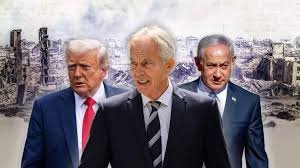
A High-Profile International Panel
According to a White House statement released Friday, the “founding Executive Board” includes a mix of current and former political leaders as well as prominent figures from global finance and diplomacy. In addition to Blair, Carney, and Rubio, the board includes:
- Steve Witkoff, Trump’s foreign-policy envoy
- Robert Gabriel, US deputy national security adviser
- Jared Kushner, Trump’s son-in-law and former senior adviser
- Marc Rowan, billionaire businessman
- Ajay Banga, President of the World Bank
Additional members are expected to be announced in the coming weeks. A Canadian government official confirmed to CNN that Prime Minister Carney formally accepted the invitation to join the board shortly after its formation was made public.
Before revealing the names, Trump took to social media to describe the panel as “the Greatest and Most Prestigious Board ever assembled,” underscoring the political weight he intends the body to carry.
Mandate: Rebuilding and Stabilizing Gaza
The Board of Peace is expected to play a strategic oversight role, with members assigned specific portfolios deemed “critical to Gaza’s stabilization and long-term success,” according to the White House. These portfolios are likely to include infrastructure reconstruction, economic revitalization, security coordination, humanitarian aid delivery, and governance reform.
The initiative comes as Gaza faces near-total devastation. Entire neighborhoods have been reduced to rubble, basic services remain largely nonfunctional, and hundreds of thousands of Palestinians remain displaced. International agencies have repeatedly warned that without coordinated reconstruction and governance, Gaza risks falling into prolonged instability.
Notably Absent: Palestinian Authority Representation
One of the most controversial aspects of the board’s formation is the absence of any representative from the Palestinian Authority (PA). The PA, which governs parts of the occupied West Bank and is widely viewed by the international community as the most viable governing body for a future Palestinian state, is expected under the US plan to eventually assume control of Gaza.
However, Israel strongly opposes the PA’s immediate involvement in Gaza. Prime Minister Benjamin Netanyahu has rejected both the authority’s participation and any broader notion of Palestinian statehood. Israeli officials have insisted that no members affiliated with Hamas or the Palestinian Authority be allowed to participate in Gaza’s interim governance.
Tony Blair’s Controversial Role
Tony Blair’s inclusion on the board has drawn particular attention. Blair, who served as British prime minister from 1997 to 2007, was a central ally of the United States during the 2003 invasion of Iraq—a decision that significantly damaged his reputation across much of the Arab world.
Following his time in office, Blair served as the Middle East envoy for the so-called Quartet (the US, EU, UN, and Russia). During that tenure, he faced criticism from Palestinians who viewed him as overly sympathetic to Israeli positions. Although his name was floated last year as a possible leader of a Gaza reconstruction body, the idea initially failed to gain traction.
His re-emergence now reflects Washington’s belief that Blair’s experience in post-conflict governance and international diplomacy could help navigate Gaza’s complex political terrain.
Governance Under the US Plan
Under the US-brokered framework, Gaza’s day-to-day administration will not be handled directly by the Board of Peace. Instead, governance will fall to a 15-member Palestinian technocratic committee, designed to operate independently of both Hamas and the Palestinian Authority.
The committee will be led by Dr. Ali Sha’ath, a Gaza-born Palestinian who previously held several positions within the Palestinian Authority. Its primary responsibilities include restoring essential public services, rebuilding administrative institutions, and stabilizing civilian life in the enclave.
Israel exercised effective veto power over the committee’s composition. According to an Israeli official, the head of Israel’s internal security agency, the Shin Bet, informed the security cabinet that all 15 nominees had been vetted and approved.
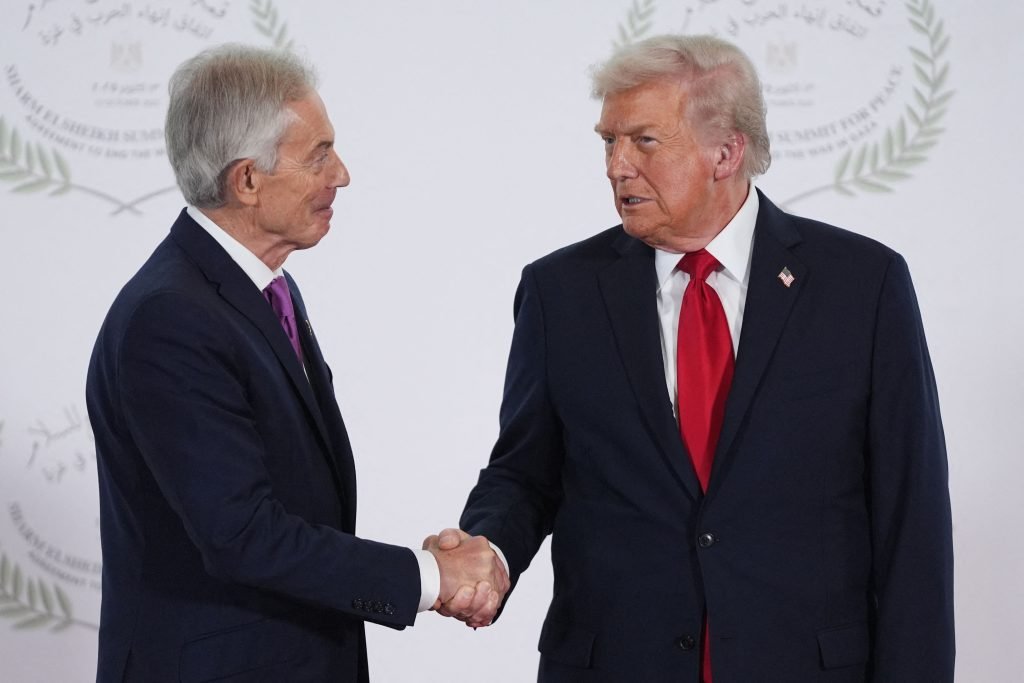
International Oversight and Regional Involvement
To complement the technocratic committee, the White House also announced the creation of a “Gaza executive board” that will support governance and coordination efforts. This body includes representatives from Turkey, Qatar, Egypt, and the United Arab Emirates, alongside selected members from the Board of Peace and the Palestinian technocratic committee.
Additionally, Nickolay Mladenov, a former UN special coordinator for the Middle East peace process and a seasoned Bulgarian diplomat, has been appointed as High Representative for Gaza. His role will involve liaising between international stakeholders, regional governments, and local administrators.
A Long Road to Self-Determination
According to the White House, the technocratic committee is intended to govern Gaza on an interim basis until the Palestinian Authority undergoes what the US describes as “extensive reforms.” Only then, the plan suggests, could control be transferred to the PA, opening the door to what officials call a “credible path to Palestinian self-determination and statehood.”
Whether that vision can be realized remains uncertain, given Israel’s firm opposition and the deep mistrust among Palestinians toward externally imposed governance structures.
Read More: Trump pushes for disarmament of Hamas as second stage of Gaza ceasefire begins
FAQs
What is Trump’s “Board of Peace”?
It is a US-led, UN-backed international panel tasked with overseeing Gaza’s reconstruction, demilitarization, and long-term stabilization after years of conflict.
Who leads the Board of Peace?
The board is chaired by US President Donald Trump.
Why is Tony Blair on the board?
Blair brings experience in post-conflict governance and Middle East diplomacy, though his past roles remain controversial in the region.
Does the board include Palestinian representatives?
No representatives from the Palestinian Authority or Hamas are included on the board itself.
Who governs Gaza day to day under the plan?
A separate 15-member Palestinian technocratic committee will handle daily governance.
What role does Israel play in the process?
Israel vetted and approved members of the technocratic committee and opposes both Hamas and the Palestinian Authority’s involvement.
Is this plan linked to Palestinian statehood?
The US plan envisions a potential path to statehood, but only after reforms and under conditions Israel currently rejects.
Conclusion
The formation of Trump’s Board of Peace represents one of the most ambitious international efforts yet to reshape Gaza’s future after years of war and humanitarian catastrophe. By bringing together figures such as Tony Blair, Mark Carney, and Marco Rubio, the US administration is signaling its intent to combine political authority, financial expertise, and diplomatic influence in rebuilding the enclave.
