

Brazil Election 2026: Lula Wins Historic Fourth Term in Dramatic Runoff
The Brazil election 2026 ended in one of the most dramatic finishes in the country’s democratic history. President Luiz Inácio Lula da Silva won a historic fourth term on Sunday, October 25, 2026, defeating conservative senator Flávio Bolsonaro in a runoff that stayed close until the final votes were counted. Lula took about 51.8 percent of the vote to Bolsonaro’s 48.2 percent, overturning a first-round defeat and making history as the first candidate since Brazil resumed direct presidential elections in 1989 to win a runoff after finishing second in the first round.
The result stunned pollsters, markets, and political observers. Bolsonaro had led the first round on October 4 and was ahead in the final pre-election polls, yet Lula’s support surged late as voters from his heartland in Brazil’s poorest regions turned out in large numbers. Bolsonaro has refused to concede, alleging election irregularities without presenting evidence. This article explains the full Brazil election 2026 results, how Lula pulled off the comeback, who the two candidates are, what decided the race, and what happens next for Latin America’s largest economy. For context on how election seasons are shaping up elsewhere this year, see our guide to the US midterm elections 2026.
Read More: France Protests 2026: Causes, Curfews and What Happens Next — another major political story from 2026, as street movements reshape European politics.
Brazil Election 2026 Results: The Final Numbers
Brazil’s Superior Electoral Court, the TSE, declared Lula the winner with 51.76 percent of the valid votes to Flávio Bolsonaro’s 48.24 percent, with 99.76 percent of votes counted. The margin was about 3.5 percentage points, or roughly three to four million votes in a country of more than 150 million registered voters. It was the closest presidential runoff in Brazil’s modern history.
Voting on Sunday was extended by two hours after transport problems and severe weather disrupted access to polling stations in parts of the country. The count seesawed all evening: Lula led early, Bolsonaro moved ahead when about 14 percent of votes were counted, and Lula reclaimed the lead at around 48 percent counted, holding it to the end. The electoral court officially declared the result late on Sunday night, and celebrations broke out among Lula supporters in São Paulo and across the northeast.
| Candidate | Party | Runoff Vote Share |
|---|---|---|
| Luiz Inácio Lula da Silva | Workers’ Party (PT) | 51.76% |
| Flávio Bolsonaro | Liberal Party (PL) | 48.24% |
How Lula Overturned Flávio Bolsonaro’s First-Round Lead
Lula entered the runoff at a clear disadvantage. In the first round on October 4, Bolsonaro finished ahead with 47.03 percent of the valid votes to Lula’s 45.16 percent, a lead of nearly two percentage points. The final Datafolha poll published the day before the runoff still had Bolsonaro ahead, 51 percent to 49 percent. Almost every forecaster expected a Bolsonaro victory.
The turnaround came in the final three weeks. Lula’s campaign concentrated on his government’s economic and social policies, warning that a Bolsonaro win would cut welfare programmes that millions of low-income families depend on. Voters from Lula’s heartland in the northeast, Brazil’s poorest region, rallied to his defence in large numbers on polling day. Turnout in the northeast surged, and Lula’s late-campaign message about preserving democracy and social spending appears to have moved undecided voters who had stayed home or voted for eliminated candidates in the first round.
The result also broke a pattern. Lula is the first presidential candidate since Brazil’s return to direct elections in 1989 to recover from a first-round defeat and win the runoff, and the first democratically elected president in the country’s history to secure four terms. It extends the rule of his left-wing Workers’ Party in Latin America’s largest economy and interrupts a run of right-wing victories across the region.
Who Is Luiz Inácio Lula da Silva?
Luiz Inácio Lula da Silva, 80, is one of the most remarkable figures in modern Brazilian politics. Born into poverty in the northeast, he worked as a metalworker and became a union leader before entering politics. He first ran for president in 1989 and lost three elections before winning in 2002. He was re-elected in 2006, serving two terms until the end of 2010, and returned to power in 2023 after defeating Jair Bolsonaro in the 2022 election.
Sunday’s runoff was his seventh presidential campaign, and his fourth victory. His political career spans more than four decades, and his supporters credit him with lifting millions of Brazilians out of poverty through welfare and minimum-wage policies during his first presidency. His critics point to the corruption scandals that touched his party and to Brazil’s strained public finances. In his victory speech on October 25, he struck a defiant tone, telling supporters that Brazilians had voted to preserve democracy and declaring: “This country doesn’t accept being anybody’s colony.”
Who Is Flávio Bolsonaro?
Flávio Bolsonaro, 45, is a senator from Rio de Janeiro and the eldest son of former president Jair Bolsonaro. He campaigned as the heir to his father’s political movement, promising tougher action on crime and lower food prices, and he openly touted his close relationship with the Trump administration in the United States. His father, who led Brazil from 2019 to 2022, remains a powerful figure on the Brazilian right even though he is barred from running for office himself.
Flávio performed strongly throughout the campaign. He won the first round, led the final polls, and was ahead for much of the runoff count on Sunday night. After the result was declared, he refused to concede, alleging election irregularities without presenting evidence, and his supporters called for the result to be annulled. The electoral court has stood by the count, and international observers have not reported evidence of fraud. His refusal to concede echoes his father’s own refusal to accept the 2022 result, and it sets up a tense transition period in a deeply divided country.
The Key Issues That Decided the Brazil Election 2026
Four issues dominated the campaign, and the candidates offered sharply different answers on each of them. Understanding these issues explains why the race was so close and why Lula’s late surge was enough to win.
Cost of Living
Rising living costs were the top concern for most voters. Bolsonaro promised measures to bring food prices down and attacked the government over inflation. Lula argued that his government’s welfare payments and wage policies were already protecting low-income families, and warned that his opponent would cut the programmes those families rely on. In the final weeks, that argument appears to have landed with voters in the northeast, where welfare support matters most.
Crime and Public Security
Public security was Bolsonaro’s strongest issue. He promised a tougher crackdown on organised crime and drug gangs, and his law-and-order message resonated in cities hit by violent crime. Lula countered with a focus on social programmes and federal coordination with state police forces, arguing that security improves when poverty falls. Exit polling suggested crime helped Bolsonaro in urban areas, but it was not enough to offset Lula’s strength elsewhere.
Corruption
Corruption shaped the campaign on both sides. Bolsonaro attacked the Workers’ Party over the scandals of its earlier years in power, while Lula’s campaign pointed to the legal troubles and investigations surrounding the Bolsonaro family and its allies. Both candidates faced scrutiny over allegations involving their families and political allies, and the campaign exposed just how deep Brazil’s political divisions have become.
Relations With the United States
The United States loomed large over the race. Flávio Bolsonaro touted his closeness to President Donald Trump’s administration, while Lula accused the American government of intervening to help his opponent. Trump did not offer an official endorsement of Bolsonaro, but the contest was widely seen as a test of US influence in Latin America. Lula’s victory denies Trump a new partner in the Western Hemisphere, where the United States has shifted resources and attention over the past year, and it points Brazil toward a more independent foreign policy with stronger ties to the Global South and China.
Why the Brazil Election 2026 Was So Close
The closeness of the result reflects a country split almost evenly in two. Brazil’s electorate is divided between Lula’s base in the poorer northeast and among working-class and union voters, and Bolsonaro’s base in the wealthier south and southeast, among evangelical voters, agribusiness, and supporters of a tougher security policy. That split has defined Brazilian politics for a decade, and the 2026 runoff was its tightest expression yet.
The polls were not wrong by much. Datafolha’s final survey had Bolsonaro ahead by two points; the actual result was Lula ahead by three and a half. The error was in the direction of the late movement, not its size. Voters who decided in the final days broke for Lula, and turnout in his strongholds exceeded expectations. The result also shows the limits of first-round leads in Brazilian politics: a two-point advantage in October can disappear in three weeks when the losing campaign finds its message.
| Round | Lula (PT) | Flávio Bolsonaro (PL) |
|---|---|---|
| First round, October 4 | 45.16% | 47.03% |
| Final Datafolha poll, October 24 | 49% | 51% |
| Runoff, October 25 | 51.76% | 48.24% |
Bolsonaro Refuses to Concede: What Happens Now
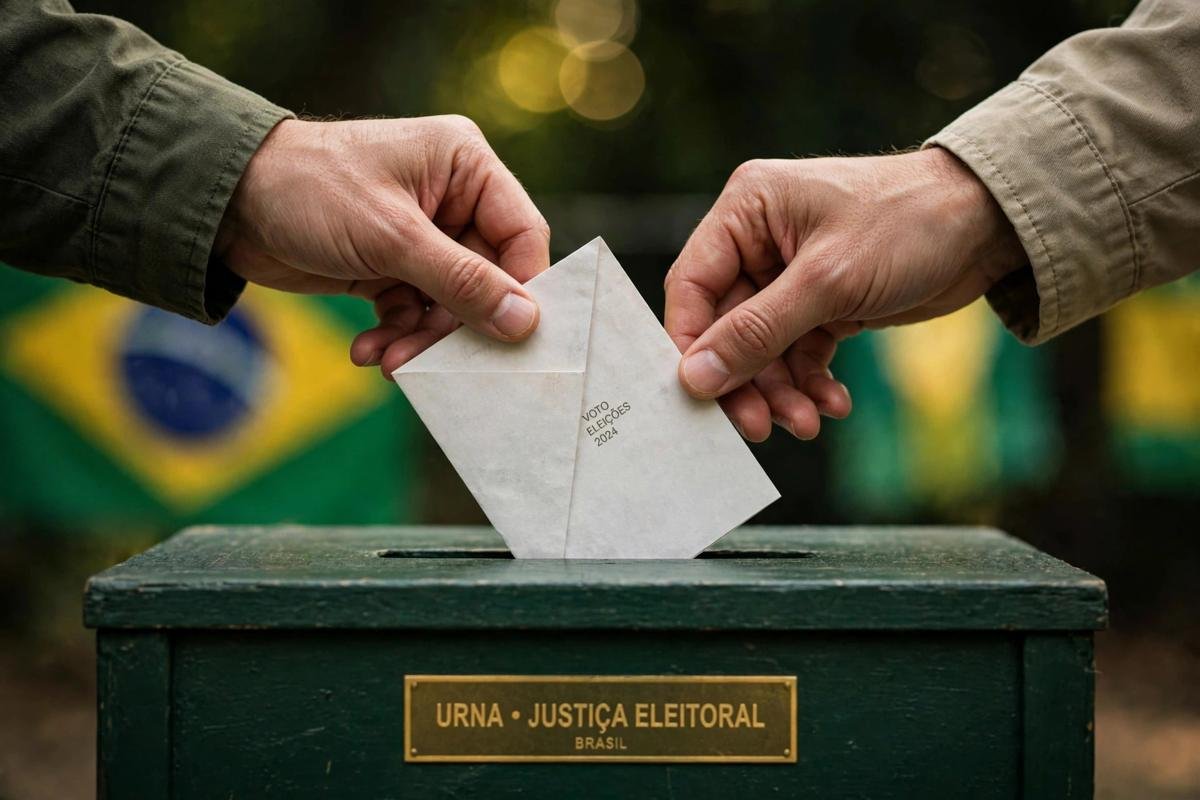
Flávio Bolsonaro’s refusal to concede raises immediate questions about Brazil’s democratic stability. He has alleged irregularities without presenting evidence, and his supporters have called for the result to be annulled. The Superior Electoral Court has declared Lula the winner, and the count has been verified through the court’s official tally. No credible evidence of fraud has emerged, and election observers have not flagged systemic problems with the vote.
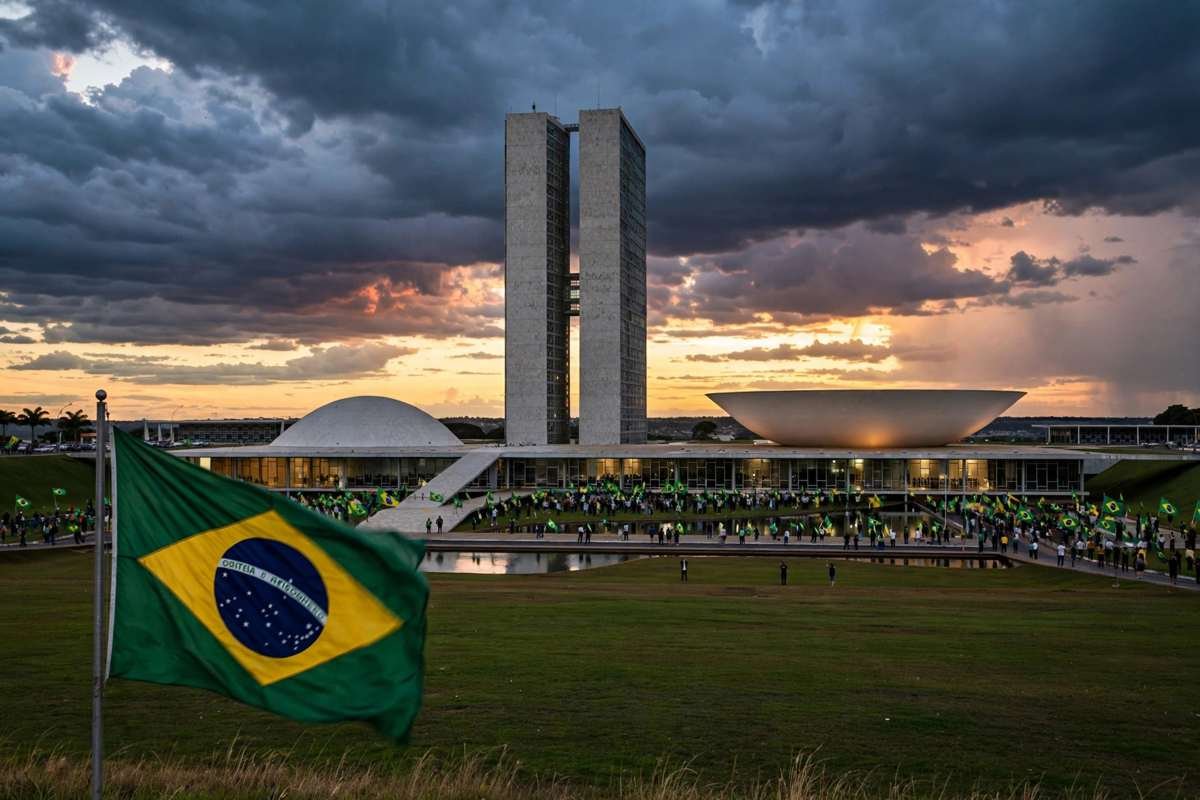
The situation is complicated by history. Jair Bolsonaro also refused to accept his 2022 defeat, and his supporters stormed government buildings in Brasília in January 2023. Brazilian institutions held then, and the courts, the military, and Congress have all signalled that the 2026 result stands. The coming weeks will test whether Flávio Bolsonaro’s challenge remains a political statement or escalates into a legal and street campaign. For now, the transition is proceeding: Lula is the incumbent president, so there is no handover of power to manage, and his new four-year term begins on January 1, 2027.
What Lula’s Win Means for Brazil
Domestically, Lula faces a difficult governing challenge. His victory came with a warning from the electorate: nearly half the country voted against him, and he will face a more conservative Congress with limited room to push through a broad agenda. Analysts expect small, negotiated wins rather than sweeping reforms. His priorities are likely to be protecting welfare programmes, supporting consumption-led growth, and defending the social policies his base voted for.
The economy is the immediate test. Investors who had been betting on a Bolsonaro win to fix Brazil’s fiscal accounts were disappointed: an exchange-traded fund tracking Brazilian stocks fell sharply in Japanese trading after the result. Lula has focused more on boosting growth through consumption than on cutting spending, and markets will watch his first budget decisions closely. At the same time, his government argues that social spending is itself an economic policy, because it sustains demand in the country’s poorest regions.
What Lula’s Win Means for the World
Internationally, the result reshapes Latin American politics. Lula’s win interrupts a string of right-wing victories across the region, in Bolivia, Chile, Costa Rica, Colombia, Ecuador, Honduras, and Peru, that had given Trump a set of ideological allies. Brazil is Latin America’s largest economy and its most influential diplomatic voice, and a Lula government is expected to pursue a more independent foreign policy, strengthening ties with the Global South and China while keeping a careful distance from Washington.
The result also matters for the climate agenda. Brazil holds most of the Amazon rainforest, and Lula has made forest protection a signature policy. His re-election is likely to keep Brazil engaged in international climate talks and to preserve the deforestation controls his government has defended. For global markets, the immediate effect is uncertainty: traders will be watching Lula’s economic team and his first signals on spending, taxation, and the central bank.
For the full background on this election, including the candidates, the parties, and the electoral system, see the 2026 Brazilian general election entry on Wikipedia.
Frequently Asked Questions
Who won the Brazil election 2026?
President Luiz Inácio Lula da Silva won the Brazil election 2026, defeating senator Flávio Bolsonaro in the runoff on October 25, 2026, with 51.76 percent of the vote to Bolsonaro’s 48.24 percent, according to Brazil’s Superior Electoral Court.
How many terms has Lula served as president of Brazil?
Lula has now won four presidential terms. He served two consecutive terms from 2003 to 2010, returned to office in 2023, and his new four-year term begins on January 1, 2027. He is the first democratically elected president in Brazil’s history to secure four terms.
Did Flávio Bolsonaro concede the Brazil election 2026?
No. Flávio Bolsonaro refused to concede, alleging election irregularities without presenting evidence. Brazil’s Superior Electoral Court has declared Lula the winner, and no credible evidence of fraud has been reported.
Who is Flávio Bolsonaro?
Flávio Bolsonaro, 45, is a senator from Rio de Janeiro and the eldest son of former president Jair Bolsonaro. He campaigned on tougher action on crime, lower food prices, and close ties with the Trump administration in the United States.
Why was the Brazil election 2026 so close?
Brazil is deeply divided between Lula’s base in the poorer northeast and among working-class voters, and Bolsonaro’s base in the wealthier south and southeast, among evangelical and agribusiness voters. The runoff was decided by about 3.5 percentage points after Lula surged late in the campaign.
When does Lula’s new term begin?
Lula’s new four-year term begins on January 1, 2027. Because he is the incumbent president, there is no handover of power; he continues in office into the new term.
Conclusion
The Brazil election 2026 delivered a result almost nobody predicted three weeks ago. Lula da Silva, written off after losing the first round and trailing in the final polls, won a historic fourth term by turning out his base in the northeast and winning the argument on living costs and democracy. Flávio Bolsonaro, the heir to Brazil’s most powerful right-wing movement, came within a few percentage points of the presidency and now refuses to accept the result.
What happens next will define Brazil for the next four years. Lula must govern a country that is almost evenly split, with a conservative Congress, nervous markets, and a defeated opponent who questions his legitimacy. His victory is historic, but it is also fragile. The world will be watching how Brazil’s institutions, its economy, and its democracy hold up in the months ahead.
