

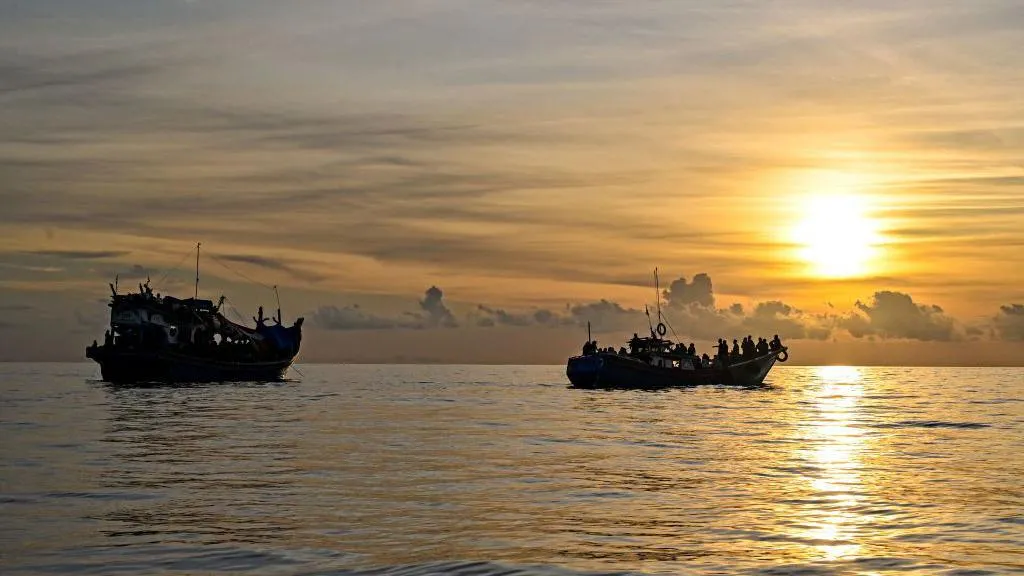
The disappearance of more than 500 Rohingya refugees at sea has become one of the most heartbreaking humanitarian mysteries in recent years. Families across refugee camps in Bangladesh and communities scattered throughout Southeast Asia are desperately searching for answers after multiple overcrowded boats carrying Rohingya men, women, and children reportedly vanished during dangerous sea journeys. The incident has once again highlighted the immense risks faced by one of the world’s most persecuted populations.
Every year, thousands of Rohingya attempt perilous voyages across the Bay of Bengal and the Andaman Sea in search of safety, employment, and a better future. While many survive these dangerous crossings, countless others fall victim to storms, human traffickers, starvation, dehydration, or maritime disasters. The reported disappearance of more than 500 people has drawn international attention, raising urgent questions about migration routes, rescue efforts, regional cooperation, and the ongoing humanitarian crisis affecting the Rohingya people.
This article explores what is currently known about the disappearance, the circumstances surrounding these sea journeys, the broader Rohingya refugee crisis, and what the international community can do to prevent similar tragedies in the future.
Who Are the Rohingya?
The Rohingya are a Muslim ethnic minority primarily from Myanmar’s Rakhine State. For decades, they have faced discrimination, restrictions on movement, and denial of citizenship under Myanmar’s nationality laws.
Following military crackdowns, particularly the events of 2017, hundreds of thousands fled to neighboring Bangladesh. Today, nearly one million Rohingya refugees live in crowded camps around Cox’s Bazar, where humanitarian organizations provide food, healthcare, education, and emergency assistance.
Despite international aid, many refugees continue to struggle with poverty, limited educational opportunities, unemployment, and uncertain futures. These conditions often push families to consider dangerous migration routes.
The Reported Disappearance of More Than 500 Rohingya
According to humanitarian organizations monitoring refugee movements, several boats carrying hundreds of Rohingya departed from refugee camps and coastal areas, hoping to reach destinations such as Malaysia or Indonesia.
Initial reports suggested that communication with multiple vessels was lost after they entered open waters. Family members waiting for updates received no messages, while rescue agencies were unable to establish contact with the boats.
The disappearance of more than 500 people quickly became a major humanitarian concern because:
- Multiple vessels were reportedly involved.
- The boats were believed to be overcrowded.
- Weather conditions deteriorated during parts of the journey.
- Search efforts faced logistical challenges.
- Survivors from nearby vessels reported difficult sea conditions.
Although investigations continue, the fate of many passengers remains unknown.
Why Do Rohingya Risk Dangerous Sea Journeys?
The decision to leave refugee camps is rarely made lightly. Most Rohingya understand the dangers of maritime migration but believe the risks are outweighed by the lack of opportunities where they currently live.
Several factors contribute to these dangerous journeys.
Limited Economic Opportunities
Employment opportunities inside refugee camps remain extremely limited. Families often depend entirely on humanitarian assistance.
Without stable incomes, many struggle to meet daily needs.
Restricted Movement
Many refugees face restrictions on travel outside camps, limiting their ability to pursue education or employment.
Family Reunification
Some refugees attempt dangerous voyages to reunite with relatives already living abroad.
Human Trafficking Networks
Smuggling organizations frequently promise safe transportation to Southeast Asian countries. In many cases, these promises prove false.
Passengers often pay significant amounts of money for overcrowded and unsafe boats.
Hope for a Better Future
Many refugees believe reaching another country may provide opportunities for education, employment, and permanent settlement.
The Dangerous Maritime Route
The Bay of Bengal and the Andaman Sea have become major migration routes for Rohingya refugees.
These waters are among the world’s most dangerous migration corridors.
Travel conditions often include:
- Overcrowded wooden boats
- Limited drinking water
- Insufficient food supplies
- Lack of medical care
- Poor navigation equipment
- Extreme weather
- Long periods at sea
Some journeys last several weeks instead of a few days.
During extended voyages, passengers frequently suffer dehydration, malnutrition, and disease.
Weather Conditions Add to the Risk
The timing of many migration attempts coincides with changing weather conditions.
Strong winds, rough seas, and seasonal storms significantly increase the likelihood of maritime accidents.
Small fishing boats converted for long-distance transport often lack the structural strength necessary to survive severe weather.
Even experienced fishermen can struggle under such conditions.
Human Traffickers Exploit Vulnerable Refugees
Human trafficking remains one of the greatest dangers facing Rohingya migrants.
Traffickers often:
- Charge large sums of money.
- Promise direct transportation.
- Overload boats beyond safe capacity.
- Abandon vessels at sea.
- Demand additional payments during the journey.
- Subject passengers to violence and abuse.
Many families borrow money or sell their remaining possessions to finance these dangerous trips.
What Happened to the Missing Boats?
Investigators continue examining several possibilities.
Severe Weather
Storms may have overwhelmed overloaded vessels.
Mechanical Failure
Engine failures can leave boats stranded without food or water for extended periods.
Capsizing
Overcrowded boats become unstable in rough waters, increasing the risk of sinking.
Lack of ReTrafficking-Related Incidents
Some experts believe certain vessels may have been intercepted or diverted by criminal networks.
At present, no single explanation has been confirmed for every missing boat.
Challenges Facing Search and Rescue Operations
Locating small wooden boats in vast stretches of open ocean presents enormous challenges.
Authorities often face:
- Limited surveillance capabilities
- Poor weather
- Incomplete passenger records
- Delayed reporting
- Lack of communication equipment onboard
- Coordination difficulties between neighboring countries
Even when rescue teams are deployed, finding vessels days after losing contact becomes increasingly difficult.
International Humanitarian Response
Humanitarian agencies have urged governments across the region to strengthen maritime rescue operations.
Organizations continue to call for:
Improved regional cooperation, faster emergency response systems, greater protection for refugees, expanded legal migration pathways, stronger action against human traffickers, and increased humanitarian assistance in refugee camps.
Aid organizations also stress that preventing dangerous sea journeys requires addressing the conditions that force refugees to leave in the first place.
Life Inside the Refugee Camps
Bangladesh hosts one of the world’s largest refugee populations.
Although humanitarian assistance has prevented widespread famine and disease, daily life remains extremely difficult.
Many refugees face:
- Limited educational opportunities
- Restricted employment
- Overcrowded shelters
- Seasonal flooding
- Fire hazards
- Limited healthcare resources
- Uncertain legal status
These challenges contribute to growing frustration, particularly among younger refugees.
Regional Impact
The disappearance has affected several countries in South and Southeast Asia.
Governments continue balancing humanitarian responsibilities with concerns related to migration management, border security, and maritime safety.
Regional cooperation remains essential because migration routes frequently cross multiple national jurisdictions.
Why Accurate Information Matters
During major humanitarian crises, misinformation often spreads rapidly across social media.
False reports regarding rescues, fatalities, or boat locations can create additional distress for families awaiting news.
Humanitarian organizations encourage the public to rely on verified information from recognized authorities and relief agencies while investigations remain ongoing.
Long-Term Solutions
Preventing future maritime tragedies requires more than emergency rescue operations.
Long-term solutions include improving living conditions in refugee camps, expanding educational opportunities, creating lawful employment pathways, combating human trafficking networks, strengthening international refugee protection, increasing regional cooperation, and supporting efforts aimed at achieving a safe, voluntary, dignified, and sustainable future for displaced Rohingya communities.
Without addressing these underlying issues, dangerous sea crossings are likely to continue.
The Human Cost
- Behind every missing passenger is a family waiting for answers.
- Parents continue searching for children.
- Children wait for parents who never arrived.
- Brothers and sisters remain uncertain whether their loved ones survived.
The disappearance of hundreds of Rohingya is not simply a migration story—it is a profound human tragedy that reflects years of displacement, insecurity, and limited options.
Read More: Trump Considers Major Expansion of U.S. Military Presence in Iran
FAQs
Why were the Rohingya traveling by sea?
Many Rohingya attempt dangerous sea journeys to seek safety, reunite with family members, find employment, or escape the difficult living conditions in refugee camps.
How many Rohingya were reported missing?
Humanitarian reports indicated that more than 500 Rohingya were feared missing after multiple boats reportedly lost contact during separate sea journeys. Investigations into the incidents are ongoing.
What dangers do Rohingya face during these voyages?
Passengers often encounter overcrowded boats, severe weather, food and water shortages, illness, mechanical failures, and exploitation by human trafficking networks.
Which countries are commonly targeted as destinations?
Many Rohingya attempt to reach countries such as Malaysia and Indonesia, where they hope to find work, safety, or reunite with relatives already living there.
What can be done to prevent similar tragedies?
Preventing future disasters requires stronger regional cooperation, enhanced maritime rescue operations, action against human traffickers, improved conditions in refugee camps, expanded legal migration pathways, and long-term political solutions that address the root causes of Rohingya displacement.
Conclusion
The reported disappearance of more than 500 Rohingya at sea serves as a stark reminder of the ongoing humanitarian crisis facing one of the world’s most vulnerable populations. While investigations continue into what happened to the missing boats, the tragedy underscores the immense dangers of irregular maritime migration and the desperate circumstances that compel so many refugees to risk their lives in search of safety and opportunity. Preventing future disasters will require stronger regional cooperation, more effective search-and-rescue operations, decisive action against human trafficking networks, and sustained international support for refugee communities. Above all, lasting solutions must address the root causes of displacement, ensuring that Rohingya families no longer feel forced to undertake perilous journeys across some of the world’s most dangerous waters. Until then, every disappearance at sea will remain a painful reminder of the urgent need for compassion, accountability, and global action.
