

Starlink Direct-to-Cell 2026: How Satellite Phone Texting Works, Compatible Phones and What’s Next
For decades, losing your phone signal in the mountains, at sea, or deep in the countryside meant one thing: you were unreachable. Starlink direct to cell 2026 changes that equation. SpaceX’s satellite network now lets ordinary, unmodified smartphones send texts, photos, and even use select apps through satellites orbiting overhead — no dish, no satellite phone, no extra hardware.
The technology moved fast in the last year. T-Mobile’s Starlink-powered T-Satellite service went commercial in July 2025, the US Federal Communications Commission approved a massive next-generation network on October 6, 2026, and by late October 2026 the service went live across Brazil. This guide explains exactly how it works, which phones and carriers are compatible, what it costs, and what comes next. 2026 is shaping up as a breakthrough year for mobile hardware in general — from Apple’s October 28 event to satellites that now connect your phone directly from space.
Read More: AI Agents Explained 2026: How Autonomous AI Works, Uses and Risks — the same class of autonomous software that steers satellites in orbit is reshaping the software on your phone.
What Is Starlink Direct-to-Cell?
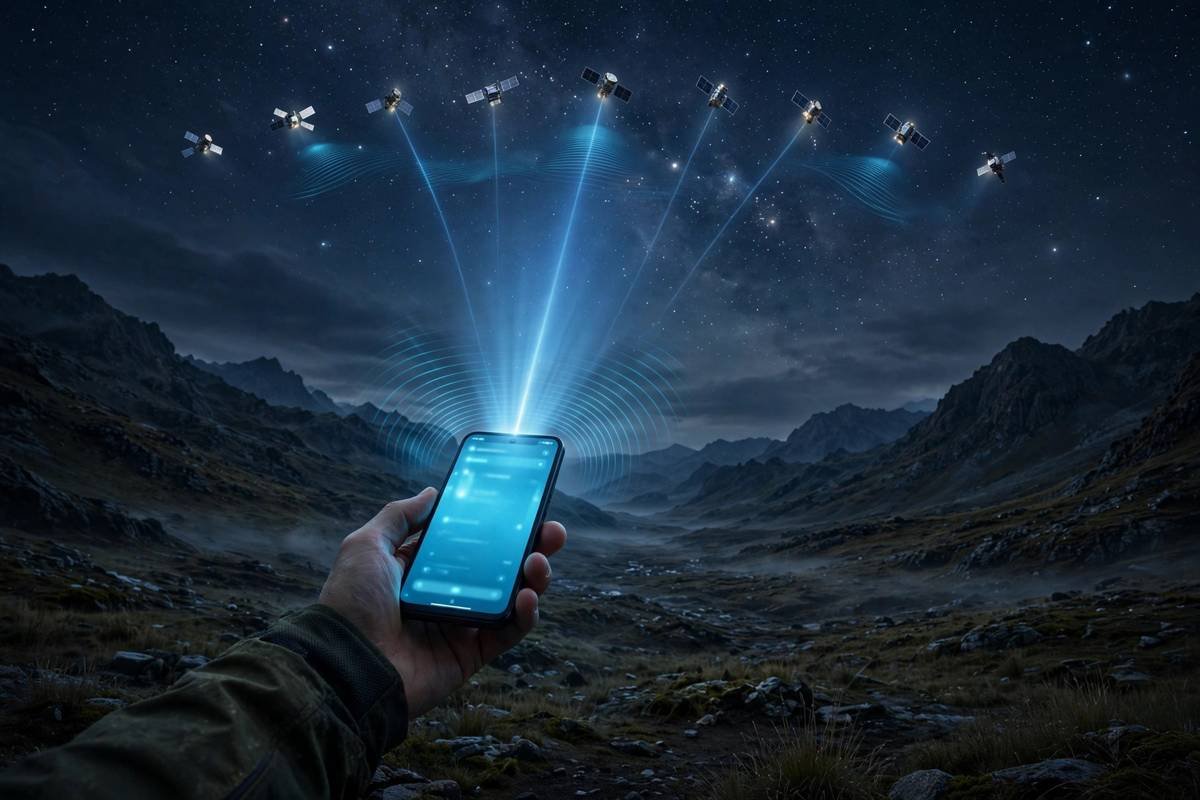
Starlink direct to cell 2026 is a satellite-based cellular service built into SpaceX’s Starlink constellation. Instead of beaming internet to a dish on your roof, the newest satellites carry the same kind of radio equipment found in a ground-based mobile tower, plus a large phased-array antenna capable of detecting a phone’s weak signal from hundreds of kilometres above the Earth.
To your phone, the satellite looks like a roaming partner network. When your regular carrier’s signal disappears, a compatible phone can connect to the satellite overhead automatically. There is no new handset to buy, no app to install, and no software to configure — your existing LTE phone just keeps working, one cell tower in space at a time.
The first-generation network consists of more than 600 satellites flying at roughly 360 kilometres altitude — far lower than traditional communications satellites, because a phone’s tiny antenna needs every bit of help it can get. Service began with basic text messaging in 2024, and commercial availability has been expanding steadily since, with direct-to-cell messaging and data now operational across more than 32 countries reaching over 1.7 billion people.
How Starlink Direct-to-Cell Works in 2026
The engineering behind Starlink direct to cell 2026 is elegant in its simplicity. Each direct-to-cell satellite acts as a cell tower in orbit:
- Satellite as tower: The satellite carries LTE-compatible radio equipment and a phased-array antenna that isolates individual phone signals from orbit.
- Phone as normal: Your unmodified smartphone treats the satellite like any roaming network — standard LTE protocols, no special mode.
- Clear sky required: The one hard condition. The satellite needs a clear view of your phone, so the service works outdoors and generally not inside buildings.
- Automatic handoff: When your terrestrial carrier’s coverage drops, the phone switches to the satellite connection on its own.
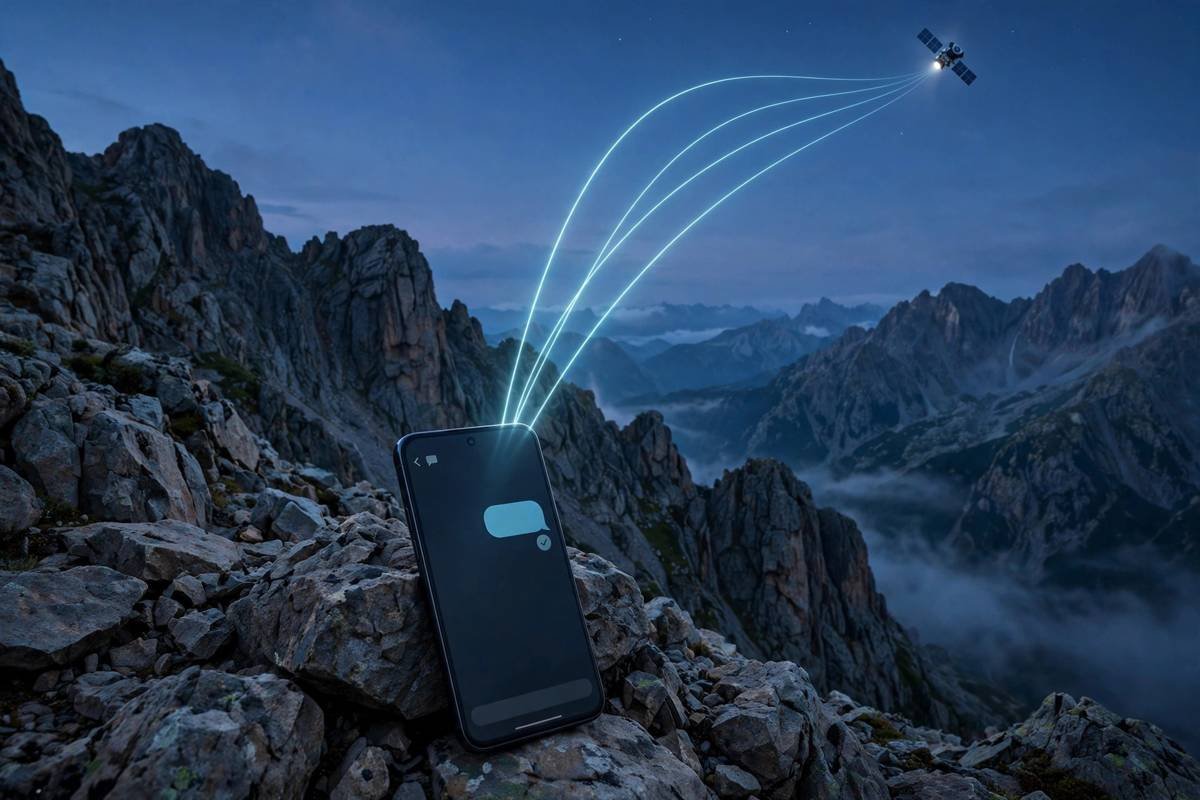
Speeds are modest compared with ground networks — this is a gap-filler, not a replacement for 4G or 5G. What works today includes SMS texting, picture and audio messages, location sharing, texting to emergency services like 911, and select satellite-ready apps such as WhatsApp. IoT data services for connected devices have been commercially available since 2025. It is precisely that modest, dependable link that makes starlink direct to cell 2026 useful where nothing else reaches.
Starlink Direct-to-Cell Compatible Phones and Carriers
Compatibility is broader than most people expect, because the service uses standard LTE radios rather than exotic hardware. Here is where Starlink direct to cell 2026 is available today:
| Carrier | Market | Service |
|---|---|---|
| T-Mobile | United States | T-Satellite — commercial since July 2025 |
| Rogers Communications | Canada | Direct-to-cell partnership |
| Optus and Telstra | Australia | Direct-to-cell partnerships |
| KDDI | Japan | Direct-to-cell partnership |
| One New Zealand | New Zealand | Direct-to-cell partnership |
| Entel | Chile and Peru | Direct-to-cell partnership |
| Salt | Switzerland | Direct-to-cell partnership |
| Kyivstar | Ukraine | Direct-to-cell partnership |
| Globe Telecom | Philippines | Partnership signed January 2026, live trials completed |
| Banglalink | Bangladesh | Live since October 7, 2026 — messaging and location sharing in dead zones |
| Vivo | Brazil | Live since October 26, 2026 — first nationwide service |
On the phone side, the service works with ordinary LTE smartphones — there is no compatibility list of special “satellite phones.” T-Mobile’s T-Satellite, the flagship deployment, supports iPhone 13 and later plus a wide range of Galaxy, Pixel, and Motorola models. On October 19, 2026, SpaceX reported that Starlink Mobile had connected more than 11 million people over the past year across VEON’s three key markets: Ukraine, Kazakhstan, and Bangladesh.
T-Mobile T-Satellite: Price, Plans and What’s Included
T-Mobile’s T-Satellite is the service most readers will encounter first, and it sets the pricing template for Starlink direct to cell 2026 in the United States:
- Price: Included with T-Mobile’s Experience Beyond plan, or $10 per month per line as an add-on for other T-Mobile customers.
- Open to rivals: AT&T and Verizon customers can also sign up for T-Satellite, and free texting to 911 is available to them.
- Emergency texting: Every T-Mobile customer can text 911 over T-Satellite free of charge, whatever their plan.
- What works: Texting, pictures, location sharing, and limited data in select satellite-ready apps.
- Roaming: As of 2026, customers can use the service while roaming in Canada and New Zealand.
The rollout timeline shows how quickly this moved from experiment to product: beta registration opened on December 16, 2024, the beta phase expanded through early 2025, the FCC approved higher-power operations in March 2025 to improve reliability, and commercial service launched in July 2025. T-Mobile confirmed in October 2025 that T-Satellite data was live and powering apps, not just texting.
Starlink Direct-to-Cell vs Apple Satellite vs Skylo: 2026 Comparison
Starlink is not the only way to message from beyond cell coverage. Here’s how the options compare as of October 2026:
| Service | Network | Phones | What works | Cost |
|---|---|---|---|---|
| T-Mobile T-Satellite (Starlink) | 650+ Starlink satellites | iPhone 13+, many Galaxy, Pixel, Motorola | Texting, photos, audio, limited apps, 911 | $10/mo or included on top plan |
| iPhone satellite | Globalstar | iPhone 14 or later | Emergency SOS, two-way iMessage and SMS | Currently free |
| Pixel Satellite SOS | Skylo / NTN | Pixel 9 or later (except 9a) | Emergency Satellite SOS | Free |
| Verizon satellite texting | Skylo | Recent Galaxy and Pixel phones | Free two-way SMS | Free |
| AST SpaceMobile | AST satellites | Standard phones (planned) | Broadband-class voice and data (planned) | Beta still pending, Oct 2026 |
The key difference: built-in phone satellite features from Apple and Google focus on emergencies and work only on specific models, while Starlink’s approach works with ordinary LTE phones across many carriers — and covers far more of the planet through roaming partners. AT&T and Verizon are both building on AST SpaceMobile for broadband-class direct-to-device service, but as of October 2026 that remains in pre-beta.
FCC Approves 15,000 Starlink Satellites: What’s Next
On October 6, 2026, the US Federal Communications Commission granted SpaceX its most ambitious licence yet: authorization to launch and operate up to 15,000 satellites built specifically for phone service, under order DA 26-1078. The details matter:
- Scale: Up to 15,000 satellites across nine shells, orbiting at 326 to 335 kilometres — roughly 203 to 208 miles up.
- Capacity: SpaceX says the new network will have more than 100 times the capacity of today’s direct-to-cell system.
- Capabilities: The filing describes fuller 5G-style data, including voice and video calls — a step beyond today’s texting and light app data.
- Direct service possible: The FCC waived, with conditions, the rule requiring a leasing deal with a ground carrier for some bands — opening a path for SpaceX to sell mobile service itself.
- Spectrum note: The EchoStar spectrum SpaceX is acquiring cannot be used commercially until that purchase fully completes; testing is allowed before then.
- Deadlines: Half of the satellites must be launched and operating by October 7, 2032, with the full system due by October 7, 2035.
Temper expectations, though: launches are not expected to start until late 2027, no consumer plan or price has been announced, and some carrier executives have publicly dismissed SpaceX’s mobile ambitions. The approval is a real step toward satellite service that could rival a ground carrier — but a plan you can buy is still years away.
Starlink Mobile Goes Live in Brazil
The most significant commercial milestone of October 2026 came from Brazil. On October 9, 2026 (US time), Brazil’s telecoms regulator ANATEL voted to approve Starlink Mobile’s full access to 2 GHz S-band spectrum. Then, on October 26, 2026, Starlink announced the service was live in Brazil with carrier partner Vivo — the first nationwide Starlink Mobile service in the world.
The numbers are striking: Vivo’s 50 million customers can now use apps and messaging in cellular dead zones across the country, and 7 million phones were already connected at launch. On the same day, after an earthquake in Panama, Starlink Mobile began providing +Móvil customers with nationwide emergency texting over the satellites — a vivid demonstration of why this technology matters most when ground networks fail. For many of those customers, starlink direct to cell 2026 is their first taste of connectivity beyond cell towers.
Limitations of Starlink Direct-to-Cell in 2026
Honest expectations matter with new technology. Here’s what Starlink direct to cell 2026 cannot do yet:
- Not a standalone carrier: The current service supplements partner networks; it does not replace your phone plan.
- No voice or video calls yet: First-generation service covers texting, images, audio messages, and limited app data. Full voice and video await the next-generation constellation.
- Outdoors only: Your phone needs a clear view of the sky; buildings block the signal.
- Slow speeds: Satellite texting is designed for messages and essentials, not streaming or heavy browsing.
- No direct SpaceX plan: You still buy through a carrier partner. SpaceX has announced no consumer pricing of its own for starlink direct to cell 2026.
How to Use Starlink Direct-to-Cell Satellite Texting
Getting connected is deliberately simple — most of it happens automatically. Follow these steps:
Step 1: Check your carrier and plan
Confirm your carrier offers a satellite add-on. In the US, that means T-Mobile’s T-Satellite — included on Experience Beyond or $10 per month per line. Other carriers’ customers can also sign up, including for free 911 texting.
Step 2: Confirm your phone is compatible
You need an ordinary LTE smartphone — iPhone 13 or later, or a recent Galaxy, Pixel, or Motorola device. No special satellite phone is required.
Step 3: Go outdoors with a clear sky view
Head outside with an unobstructed view of the sky. Trees, canyons, and buildings degrade the connection; open sky is ideal.
Step 4: Let the phone connect
When your carrier’s signal drops, the phone finds the satellite network automatically — you will typically see a satellite indicator on the signal bar.
Step 5: Message as normal
Send texts, photos, or audio messages through your usual messaging app. Keep messages short and essential; this is a lifeline link, not broadband.
For the deeper background on the constellation itself, see Starlink on Wikipedia — and note that technical details continue to evolve as SpaceX launches new satellites.
Starlink Direct-to-Cell 2026: Frequently Asked Questions
Does Starlink direct-to-cell need a special phone?
No. The service works with ordinary LTE smartphones — iPhone 13 and later, plus many recent Galaxy, Pixel, and Motorola models on T-Satellite. No dish, antenna, or satellite phone is required.
How much does Starlink satellite texting cost?
Through T-Mobile’s T-Satellite, it costs $10 per month per line, or is included with the Experience Beyond plan. Texting to 911 is free for all T-Mobile customers, and AT&T and Verizon customers can also access free 911 texting.
Can you make phone calls over Starlink direct-to-cell?
Not yet on the first-generation network — it handles texting, images, audio messages, location sharing, and limited app data. Voice and video calls are planned for the next-generation constellation the FCC approved in October 2026.
Does it work internationally?
Yes, through carrier partners: T-Mobile (US), Rogers (Canada), Optus and Telstra (Australia), KDDI (Japan), One New Zealand, Entel (Chile, Peru), Salt (Switzerland), Kyivstar (Ukraine), Globe (Philippines), Banglalink (Bangladesh), and Vivo (Brazil). T-Satellite roaming also covers Canada and New Zealand.
When will SpaceX sell mobile service directly?
Unknown. The FCC’s October 2026 approval opens the legal path, but launches do not begin until late 2027 and SpaceX has announced no plan, price, or timeline for a direct consumer service.
Conclusion
Starlink direct to cell 2026 has crossed the line from demo to daily utility. Ordinary phones now text through space across more than 32 countries, T-Satellite has real pricing and millions of potential users, and Brazil’s nationwide launch shows what full-scale deployment looks like. The October 2026 FCC approval of up to 15,000 next-generation satellites points to a future where satellite voice and video are as ordinary as texting is today. The dead zone — the last place your phone couldn’t follow you — is quietly disappearing.
