


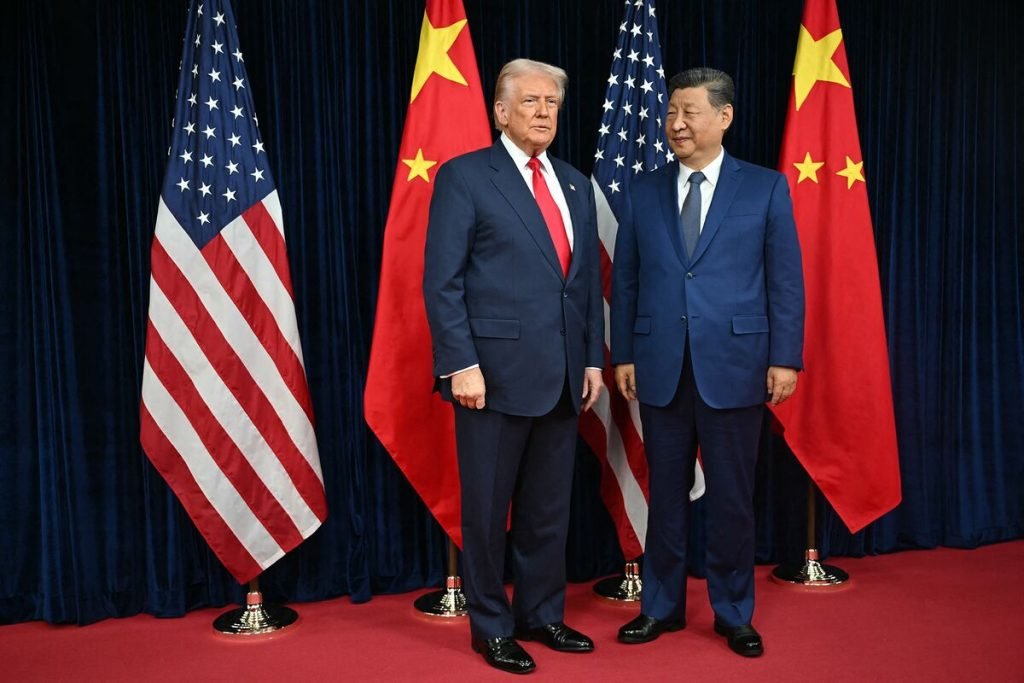
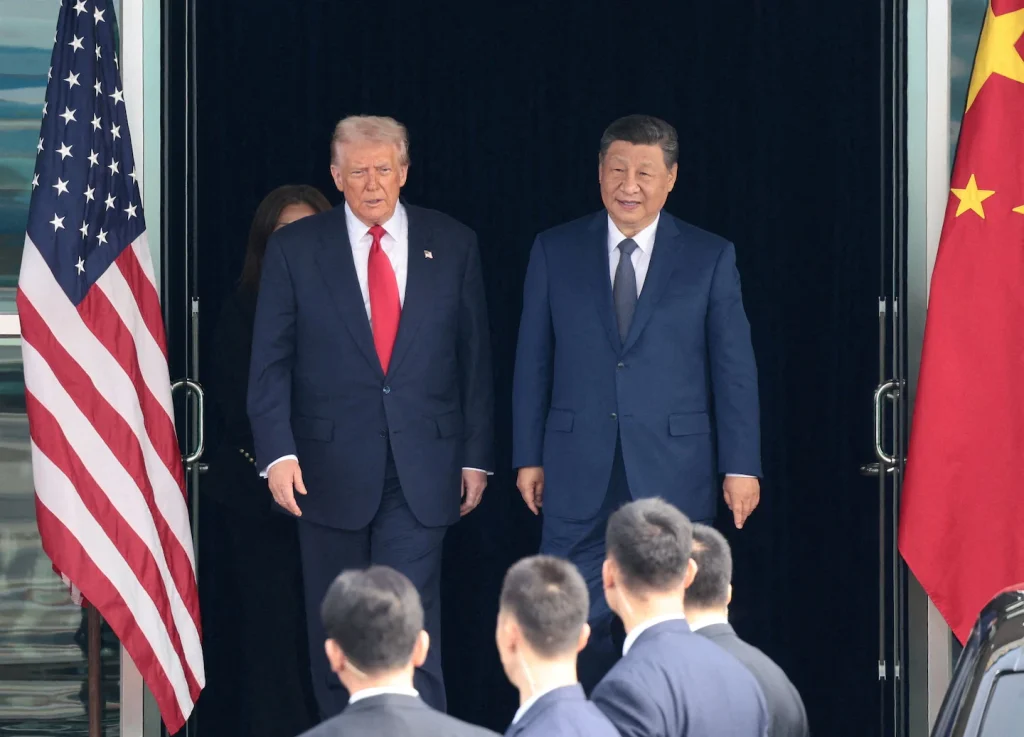
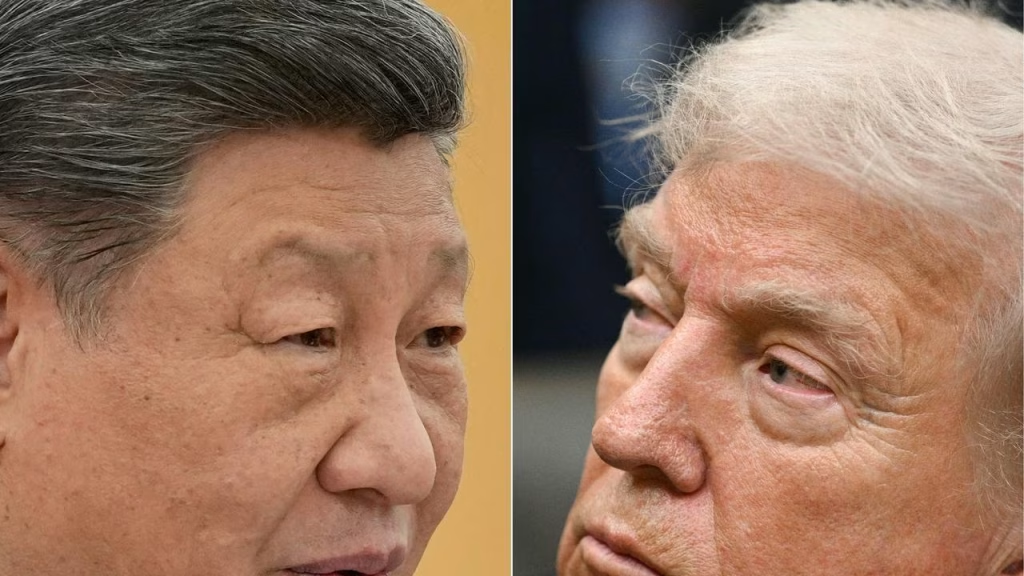
President Donald Trump described his latest conversation with Chinese President Xi Jinping as “very positive,” projecting optimism about the future of U.S.–China relations after months of escalating tension marked by disputes over Taiwan, military maneuvers, tariffs, and competing global ambitions.
The call, which took place on Wednesday morning, marked the first publicly acknowledged contact between the two leaders in several months and came at a moment of heightened uncertainty in the bilateral relationship. While Trump emphasized cooperation, trade, and personal rapport, Beijing’s official readout struck a more cautionary tone, underscoring unresolved disputes and issuing a pointed warning over U.S. arms sales to Taiwan.
The contrast between the two sides’ messaging reflected the broader state of U.S.–China relations: outwardly cordial, strategically cautious, and underpinned by deep structural rivalry.
A Call After Months of Strain
Wednesday’s conversation followed a turbulent stretch in relations between Washington and Beijing. In recent months, the two governments have sparred over a record $11 billion U.S. arms package to Taiwan, China’s unprecedented live-fire military exercises encircling the island, and accusations from the Trump administration that Beijing harbors territorial ambitions extending as far as Greenland.
Those tensions have played out against the backdrop of Trump’s second term, which has been characterized by an effort to recalibrate U.S. foreign policy while maintaining a confrontational edge on issues of sovereignty, trade imbalances, and national security.
In a social media post following the call, Trump struck an upbeat tone.
“I just finished a very positive call with President Xi of China,” Trump wrote. “Our relationship is extremely good, and I believe there will be many positive results achieved over the next three years of my Presidency.”
According to Trump, the leaders discussed a range of topics, including Chinese purchases of U.S. soybeans, oil, and natural gas — a nod to trade issues that have long been central to Trump’s approach to China — as well as the wars in Ukraine and the Middle East, and concerns surrounding Iran.
Trump also said he plans to visit Beijing in April, a potential high-profile diplomatic event that, if confirmed, would mark a significant moment in his second term. Chinese officials, however, did not immediately confirm the visit.
Diverging Messages From Washington and Beijing
While Trump’s statement emphasized warmth and forward momentum, China’s official account of the call was noticeably more restrained.
A statement from China’s Foreign Ministry highlighted Trump’s expression of “deep respect” for Xi but quickly pivoted to Beijing’s core concerns. It urged the United States to handle arms sales to Taiwan with “extreme caution” and reiterated China’s longstanding position that “Taiwan will never be allowed to separate from China.”
The language reflected Beijing’s sensitivity to any signals that Washington might be bolstering Taiwan’s military capabilities or international standing. For Chinese leaders, Taiwan remains the most volatile and emotionally charged issue in the relationship with the United States.
The differing readouts underscored a familiar pattern in U.S.–China diplomacy: Washington often emphasizes pragmatic cooperation and personal diplomacy, while Beijing focuses on sovereignty, red lines, and strategic deterrence.
Taiwan at the Center of the Relationship
Few issues loom larger over U.S.–China relations than Taiwan. In December, the United States approved an $11 billion arms package for the self-governing island, the largest such deal in history. The move was intended to strengthen Taiwan’s defensive capabilities amid growing concern about China’s military posture, but it drew an immediate and angry response from Beijing.
China’s government said the arms sale “gravely interfered” in its internal affairs and violated commitments made by Washington under previous bilateral agreements. Shortly afterward, the People’s Liberation Army conducted large-scale military exercises around Taiwan, including live-fire drills that effectively encircled the island.
Chinese officials described the exercises as “punitive,” framing them as a warning to Taiwan’s leaders and to external forces — particularly the United States — against any steps toward formal independence.
For the Trump administration, Taiwan represents both a strategic partner and a test case for U.S. credibility in the Indo-Pacific. For Beijing, it is a non-negotiable issue of sovereignty and national identity.
Trade, Tariffs, and Economic Interdependence
Despite the security tensions, trade remains a central pillar of the U.S.–China relationship — and a recurring theme in Trump’s rhetoric.
During the call, Trump highlighted discussions about Chinese purchases of U.S. agricultural and energy products, including soybeans, oil, and natural gas. Such purchases have historically served as pressure valves during periods of trade friction, offering tangible benefits to U.S. farmers and energy producers while allowing Beijing to signal goodwill without making structural concessions.
At the same time, disputes persist over tariffs, access to critical minerals, and supply chain resilience. The Trump administration has sought to reduce U.S. dependence on China in key sectors, while Beijing has accelerated efforts to achieve technological self-sufficiency.
The result is a relationship defined by economic interdependence and strategic competition — a balance that both sides appear determined to manage rather than rupture, at least for now.
A Shifting Tone From the White House
The call comes as the White House has sought to adopt a more conciliatory tone toward Beijing, at least rhetorically, emphasizing stability and dialogue even as policy disagreements remain unresolved.
Administration officials have suggested that prioritizing trade and economic engagement could help prevent broader deterioration in relations, particularly at a time when the global economy faces slowing growth, geopolitical uncertainty, and persistent inflationary pressures.
Yet the effort to soften the tone has not erased underlying mistrust. Trump’s aggressive foreign-policy moves — including the dramatic capture of Venezuelan strongman Nicolás Maduro shortly after his meeting with a Chinese envoy — have fueled Chinese suspicions about Washington’s intentions.
Trump has also repeatedly asserted, without presenting evidence, that China harbors ambitions to take control of Greenland, a claim Beijing has dismissed but which has further strained diplomatic ties.
Xi’s Consolidation of Power and Military Calculus
The geopolitical context of the call is shaped not only by U.S. policy but also by significant developments within China itself.
In recent weeks, Chinese authorities announced a career-ending investigation into Zhang Youxia, the country’s top uniformed military official. The move appears to be part of Xi Jinping’s broader effort to reassert complete control over the People’s Liberation Army.
By sidelining senior military figures and consolidating authority, Xi has effectively centralized decision-making over China’s military strategy to an unprecedented degree in the modern era. Analysts say this accumulation of power could have far-reaching implications for China’s approach to Taiwan and regional security.
Xi has set a self-imposed goal of building a military capable of invading Taiwan by 2027 — a timeline that looms large over strategic planning in Washington, Taipei, and allied capitals.
China, Russia, and a Multipolar World
Adding another layer of complexity, Xi held a videoconference with Russian President Vladimir Putin earlier Wednesday, just hours before speaking with Trump.
China’s Foreign Ministry released a lengthy statement describing the Xi-Putin meeting as a chance to mark the Lunar New Year and to “jointly chart a new blueprint for China-Russia relations.” The timing of the call underscored Beijing’s effort to balance engagement with Washington while deepening strategic ties with Moscow.
For the Trump administration, China’s close relationship with Russia — particularly amid the ongoing war in Ukraine — remains a source of concern. Trump has positioned himself as a potential broker of peace in Ukraine, but Beijing’s alignment with Moscow complicates those ambitions.
Diplomatic Momentum Beyond Washington
Xi’s outreach has not been limited to the United States and Russia. In recent weeks, the Chinese leader has embarked on a flurry of diplomatic engagements, particularly with countries navigating strained relations with Washington.
Last week, Xi met with British Prime Minister Keir Starmer in Beijing, where the two sides announced agreements on visas, finance, and technology — signaling a partial reset in U.K.–China relations after years of tension.
Earlier this month, Xi welcomed Canadian Prime Minister Mark Carney to Beijing. The meeting resulted in an agreement to lower Chinese tariffs on a range of products and to open Canada’s market to Chinese electric vehicles. Canada’s foreign ministry framed the deal as a response to the need to diversify its economy in a “divided and uncertain world.”
Together, these moves suggest Beijing is seeking to capitalize on fractures between the United States and some of its traditional allies, positioning China as an indispensable economic partner.
Personal Diplomacy and Political Theater
Trump’s emphasis on his personal relationship with Xi reflects a broader pattern in his approach to foreign policy. Throughout his political career, Trump has often framed diplomacy in terms of leader-to-leader rapport, portraying strong personal ties as a substitute for — or complement to — institutional engagement.
Whether that approach produces lasting results remains a matter of debate. Critics argue that personal diplomacy risks obscuring structural conflicts and empowering authoritarian leaders. Supporters contend it allows for flexibility and de-escalation in moments of crisis.
Wednesday’s call offered a glimpse of both dynamics: warm words at the top, paired with unresolved disputes below.
What Comes Next?
If Trump’s proposed April visit to Beijing materializes, it could become a defining moment in his second term. Such a visit would offer an opportunity to reset the relationship — or, conversely, to highlight the limits of rapprochement.
Key questions remain unanswered: Will the two sides reach any concrete agreements on trade or security? Can Washington and Beijing manage their rivalry without sliding into confrontation? And how will Taiwan factor into future negotiations?
For now, both governments appear committed to keeping channels of communication open, even as they prepare for the possibility of deeper conflict.
Read More: Bill Gates says he ‘regrets’ knowing Epstein as ex-wife alludes to ‘muck’ in marriage
FAQs
Was this the first Trump–Xi call of Trump’s second term?
It was the first publicly acknowledged call between the two leaders in several months, following a period of limited high-level contact.
Did China confirm Trump’s planned visit to Beijing?
No. While Trump said he plans to visit China in April, Chinese officials did not immediately confirm the visit.
What did the leaders discuss?
According to Trump, the discussion included trade, energy purchases, the wars in Ukraine and the Middle East, and Iran. China’s statement focused more on Taiwan and U.S.–China relations.
Why is Taiwan such a major issue?
China views Taiwan as part of its territory and has vowed to reunify it with the mainland, by force if necessary. The United States supports Taiwan’s self-defense, making the issue a major flashpoint.
How does China’s relationship with Russia affect U.S.–China ties?
China’s close alignment with Russia, particularly during the Ukraine war, complicates relations with Washington and raises concerns about a broader geopolitical bloc opposing U.S. influence.
Conclusion
President Trump’s description of his call with Xi Jinping as “very positive” reflects a familiar rhythm in U.S.–China relations: moments of optimism punctuated by enduring mistrust. The call signaled a willingness on both sides to engage, to manage tensions, and to avoid miscalculation. Yet the starkly different messages issued by Washington and Beijing reveal how far apart the two governments remain on fundamental issues, especially Taiwan.
