


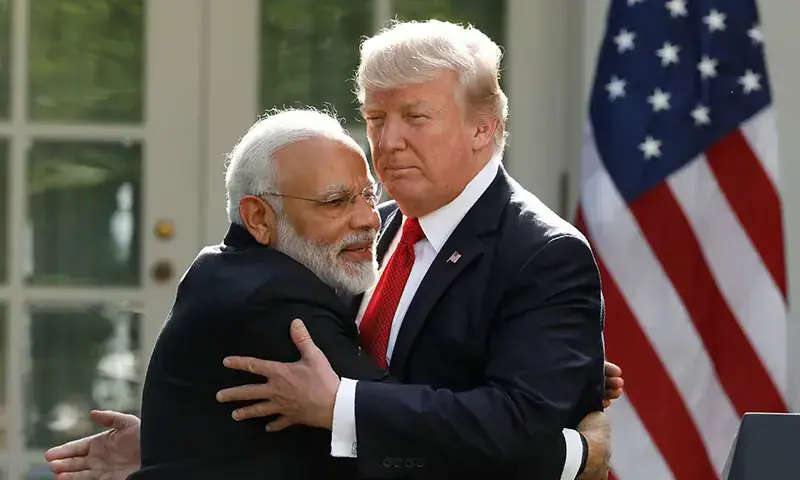
The United States and India have taken a significant step toward reshaping one of the world’s most consequential bilateral economic relationships, unveiling an interim trade framework that lowers tariffs, realigns energy trade, and deepens cooperation across key strategic sectors. The announcement, made following high-level talks between U.S. President Donald Trump and Indian Prime Minister Narendra Modi, signals renewed momentum toward a comprehensive bilateral trade agreement that officials on both sides say could be finalized as early as March.
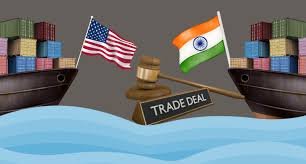
The interim framework, released jointly by Washington and New Delhi on Friday, outlines immediate trade adjustments while reaffirming a shared commitment to continued negotiations on a broader, legally binding pact. Though not a final agreement, the framework is being viewed by policymakers, businesses, and analysts as a major political and economic signal — one that reflects shifting global supply chains, evolving geopolitical alliances, and a growing convergence of U.S. and Indian strategic interests.
“This framework sets the direction for our economic partnership in the years ahead,” the joint statement said. “Both sides remain committed to working constructively toward a comprehensive and balanced trade agreement that advances shared prosperity, resilience, and security.”
A Reset in a Complex Trade Relationship
Trade relations between the United States and India have long been characterized by ambition tempered by friction. Despite growing strategic cooperation and shared concerns about China’s economic dominance, the two countries have struggled for years to resolve disputes over tariffs, market access, intellectual property protections, agricultural trade, and digital commerce.
The interim framework represents a deliberate attempt to reset that relationship.
At its core, the arrangement lowers average U.S. tariffs on selected Indian exports to 18%, offering relief to Indian manufacturers that have faced higher trade barriers in recent years. In exchange, India has committed to a sweeping reorientation of its energy imports, pledging to significantly increase purchases of U.S. oil, liquefied natural gas (LNG), aircraft, defense equipment, and advanced technology totaling an estimated $500 billion over five years, according to officials familiar with the talks.
The scale of that commitment underscores the economic and geopolitical significance of the deal. It also reflects India’s growing energy needs as its economy expands, as well as Washington’s desire to position itself as a reliable long-term supplier to strategic partners.
Energy at the Center of the Deal
Energy trade emerged as one of the most consequential elements of the interim framework.
India, the world’s third-largest oil importer, has increased its purchases of discounted Russian crude since the outbreak of the Ukraine conflict. While those imports have helped India manage inflation and energy costs, they have also drawn scrutiny from Western governments seeking to curtail Russia’s energy revenues.
Under the new framework, India agreed to gradually reduce its reliance on Russian oil and instead expand imports from the United States. Officials stressed that the transition would be phased and market-based, avoiding sudden shocks to domestic fuel prices.
“This is about diversification, not disruption,” an Indian government official said. “India will continue to prioritize energy security and affordability while strengthening partnerships with trusted suppliers.”
For the United States, the deal represents a major opportunity to expand energy exports, support domestic producers, and deepen strategic ties with a fast-growing economy. U.S. LNG exporters, in particular, stand to benefit as India looks to increase gas consumption to meet climate and development goals.
Beyond oil and gas, the framework also envisions cooperation on clean energy technologies, including green hydrogen, carbon capture, and grid-scale storage areas where both governments see opportunities for joint investment and innovation.
Tariffs, Market Access, and Manufacturing
The tariff reductions outlined in the framework are targeted rather than comprehensive, reflecting the political sensitivities on both sides.
U.S. tariff cuts apply primarily to selected Indian manufactured goods, including textiles, engineering products, auto components, and certain consumer goods. Indian officials said the reductions would improve competitiveness for domestic manufacturers and support job creation.
However, Washington stopped short of offering broad tariff elimination, citing concerns about trade imbalances and domestic industry protection. U.S. officials emphasized that further concessions would depend on progress in negotiations over market access, regulatory transparency, and intellectual property protections.
India, for its part, resisted pressure to open its agricultural markets, a long-standing point of contention in U.S.-India trade talks. The interim framework explicitly avoids new commitments on farm imports, reflecting the political sensitivity of agriculture in India, where millions of small farmers depend on government support and protection.
“The interests of our farmers have been fully safeguarded,” India’s commerce ministry said in a statement. “There is no dilution of India’s position on agricultural market access.”
Aviation, Defense, and Technology Cooperation
Beyond tariffs and energy, the framework places heavy emphasis on strategic industries, particularly aviation, defense manufacturing, and advanced technology.
India is expected to significantly increase purchases of U.S.-made commercial aircraft over the next five years, benefiting major American manufacturers and supporting high-skilled jobs. The agreement also reinforces existing defense cooperation, including joint production initiatives and technology transfers under India’s “Make in India” program.
In the technology sector, the framework outlines cooperation on semiconductors, artificial intelligence, cybersecurity, and digital infrastructure. Both governments said they aim to reduce dependence on single-country supply chains and promote trusted ecosystems for critical technologies.
U.S. officials described India as a “natural partner” in efforts to build resilient technology supply chains, citing its large talent pool, growing startup ecosystem, and strategic alignment with Washington.
Domestic Political Reactions in India
The announcement of the interim framework triggered immediate political reactions in India, highlighting the domestic challenges facing the government as it pursues closer economic ties with the United States.
The ruling government defended the agreement as balanced and forward-looking, emphasizing the absence of concessions on agriculture and the long-term benefits of increased investment and exports.
Opposition parties, however, criticized the framework as favoring U.S. interests, particularly in energy and defense. Some lawmakers argued that committing to large-scale purchases from the United States could limit India’s strategic autonomy and bargaining power.
“This framework appears to lock India into expensive imports while offering limited guarantees for our exporters,” an opposition leader said.
Economists offered more nuanced assessments, noting that while the benefits may not be immediate, the agreement could support India’s long-term growth by integrating it more deeply into global supply chains.
Reactions in the United States
In Washington, the framework was welcomed by business groups and lawmakers who see India as a critical partner in counterbalancing China’s economic influence.
Energy companies praised the prospect of expanded exports, while aerospace and defense firms highlighted the potential for long-term contracts and joint ventures. Technology firms welcomed language on digital trade and intellectual property, though some cautioned that key issues remain unresolved.
Labor groups expressed cautious optimism, noting that increased exports could support U.S. jobs but calling for strong enforcement mechanisms in any final agreement.
Strategic and Geopolitical Implications
The interim framework cannot be viewed solely through an economic lens. It reflects broader geopolitical shifts as the United States and India seek to strengthen ties amid an increasingly fragmented global order.
Both countries are members of the Quad grouping, alongside Japan and Australia, and share concerns about supply chain vulnerabilities, maritime security, and economic coercion. Deepening trade ties is seen as a way to reinforce strategic alignment and reduce mutual dependence on rivals.
“This is as much a strategic agreement as it is a trade one,” said a senior U.S. official. “Economic integration strengthens our ability to work together on shared challenges.”
What Remains Unresolved
Despite the progress, significant issues remain unresolved and will be central to negotiations over the coming weeks.
Key sticking points include:
- Agricultural market access
- Digital trade rules and data localization
- Intellectual property protections
- Dispute settlement mechanisms
- Rules of origin and regulatory standards
Officials on both sides acknowledged that these issues are complex and politically sensitive, but expressed confidence that progress could be made.
Read More: Trump touts ‘very positive’ call with Chinese leader Xi
FAQs
What is an interim trade framework?
An interim trade framework is a preliminary arrangement that outlines immediate actions and guiding principles while negotiations continue toward a comprehensive trade agreement.
Is this a final trade deal?
No. The framework is not legally binding and serves as a foundation for a broader agreement expected to be negotiated by March 2026.
How large is the proposed trade commitment?
India has indicated plans to purchase approximately $500 billion worth of U.S. energy, aircraft, defense equipment, and technology over five years.
Does the deal affect Indian farmers?
According to the Indian government, there are no new commitments on agricultural imports, and existing protections remain in place.
Why is energy such a big part of the agreement?
Energy trade supports India’s growing demand, helps diversify supply sources, and aligns with U.S. strategic and economic interests.
Conclusion
The US–India interim trade framework represents a meaningful step toward deeper economic integration between two of the world’s most important democracies. While far from a final deal, it signals shared intent to lower trade barriers, realign energy ties, and strengthen cooperation in critical industries. Whether the framework evolves into a comprehensive and durable trade agreement will depend on the ability of both governments to navigate domestic politics, bridge longstanding differences, and translate strategic alignment into concrete economic outcomes.
