


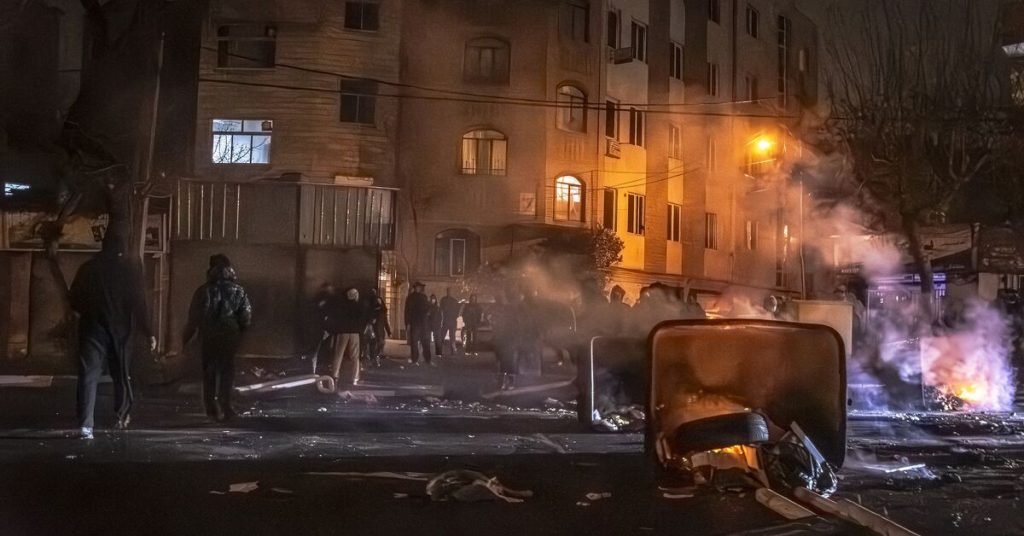
Trump’s military options. United States President Donald Trump has repeatedly threatened military intervention in Iran amid ongoing protests and widespread domestic unrest. The demonstrations, which began in late December 2025 over economic hardships, have escalated into a broader challenge to the clerical leadership that has ruled Iran since the 1979 Islamic Revolution.
Trump has signaled his willingness to act if Iranian authorities violently suppress these protests, telling demonstrators via Truth Social that “help is on its way.” This statement has fueled speculation about potential U.S. military operations against Iran and prompted concerns about regional escalation and retaliation.
Trump’s Statements on U.S. Intervention
On January 14, 2026, Trump wrote on Truth Social:
“Iranian Patriots, KEEP PROTESTING TAKE OVER YOUR INSTITUTIONS!!! Save the names of the killers and abusers. They will pay a big price. I have cancelled all meetings with Iranian Officials until the senseless killing of protesters STOPS. HELP IS ON ITS WAY. MIGA!!! PRESIDENT DONALD J. TRUMP”The acronym “MIGA” stands for Make Iran Great Again, a play on Trump’s campaign slogan “Make America Great Again.”
Earlier, on January 2, Trump posted that if Iran violently suppresses peaceful protesters, the United States “will come to their rescue” and that U.S. forces were “locked and loaded and ready to go.” While these statements remain vague, they underline Trump’s willingness to use military force as a deterrent against human rights abuses in Iran.
U.S. Administration’s Position
White House Press Secretary Karoline Leavitt emphasized that diplomacy remains the first option, but the administration is “unafraid to use the lethal force and might of the United States military if and when he deems that necessary.”
Leavitt added that air strikes are among the many options available to Trump, highlighting the president’s authority as Commander-in-Chief of the U.S. armed forces. She emphasized that the use of force would aim to prevent further deaths of civilians in Tehran and other Iranian cities.
Historical Context: U.S.-Iran Military Engagements
Trump has previously authorized military action in Iran, including the June 2025 strikes during Iran’s 12-day war with Israel. U.S. forces targeted Iranian nuclear sites at Fordow, Natanz, and Isfahan following Israeli airstrikes. During that period, Iran retaliated with missiles, resulting in civilian and military casualties, including attacks on the Al Udeid Airbase in Qatar, which hosts the largest U.S. military presence in the Middle East.
These past engagements demonstrate that the U.S. has the capacity to conduct precision strikes, but the current context differs due to reduced U.S. military presence in the region.
Current U.S. Military Presence in the Middle East
Since the June 2025 conflict, several changes have occurred in U.S. military deployments:
- The USS Gerald Ford aircraft carrier, previously positioned in the Mediterranean, has been redeployed to the Caribbean as part of Operation Southern Spear, targeting alleged narco-terrorist activities in Latin America.
- Patriot missile defense units temporarily deployed to the Middle East have returned to South Korea for equipment upgrades.
- Despite these changes, the U.S. maintains 19 military sites across the Middle East, including permanent bases in Bahrain, Egypt, Iraq, Jordan, Kuwait, Qatar, Saudi Arabia, and the UAE.
Some personnel at Al Udeid Airbase were advised to leave temporarily, signaling a posture adjustment rather than a full evacuation. This reflects heightened caution amid the ongoing protests and potential escalation with Iran.
Possible U.S. Military Options
Precision Air Strikes
Air strikes are the most likely option, given the Trump administration’s preference for short, sharp operations that minimize risks to U.S. troops. Precision strikes could target:
- Iranian nuclear facilities
- Military installations associated with the Islamic Revolutionary Guard Corps (IRGC)
- High-value military assets in key cities
Precision strikes carry the advantage of quick impact with limited exposure of U.S. personnel but risk retaliation through Iranian missile or drone attacks.
Targeted Assassinations
Trump has previously authorized targeted operations, most notably the drone strike that killed Qassem Soleimani in Baghdad in 2020. Analysts suggest that U.S. forces could target key Iranian leaders, including Ayatollah Ali Khamenei or senior IRGC commanders.
Experts warn that while leadership decapitation might temporarily disrupt the Iranian regime, it could provoke severe retaliatory attacks and shift power to the IRGC, potentially increasing hostility toward the U.S.
Naval Posturing
Deploying aircraft carriers or strike groups to the Persian Gulf is another option. However, the redeployment of the USS Gerald Ford to the Caribbean means that U.S. naval strike power in the region is currently reduced. Moving carriers back to the Gulf would require at least two to three weeks, increasing operational complexity.
Special Operations
Small-scale special operations raids are possible but considered highly risky due to Iran’s heightened alert and robust security infrastructure. Unlike the Venezuela operation against Nicolás Maduro, Iran’s geography, air defenses, and internal intelligence capabilities make such missions logistically challenging.
Cyber Operations
Cyberattacks targeting Iranian communications, military systems, or nuclear facilities could be employed as a non-kinetic option. Cyber operations allow the U.S. to disrupt Iranian capabilities without direct physical engagement but may escalate tensions or provoke counter-cyber retaliation.
Ground Invasion: Highly Unlikely
Experts widely agree that a full-scale ground invasion of Iran is improbable. Analysts note that:
- Trump’s administration does not favor long-term nation-building or protracted conflicts.
- The logistical and human costs of deploying ground troops are prohibitively high.
- Historical precedent, such as the U.S. withdrawal from Afghanistan, demonstrates a reluctance to commit to extended ground wars.
Instead, U.S. strategy is expected to focus on limited, targeted military actions designed to influence Iranian behavior without triggering a full-blown war.
Iran’s Military Preparedness
Iranian officials have repeatedly warned that any U.S. strike would be met with decisive retaliation. According to Iranian Foreign Minister Abbas Araghchi, the country now has enhanced military readiness compared to the June 2025 conflict.
The IRGC, bolstered by advanced missile capabilities and internal security measures, is likely to respond aggressively to any U.S. attack, potentially targeting U.S. bases in the Gulf, Israel, or allied regional interests.
Risks and Consequences
A military strike, whether through airpower, special operations, or targeted assassinations, carries significant risks:
- Escalation: Iranian retaliation could expand into a regional conflict, involving Iraq, Syria, and other Middle Eastern nations.
- Civilian casualties: Even precision strikes risk unintended deaths, which could further inflame protests and anti-U.S. sentiment.
- Economic impact: Disruptions to oil markets and regional trade could affect global energy prices.
- Terrorist response: The IRGC and affiliated groups could increase attacks on U.S. interests abroad.
Political Implications
Trump’s statements also serve a domestic political purpose, signaling toughness on Iran while appealing to his political base. Experts suggest that public messaging may serve as leverage for negotiations, without necessarily leading to immediate military action.
Additionally, a U.S. strike against Iran would require careful coordination with allies, particularly Israel and Gulf states, while avoiding international condemnation or escalation with Russia and China.
Read More: US freezes immigrant visa processing for 75 countries, including Pakistan
FAQs
Has Trump confirmed a military strike on Iran?
No, Trump has threatened military intervention but has not committed to any specific action. Statements on Truth Social indicate that options are being considered.
Are U.S. ground troops likely to be deployed in Iran?
Experts consider a full-scale invasion highly unlikely due to logistical, political, and human costs. Limited strikes are more probable.
Can Iran retaliate if attacked?
Yes, Iran has extensive missile and military capabilities and has warned of decisive retaliation against U.S. and Israeli targets.
What previous U.S. military actions in Iran provide context?
The June 2025 strikes on Iranian nuclear facilities and the 2020 drone killing of Qassem Soleimani are examples of precision and targeted operations used by the U.S. in Iran.
Could cyber operations be used instead of physical strikes?
Yes, cyberattacks are a non-kinetic option that could disrupt Iranian systems but may provoke escalation.
Conclusion
President Trump’s military options in Iran are diverse but constrained. Precision air strikes, targeted assassinations, cyber operations, and naval posturing remain possible, while ground invasion is highly unlikely. The overarching goal appears to be protecting civilians, deterring violent crackdowns, and signaling U.S. resolve without triggering a full-scale war.
