


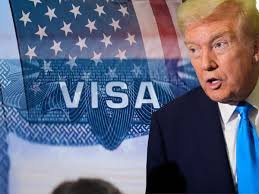
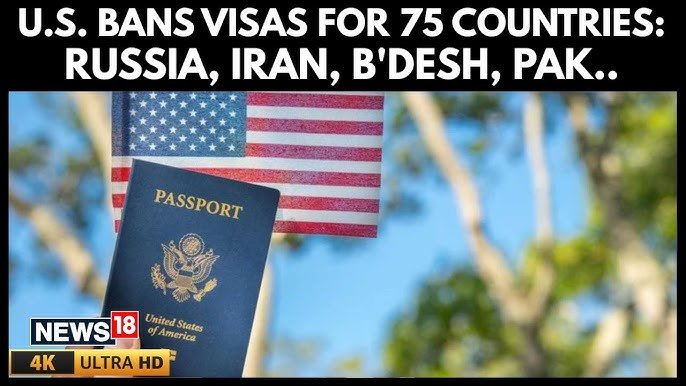
The United States has announced a sweeping pause on immigrant visa processing for nationals of 75 countries, including Pakistan, effective January 21, 2026. This move, confirmed by the U.S. State Department, forms part of President Donald Trump’s renewed hard-line immigration agenda, emphasizing financial self-sufficiency and limiting access to public benefits for incoming migrants.
While the freeze targets immigrant visas specifically, non-immigrant visas, such as tourist and student visas, remain unaffected. The decision signals a major shift in U.S. immigration policy, reflecting a continuation of the “public charge” provisions that were a cornerstone of Trump’s previous term and a revival of policies aimed at restricting entry from countries considered “high-risk” by Washington.
The State Department’s Statement
The U.S. State Department, in a notice published on its official website, explained that the freeze is part of a comprehensive review of immigration policies. Officials stated that the review aims to ensure that new immigrants from selected countries will not become dependent on public welfare programs, a category they referred to as “public charges.”
“The State Department will pause immigrant visa processing from 75 countries whose migrants take welfare from the American people at unacceptable rates. The freeze will remain active until the U.S. can ensure that new immigrants will not extract wealth from the American people,” the statement read.The department clarified that while affected applicants may still submit applications and attend interviews, no immigrant visas will be issued during the suspension. Additionally, dual nationals applying with a passport from an exempt country are not affected by the freeze.
Countries Affected by the Visa Freeze
The State Department listed countries spanning Asia, Africa, the Middle East, Europe, and Latin America. Some of the notable affected countries include:
- Asia: Pakistan, Afghanistan, Bangladesh, Thailand
- Middle East: Iran, Iraq, Egypt
- Africa: Nigeria, Somalia
- Europe: Russia
- Latin America: Brazil
This selection aligns with what the administration describes as “high-risk” countries whose migrants, in its view, are more likely to rely on public welfare programs.
It is important to note that the freeze does not affect previously issued immigrant visas, meaning migrants already granted permanent residency or lawful entry will not have their status revoked.
Historical Context: “Public Charge” and Trump’s Immigration Legacy
The freeze revives the “public charge” provision of U.S. immigration law, a policy allowing authorities to deny entry to applicants deemed likely to depend on public benefits. The provision had been heavily enforced during Trump’s first term, and its revival reflects a continuity of his administration’s prioritization of economic self-sufficiency as a criterion for immigration.
During Trump’s previous term, the administration also implemented a controversial Muslim-majority country travel ban, widely referred to as the Muslim ban. Although challenged in U.S. courts, a revised version was upheld by the Supreme Court before being rescinded under President Joe Biden. The current immigrant visa freeze shares similarities in its broad targeting of multiple nations, although it is framed in terms of economic self-sufficiency rather than religious or political criteria.
Implications for Pakistani Applicants
Pakistan, which has a significant diaspora in the United States, is among the countries affected. The visa freeze means:
- Immigrant visas will not be issued to Pakistani nationals until the review concludes.
- Applicants may still submit forms and attend interviews, but approval is temporarily suspended.
- Non-immigrant visas, such as tourist, student, or business visas, are unaffected.
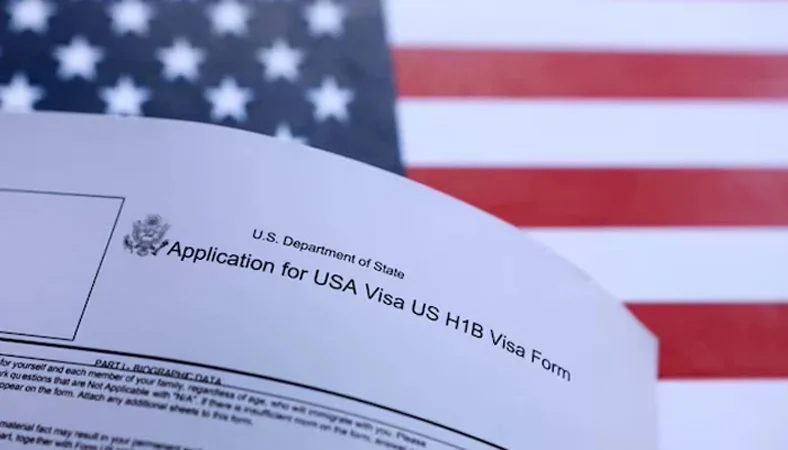
This decision could impact Pakistani families seeking family reunification, employment-based visas, or permanent residency, creating delays and uncertainty for thousands of prospective migrants.
Economic and Social Impact
The freeze has economic and social ramifications for both the U.S. and the affected countries:
- Remittances: Countries like Pakistan rely heavily on remittances sent by citizens working in the U.S. Delays in permanent residency approvals may affect long-term settlement and remittance flows.
- Migration Planning: Prospective immigrants must adjust plans for relocation, employment, and family reunification.
- Higher Education: Some families planning long-term educational arrangements for students in the U.S. may reconsider timelines, though student visas remain unaffected.
US Domestic Context: Enforcement and Controversy
The visa freeze coincides with a broader push for domestic immigration enforcement. U.S. Immigration and Customs Enforcement (ICE) has reportedly intensified operations nationwide, generating debate over the administration’s tactics.
Last week, a controversial incident involving ICE agents in Minneapolis resulted in the death of a U.S. citizen, Renee Good, during a federal operation. The incident sparked protests and reignited discussions on the scope and ethics of immigration enforcement under Trump, highlighting the domestic tensions surrounding immigration policies.
Legal and Regulatory Considerations
While the freeze is officially framed as a review, it raises potential legal and regulatory questions:
- Duration of the Freeze: The State Department has not specified when the review will conclude, leaving the timeline for resumption of immigrant visas uncertain.
- Public Charge Definition: Determining who may become a public charge involves complex criteria, including income, employment history, and reliance on welfare benefits.
- Dual National Exceptions: The carve-out for dual nationals adds complexity to eligibility assessments.
Legal experts suggest that while the policy is within the administration’s authority, affected countries and advocacy groups may challenge aspects of the freeze if it appears discriminatory or lacks clear criteria.
International Response and Diplomatic Implications
The freeze is likely to have diplomatic repercussions, particularly among countries with large numbers of nationals seeking permanent residency in the U.S. Pakistan’s government has yet to issue a formal statement, but officials are reportedly assessing the impact on citizens and bilateral relations.
Other affected countries, including Iran, Nigeria, and Brazil, may also seek clarification or lodge formal objections through diplomatic channels. Observers note that the policy may strain U.S. relations with traditional allies while signaling a shift toward more restrictive immigration practices globally.
Public Reaction: Concerns and Criticism
The freeze has generated mixed reactions:
- Supporters argue that the move protects American taxpayers and ensures that immigrants contribute economically.
- Critics describe the policy as punitive and discriminatory, potentially targeting nations unfairly and creating hardship for families and individuals with legitimate claims to residency.
Civil society organizations and human rights advocates emphasize that while enforcing immigration laws is legitimate, sweeping suspensions may violate principles of fairness, due process, and international norms.
Broader Trends: Immigration Policy Under Trump
The immigrant visa freeze is part of a broader pattern under President Trump’s current term:
- Reviving and expanding “public charge” rules
- Tightening immigration enforcement through ICE operations
- Targeting specific nations with broad visa restrictions
- Limiting avenues for legal migration while keeping non-immigrant travel channels open
These policies signal a renewed focus on self-sufficiency and risk assessment, reflecting the administration’s broader immigration philosophy.
Read More: Pakistan Partners with Trump Family’s World Liberty USD1 Stablecoin
Potential Economic Effects on the U.S.
While aimed at reducing reliance on public welfare, the freeze could have unintended economic consequences:
- Labor shortages: Certain sectors in the U.S., including healthcare, technology, and agriculture, rely on immigrant labor. Delays in permanent residency may exacerbate labor gaps.
- Remittances and trade: Lower migration could affect bilateral economic ties and reduce remittances sent back to home countries, indirectly influencing trade.
- Investor confidence: Uncertainty around visa policies may impact foreign talent and international investment in U.S. industries.
FAQs
Which visas are affected by the freeze?
Only immigrant visas are paused. Non-immigrant visas, including tourist, student, and business visas, remain unaffected.
When does the freeze start?
The freeze takes effect on January 21, 2026, until the U.S. State Department completes its review.
Are dual nationals affected?
Dual nationals using a valid passport from a country not on the list of 75 countries are exempt from the freeze.
Will previously issued visas be revoked?
No, immigrant visas already issued will not be revoked or canceled.
Why were these 75 countries selected?
The U.S. State Department cited concerns about immigrants from these countries relying on public welfare programs at what it described as unacceptable rates.
Conclusion
The suspension of immigrant visa processing for nationals of 75 countries, including Pakistan, underscores the Trump administration’s hard-line approach to immigration. While framed as a measure to protect taxpayers and ensure immigrant self-sufficiency, the freeze has significant implications for families, economic migrants, and bilateral relations.
