


Iran’s Foreign Minister Abbas Araghchi has firmly denied claims that Tehran plans to execute anti-government protesters, amid a volatile standoff between Iran and the United States that has raised fears of a wider regional conflict. His remarks come at a critical moment, as U.S. President Donald Trump appeared to soften his tone after days of threatening military action, saying he had been assured that killings of demonstrators in Iran had stopped.
The exchange of statements marks a fragile pause in an escalating crisis that has seen mass protests sweep across Iran, a deadly crackdown by security forces, sharp rhetoric from Washington, and heightened military alertness across the Middle East. While officials on both sides have signaled a potential cooling of tensions, the situation remains deeply uncertain, with conflicting reports, ongoing communication blackouts inside Iran, and continued anxiety among civilians.
This article explores the unfolding developments in depth, examining Iran’s official position, Trump’s shifting rhetoric, the military and diplomatic maneuvers underway, the human toll of the protests, and what all this could mean for the future of U.S.–Iran relations.
Abbas Araghchi’s Statement: “Hanging Is Out of the Question”
In an interview with Fox News, Iranian Foreign Minister Abbas Araghchi directly addressed concerns that protesters detained during nationwide demonstrations could face execution. Asked whether Iran planned to carry out hangings, Araghchi was unequivocal.
“There is no plan for hanging at all,” he said, adding bluntly that “hanging is out of the question.”
The remarks were clearly aimed at countering international outrage and alleviating fears that Iran was preparing mass executions similar to those seen during past periods of unrest. Araghchi’s comments followed President Trump’s public claim that he had received assurances from Iranian sources that the killing of protesters had ceased and that executions had been halted.
Iranian officials have repeatedly rejected accusations that they are carrying out systematic killings of protesters, instead attributing violence to what they describe as “armed and terrorist groups.” However, these claims stand in stark contrast to reports from human rights organizations and opposition groups, which allege widespread and indiscriminate use of lethal force by Iranian security forces.
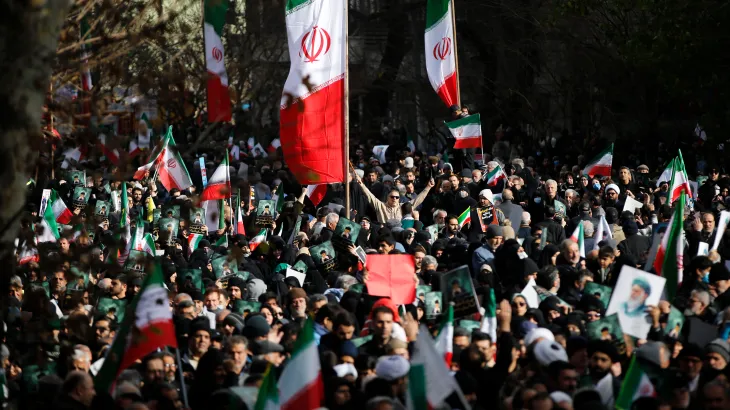
Trump’s Shift in Tone: From Threats to “Watching the Process”
Only days earlier, President Trump had openly threatened military action against Iran, warning that continued violence against protesters could trigger U.S. strikes. His rhetoric fueled fears of another direct confrontation between Washington and Tehran particularly sensitive given the memory of the brief but intense U.S.–Israel–Iran conflict earlier in the year.
However, speaking to reporters in Washington, Trump struck a noticeably softer tone.
He said he had spoken to “very important sources on the other side” and had received what he described as a “very good statement” from Iran. According to Trump, these assurances indicated that the killing of protesters had stopped and that executions would not proceed.
“We are going to watch what the process is,” Trump said, stopping short of ruling out military action but clearly signaling a step back from imminent confrontation.
Al Jazeera’s correspondent in Washington described the remarks as a potential de-escalation, noting that Trump appeared to be backing away from what had seemed like the brink of immediate action.
A Calculated Retreat or Tactical Pause?
Political analysts have offered mixed interpretations of Trump’s comments. Some view them as a genuine attempt to ease tensions, while others see a strategic maneuver designed to avoid war without appearing weak.
Sina Toossi, a senior non-resident fellow at the Center for International Policy, described Trump’s statement as potentially “face-saving.”
On the surface, Toossi said, Trump’s claim that killings had stopped provided him with political cover to step back from military action. However, Toossi cautioned that this did not entirely rule out the possibility of future strikes.
Trump, he noted, has a long history of blending negotiation with aggressive threats, particularly when dealing with Iran. While the president has often shown reluctance to engage in large-scale, prolonged military conflicts, he has also used the threat of force as leverage.
Trump’s Dilemma: Strength vs. Restraint
Barbara Slavin, a distinguished fellow at the Stimson Center, suggested that Trump is likely torn between competing instincts.
On one hand, Trump has consistently portrayed himself as a strong leader willing to use force. On the other, he has repeatedly expressed disdain for prolonged military entanglements in the Middle East.
According to Slavin, Trump may be searching for a limited course of action—one that allows him to claim he stood up for Iranian protesters without dragging the U.S. into a full-scale war.
Such a scenario could involve symbolic or limited strikes, or intensified diplomatic and economic pressure, rather than a sustained military campaign. Whether Trump ultimately chooses restraint or confrontation may depend on how events inside Iran unfold in the coming days.
Military Movements and Heightened Alerts
Despite the softened rhetoric, military activity in the region suggests that tensions remain high.
Earlier in the week, the United States and Britain withdrew some personnel from Al Udeid Air Base in Qatar, one of the most important U.S. military installations in the Middle East. The move followed warnings from a senior Iranian official that Tehran would target U.S. bases in neighboring countries if Washington launched attacks.
Several governments have since issued travel advisories and evacuation guidance for their citizens across the region, citing fears of a broader escalation.
U.S. media reports have also suggested that the Pentagon began repositioning naval assets, including a possible aircraft carrier strike group, toward the Middle East. While the U.S. government has not publicly confirmed these movements, such reports underscore the seriousness with which Washington is treating the situation.
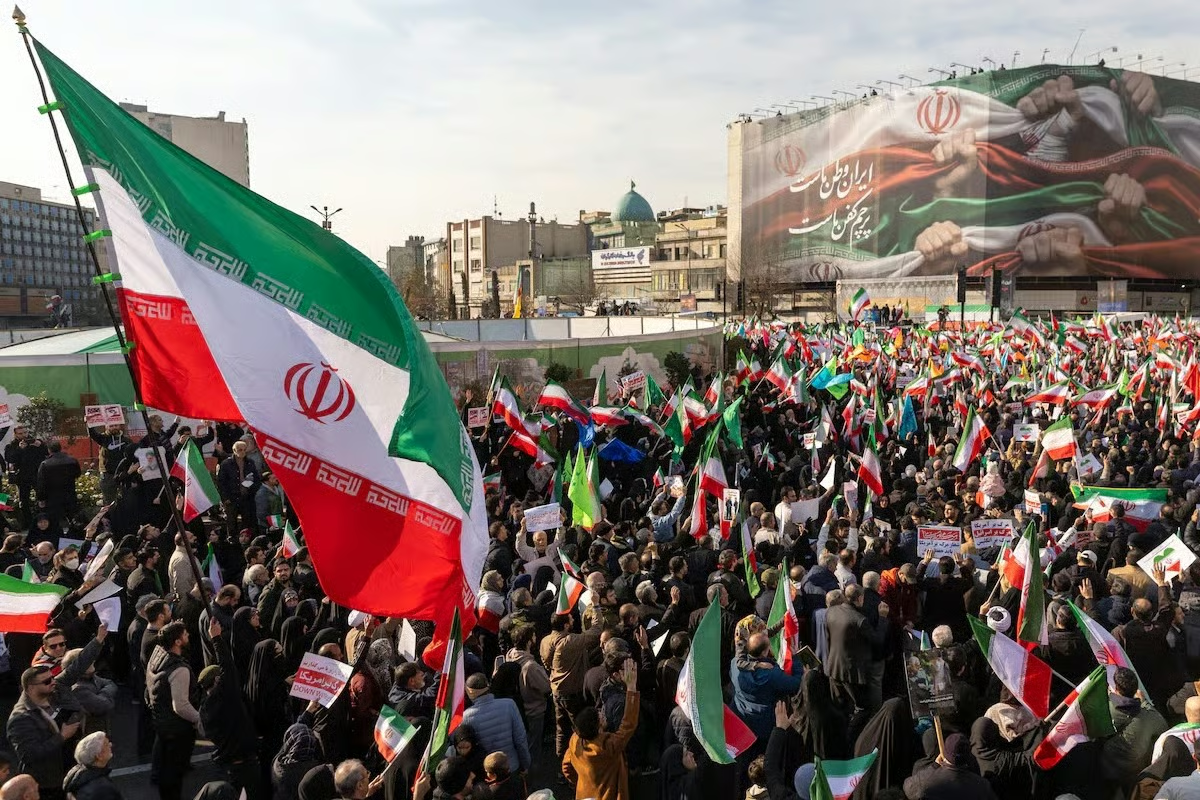
Iran’s Response: “Ready to Retaliate”
Iranian officials, meanwhile, have made clear that any U.S. intervention would be met with force.
Mohammad Pakpour, commander of the Islamic Revolutionary Guard Corps (IRGC), stated that Iran is at “the height of readiness” to respond decisively to what he described as enemy miscalculations. He accused both the United States and Israel of orchestrating the unrest inside Iran and labeled President Trump and Israeli Prime Minister Benjamin Netanyahu as “murderers of the youth of Iran.”
These statements reflect the deeply entrenched hostility between Tehran and Washington, as well as Iran’s insistence that foreign actors are fueling domestic protests—a claim that protesters themselves often reject.
Inside Iran: Calm Claimed, Anxiety Felt
While Iranian officials insist the situation is under control, reports from inside the country paint a more complex picture.
Araghchi claimed that after several days of what he described as “terrorist operations,” calm had returned and the government was firmly in control. However, journalists and residents describe widespread fear and anxiety, particularly given the memory of recent conflicts and the possibility of renewed violence.
Al Jazeera’s correspondent in Tehran reported that many Iranians feel they are living under the “shadow of war,” an atmosphere that affects daily life, economic activity, and mental health.
Origins of the Protests: Economic Pain Turns Political
The protests that erupted in December began with economic grievances. Shopkeepers and workers took to the streets to protest the rapid decline of Iran’s currency and the soaring cost of living.
Inflation, unemployment, and international sanctions have placed immense strain on ordinary Iranians. What began as economic demonstrations quickly evolved into broader antigovernment protests, with calls for political reform and accountability.
As demonstrations spread nationwide, the government responded with force, deploying security services to suppress unrest.
The Human Cost: Conflicting Death Toll Estimates
Determining the true human toll of the protests has proven difficult.
Iranian state media has acknowledged a high number of deaths but attributes them largely to clashes with what it calls “armed and terrorist groups.” Officials say more than 100 security personnel have been killed.
Opposition activists and human rights organizations offer a starkly different account. The U.S.-based Human Rights Activists News Agency claims it has confirmed the deaths of more than 2,400 protesters, along with more than 150 security personnel and government supporters.
These figures have not been independently verified, but they align with reports from Amnesty International, which says it has documented evidence of mass unlawful killings.
Amnesty International: “Unprecedented Scale”
Amnesty International released a statement saying it had reviewed evidence pointing to a coordinated nationwide escalation in the use of lethal force against protesters.
According to the organization, verified videos and images show protesters being shot at close range, chased by security forces, and suffering fatal injuries, including gunshot wounds to the head and eyes.
Amnesty described the violence as occurring on an “unprecedented scale,” raising serious concerns about violations of international human rights law.
Communications Blackout: A Nation Cut Off
Compounding concerns is Iran’s near-total telecommunications shutdown.
Internet monitoring group NetBlocks reported that the blackout had exceeded 144 hours, severely limiting Iranians’ ability to communicate with the outside world. The shutdown has made it difficult to verify information, contact family members, or organize humanitarian responses.
Such blackouts are often used during periods of unrest to restrict the flow of information, but they also intensify fear and uncertainty among the population.
Regional Implications: A Wider Firestorm?
The Iran crisis has implications far beyond its borders.
Neighboring countries worry that any U.S.Iran confrontation could destabilize the region, disrupt energy markets, and draw in multiple actors. Gulf states, many of which host U.S. military bases, are particularly vulnerable to retaliatory strikes.
The earlier closure and subsequent reopening of Iranian airspace briefly disrupted commercial aviation and highlighted how quickly the crisis could affect global travel and trade.
International Diplomacy: Pressure Without War?
Global powers face a delicate balancing act: applying pressure on Iran over human rights abuses while avoiding a military confrontation that could spiral out of control.
European governments, the United Nations, and international organizations have called for restraint, transparency, and independent investigations into the violence.
For now, Trump’s softened rhetoric appears to have bought time for diplomacy—but whether that time leads to meaningful change remains uncertain.
Read More: Trump says he’s been assured Tehran has stopped killing protesters as Iran reopens its airspace
FAQs
Has Iran officially confirmed that no protesters will be executed?
Iran’s foreign minister has publicly stated that there are no plans to execute protesters and that “hanging is out of the question.” However, independent verification remains limited due to communication blackouts.
Why did Trump initially threaten military action?
Trump cited concerns over violent crackdowns on protesters and human rights abuses. He has often used military threats as leverage in negotiations with Iran.
Is the risk of war between the U.S. and Iran over?
No. While rhetoric has softened, military forces remain on alert, and Iranian officials have warned of retaliation if attacked.
How reliable are the reported death toll figures?
Death toll estimates vary widely. State media and opposition groups report very different numbers, and independent verification is difficult due to restricted access and internet shutdowns.
What role do human rights organizations play in this crisis?
Groups like Amnesty International provide independent documentation of alleged abuses and help bring international attention to human rights violations.
Conclusion
Iran’s denial of planned executions and President Trump’s softened rhetoric mark a momentary easing of one of the most dangerous standoffs of recent years. Yet beneath the surface, the crisis remains unresolved. Mass protests, economic hardship, human rights abuses, military threats, and geopolitical rivalries continue to collide in a volatile mix. While statements from Tehran and Washington suggest a willingness to step back from immediate escalation, the lack of transparency and ongoing repression raise serious doubts about lasting change.
