


Debate surrounding the Terminally Ill Adults (End of Life) It has reshaped discussions on dignity, patient autonomy, and end-of-life choices across England and Wales. Public attention has intensified as legislators continue to examine the moral, legal, and procedural complexities that accompany assisted dying. Lawmakers, advocacy groups, and medical experts remain deeply divided, leading to one of the most significant parliamentary confrontations in recent years.
Advocates see the bill as a compassionate step toward empowering terminally ill adults who want control over their final moments. Opponents believe the legislation carries risks that may affect vulnerable individuals and impact society’s understanding of life and protection. This sharp divide has created a legislative journey filled with amendments, delays, and passionate debate at every stage.
The House of Lords is now navigating a detailed 14-day line-by-line review. Each clause faces scrutiny from supporters and critics who seek to shape the law in drastically different ways. With the clock ticking on the current parliamentary session, uncertainty surrounds whether the bill will advance or fall, forcing the entire process to begin again.
How the Bill Reached This Point
Origins of the Proposal
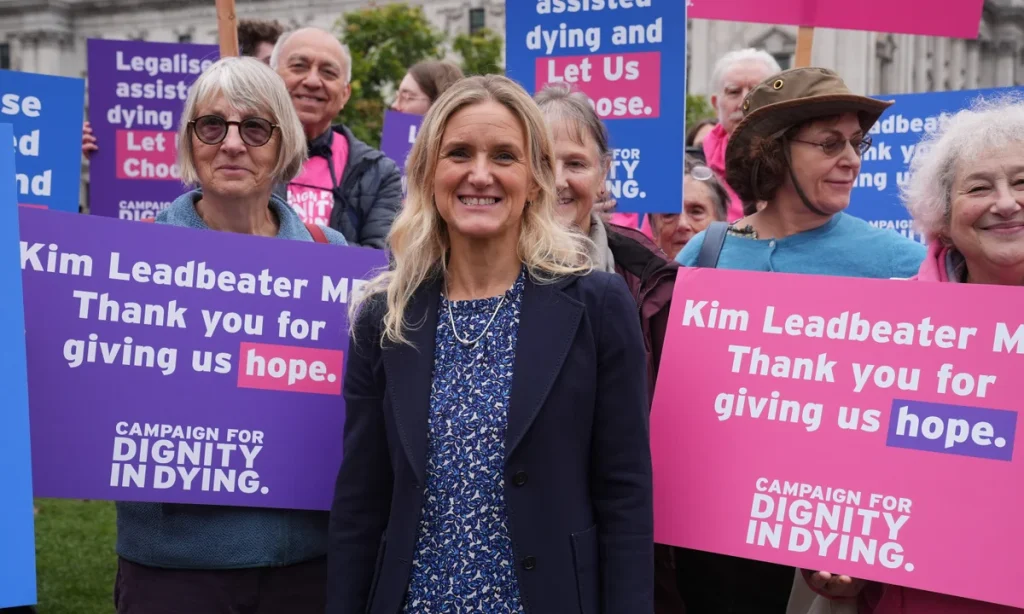
The Terminally Ill Adults (End of Life) Bill emerged as a private member’s bill introduced by Labour MP Kim Leadbeater in October 2024. Its purpose centers on granting adults aged 18 and above, diagnosed with a terminal illness and given a life expectancy of six months or less, the legal right to request medical assistance to end their life. They includes strict safeguards designed to prevent misuse and ensure voluntary participation.
MPs spent extensive time debating the proposal during its early stages. The first significant breakthrough occurred in November 2024 when the House of Commons approved the bill “in principle” by a majority of 55 votes. This marked a historic moment as MPs acknowledged public demand for clarity on assisted dying choices.
A cross-party committee began a detailed review process soon after the approval vote. The committee received more than 500 proposed amendments from both supporters and critics, reflecting the complexity of the issue. Members evaluated each proposal to identify weaknesses, strengthen safeguards, and address ethical concerns raised by constituents and experts.
Scrutiny in the House of Commons
After months of committee deliberations, the returned to the Commons for further debate. MPs revisited several amendments related to safeguarding, eligibility, doctor participation, mental health evaluation, and oversight mechanisms. Discussion periods were long and emotional as MPs shared personal stories from their constituencies.
The Commons voted again in June to advance the bill to the House of Lords. This time, the majority margin was 23 votes. Though narrower than the initial approval margin, the vote confirmed continued support among elected representatives who believed the House of Lords should take a closer look at the text.
Transition to the House of Lords
The House of Lords began its examination with the goal of reviewing every line and clause. Peers from various political backgrounds submitted new amendments, introduced concerns, and engaged in detailed policy analysis. The bill entered its most intense phase of scrutiny, where procedural delays, legal questions, and ethical debates all converged to shape the next stage of its legislative journey.
Each amendment raised by peers emphasized different priorities, signaling the complexity involved in modifying such a sensitive law. As the number of proposals continued to grow, the legislative process became increasingly demanding.
What Still Needs to Happen Before the Bill Becomes Law
Joint Approval from Both Houses
Officially become law, the House of Commons and the House of Lords must agree on an identical final version of the text. Any disagreement requires further amendments and discussions until a unified format is reached. This step is crucial in maintaining balance between democratic representation and technical scrutiny.
Completion Before the Parliamentary Deadline
The current parliamentary session will end next spring. The bill must clear both Houses before the session concludes. Failure to meet the deadline results in an automatic collapse of the proposal. Private member’s bills cannot be carried into the next session, making timing extremely important.
Risk of Stalling
Debate sessions in the Lords move at a slow pace due to the bill’s sensitive nature and the large number of amendments. If progress remains slow, the legislation could run out of time even before all clauses are examined. Supporters worry that procedural delays may be intentional efforts to prevent the bill from advancing.
Bullet Points for This Heading (As Required):
- Every clause must pass both Houses in identical form
- Amendments require approval from MPs and peers
- The automatically falls if the session ends before completion
Are the House of Lords Attempting to Block the Bill?
Record-Breaking Volume of Amendments
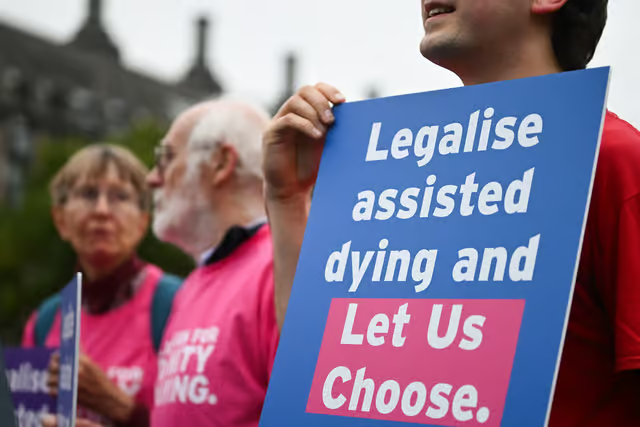
Members of the House of Lords submitted more than 1,000 amendments, far exceeding previous private member’s bills. Experts believe this volume represents a parliamentary record. Advocacy groups supporting assisted dying argue that many of these amendments aim to delay progress rather than enhance safeguards. They fear the bill may be deliberately slowed to prevent approval before the parliamentary session ends.
Supporters’ Perspective on Delays
Supporters of the bill express frustration over what they consider unnecessary and burdensome proposals. Kim Leadbeater publicly welcomed scrutiny but labelled many amendments as “cruel” and counterproductive. She pointed to suggestions such as banning applicants who traveled outside the country within the past 12 months and recording assisted deaths on video. Supporters believe these additions undermine the dignity of individuals seeking relief from terminal illness.
Opposition’s Defense of Thorough Scrutiny
Opponents argue their amendments are not obstructive but essential for closing loopholes. Baroness Tanni Grey-Thompson, an independent crossbench peer and respected former Paralympian, stated that the bill contains serious flaws. She emphasized that many amendments aim to strengthen protection against coercion, ensure independent oversight, and prevent misuse. Opponents maintain that high-quality lawmaking requires cautious and comprehensive evaluation, especially in a matter with permanent and irreversible outcomes.
Read More: Hezbollah’s refusal to disarm increases the chances of direct Lebanon Israel negotiations.
Where the Government Stands on the Assisted Dying Bill
Prime Minister’s Previous Position
Before becoming prime minister, Sir Keir Starmer expressed support for assisted dying reforms. He highlighted the importance of patient autonomy and promised to ensure parliamentary time for discussion if a backbench MP introduced legislation. His position brought attention to the need for modernized end-of-life choices.
Neutral Stance of the Current Government
The government has adopted a neutral approach. Parties are treating the issue as a conscience vote, meaning MPs and peers are free to decide without party pressure. Ministers clarified that government time will not be allocated to advance the bill. Despite this stance, the chief whip in the House of Lords granted ten additional Friday sessions to ensure sufficient time for scrutiny.
Impact of Government Neutrality
The neutrality position places responsibility entirely on MPs and peers without intervention from ministers. This approach respects democratic decision-making but increases the possibility of the bill falling due to time limitations, procedural delays, and unresolved amendments. The government’s decision not to prioritize scheduling adds complexity to the legislation’s already challenging timeline.
Bullet Points for This Heading (As Required):
- Government maintains a neutral position
- MPs and peers vote according to conscience
- No official government time allocated for advancement
Could the Bill Collapse Before Completion?
Time Pressure as a Major Threat
The faces significant risk of failure due to limited parliamentary time. Even with additional debate days granted by the chief whip, the bill must progress rapidly. Parliamentary schedules are often filled with competing legislative priorities, reducing available time for private member’s bills.
The Parliament Act as a Potential Option
Some pro-assisted dying MPs have suggested using the Parliament Act to override the House of Lords. The Act allows the House of Commons to enforce passage of legislation when disagreements persist. Experts believe using the Parliament Act for a private member’s bill would be unprecedented. The last use of the Act occurred in 2004 for the legislation banning fox hunting.
Consequences of the Bill Falling
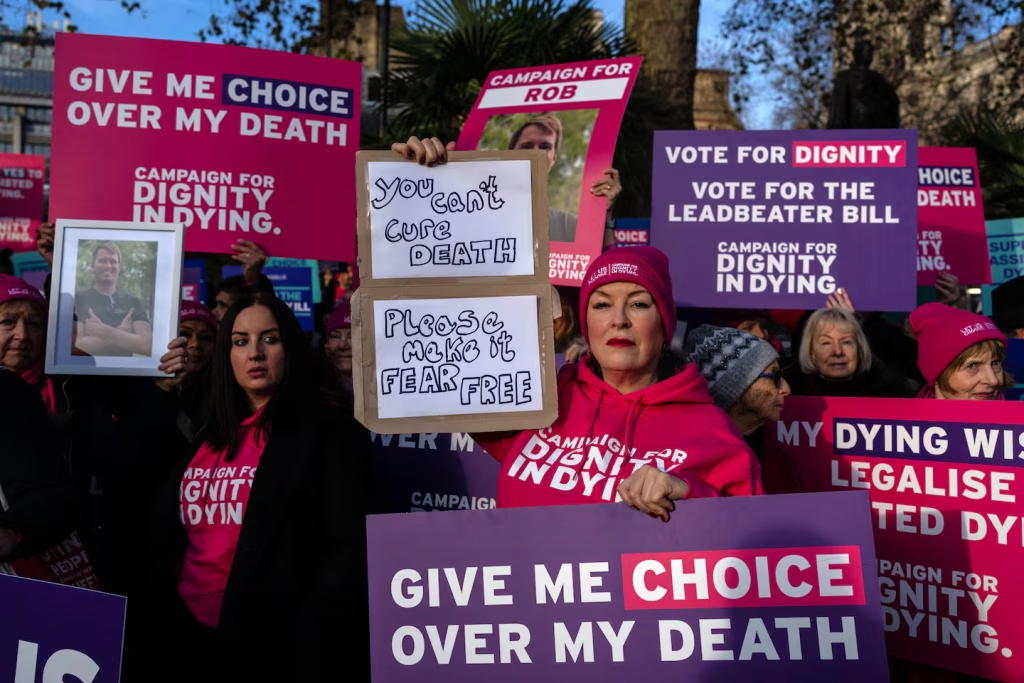
If the bill does not pass before the session ends, the entire process must restart in the next session. A new private member’s bill would need to be introduced, debated, amended, and voted on again from the beginning. This restarts years of progress and delays relief for terminally ill individuals seeking legal certainty in their end-of-life choices.
Bullet Points for This Heading (As Required):
- Time constraints threaten the bill’s continuation
- Parliament Act usage remains unlikely
- Collapse requires restarting the entire legislative process
Frequently Asked Questions
What does the Terminally Ill Adults (End of Life) Bill propose?
The proposes allowing terminally ill adults with a life expectancy of six months or less to access medical assistance to end their life under strict safeguards. It aims to provide autonomy, control, and dignity to individuals facing end-of-life suffering.
Who introduced the assisted dying bill?
Labour MP Kim Leadbeater introduced the bill as a private member’s proposal in October 2024. Her involvement has remained central as the bill progresses through parliamentary stages.
Why is the bill controversial?
The proposal touches on profound moral, ethical, and religious questions. Supporters emphasize compassion and autonomy, while opponents focus on risks to vulnerable individuals, potential coercion, and the sanctity of life.
Why have so many amendments been submitted?
More than 1,000 amendments were submitted by members of the House of Lords. Supporters believe many amendments seek to delay progress, while critics argue they address critical safety gaps.
Is the government supporting the bill?
The government is officially neutral. MPs and peers are free to vote according to conscience. No government time has been allocated to advance the bill.
What happens if the bill fails this session?
If the bill does not pass before the current session ends, it automatically falls. Private member’s bills cannot carry into the next session, requiring the entire process to begin again.
Conclusion
The Terminally Ill Adults (End of Life) Bill continues to shape national debate on autonomy, compassion, and protection. Ongoing scrutiny in the House of Lords plays a critical role in determining whether the bill advances or collapses. Supporters view the legislation as a humane option for terminally ill adults, while opponents emphasize the need for rigorous safeguards. The final outcome depends on parliamentary time, cooperation, and consensus within both Houses.
