


NEW YORK (Feb 23, 2026) – New York City Mayor Zohran Mamdani has declared a state of emergency and ordered a complete shutdown of the city’s traffic network, permitting travel only for emergencies, as a massive snowstorm sweeps across the Northeast United States.
“NYC, we’ve declared a local state of emergency ahead of this blizzard. Stay safe, New York,” Mamdani posted on X late Sunday evening.The severe winter storm, described by meteorologists as one of the most intense in over a decade, is expected to disrupt daily life across multiple states, prompting emergency measures and preemptive preparations.
Storm Impact and Warnings
The National Weather Service (NWS) has issued blizzard warnings from the mid-Atlantic to Maine, including coastal regions in New Jersey, New York, Connecticut, Massachusetts, Delaware, Maryland, and Rhode Island. The storm is expected to produce:
- Snowfall rates of up to 3 inches (7.6 cm) per hour
- Total snow accumulation of 12 to 24 inches (30–61 cm)
- Wind gusts reaching 60 mph (100 km/h)
- Coastal flooding in low-lying areas
Meteorologist Cody Snell of the NWS Weather Prediction Center called the storm “a major winter storm with significant impact for the Northeast,” emphasizing that travel conditions would be “nearly impossible” during the height of the blizzard.
As of Sunday evening, power outages had already affected over 22,800 customers in New Jersey, with more outages anticipated across the storm zone due to heavy, wet snow combining with strong winds.
Citywide Shutdown and Travel Restrictions
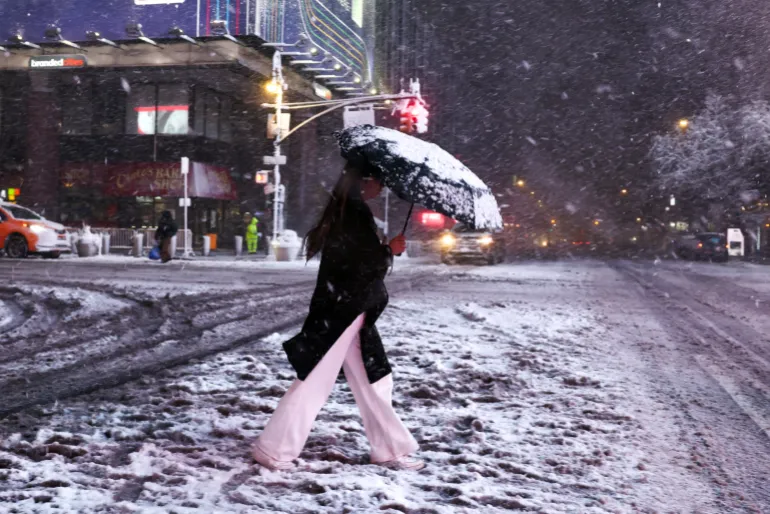
Mayor Mamdani announced that streets, highways, and bridges would be closed from 9 PM Sunday until noon Monday. The shutdown applies to nonessential travel, although essential workers and emergency personnel are exempt.
“New York City has not faced a storm of this scale in the last decade. We are asking New Yorkers to avoid all nonessential travel,” said Mamdani.Residents like Brandon Smith, a Brooklyn local, expressed concerns about commuting challenges, noting that workplaces remain open despite the citywide road closures.
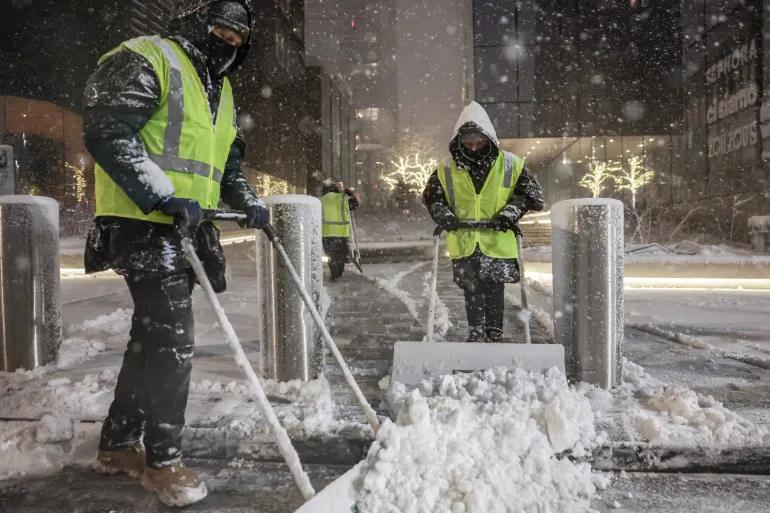
Public transportation has been heavily restricted, and authorities advise New Yorkers to remain indoors and monitor emergency updates. Snowplows, emergency vehicles, and city services are mobilized to clear roads and respond to accidents or urgent situations.
Preparations Across the Northeast
Emergency declarations have also been issued in neighboring states, including New Jersey, as officials mobilize resources to manage potential flooding, accidents, and power outages. Coastal communities are particularly at risk due to storm surge and high winds.
In Boston, the NWS warned of a “Potentially Historic/Destructive Storm” in the Boston-Providence corridor, citing the risk of widespread power outages and hazardous conditions.
Residents across the region are urged to stock up on essentials, stay off the roads, and avoid unnecessary travel until the storm passes.
Safety Measures and Recommendations
Authorities are advising the public to:
- Remain indoors and limit travel
- Keep emergency kits with food, water, and medical supplies
- Charge phones and other essential devices in case of outages
- Avoid walking on snow-covered streets or bridges during high winds
- Follow official updates from the NWS and local authorities
Emergency shelters are being prepared for those in vulnerable housing or without power, and snow-clearing operations are ongoing across affected areas.
Historical Context
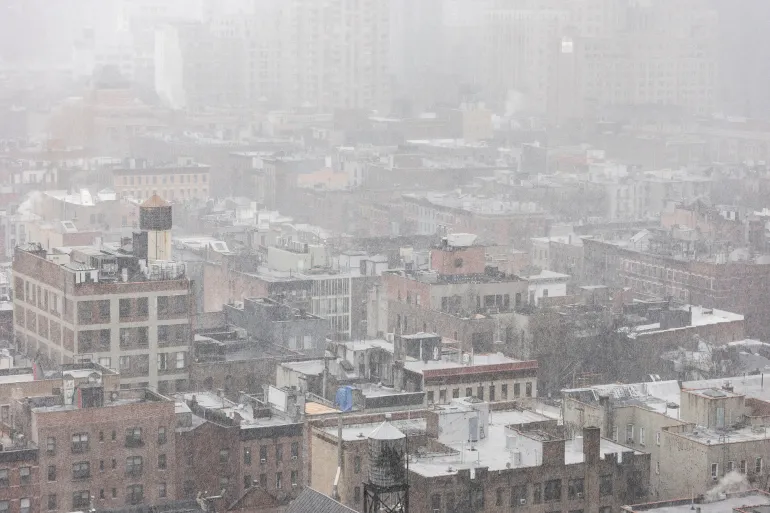
Nor’easters and winter storms are common in the Northeast, but meteorologists note that the scale and intensity of this blizzard make it exceptional. New York City, with a population exceeding 8 million, is experiencing one of the largest mobilizations in recent memory, reflecting concerns over safety, transportation, and critical infrastructure.
Regional Implications
Beyond New York, neighboring states are bracing for impacts:
- New Jersey, Connecticut, Delaware, Maryland, Rhode Island: Blizzard warnings issued; preemptive road closures and emergency services activated.
- Massachusetts (Boston area): Potential for historic snowfall and strong winds affecting transportation and power.
- Maine to Mid-Atlantic Coast: Widespread travel disruptions and coastal flooding risk.
The combination of heavy snowfall and high winds increases the likelihood of structural damage, traffic accidents, and prolonged power outages.
Economic and Social Effects
The storm is expected to disrupt business operations, commute patterns, and public services:
- Closure of offices, schools, and nonessential businesses
- Suspension of public transportation in major cities
- Delays in deliveries and logistics are affecting regional supply chains
- Increased demand for emergency services, snow removal, and utility repair teams
Local hospitals, police, and fire departments are on high alert, and emergency management teams are coordinating across city and state agencies.
Read More: Trump warns countries against ‘playing games’ with tariffs
FAQs
Why did Mayor Mamdani declare a state of emergency?
The declaration allows the city to enforce travel restrictions, mobilize resources, and ensure public safety during one of the largest snowstorms in recent decades.
How much snow is expected in New York City?
The NWS forecasts 12–24 inches (30–61 cm) of snowfall, with rates up to 3 inches per hour, combined with high winds that make travel nearly impossible.
Which areas are most affected?
The Northeast corridor is heavily impacted, including New York City, Long Island, Boston, coastal New Jersey, Connecticut, Delaware, Maryland, and Rhode Island.
Are all roads closed in New York City?
All nonessential travel is prohibited, including highways, bridges, and streets. Emergency vehicles and essential workers are exempt.
How long will the shutdown last?
The shutdown began at 9 PM Sunday and is expected to continue until noon Monday (17:00 GMT), though authorities may extend restrictions if conditions worsen.
Conclusion
New York City and the broader Northeast face one of the most significant winter storms in recent memory. Mayor Zohran Mamdani’s state of emergency and citywide traffic shutdown reflect the severity of the blizzard and the priority placed on public safety.
With widespread snowfall, strong winds, power outage risks, and potential flooding, residents are urged to remain indoors and heed official warnings. The storm underscores the vulnerability of urban centers to extreme weather events and highlights the need for coordinated emergency response and community preparedness.
