


Gold price rises after US captures Venezuela’s Maduro Global financial markets reacted swiftly after news broke that the United States had captured Venezuelan President Nicolás Maduro, a dramatic geopolitical development that immediately heightened investor anxiety. Within hours of the announcement, money began flowing into traditional safe-haven assets, pushing gold and silver prices sharply higher while markets assessed the broader implications for energy supplies, global stability, and economic confidence.
In early Asian trading on Monday, gold jumped by nearly 1.8%, reaching around $4,408 per ounce, while silver surged close to 3.5%. These moves came as investors sought protection against uncertainty, reinforcing precious metals’ longstanding role as stores of value during periods of political and economic turmoil.
Although oil prices and stock markets showed comparatively muted reactions, analysts say the developments in Venezuela could have far-reaching consequences depending on how the situation unfolds. From global commodity markets to investor sentiment, the ripple effects of Washington’s move are being closely watched.
Why Gold and Silver Reacted So Quickly
Safe-Haven Assets in Times of Crisis
Gold and silver have historically benefited during moments of geopolitical instability. When investors fear disruption whether from war, political upheaval, or economic shocks, they tend to shift capital away from riskier assets like equities and into hard assets that are perceived to retain value.
The capture of a sitting head of state is a rare and extreme event in global politics. As soon as the news emerged, traders priced in the risk of escalation, retaliation, sanctions, or prolonged instability in Latin America. This uncertainty was enough to spark a renewed rush into precious metals.
A Strong Year Made Even Stronger
The rally also built on gold’s already extraordinary performance in 2025. Despite a brief pullback at the very end of the year, gold posted its best annual performance since 1979, gaining more than 60% and reaching a record high of $4,549.71 on 26 December.
Silver, often more volatile than gold, also experienced a blockbuster year, touching record highs before retreating slightly in the final trading sessions of 2025. The latest surge suggests that investor confidence in precious metals remains strong heading into 2026.
The Broader Drivers Behind Gold’s Historic Rally
While Venezuela’s political crisis provided the immediate trigger, gold’s rise over the past year has been driven by a combination of powerful structural forces.
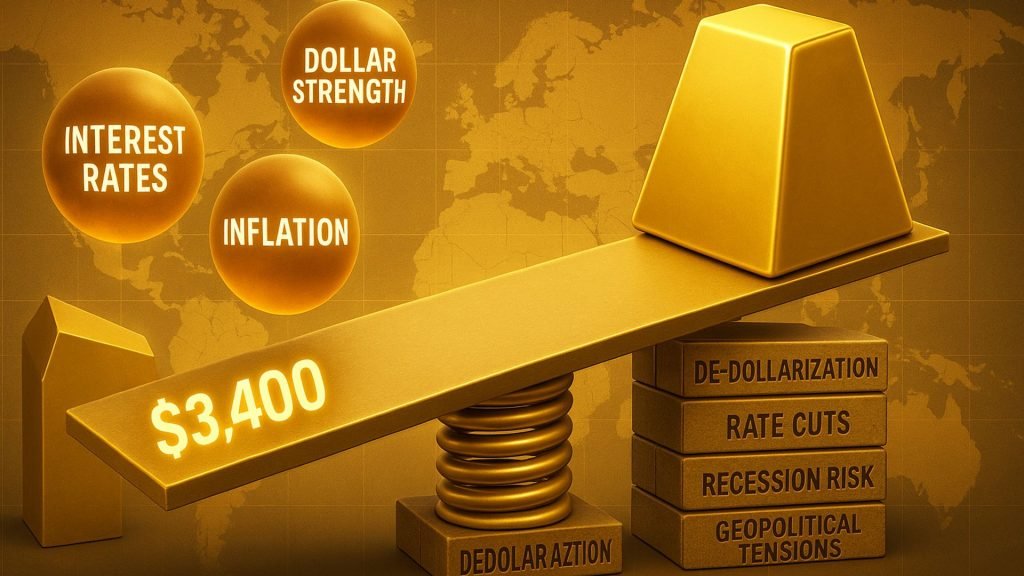
Expectations of Interest Rate Cuts
One of the most important drivers has been expectations that major central banks—particularly the US Federal Reserve—will cut interest rates further. Lower rates reduce the opportunity cost of holding non-yielding assets like gold, making them more attractive relative to bonds and savings accounts.
As inflation remained stubbornly high in several economies, policymakers signaled a willingness to prioritize growth and financial stability, reinforcing the bullish case for precious metals.
Central Bank Buying Frenzy
Central banks around the world have been buying gold at a record pace. Countries seeking to diversify away from the US dollar, hedge against sanctions risk, or strengthen their reserves have added substantial amounts of bullion.
This official sector demand has provided a strong floor under prices and signaled long-term confidence in gold’s role within the global monetary system.
Persistent Geopolitical Tensions
From conflicts in Eastern Europe and the Middle East to rising US-China tensions, investors have faced a steady stream of geopolitical risks. The situation in Venezuela adds yet another layer of uncertainty, reinforcing gold’s appeal as a hedge against global instability.
Oil Markets: Why Prices Barely Moved
Initial Volatility, Then Calm
In contrast to gold and silver, oil prices showed only modest movement following the announcement. While prices fluctuated in early trading, they were slightly lower by mid-morning as traders concluded that the immediate impact on global crude supply would be limited.
This reaction may surprise some observers, given Venezuela’s vast oil reserves. However, analysts argue that the country’s ability to influence global energy markets has diminished significantly over the past two decades.
Venezuela’s Declining Oil Industry
Once one of the world’s top oil producers, Venezuela’s energy sector has suffered from years of mismanagement, underinvestment, corruption, and international sanctions. According to analysts, the country now accounts for around 1% of global oil production, a fraction of its former output.
Investment strategist Vasu Menon of OCBC Bank described Venezuela’s crude production as “lacklustre,” noting that years of decline have severely limited its impact on global supply dynamics.
US Plans for Venezuela’s Oil Reserves
Trump’s Statement and Market Reaction
US President Donald Trump stated that Washington intends to tap into Venezuela’s vast oil reserves following Maduro’s capture. He said the US would “run the country until such time as we can do a safe, proper and judicious transition.”
Despite the bold language, energy markets remained cautious. Analysts emphasized that transforming Venezuela’s reserves into usable supply is far from straightforward.
The High Cost of Revival
Experts estimate that it would take billions of dollars and years of sustained investment to repair Venezuela’s crumbling oil infrastructure. Refineries, pipelines, drilling equipment, and export facilities have all suffered from neglect.
Former BP chief executive Lord Browne told the BBC that reviving Venezuela’s oil production would require “a tremendous amount of skill, investment, and time.” He added that while there could be a short-term boost in some areas, overall output might initially fall as the industry undergoes reorganization.
Why Energy Prices May Not Rise Immediately
Despite political upheaval, analysts believe that gasoline and energy prices for consumers are unlikely to see immediate spikes.
Several factors support this view:
- Venezuela’s limited share of global output
- Ample supply from other producers
- Strategic petroleum reserves held by major economies
- Weak demand growth in some regions
As a result, oil traders appear to be taking a wait-and-see approach rather than reacting emotionally to headline risk.

Stock Markets: Calm Amid Chaos
Asia-Pacific Markets Move Higher
Stock markets across the Asia-Pacific region largely shrugged off the news from Venezuela. Japan’s Nikkei 225 rose by 2.6% on the first trading day of the year, buoyed by data showing stabilization in manufacturing activity during December.
Major indexes in South Korea and China also posted gains, suggesting that investors believe the fallout from Venezuela’s crisis will remain geographically contained.
Focus on Other Growth Drivers
According to Zavier Wong of eToro, investors appear confident that developments in Venezuela will not materially affect corporate earnings or regional economic growth in Asia.
Meanwhile, Shigeto Nagai of Oxford Economics noted that strong gains in Japanese and South Korean equities reflected momentum from the AI-led rally in US markets, rather than any reaction to Latin American politics.
Gold and Silver: A Rollercoaster End to a Blockbuster Year
Volatility at Record Levels
While gold and silver finished 2025 near historic highs, the final weeks of the year were marked by sharp swings. Profit-taking, year-end rebalancing, and shifting rate expectations contributed to volatility.
The renewed rally following Maduro’s capture highlights how quickly sentiment can turn in precious metals markets when uncertainty re-emerges.
What This Means for Investors in 2026
Many analysts believe that gold’s structural drivers remain intact. Even if prices experience short-term corrections, ongoing geopolitical risks, central bank demand, and monetary easing expectations could continue to support elevated levels throughout 2026.
Global Implications of the Venezuela Crisis
Political Precedent and International Law
The capture of a sitting president raises profound questions about international norms, sovereignty, and the future of global diplomacy. Depending on how other nations respond, the event could reshape alliances and increase geopolitical fragmentation.
Impact on Emerging Markets
Emerging markets may face renewed volatility as investors reassess political risk. Countries with fragile institutions or strained relations with major powers could see capital outflows, boosting demand for safe-haven assets even further.
Read More: Oppo Reno 15 Series Reaches Global Market, Pakistan Launch Likely Imminent
FAQs
Why did gold prices rise after the US captured Nicolás Maduro?
Gold rose because investors sought safety amid heightened geopolitical uncertainty. Such events often trigger demand for safe-haven assets.
How much did gold and silver increase?
Gold rose about 1.8% to around $4,408 per ounce, while silver jumped nearly 3.5%.
Is Venezuela important to global oil supply?
Not significantly. Venezuela currently produces around 1% of global oil output, limiting its immediate impact on prices.
Why didn’t oil prices surge?
Markets believe Venezuela’s oil infrastructure cannot be revived quickly, and global supply remains sufficient.
What role do interest rates play in gold prices?
Lower interest rates make gold more attractive by reducing the opportunity cost of holding non-yielding assets.
Did gold perform well in 2025 overall?
Yes. Gold rose more than 60% in 2025, marking its best annual performance since 1979.
Are central banks still buying gold?
Yes. Central banks have been major buyers, supporting long-term demand.
Will Venezuela’s oil production increase soon?
Unlikely. Experts say it would take years and billions of dollars to rebuild the industry.
How did stock markets react?
Most Asia-Pacific stock markets rose, focusing on local economic data and US tech momentum rather than Venezuela.
Could gold prices rise further in 2026?
Many analysts believe so, citing ongoing geopolitical risks and expectations of monetary easing.
Conclusion
The sharp rise in gold prices following the capture of Venezuela’s Nicolás Maduro underscores a timeless truth of global finance: uncertainty fuels demand for safety. While oil markets and equities showed restraint, precious metals reacted immediately, reflecting deep-seated investor instincts during moments of geopolitical shock.
