


When Oscar Murphy sat upright in his hospital bed at Manchester Royal Infirmary, smiling as a tiny bag of clear liquid was connected to a drip and slowly infused into his bloodstream, the moment may not have looked extraordinary. There were no flashing machines, no dramatic alarms, and no visible signs of cutting‑edge science at work.
Yet what was happening inside his body marked a historic milestone for the NHS.
Oscar, a 28‑year‑old car salesman from Bury, became the first leukaemia patient in England to receive a newly approved form of CAR‑T cell therapy on the NHS for an aggressive adult blood cancer known as B‑cell acute lymphoblastic leukaemia (B‑cell ALL).
The treatment, often described as a “living drug, involves genetically re‑engineering a patient’s own immune cells to hunt down and destroy cancer. To Oscar, it felt like something taken straight from a science‑fiction film.
“It’s very sci‑fi,” he said. “But if it means it gets rid of the cancer permanently and my own cells can do it, it’s just fantastic.”
For Oscar and dozens of patients who will follow him each year, this therapy represents something far more than advanced science. It represents time, hope, and the possibility of a future once thought impossible.
Oscar Murphy’s Journey: From Diagnosis to Desperation
Oscar’s story began in March 2025, when he was diagnosed with B‑cell acute lymphoblastic leukaemia, a rare but particularly aggressive blood cancer in adults.
Like many patients, Oscar had initially dismissed early symptoms. Fatigue, minor infections, and feeling “not quite right” were easy to attribute to a busy life. But blood tests revealed something far more serious: his bone marrow was producing malignant white blood cells that were rapidly crowding out healthy ones.
B‑cell ALL progresses fast. Without treatment, it is often fatal within weeks or months. Even with standard therapy, outcomes for adults are far worse than for children.
Oscar began intensive chemotherapy, followed by a donor stem cell transplant in July. The transplant offered hope of a cure, replacing his diseased bone marrow with healthy donor cells.
For a time, it seemed to work.
Then, in November, devastating news arrived: the cancer had returned.
“The leukaemia I’ve got is so fast‑acting,” Oscar explained. “It needs an even quicker response to stop it.”For many patients, relapse after a stem cell transplant signals the end of curative options. Survival is often measured in months.
But for Oscar, a new door was opening.
What Is CAR‑T Therapy? Turning the Immune System Into a Weapon
CAR‑T therapy, short for Chimeric Antigen Receptor T‑cell therapy, is one of the most revolutionary developments in modern medicine.
Rather than relying on chemotherapy or radiation to kill cancer cells directly, CAR‑T therapy reprograms the patient’s own immune system to do the job.
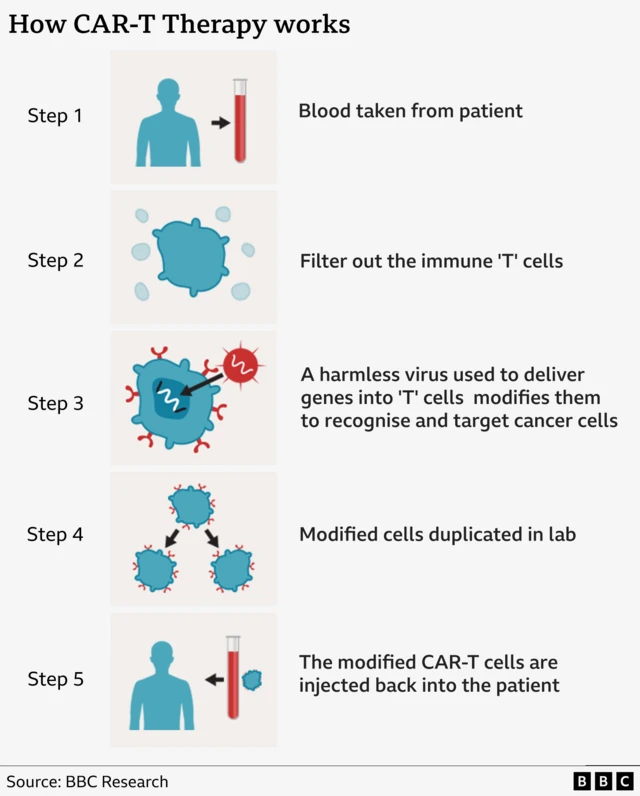
Step‑by‑Step: How CAR‑T Therapy Works
T‑cell Collection
Doctors remove T‑cells (a type of white blood cell) from the patient’s blood using a process similar to dialysis.
Genetic Reprogramming
The cells are sent to a specialised laboratory, where a harmless virus introduces new genetic instructions.
Cancer Recognition
These instructions enable the T‑cells to produce special receptors that can recognise specific proteins on cancer cells.
Mass Production
The modified T‑cells are grown into millions of copies in the lab.
Infusion Back Into the Patient
The “super‑charged” immune cells are returned to the patient through an intravenous drip.
Once inside the body, these CAR‑T cells seek out and destroy cancer cells, multiplying as they work and remaining in the body long‑term to prevent relapse.
This is why CAR‑T is often described as a living drug.
The “Sci‑Fi” Moment: Oscar’s Infusion Day
On 2 January, BBC News was present as Oscar received the first of two infusions.
The personalised treatment arrived in a tiny cryopreserved bag, holding 100 million CAR‑T cells in just three teaspoons of liquid.
“I was surprised something so small could be so powerful,” Oscar said.The infusion took only minutes, but the impact could last a lifetime.
A second infusion, containing 300 million cells, followed shortly after, marking the end of the treatment phase.
Unlike chemotherapy, which attacks both healthy and cancerous cells, CAR‑T therapy is designed to be precise, reducing collateral damage to the body.
Clinical Results: What the Evidence Shows
The decision by NHS England to fund this therapy followed years of clinical trials and evaluation.
Trial Outcomes
- 77% of patients achieved remission
- 50% showed no signs of cancer after 3.5 years
- Average life expectancy increased by 15.6 months
For a disease where survival after relapse is often measured in weeks, these results are remarkable.
Oscar’s haematologist, Dr Eleni Tholouli, described the therapy as transformative.
“Usually, this type of leukaemia is very aggressive and adult patients don’t live beyond six to eight months. With this therapy, we are able to offer them years—and potentially a cure.”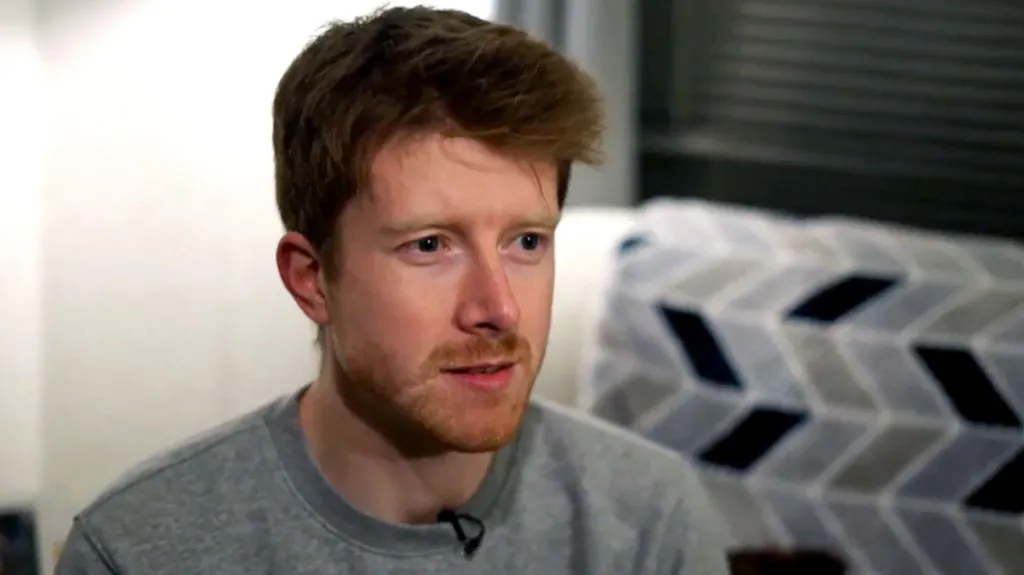
Safety and Side Effects: A Gentler Option
CAR‑T therapy is not without risks. Some patients experience immune reactions such as cytokine release syndrome or neurological side effects. However, advances in monitoring and treatment have significantly improved safety.
According to Dr Tholouli:
“It’s safer than existing treatments, with fewer side effects and much more effective.”For patients who have already endured chemotherapy, radiation, and transplants, the reduced toxicity is a major advantage.
Love in Uncertain Times: Oscar and Lauren’s Wedding
Cancer does not pause life—it reshapes it.
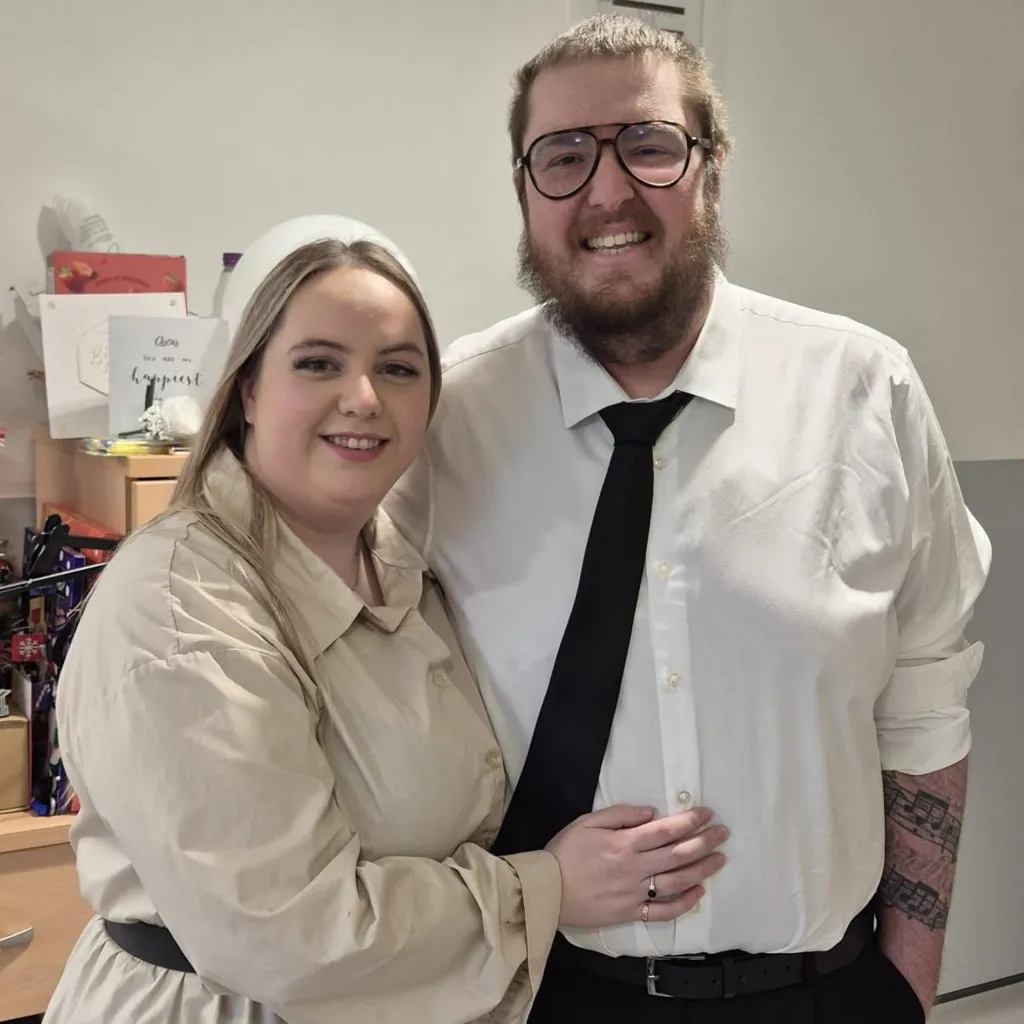
Facing uncertainty about his future, Oscar and his partner Lauren made the decision to marry in hospital last month.
Photos show the couple smiling, her hand resting on his stomach, wedding ring visible.
“We wanted to get it done,” Oscar said. “There were so many uncertainties.”They still plan a larger ceremony in October, a celebration they hope will mark not survival, but recovery.
“I want children and the white picket fence with my amazing wife. I just want that normality.”From Experiment to NHS Standard: A UK‑Developed Breakthrough
The therapy Oscar received is manufactured by Autolus, a spin‑out company from University College London.
Previously, patients in clinical trials had to send their cells to laboratories in the United States. Now, production takes place in Stevenage, a major step forward for UK biomedical innovation.
The list price is £372,000 per infusion, though the NHS has negotiated a confidential discount.
Despite the cost, NHS leaders believe the therapy represents value for money, given its life‑extending and potentially curative benefits.
A Wider Rollout Across England
The treatment will be available at specialist centres, including:
- Manchester
- Cambridge
- Newcastle
- Sheffield
- Plymouth
- London
Patients from Wales and Northern Ireland will travel to England. Approval in Scotland is still pending.
NHS England estimates around 50 patients a year will initially benefit, though clinicians believe the number could grow.
Dr Tholouli predicts:
“Eventually, it could be used as a first‑line treatment instead of stem cell transplantation.”Another Success Story: Chris Williams
Oscar is not alone.
Chris Williams, 29, from Belfast, received CAR‑T therapy during its experimental phase after his leukaemia returned in 2021.
Now nearly three years in remission, his life has transformed.
“A few years ago I was very unwell and now I’m able to live a full life,” he said. “I went back to work. I met Chloe. Now we’re engaged.”Stories like Chris’s offer hope, not just statistics.
NHS Perspective: A “Landmark Moment”
Professor Peter Johnson, NHS National Clinical Director for Cancer, described the rollout as historic.
“This is a landmark moment for people with aggressive blood cancer. It’s remarkable that a treatment developed from UK scientific research is now being delivered in NHS centres.”Read More: Social Health and Digital Play: A Conversation, Not a Conclusion
FAQs
What is B‑cell acute lymphoblastic leukaemia?
It is a fast‑growing blood cancer affecting immature white blood cells. It progresses rapidly and is more difficult to treat in adults than in children.
Is CAR‑T therapy a cure?
It can be. Some patients achieve long‑term remission with no detectable cancer years after treatment.
Who is eligible for this treatment on the NHS?
Adults over 26 whose B‑cell ALL has returned or not responded to standard treatment.
Is the treatment painful?
The infusion itself is painless. Side effects vary but are often less severe than chemotherapy.
Why is it so expensive?
The therapy is personalised, highly complex, and involves advanced genetic engineering.
Conclusion
Oscar Murphy’s story represents more than personal courage it marks a turning point in cancer treatment. What once belonged to the realm of science fiction is now routine NHS care for some of the sickest patients in the country.CAR‑T therapy demonstrates what is possible when cutting‑edge research, public healthcare, and patient determination align.
