

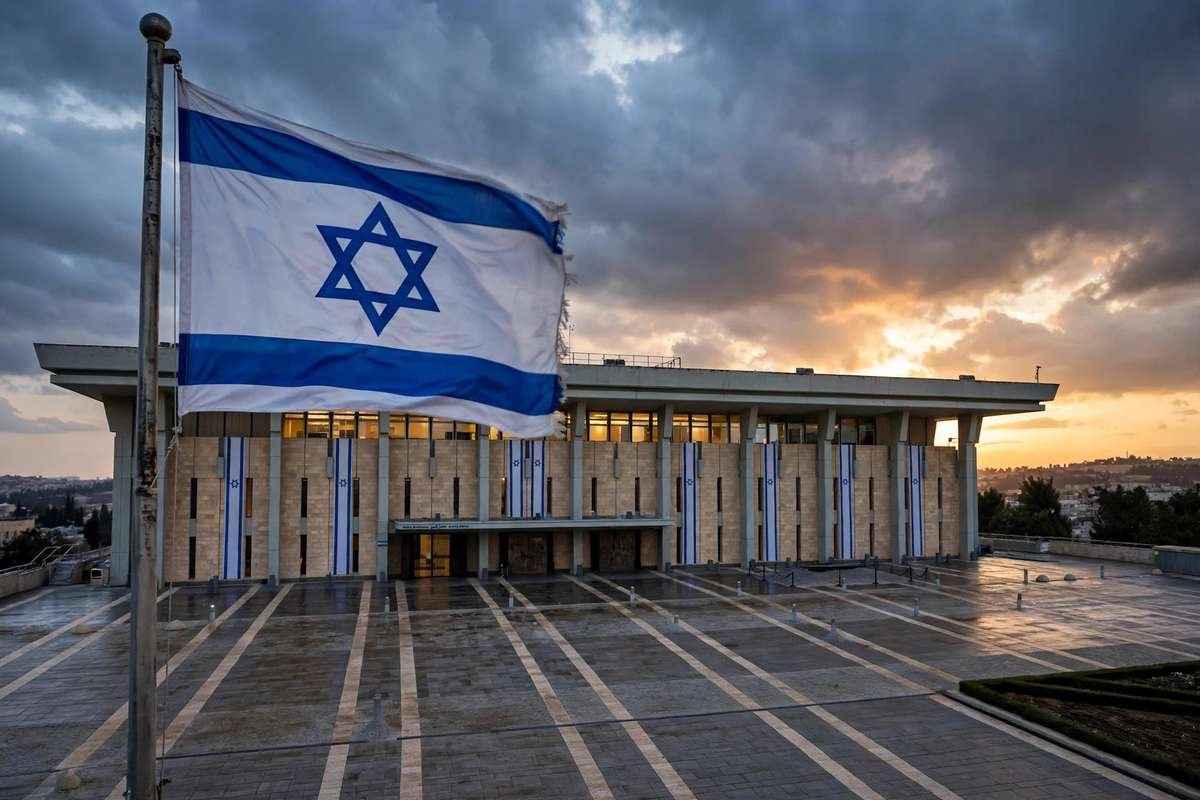
Israel Election 2026: Results, Seat Count and What Happens Next
The Israel election 2026 has delivered one of the most finely balanced verdicts in the country’s history — and no clear winner. Israelis voted on October 27, 2026 for the 26th Knesset, and when the final count was released early on October 30, Prime Minister Benjamin Netanyahu’s right-wing bloc stood at 53 of the 120 seats, eight short of the 61 needed to govern. Opposition leader Gadi Eisenkot’s camp finished on 48, while the two Arab-led parties took a combined 19 seats — enough to make them the unexpected kingmakers of Israeli politics.
It is a dramatic reversal of fortune for Netanyahu, whose outgoing coalition controlled 68 seats, and it sets the stage for weeks of high-stakes coalition bargaining. Here is everything you need to know: the full Israel election 2026 seat count, why neither camp can govern alone, the possible coalition scenarios, and the timeline for what happens next. And if you are following election season globally, keep an eye on the US midterm elections on November 3, 2026, which are shaping up to be just as consequential for world markets and diplomacy.
Israel Election 2026 Results at a Glance
The Central Elections Committee completed its count of all ballots on October 30, 2026, and the picture is remarkably fragmented:
- Netanyahu’s bloc: 53 seats — the largest camp, but eight short of a majority.
- Eisenkot’s opposition bloc: 48 seats — thirteen short of a majority.
- Arab-led parties: 19 seats combined — the balance of power.
- Largest single party: Likud with 27 seats, down from 32.
- Voter turnout: 77.97 percent, up more than 7 points from the previous election.
The results are complete but still awaiting formal certification, which is expected on November 4, 2026. They will then be presented to President Isaac Herzog, who must choose a lawmaker to try to form the next government. Israel’s parliament, the Knesset, has 120 seats, and a government needs the support of at least 61 members. This was the first time since 1988 that an Israeli legislature completed its full four-year term without early dissolution — the 25th Knesset dissolved on July 17, 2026, ending a relatively rare stretch of stability in a country that held five elections between 2018 and 2022.
Israel Election 2026 Seat Count: Full Party-by-Party Breakdown
Under Israel’s proportional representation system, parties win seats based on their share of the national vote, provided they clear the 3.25 percent electoral threshold. Eleven parties crossed it this time. Here is the full Israel election 2026 seat count:
| Party | Leader | Vote % | Seats | Change |
|---|---|---|---|---|
| Likud | Benjamin Netanyahu | 20.52 | 27 | −9 |
| Yashar | Gadi Eisenkot | 16.05 | 21 | New |
| Together | Naftali Bennett | 9.34 | 12 | −12 |
| Joint List | Yousef Jabareen | 8.79 | 11 | +6 |
| The Democrats | Yair Golan | 6.44 | 8 | +4 |
| Ra’am | Mansour Abbas | 5.93 | 8 | +3 |
| Yisrael Beytenu | Avigdor Lieberman | 5.93 | 7 | +1 |
| Otzma Yehudit | Itamar Ben-Gvir | 5.74 | 7 | +1 |
| United Torah Judaism | Ya’akov Asher | 5.49 | 7 | 0 |
| Shas | Aryeh Deri | 5.26 | 6 | −5 |
| RZP–Zehut | Bezalel Smotrich | 5.10 | 6 | −1 |
A few numbers stand out. Likud’s 27 seats make it the largest party, but its nine-seat slide from 32 tells the story of Netanyahu’s night. The biggest winner is arguably the Joint List, the Arab-led alliance that jumped from 5 to 11 seats — a six-seat surge that reshaped the entire map. Newcomer Yashar, the centrist party of former military chief Gadi Eisenkot, debuted with 21 seats, instantly becoming the anchor of the opposition.
Why Netanyahu’s Bloc Fell Short of 61 Seats
Netanyahu’s coalition spans Likud, the ultra-Orthodox parties Shas and United Torah Judaism, and the far-right Religious Zionism (led by Bezalel Smotrich) and Otzma Yehudit (led by Itamar Ben-Gvir). Together they hold 53 seats — a 15-seat collapse from the 68 they commanded in the outgoing Knesset.
Three factors drove the fall:
- The Haredi conscription crisis. The coalition’s stability was repeatedly rocked by the politically explosive question of drafting ultra-Orthodox men into military service. Both factions of United Torah Judaism resigned from the government in July 2025 in protest over stalled conscription legislation, and Shas withdrew its ministers soon after. Although they returned to avoid toppling the government, the recurring threat of collapse became a constant feature of Netanyahu’s premiership.
- A bruised Likud. Likud lost nearly a third of its seats, bleeding votes to Eisenkot’s Yashar and, critically, losing younger and centrist voters who had tired of the coalition’s internal wars after the judicial-reform battles of 2023 and the Gaza war that followed the October 7 attacks.
- A high-turnout election. With turnout at 77.97 percent — more than seven points higher than last time — Arab voters turned out in record numbers, swelling the Joint List and Ra’am to 19 seats and mathematically blocking Netanyahu’s path to 61.
Netanyahu remains caretaker prime minister while negotiations unfold. He is Israel’s longest-serving prime minister, with 19 years in office across three stints — but this is the most precarious position of his career.
Israel Election 2026 Kingmakers: The Arab Parties’ 19 Seats
The Israel election 2026 turned the Arab parties from perennial outsiders into the hinge of the next government. Neither of the two main blocs can reach 61 without the 19 seats held by the Arab-led parties — the Joint List (11 seats) and Ra’am (8 seats). That makes their leaders, Yousef Jabareen and Mansour Abbas, the most courted politicians in Israel right now.
The mathematics is brutal for Netanyahu: his bloc needs eight more seats, and the only reservoir available is Ra’am’s eight. Bringing Ra’am into the coalition would theoretically get him exactly to 61. But Netanyahu has repeatedly described governing with Arab-led parties as unacceptable, his far-right allies Itamar Ben-Gvir and Bezalel Smotrich have made clear their opposition to any such arrangement, and his camp spent election week circulating unproven fraud allegations against the Arab parties. Abbas, for his part, told Channel 12 that “everyone is speaking with us” and said he is willing to join an Eisenkot-led coalition if it proves viable.
Eisenkot’s arithmetic is only slightly less punishing. His 48 seats plus the 19 Arab seats would total 67 — comfortably over the line — but he ruled out a minority government relying on Arab-led parties before the vote. Since then, he has not set out any framework for working with them. Within his camp, only Yair Golan, chairman of The Democrats, has openly endorsed a partnership with Arab citizens, urging partners to form “a government of change.”
The most striking quote of the week came from Joint List figure Ahmad Tibi, who said the party would not seek ministries or formal coalition membership but would consider backing a government from outside — in return for commitments on crime in Arab communities and an end to Bedouin home demolitions. That “outside support” model, if it ever materialized, would be unprecedented in Israeli politics.
What Happens Next After the Israel Election 2026
The coalition clock has already started ticking. Here is the Israel election 2026 timeline as it stands:
- October 30, 2026: Final vote count completed and released by the Central Elections Committee.
- November 4, 2026: Official certification of the results expected.
- Following Wednesday: Results formally presented to President Isaac Herzog.
- Then: Herzog holds consultations with all party leaders and tasks one lawmaker with forming a government.
- The mandate: That lawmaker gets 28 days, with a possible 14-day extension — meaning coalition talks could legally stretch into mid-December.
- November 10, 2026: The new Knesset is sworn in, whatever the coalition situation.
Herzog’s consultations are where the real negotiations begin. He must determine which leader has the best prospect of assembling 61 votes — and this time, neither camp can get there without the other side’s traditional red lines being crossed. The coming weeks will test whether Israel’s politicians can do something they have avoided for decades: govern with, or alongside, the Arab parties.
5 Possible Scenarios for Israel’s Next Government
Here is how each path could play out after the Israel election 2026:
Scenario 1: Netanyahu–Ra’am deal
Netanyahu brings Mansour Abbas’s Ra’am into his coalition to reach exactly 61 seats. This would be the boldest move of his career — but it would require him to abandon years of rhetoric against Arab-party cooperation, and to force Itamar Ben-Gvir and Bezalel Smotrich to swallow a partnership they have explicitly ruled out. Odds: long.
Scenario 2: Eisenkot minority government with Arab backing
Eisenkot forms a government with his 48 seats plus the Joint List and Ra’am voting with him from outside. Abbas has publicly cast doubt on this option, telling party colleagues that the prospects of an Eisenkot-led minority government backed by Arab lawmakers were “slim or nonexistent,” according to Channel 12. Odds: long.
Scenario 3: National unity or rotation government
Netanyahu and Eisenkot bury the hatchet in a broad unity arrangement — possibly with a rotation of the premiership. Eisenkot has explicitly rejected serving under Netanyahu, including in a rotation, while Netanyahu has said partners are welcome “without a rotation.” With 101 seats between them, the numbers are irresistible; the personalities are the obstacle. Odds: possible but difficult.
Scenario 4: Prolonged deadlock, then new elections
If no lawmaker can secure 61 within the 42-day window, Israel heads back to the polls — a scenario the country knows well from 2018–2022. Voters would not be pleased: this Knesset was supposed to end the era of snap elections. Odds: real, and rising if scenarios 1–3 collapse.
Scenario 5: A creative third-way coalition
Smaller parties like Yisrael Beytenu (Avigdor Lieberman) or individual factions break ranks and cut cross-bloc deals nobody predicted. Israeli politics has a long history of last-minute surprises — Netanyahu built entire governments on them. Odds: the wild card.
| Scenario | Key Players | Seats | Likelihood |
|---|---|---|---|
| Netanyahu + Ra’am | Likud, Haredim, far-right, Ra’am | 61 | Long |
| Eisenkot minority | Yashar, opposition, Arab outside support | 67 | Long |
| National unity | Netanyahu + Eisenkot blocs | 101 | Possible |
| New election | — | — | Rising risk |
| Surprise coalition | Cross-bloc defectors | Varies | Wild card |
How Does Israel Actually Form a Government?
For readers new to Israeli politics, the system works differently from the winner-takes-all elections of the United States or Britain. Israel uses closed-list proportional representation in a single nationwide constituency: you vote for a party, not a candidate, and seats are allocated by vote share among parties that clear the 3.25 percent threshold.
Because no party has ever won an outright majority, Israel has only ever been governed by coalitions. After the vote, the president consults with every party leader and tasks the lawmaker he believes has the best chance of reaching 61. That lawmaker then negotiates a coalition agreement — dividing ministries, agreeing on policy guidelines, and locking in a majority. If the first designee fails, the president can task someone else; if everyone fails, the Knesset can dissolve itself and call new elections.
This is why finishing “first” matters less in Israel than assembling 61. Netanyahu’s bloc is the largest, but size without partners is just a number — a lesson Likud learned painfully in 2026.
What the Israel Election 2026 Means Beyond Israel
The deadlock matters far beyond Jerusalem. Israel remains at the center of several live international questions: the fragile post-Gaza-war security arrangements, its increasingly tense relationship with parts of the European Union, and its deepening strategic cooperation with the United States and several Arab states under the Abraham Accords framework. A caretaker government with limited authority cannot make durable decisions on any of these files.
There is also a broader democratic signal. The 2026 vote was held against the backdrop of the mass protests over judicial reform in 2023, the October 7 attacks, and years of coalition crises over Haredi conscription — and the electorate responded with the highest turnout in years. The result: a parliament that looks more like the country itself — diverse, divided, and demanding compromise. Whether Israel’s politicians can deliver that compromise is now the question the world will be watching for the next six weeks.
For readers who want deeper background on the electoral system and the full historical context of this vote, the 2026 Israeli legislative election article on Wikipedia provides a comprehensive overview of the parties, the campaign, and the results.
Israel Election 2026 FAQs
Who won the Israel election 2026?
No one won outright. Netanyahu’s bloc finished first with 53 seats, but that is eight short of the 61-seat majority needed to govern. Eisenkot’s opposition bloc won 48, and the Arab-led parties took 19 — leaving coalition talks, not a winner, as the outcome.
How many seats does a party need to form a government in Israel?
A government needs the support of at least 61 members of the 120-seat Knesset — a simple majority. Parties clear a 3.25 percent national threshold to enter parliament at all.
When will Israel have a new government?
The timeline: results are certified around November 4, 2026, then presented to President Isaac Herzog, who tasks a lawmaker with forming a government. That person gets 28 days plus a possible 14-day extension — so a new government could take shape anywhere from late November to mid-December, or not at all if talks fail.
Why are the Arab parties called kingmakers in this election?
Because neither main bloc can reach 61 without them. The Joint List and Ra’am hold a combined 19 seats — more than Netanyahu’s eight-seat shortfall and enough to push either camp over the line. Every realistic path to a government runs through them.
Could Israel hold another election?
Yes. If no lawmaker can assemble a 61-seat coalition within the mandated window, the Knesset can dissolve itself and call fresh elections. It would be an unpopular outcome — the 25th Knesset was the first since 1988 to serve a full term — but it remains a genuine possibility.
Conclusion
The Israel election 2026 will be remembered less for who won than for what it revealed: a country evenly split between two camps, neither able to govern, with the balance of power held by parties that were long treated as outsiders. Netanyahu remains the largest player but has lost his majority; Eisenkot has the momentum of a debut but lacks the numbers; and the Arab parties, with their historic 19 seats, have become the hinge on which Israel’s future turns.
The next six weeks of coalition talks will decide whether Israel gets a government, a unity experiment, or a return to the ballot box. Whatever emerges, the 2026 vote has already changed Israeli politics — it proved that no bloc, however entrenched, can ignore the other half of the country forever. We will be updating this story as the coalition negotiations develop, so check back for the latest on who forms Israel’s next government.
