


Air travel across the Middle East has been severely disrupted following U.S. and Israeli strikes on Iran, including attacks on Tehran. The escalation has prompted airlines to cancel or divert flights, governments to issue urgent travel warnings, and passengers to face uncertainty and delays.
Airline Disruptions Across the Region
Major carriers, including British Airways, Virgin Atlantic, and Wizz Air, have significantly reduced flights to destinations in the Middle East due to safety concerns.
- Dubai: Both Dubai International Airport and Al Maktoum International suspended flights on Saturday afternoon. The Dubai media office later confirmed the airport sustained “minor damage,” with four staff injured.
- Qatar: Qatar Airways temporarily suspended flights to and from Doha after Qatari airspace closure. Operations were scheduled to resume Sunday at 19:00 local time (16:00 GMT).
- UK Services: British Airways cancelled flights to Tel Aviv and Bahrain until Wednesday, while flights to Abu Dhabi, Amman, Doha, Dubai, and Tel Aviv could face multi-day disruptions. Virgin Atlantic warned of delays on flights to India, Saudi Arabia, and the Maldives. Wizz Air suspended all flights to Israel, Dubai, Abu Dhabi, and Amman until the following Saturday.
Passengers have reported long waits and uncertainty. Sarah Short, returning from Dubai, said:
“We got on the plane and were literally about to taxi when the pilot said: 'We have some bad news – we're not going anywhere.' We then sat on the plane on the tarmac for over three hours. It’s all so volatile, you just don’t know what’s going to happen next.”Flights normally routed over the affected region have been diverted, causing delays and operational challenges for airlines.
Government Travel Warnings
The UK Foreign Office (FCDO) has issued urgent guidance for British nationals in the region:
- Immediate shelter in place for those in Bahrain, Qatar, Kuwait, and the UAE.
- Residents in Saudi Arabia advised to remain indoors in secure locations.
- Nationals in Jordan, Syria, Lebanon, Iraq, Yemen, Turkey, and Oman instructed to remain vigilant and take shelter if necessary.
The FCDO also recommended against all travel to Israel and Palestine and encouraged British nationals to register their presence to receive direct updates.
John Henry, 71, vacationing in Qatar, described the tense environment:
“We heard a bit of a thud and felt a tremor, and we saw people moving quickly out of the shopping centre. You could see the vapour trails where Iranian missiles had been intercepted. We heard four or five additional thuds where something must have happened.”Both the UAE and Qatar confirmed intercepting incoming Iranian missiles, while footage also shows a U.S. facility in Bahrain being targeted.
Impact on Regional Airspace
Iranian and Israeli airspace have been closed, with flight tracking systems showing international airlines avoiding the region entirely. These closures have forced long rerouting of flights, increasing delays and operational costs for airlines and passengers.
Prime Minister Sir Keir Starmer chaired a Cobra meeting in response to the strikes, focusing on the safety of UK nationals and consular support. A government spokesperson emphasized:
“Our immediate priority is the safety of UK nationals in the region, and we will provide them with consular assistance.”Travel Chaos and Passenger Experiences
Airports across the region have seen heightened tension and disruption:
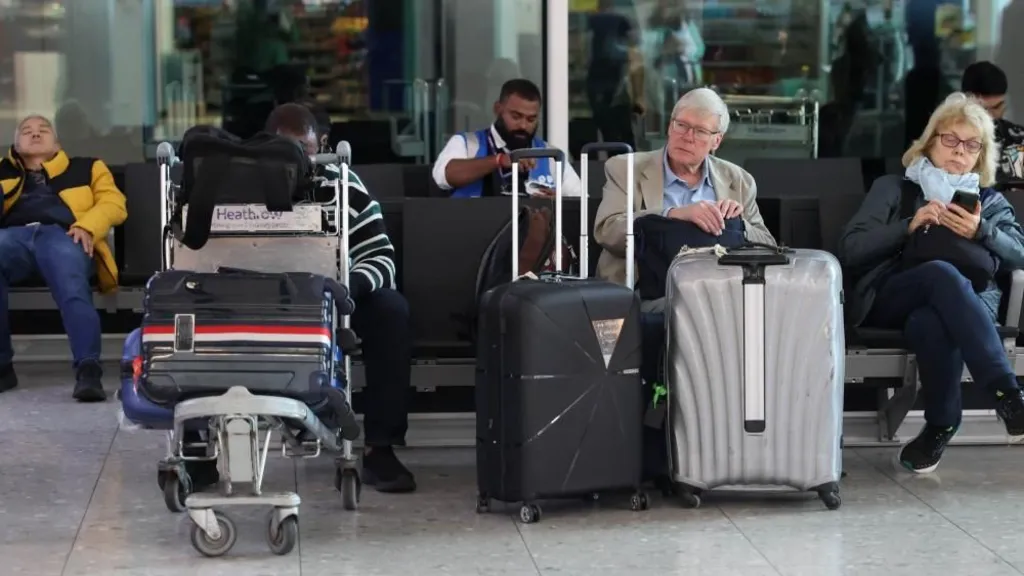
- Heathrow, London: Passengers advised to check with airlines due to multi-day schedule changes. Some flights, like the 20:00 to Doha, returned mid-journey due to technical issues, adding to confusion.
- Dubai: Residents witnessed missile interceptions across the city. Fires from intercepted missiles caused temporary closures and safety operations at key facilities.
- Qatar: Air raid alerts triggered widespread public concern, with civilians seeking shelter in public spaces.
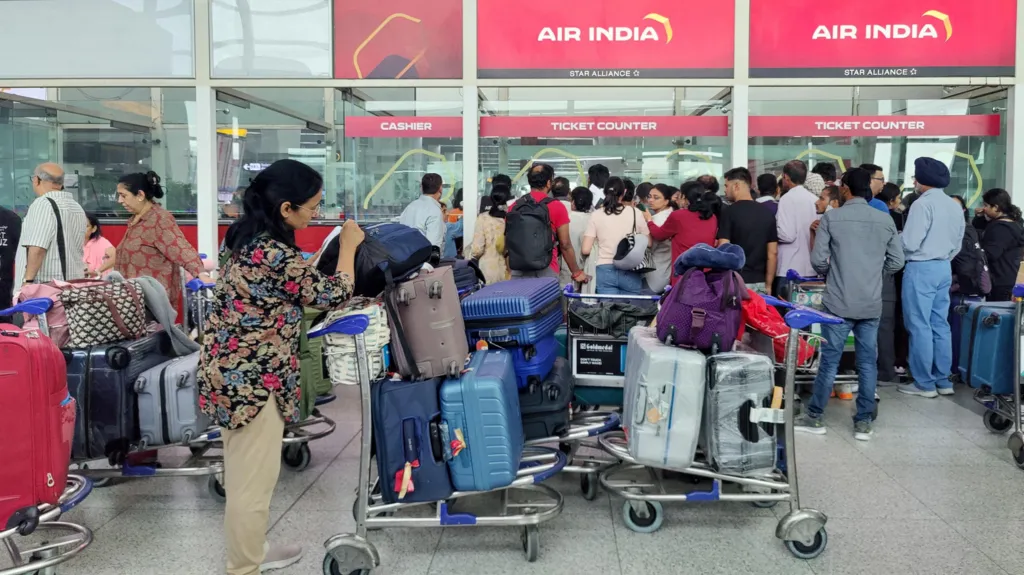
Passengers face a combination of uncertain schedules, heightened security checks, and personal safety concerns, leaving many stranded or forced to alter travel plans at short notice.
Read More: Bigger ramifications than Venezuela’s Markets brace for impact after U.S. strikes Iran
FAQs
Which airlines have cancelled flights due to the strikes?
Major affected carriers include British Airways, Virgin Atlantic, Wizz Air, and Qatar Airways, with flights to Dubai, Abu Dhabi, Doha, Tel Aviv, Bahrain, and Amman disrupted.
Are airports in the UAE and Qatar safe to use?
Airports have sustained minor damage, and operations have been temporarily suspended. Airlines and authorities advise passengers to delay travel or reroute flights until the situation stabilizes.
What advice has the UK Foreign Office issued?
British nationals in affected countries are urged to shelter in place and avoid unnecessary travel. Those in surrounding countries are advised to remain vigilant and follow local authorities’ instructions.
How long are flight disruptions expected to last?
Flight cancellations and reroutes are ongoing. Some airlines, such as British Airways, anticipate disruptions for several days. Continuation depends on regional security developments.
Can travelers register for updates on safety?
Yes, the FCDO encourages British nationals in the region to register their presence online to receive direct security updates and guidance.
Conclusion
The U.S. and Israeli strikes on Iran have triggered a major disruption in regional air travel, forcing airlines to cancel flights and governments to issue urgent travel warnings. With missile interceptions, airspace closures, and ongoing retaliation, passengers face uncertainty and potential danger.
- Airlines, governments, and travelers must remain vigilant as the situation evolves. The current disruption underscores the broader risks of military escalation in the Middle East, highlighting how quickly geopolitical tensions can impact travel, commerce, and civilian life.
- As the region stabilizes or escalates, travelers should monitor airline updates, adhere to government advice, and prioritize personal safety above all.
