


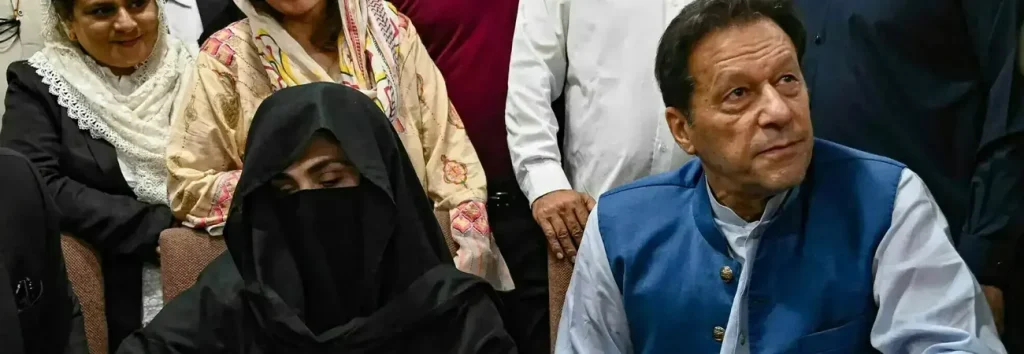
A special court has sentenced former prime minister Imran Khan and his wife, Bushra Bibi, to 17 years of imprisonment each in a high-profile corruption case linked to the alleged unlawful retention of a luxury jewellery set received as a state gift. The court also imposed a combined fine of Rs16.4 million, warning that failure to pay would result in additional jail time.
Special Judge Central Shahrukh Arjumand announced the verdict during proceedings conducted inside Adiala Jail, Rawalpindi, where Imran Khan has been incarcerated since August 2023. The case, often referred to as “Toshakhana 2.0,” centers on the alleged misuse of authority by the former premier in connection with gifts received during his tenure.
Background of the Case
The case revolves around an expensive Bulgari jewellery set reportedly gifted to Imran Khan by the Saudi crown prince during an official visit to Saudi Arabia in May 2021. According to the prosecution, the jewellery set was valued at approximately Rs80 million, but the accused retained it by paying a significantly reduced amount of Rs2.9 million, which prosecutors described as a “throwaway price.”
Under Pakistani law, gifts received by public office holders from foreign dignitaries must be deposited in the Toshakhana, the state repository for such items. While officials are allowed to retain certain gifts after paying a prescribed amount based on assessed value, the prosecution alleged that the valuation process in this case was deliberately manipulated.
Charges and Sentencing
Imran Khan was sentenced under multiple legal provisions. The court awarded him:
- 10 years of rigorous imprisonment under Sections 34 (common intention) and 409 (criminal breach of trust) of the Pakistan Penal Code.
- Seven years of imprisonment under Section 5(2) of the Prevention of Corruption Act, which deals with criminal misconduct by public servants.
- Bushra Bibi received an identical 17-year sentence, having been convicted under the same sections of law.
In addition to imprisonment, the court imposed a fine of Rs16.4 million on the convicts. The judgment noted that failure to pay the fine would lead to further imprisonment as mandated by law.
Court’s Reasoning and Leniency
In its written order, the court acknowledged certain mitigating factors while determining the punishment. The judge stated that Imran Khan’s age and Bushra Bibi’s gender were taken into account, resulting in a comparatively lesser sentence than what could have been imposed under the law.
“This court, while passing sentences, has considered the old age of Imran Ahmed Khan Niazi, as well as the fact that Bushra Imran Khan is a female,” the judgment read. “In consideration of these factors, a lenient view has been taken in awarding lesser punishment.”
The court also extended the benefit of Section 382-B of the Criminal Procedure Code, which allows time already spent in custody to be counted toward the sentence.
Trial Conducted Inside Jail
The trial was conducted inside Adiala Jail due to security concerns and the incarceration of the former prime minister. Both Imran Khan and Bushra Bibi were formally indicted in December last year, and the case proceeded amid heightened political tensions in the country.
In October, both accused recorded their statements, categorically denying all allegations. They described the case as politically motivated, alleging it was designed to disqualify Imran Khan from politics and weaken his party, Pakistan Tehreek-e-Insaf (PTI).
Prosecution’s Case
The prosecution presented a detailed case, arguing that Imran Khan abused his authority as prime minister to retain a valuable state gift unlawfully. Over the course of the trial, 21 witnesses were produced, including senior government officials and individuals involved in the valuation process.
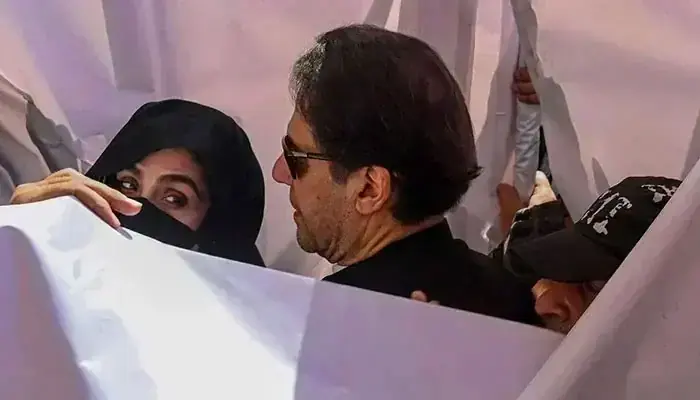
One of the most significant testimonies came from Imran Khan’s former military secretary, whom the court described as a “key and damaging witness.” He testified that the former prime minister had directed him not to deposit the Bulgari jewellery set in Toshakhana, effectively bypassing established procedures.
According to the prosecution, this instruction was a clear violation of the rules governing state gifts and demonstrated criminal intent.
Allegations of Undervaluation
A central issue in the case was the alleged undervaluation of the jewellery set. The prosecution claimed that the set’s actual market value was around Rs80 million, but it was deliberately undervalued to enable its retention at a nominal cost.
Former comptroller Syed Inamullah Shah and appraiser Sohaib Abbasi testified regarding the valuation process. Their statements suggested irregularities and external pressure during the assessment.
Sohaib Abbasi later admitted that the jewellery had been undervalued at Rs5 million under pressure, a revelation that became a crucial element of the prosecution’s argument.
Defense’s Position
Imran Khan, in his statement before the court, strongly rejected all allegations. He denied instructing any official to manipulate the valuation process and dismissed the prosecution’s claims as false, fabricated, and politically driven.
He challenged the credibility of key witnesses, calling Syed Inamullah Shah an “unreliable witness” who allegedly held personal grudges after being removed from service. He accused Shah of acting at the behest of political rivals.
Similarly, Imran Khan described appraiser Sohaib Abbasi as an “untrustworthy approver” who, according to him, changed his stance under external pressure.
Jurisdictional Objections
The former prime minister also raised serious objections to the jurisdiction of investigative agencies, including the National Accountability Bureau (NAB) and the Federal Investigation Agency (FIA).
He argued that the investigations were “extra-legal and supra-constitutional, asserting that the FIA merely acted as a “post office” when the case was transferred from NAB, without conducting an independent assessment.
Imran Khan further questioned the admissibility of evidence obtained from abroad, particularly documents and information sourced from Bulgari Italy. He cited recent amendments to the National Accountability Ordinance, 1999, claiming that such evidence did not meet legal requirements.
Claim of Political Victimization
Throughout the proceedings, Imran Khan repeatedly referred to himself as a “political prisoner.” He claimed that since his removal from office in May 2022, more than 350 criminal cases had been filed against him as part of a broader campaign to exclude him from the political process.
He pointed out that his earlier convictions in Toshakhana-related cases had already been overturned on appeal, which, according to him, demonstrated that the allegations were “bogus and groundless.”
Existing Convictions and Pending Cases
Imran Khan is already serving a 14-year prison sentence in the £190 million corruption case, while also facing multiple pending trials, including cases registered under the Anti-Terrorism Act in connection with the May 9, 2023 protests.
Bushra Bibi is also serving a seven-year sentence in the same £190 million corruption case, adding to her legal troubles.
The latest conviction further complicates the legal landscape for both, significantly extending their time behind bars unless relief is granted by appellate courts.
Read More: King Charles marks cancer treatment reduction milestone.
Political and Legal Implications
The verdict has far-reaching political implications, particularly for the Pakistan Tehreek-e-Insaf, which has consistently alleged that its leadership is being targeted through legal means.
Legal experts note that the conviction could further hinder Imran Khan’s ability to participate in politics, even if some sentences are later suspended or overturned on appeal.
Supporters of the former prime minister have criticized the verdict as unjust, while government representatives maintain that the case represents accountability under the law.
What Comes Next
Legal analysts expect appeals to be filed in the Islamabad High Court, challenging both the conviction and the sentence. Given the complexity of the case and its political sensitivity, the appellate process is likely to draw significant public attention.
For now, the verdict marks another major chapter in the ongoing legal saga surrounding Imran Khan and Bushra Bibi, reinforcing the deep intersection between law, politics, and accountability in Pakistan’s current landscape.
Frequently Asked Questions (FAQs)
Why were Imran Khan and Bushra Bibi sentenced to prison?
Imran Khan and Bushra Bibi were sentenced for unlawfully retaining a luxury jewellery set received as a state gift. The court found that the item was undervalued and not properly deposited in the Toshakhana, violating corruption and trust laws.
How long is the jail sentence for Imran Khan and Bushra Bibi?
Both Imran Khan and Bushra Bibi were sentenced to 17 years of imprisonment each under the Pakistan Penal Code and the Prevention of Corruption Act.
What was the value of the jewellery involved in the case?
The prosecution stated that the jewellery set was worth around Rs80 million, but it was allegedly retained after undervaluation, with only Rs2.9 million paid.
Did the court consider any leniency in sentencing?
Yes, the court stated that it awarded a lesser punishment after considering Imran Khan’s age and Bushra Bibi’s gender, while still holding them guilty under the law.
What fines were imposed by the court?
The court imposed a total fine of Rs16.4 million. Failure to pay the fine may result in additional imprisonment.
What defense did Imran Khan present during the trial?
Imran Khan denied all allegations, claiming the case was politically motivated. He challenged the credibility of the prosecution witnesses and questioned the jurisdiction of the NAB and the FIA.
Is this Imran Khan’s only conviction?
No, Imran Khan is already serving a 14-year sentence in the £190 million corruption case and faces additional pending cases, including those related to the May 9, 2023, protests.
Conclusion
The sentencing of former prime minister Imran Khan and Bushra Bibi in the Toshakhana jewellery case marks a significant development in Pakistan’s ongoing accountability process. While the court ruled that the accused misused their authority by unlawfully retaining a valuable state gift, both have strongly rejected the verdict and are expected to challenge it in higher courts. As legal proceedings continue, the case remains a focal point of national political and legal debate, with far-reaching implications for Pakistan’s political landscape.
