


As Israel intensifies its airstrikes on Lebanon and Hezbollah’s military capacity continues to erode, the Lebanese government faces growing internal and external pressure to pursue negotiations with Israel — a step once considered politically untouchable.
Lebanese president Joseph Aoun sparked nationwide controversy when he announced that Lebanon now has “no choice” but to engage in negotiations. “The language of negotiation is more important than the language of war,” Aoun said, emphasizing that Lebanon cannot afford another cycle of devastation.
His remarks triggered a turbulent political debate, challenging one of Lebanon’s long-standing taboos: direct talks with Israel. The countries have never had diplomatic relations and technically remain in a state of war since 1948. Although Hezbollah has dominated recent military confrontations with Israel, the Lebanese Armed Forces have historically remained outside the battlefield.
Growing External Pressure
While Aoun did not explicitly state that negotiations would occur directly rather than through intermediaries, Lebanon appears increasingly cornered into taking that route. After the destructive 2023–2024 Hezbollah–Israel war, Israel’s military pressure and US diplomatic pressure have converged, narrowing Beirut’s room for maneuver.
Hezbollah’s refusal to comply with the ceasefire agreement which required all non-state armed groups to disarm has intensified scrutiny. The group continues to relocate weapons inside Lebanon and smuggle arms from Syria. Hezbollah insists it is only required to disarm south of the Litani River and accuses Israel of ceasefire violations.
Israel, meanwhile, has escalated its strikes inside Lebanon and insists the Lebanese state must dismantle Hezbollah’s military infrastructure. US officials have echoed this stance, with envoy Tom Barrack calling Lebanon a “failed state” and Morgan Ortagus urging the Lebanese military to fully implement a disarmament plan.
Given these pressures, direct negotiations between Beirut and Tel Aviv are no longer a distant possibility they are becoming a likely outcome.
Read More: The US auto industry is bracing for an EV winter. Here’s why.
Land Border and Security Agreement at the Heart of Talks
The emerging negotiation framework centers on two major issues:
- Formal demarcation of the Lebanon–Israel land border, which has never been officially established.
- A comprehensive security agreement, reshaping security responsibilities along the frontier.
Political expectations had long favored indirect negotiations similar to the 2022 US-brokered maritime border agreement. But today, leaders outside the Hezbollah-aligned camp increasingly support direct talks.
Kataeb Party leader Samy Gemayel recently called such negotiations “necessary,” adding that “what was impossible has become possible.” He emphasized that any decision should be taken with national consensus. Another MP supported the idea but acknowledged public skepticism.
Hezbollah’s Existential Concerns
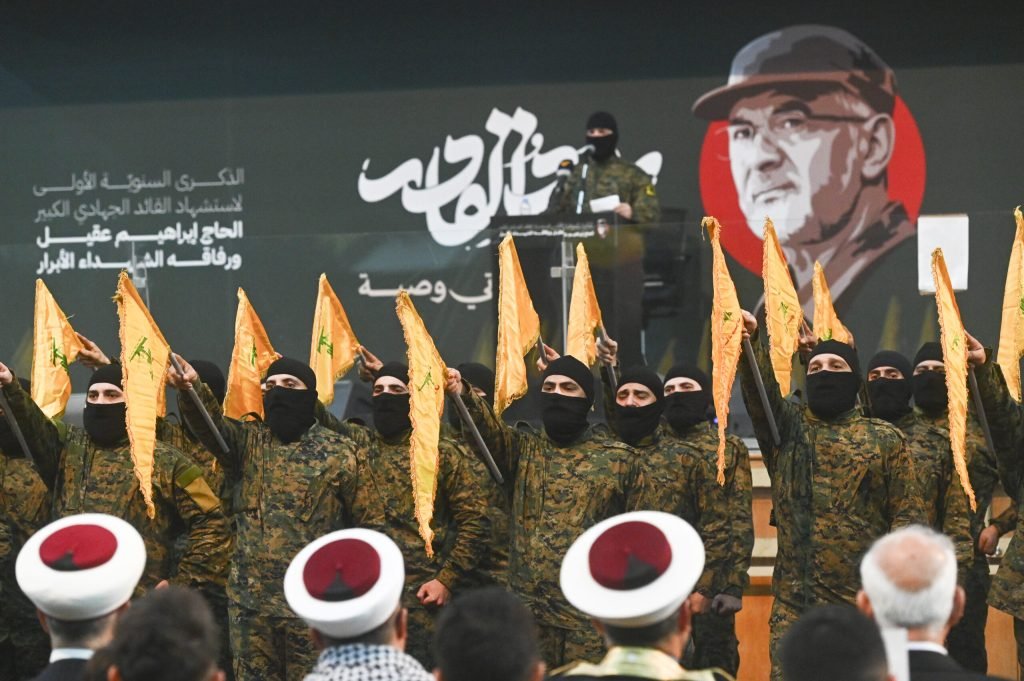
A peace deal with Israel threatens Hezbollah’s core narrative that it acts as Lebanon’s shield against Israeli aggression. The group responded to Aoun’s comments with an open letter rejecting both disarmament and direct negotiations.
Historically, Hezbollah’s legitimacy as an armed actor was reinforced by Lebanon’s 2008 ministerial statement, which recognized “resistance” alongside the army as part of national defense. But the current government has abandoned this language in favor of asserting the state’s exclusive authority over weapons and war-related decisions.
Prime Minister Nawaf Salam reaffirmed this stance, dealing another blow to Hezbollah’s political influence.
Hezbollah’s Position of Weakness
Despite its defiant rhetoric, Hezbollah’s current situation is precarious:
- Militarily weakened by Israel’s decisive blows
- Financially strained, unable to compensate affected civilians as it did after 2006
- Politically isolated, with parts of its base privately expressing disillusionment
- Strategically disadvantaged, as Tehran its main backer faces its own internal pressures
A directly negotiated Lebanese–Israeli security agreement would fundamentally undermine Hezbollah’s justification for maintaining its weapons, weakening its relevance in Lebanon’s defense landscape.
FAQs
Why is Lebanon considering negotiations with Israel now?
Lebanon is facing mounting pressure from Israel’s military escalation and from US diplomatic efforts. Combined with Hezbollah’s weakened position, the Lebanese government sees negotiations as a necessary step to avoid a broader conflict.
Are the negotiations expected to be direct or indirect?
While not confirmed, political signals suggest that direct negotiations are increasingly likely, even though this has long been taboo in Lebanese politics.
What are the main issues at stake in the negotiations?
Two core issues dominate:
- The formal land border demarcation between Lebanon and Israel
- A bilateral security agreement redefining border control and stability mechanisms
Why is Hezbollah opposed to negotiations?
Negotiations, especially a peace agreement, would undermine Hezbollah’s claim that Lebanon needs its armed presence to defend against Israel. This directly challenges its political identity and military role.
How is the Lebanese public responding to the possibility of talks?
Public responses are divided. Some political factions and civilians see negotiations as necessary for stability, while others view them as a dangerous concession that could undermine national sovereignty or legitimate resistance narratives.
What role is the United States playing?
The US is applying diplomatic pressure on Beirut to implement the ceasefire terms, especially disarming Hezbollah. Washington supports negotiations as a pathway to a more stable and controlled border environment.
Conclusion
Lebanon stands at a pivotal moment. With Israeli airstrikes intensifying, Hezbollah weakened, and international pressure mounting, the political landscape is shifting toward a once-unthinkable scenario: direct negotiations with Israel.
