

Tibet Earthquake 2026: Magnitude 7.0 Quake Kills 16 and Triggers Mass Evacuations
A powerful magnitude 7.0 earthquake struck China’s Tibet region on Thursday, October 22, 2026, killing at least 16 people and injuring dozens more, according to state-run Xinhua news agency. Authorities ordered thousands of residents to evacuate as rescue teams raced to reach remote mountain communities cut off by landslides and damaged roads.
The Tibet earthquake 2026 is the deadliest seismic event to hit the Himalayan region this year and one of the most significant natural disasters of the autumn. Assessments were still underway at the time of writing, and officials warned the casualty count could rise as search teams reach isolated villages at high altitude.
This guide covers everything known so far about the Tibet earthquake 2026: what happened, the confirmed casualties and damage, how rescue and relief efforts are unfolding, why this region is so prone to powerful quakes, and what the aftershock risk means for the days ahead. The quake is the latest in a string of natural disasters making headlines in 2026, following Greece’s wildfire risk this summer, and it comes in the same week that Typhoon Champi disrupted Taiwan — a reminder of how exposed the region is to extreme events this season.
Tibet Earthquake 2026: What Happened
The Tibet earthquake 2026 struck on Thursday, October 22, 2026, registering magnitude 7.0. Chinese state media reported the quake hit the Tibet Autonomous Region, a vast, mountainous area on the northern edge of the Himalayas known as the “Roof of the World.”
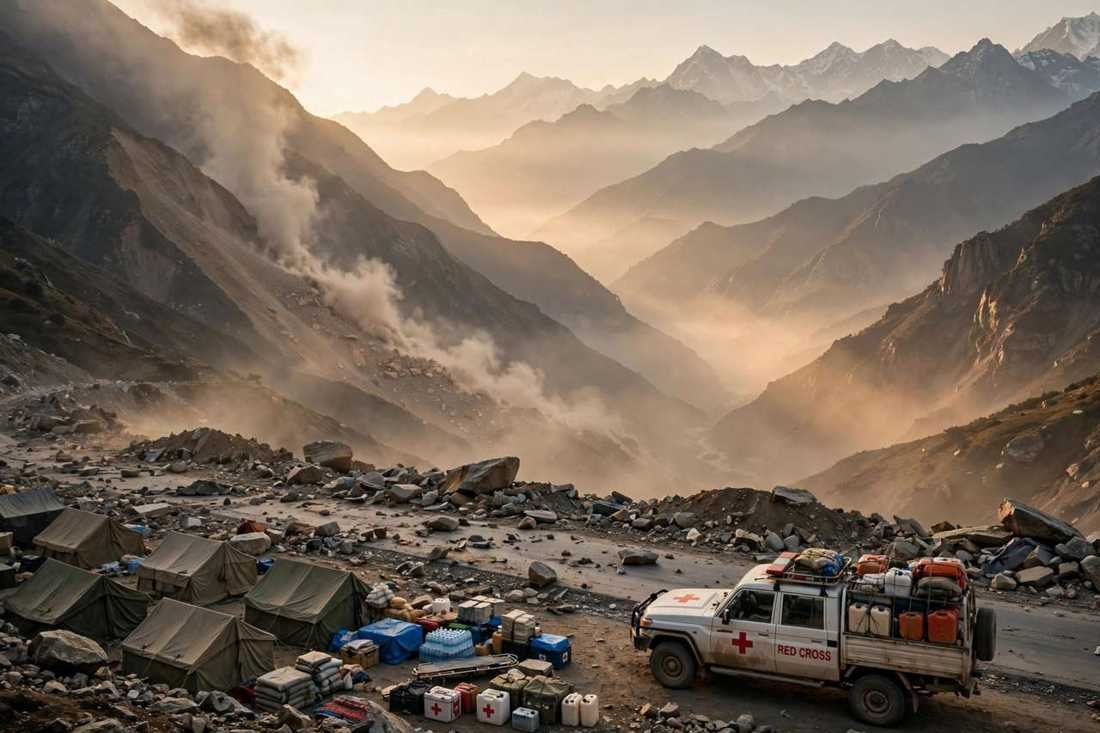
Within hours, reports of collapsed buildings, cracked roads and disrupted communications began reaching regional authorities. State broadcaster accounts described significant damage in towns and villages near the epicentre area, with emergency services reporting that several communities were temporarily cut off by rockfalls and landslides triggered by the shaking.
Key facts about the Tibet earthquake 2026, as confirmed so far:
- Magnitude: 7.0 — a major earthquake capable of serious damage, especially in areas with older masonry buildings.
- Date: Thursday, October 22, 2026.
- Deaths confirmed: at least 16, per China’s Xinhua news agency.
- Injuries: dozens reported, with figures still being updated.
- Evacuations: thousands of residents moved to temporary shelters.
- Source of figures: Chinese state media; independent verification remains limited because of the region’s remoteness.
Officials have not yet released the quake’s precise depth or full epicentre coordinates in internationally published reports, and those technical details are expected to be refined as seismological agencies complete their analysis.
Casualties and Damage From the Tibet Earthquake
The human toll of the Tibet earthquake 2026 is still becoming clear. Xinhua reported at least 16 deaths and dozens of injuries in the hours after the quake, but authorities cautioned that the numbers were preliminary while assessments continued across a wide and rugged area.
Damage reports point to a familiar pattern for strong Himalayan earthquakes. Traditional stone and mud-brick houses — common in remote Tibetan villages — perform poorly under sustained shaking, and collapsed walls and roofs account for many of the casualties in quakes of this size. Roads buckled, power lines came down, and mobile networks went dark in several districts, complicating the first wave of emergency calls.
Landslides are a second, often deadlier threat. Steep Himalayan slopes loosened by the main shock have a history of giving way during aftershocks, and reports from the Tibet earthquake zone mentioned blocked mountain roads and debris covering sections of key routes used by rescue convoys.
Step 1: How Casualty Counts Evolve After a Major Quake
Readers following the Tibet earthquake 2026 should expect the official figures to change. In the first hours, counts come from the most accessible towns. Over the next one to three days, as teams reach outlying villages — often on foot where roads are blocked — both the death and injury totals typically rise before stabilising.
Step 2: Why Early Numbers Often Understate the Damage
High-altitude regions like Tibet combine thinly spread populations with fragile infrastructure. Communications blackouts, night-time rescue conditions and freezing October temperatures all slow the work. Authorities have a strong incentive to publish cautious early figures and revise them upward as the picture firms up.
Rescue and Relief Efforts in the Tibet Earthquake Zone
China’s emergency management authorities activated a national-level earthquake response within hours of the Tibet earthquake 2026. State media reported that rescue teams, medical personnel and relief supplies were being dispatched to the affected region, with tents, blankets, food and emergency medical kits prioritised for survivors facing cold autumn nights at altitude.
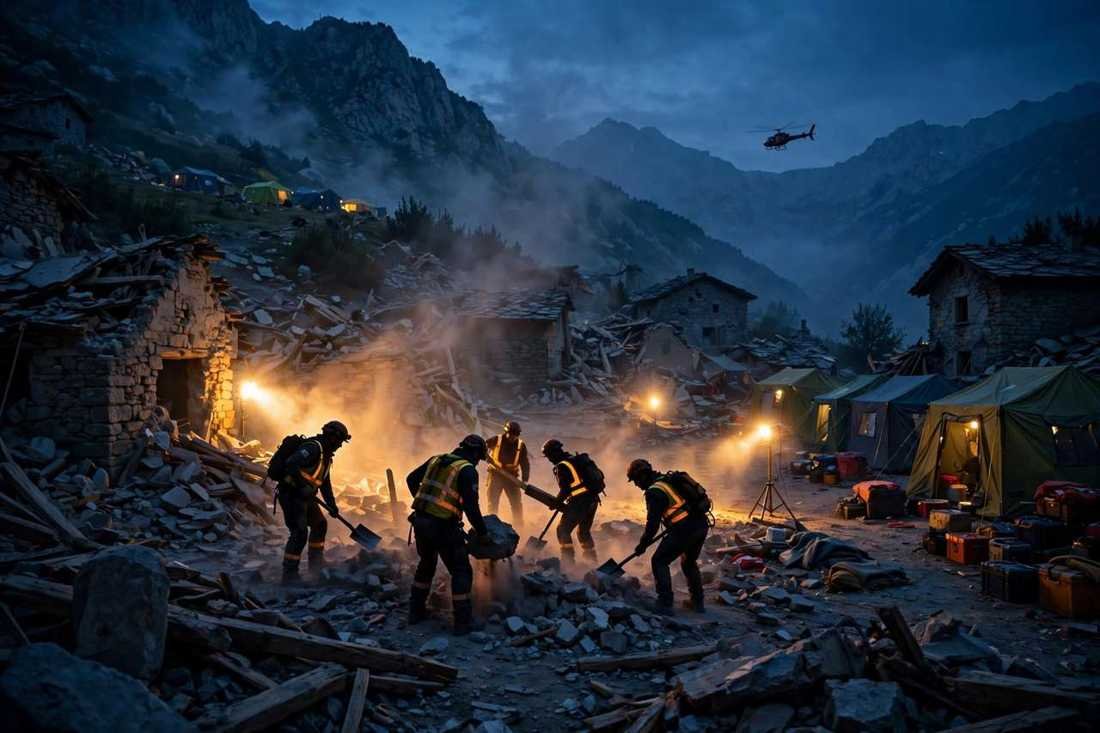
The operation faces punishing conditions. The Tibetan Plateau averages more than 4,000 metres above sea level, and October nights bring freezing temperatures. Thin air slows both rescuers and machinery, while aftershocks keep weakened structures dangerous to enter.
Thousands of residents have been evacuated to temporary shelters as a precaution. Authorities typically establish relocation points in open areas away from buildings and unstable slopes, and state media footage showed emergency tents being set up for displaced families.
International offers of assistance had not been formally detailed in early reporting. China has historically managed large-scale disaster response domestically, deploying the People’s Liberation Army and national emergency teams for search-and-rescue, logistics and medical care.
Why Earthquakes Keep Striking Tibet
The Tibet earthquake 2026 is no geological accident. The region sits on one of the most seismically active zones on the planet: the collision boundary between the Indian and Eurasian tectonic plates.
For roughly 50 million years, the Indian plate has been pushing northward into Eurasia at several centimetres per year. That relentless pressure crumpled the Earth’s crust upward into the Himalayas and the Tibetan Plateau — and it keeps accumulating stress along faults across the entire region. When the stress finally releases, the result is an earthquake.
This is why Tibet, Nepal, northern India, Pakistan and western China experience powerful quakes with grim regularity. The plateau’s crust is thick, fractured and constantly being squeezed, making magnitude 6 and 7 events a recurring feature of the region’s geology rather than a freak occurrence.
Tibet Earthquake 2026 Compared With Past Himalayan Quakes
To put the Tibet earthquake 2026 in perspective, it helps to compare it with other major quakes along the same plate boundary. Each event carries lessons about building standards, warning systems and rescue logistics that shape how the current response is being run.
| Earthquake | Magnitude | Death toll (approx.) | Key lesson |
|---|---|---|---|
| Gorkha, Nepal (April 2015) | 7.8 | ~9,000 | Unreinforced masonry collapsed widely; triggered international building-code reforms. |
| Sichuan, China (May 2008) | 7.9 | ~69,000 | School and hospital construction standards came under national scrutiny. |
| Tibet (October 2026) | 7.0 | 16+ (still being assessed) | Remote terrain and altitude slow rescue; final toll pending. |
The comparison shows why early casualty figures for the Tibet earthquake 2026 remain provisional. The 2015 Nepal quake’s toll also climbed over several days as remote districts were reached — a pattern disaster experts expect to repeat here.
Aftershock Warnings and Safety Advice After the Tibet Earthquake
A magnitude 7.0 earthquake is almost always followed by aftershocks — smaller quakes triggered as the crust settles. Some can be nearly as strong as the main shock, and they can continue for days or weeks.
Authorities in quake zones typically issue standard guidance after an event like the Tibet earthquake 2026:
- Stay out of damaged buildings until engineers declare them safe; aftershocks bring down weakened structures.
- Avoid steep slopes and valleys below them where landslides are more likely after heavy shaking.
- Keep emergency supplies ready: water, food, warm clothing, flashlights and charged phones, in case of further evacuations.
- Follow official channels only for casualty figures and relief information; rumours spread fast after disasters.
- Expect disrupted travel: roads, rail links and flights in the region may face delays or closures for inspection.
Seismologists cannot predict exactly when or where aftershocks will strike, but the statistical pattern is clear: the largest aftershocks usually occur within the first few days, and their frequency then tapers off.
Is It Safe to Travel to Tibet Right Now?
With the Tibet earthquake 2026 still unfolding, travel to the affected region is not advisable. Authorities have their hands full with rescue operations, and damaged infrastructure makes independent travel difficult and potentially dangerous.
Travellers with existing plans should check with airlines, tour operators and their government’s travel advisories before making decisions. Regions of Tibet outside the quake zone may be unaffected, but transport networks across the plateau can be disrupted even at a distance.
Anyone currently in Tibet should register with their embassy or consulate, keep travel documents accessible, and follow instructions from local authorities and hotel staff.
Aid and Donations: How to Help After the Tibet Earthquake 2026
The most effective help after the Tibet earthquake 2026 will flow through established channels. Large disasters in China are typically managed by national and provincial authorities, with the Red Cross Society of China playing a major coordination role.
- Donate money, not goods: relief agencies consistently say cash donations are more flexible and faster to deploy than shipped supplies.
- Use verified organisations: check that any charity collecting for Tibet earthquake relief is registered and transparent about how funds are used.
- Beware of scams: fraudsters routinely exploit major disasters with fake fundraising pages and social media appeals.
- Amplify reliable information: sharing verified casualty and relief updates helps more than sharing unverified viral claims.
For background on the region’s geography and why it is so seismically active, the Tibetan Plateau on Wikipedia provides a solid overview of the plateau’s formation and characteristics.
Frequently Asked Questions About the Tibet Earthquake 2026
When did the Tibet earthquake 2026 happen?
The earthquake struck on Thursday, October 22, 2026, according to Chinese state media reports.
How strong was the Tibet earthquake 2026?
It registered magnitude 7.0, classifying it as a major earthquake capable of causing serious damage over a wide area.
How many people died in the Tibet earthquake 2026?
At least 16 deaths and dozens of injuries have been confirmed by Xinhua. The figures are preliminary and may rise as rescue teams reach remote villages.
Will there be aftershocks after the Tibet earthquake 2026?
Almost certainly. Aftershocks are expected in the days and weeks following a magnitude 7.0 quake, and residents have been advised to avoid damaged buildings and unstable slopes.
Why does Tibet get so many earthquakes?
Tibet sits on the collision zone between the Indian and Eurasian tectonic plates. The ongoing collision builds stress in the Earth’s crust that is periodically released as earthquakes.
Is it safe to travel to Tibet after the earthquake?
Travel to the affected region is not currently advisable. Check official travel advisories and tour operators before making plans, and follow local authority guidance if you are in the area.
Conclusion
The Tibet earthquake 2026 is a stark reminder of the forces at work beneath the world’s highest plateau. With at least 16 confirmed dead, dozens injured and thousands evacuated, the immediate priority is the rescue operation unfolding across remote, high-altitude terrain in freezing October conditions.
As with every major Himalayan earthquake, the full toll of the Tibet earthquake 2026 will only become clear in the coming days. The deeper question — how to build safer communities on one of the planet’s most restless fault zones — will outlast the rescue phase. For now, the focus belongs on the survivors, the search teams working through the nights, and the relief effort racing the cold.
