

France Protests 2026: Causes, Curfews and What Happens Next
France entered the third week of October 2026 in a state of high alert. What began in September as a wave of student demonstrations over teacher shortages, overcrowded classrooms and run-down school buildings has grown into a nationwide protest movement against the cost of living — and, over the weekend of October 17–19, into some of the worst civil unrest the country has seen in years.
Authorities report about 2,400 arrests, roughly 1,000 injured police officers and gendarmes, and damage to some 3,000 businesses. Prime Minister Sébastien Lecornu has ordered prefects to impose partial night curfews in riot-hit areas, President Emmanuel Macron has expressed “anger” and “shame” in a Sunday address, and the interior minister has offered his resignation — only to have it refused.
The France protests 2026 now sit at the intersection of an inflation shock, a painful 2027 budget plan, and a presidential election looming in 2027. This guide explains how the movement started, what happened over the weekend, how the government has responded, and what could come next. The unrest is also part of a broader wave of protests spreading across Europe, with cost-of-living demonstrations reported the same weekend in Italy, Belgium and Albania.
Read More: Trump’s recent foreign-policy remarks
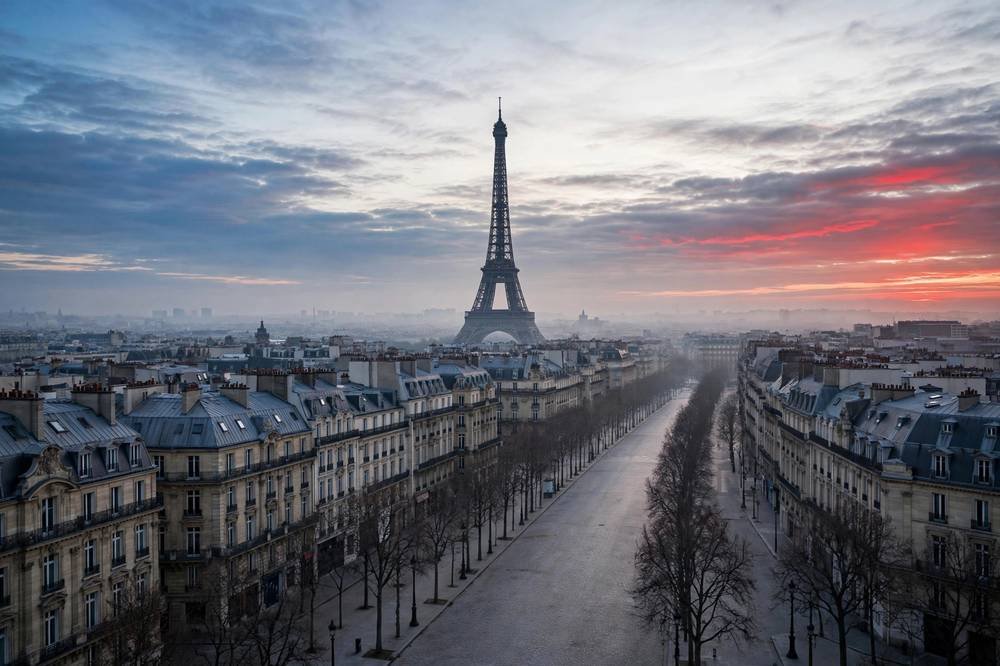
France Protests 2026: How a School Revolt Became a National Movement
The France protests of October 2026 did not appear out of nowhere. The fuse was lit in September, when students walked out of schools across the country to protest teacher shortages, overcrowded classes and deteriorating buildings. Hundreds of schools were disrupted, and student organisations began coordinating with labour unions.
What turned a school revolt into a national movement was the wider economic backdrop. With inflation at 3.1% in September and energy prices up 21.3% year-on-year, household budgets were already under strain. Trade unions seized on the student momentum to call broader demonstrations against the cost of living — and networks linked to the Yellow Vest movement joined in, adding an organised street-protest infrastructure.
By October 17, the movement had a single national date and a single slogan: opposition to the cost of living and to the government’s economic direction. The France unrest had moved from school gates to city centres.
The spark: September school walkouts
September’s student protests targeted conditions inside schools — too few teachers, classrooms packed beyond capacity, and buildings in visible disrepair. More than 700 schools were disrupted at the peak, and the images of teenagers blockading school gates became a fixture of the national news cycle.
Unions join, demands widen
Labour unions saw the student energy as a foundation to build on. They folded the school demands into a broader platform: wages, energy bills, and the government’s fiscal plans. That merger is what produced the October 17 nationwide demonstrations.
The Yellow Vest connection
Networks associated with the Yellow Vest movement — France’s defining protest wave of 2018–2019 — lent organisation and street experience to the demonstrations. Their presence helps explain how quickly local protests scaled up and how confrontations escalated in several cities.
France Unrest Timeline: What Happened on October 17–19
The decisive weekend ran from Saturday, October 17 through Monday, October 19. Peaceful mass demonstrations during the day gave way to arson, looting and street battles at night in several cities.
Saturday, October 17: nationwide demonstrations
- Nationwide marches against the cost of living and poor school conditions drew huge crowds. The Interior Ministry put turnout at roughly 550,000; organisers claimed about 800,000.
- In Paris, demonstrators targeted luxury districts: the Place Vendôme saw boutiques shuttered, a Dior door was smashed, and windows were damaged at Rolex, Louis Vuitton, Ralph Lauren and Gucci stores.
- The Louvre was blocked by protesters and closed to visitors. Sciences Po, the elite Paris university, saw blockades.
- Over 735 schools were reported disrupted across the country.
- Elsewhere: Limoges saw its town hall burned; Lyon, Marseille and Lille all recorded major disturbances.
Sunday, October 18: the political shockwave
- Interior Minister Laurent Nunez offered his resignation, telling reporters that authorities had “lost control” in some cities.
- Macron delivered a Sunday evening address expressing “anger” and “shame” over the violence.
- The weekend toll hardened: about 2,400 arrests, around 3,000 businesses damaged or looted (according to the AP), about 1,000 injured police officers and gendarmes, and at least two deaths reported (CNN).
Monday, October 19: curfews ordered
- Prime Minister Sébastien Lecornu ordered prefects to impose “partial and localised” night curfews in areas hit by rioting.
- The northern town of Denain imposed a 9pm–6am curfew through October 25; Marseille banned public gatherings in sensitive zones.
- A full Paris curfew was excluded, and officials did not rule out a state of emergency if the violence continued.
- Macron refused Nunez’s resignation, citing the need for continuous command of the security forces — but acknowledged failures in anticipation and intelligence and ordered new policing tactics.
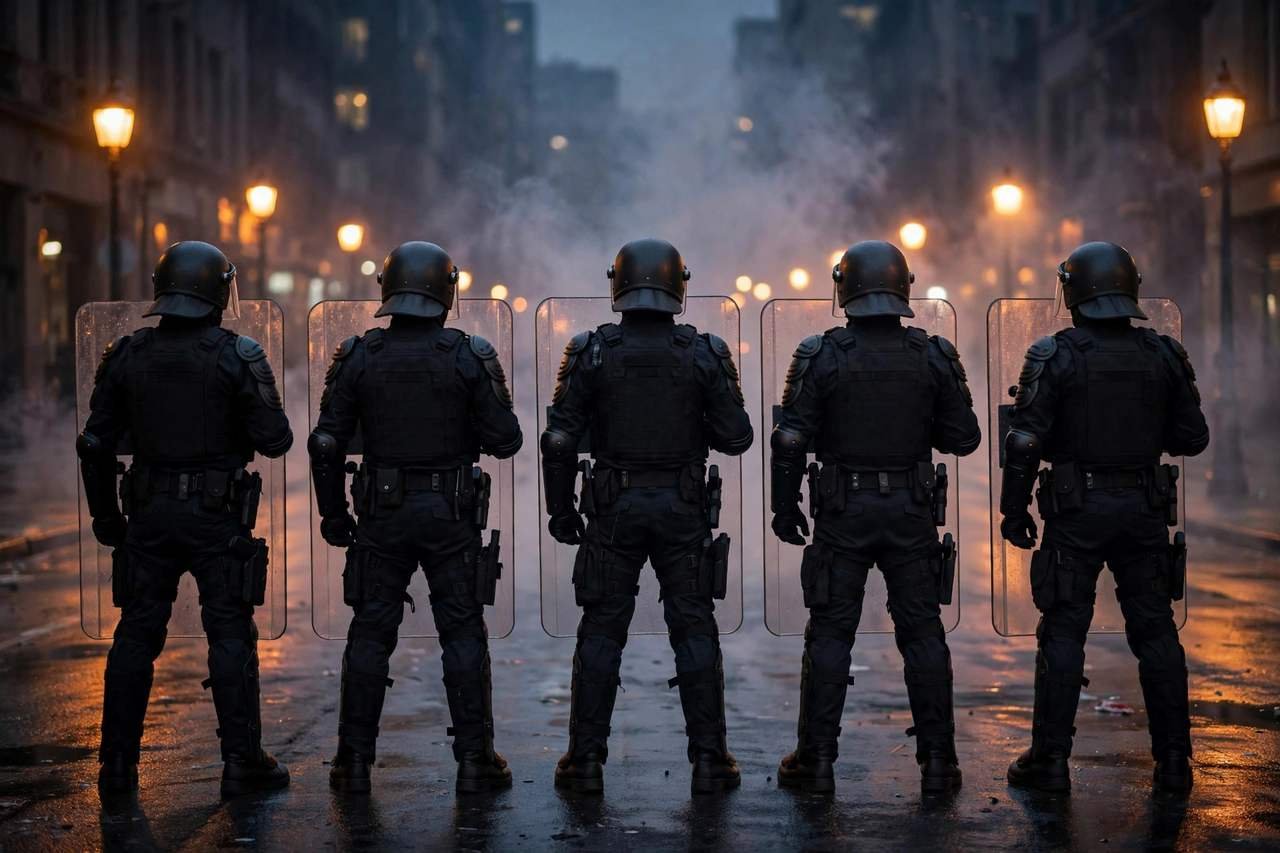
France Protest Damage: The Weekend Toll in Numbers
The scale of the weekend’s destruction is what moved the crisis from a protest story to a national emergency. The figures below come from French authorities, the Associated Press and CNN reporting.
| Measure | Reported figure | Source |
|---|---|---|
| Demonstrators (Oct 17) | ~550,000 (ministry) / ~800,000 (organisers) | Interior Ministry / organisers |
| Arrests over the weekend | ~2,400 | Authorities |
| Businesses damaged or looted | ~3,000 | Associated Press |
| Police and gendarmes injured | ~1,000 | Authorities |
| Deaths reported | At least two | CNN |
| Schools disrupted | 735+ | Authorities |
The looting of luxury boutiques around the Place Vendôme carried symbolic weight: the movement’s target was not just the government but the visible wealth of the capital. The burning of Limoges town hall — a seat of local authority — signalled anger directed at the state itself.
France Protests Government Response: Curfews, Crisis Cell and Business Aid
The government’s response has combined security measures with political signalling. Here is what has been announced so far — and how it compares with what protesters are demanding.
| What the government announced | What protesters demand |
|---|---|
| Partial, localised night curfews (e.g., Denain 9pm–6am through Oct 25) | Price relief on energy and food |
| Gathering bans in sensitive zones (e.g., Marseille) | Wage increases tied to inflation |
| Emergency fund promised for damaged businesses | Hiring of teachers and school repairs |
| New policing tactics ordered after intelligence failures | Withdrawal of the 2027 budget austerity plan |
| Interior minister kept in post for “continuous command” | A change of government economic direction |
Step 1: Curfews and gathering bans
Lecornu’s instruction to prefects authorises night-time curfews targeted at riot-hit neighbourhoods rather than entire cities. Denain’s 9pm–6am order is the template; Marseille’s gathering ban covers areas where clashes concentrated.
Step 2: Security command continuity
By refusing Nunez’s resignation, Macron kept the interior minister in charge of the police and gendarmerie at the height of the crisis — while publicly acknowledging that anticipation and intelligence had failed.
Step 3: Economic aid for businesses
A crisis support fund for the roughly 3,000 damaged businesses has been promised, though details of eligibility and payout timelines have yet to be published.
Macron’s Position on the France Protests
In his Sunday address, Macron expressed “anger” and “shame” at the destruction. He blamed the violence on far-left and ultra-left “factious” groups, joined, in his words, by “delinquents.” His message to looters was blunt: “Those who destroyed must pay. Those who looted must pay back.”
The speech was aimed at two audiences at once. To the broader public, it framed the government as the defender of order. To protesters, it drew a sharp line between the right to demonstrate — which he did not question — and the violence and looting, which he promised would be punished.
Politically, the address also served as damage control. With a presidential election expected in 2027, images of burning town halls and smashed luxury boutiques are a liability no incumbent wants. Acknowledging intelligence failures was an attempt to show accountability without conceding the economic argument.
Trump’s Comments on France Unrest
US President Donald Trump weighed in on the unrest with characteristic bluntness, blaming France’s troubles on immigration and insisting the violence had “nothing to do with schools.” He urged Macron to tighten France’s borders.
The remarks landed poorly in Paris, where officials see the unrest as driven by inflation and the budget — not migration policy. But they underline how the France protests are being read through different political lenses internationally, with the US administration framing them as a migration story while French unions and students insist they are about purchasing power and public services.
Root Causes of the France Protests 2026
The October explosion has deep roots. Understanding the drivers is essential to judging whether the movement will fade or grow.
Inflation and energy prices
- Consumer inflation ran at 3.1% in September, well above the comfort zone for French households.
- Energy prices were up 21.3% year-on-year, feeding directly into heating and transport costs.
- Wage growth has not kept pace, leaving real purchasing power squeezed.
The 2027 budget: a 54 billion euro adjustment
The government’s 2027 budget plan includes a 54 billion euro fiscal adjustment — a scale of belt-tightening that unions describe as austerity. Protesters see the plan as proof that the pain will continue, and the budget debate has become the movement’s main forward-looking target.
Schools as the original grievance
The September walkouts never fully ended. Teacher shortages, overcrowded classes and crumbling buildings remain unresolved, and students remain one of the movement’s most organised blocs.
The 2027 presidential election
With the presidential election expected in 2027, every protest becomes a campaign issue. Opposition parties are courting the movement, and the government’s handling of the unrest will be judged at the ballot box.
France Protests: What Happens Next?
Several scenarios are now in play. None of them suggests the crisis is over.
Scenario 1: Curfews contain the violence
If the partial curfews and gathering bans hold, street violence could subside within days — as happened after previous French urban riots. Peaceful demonstrations might continue, but the emergency framing would fade.
Scenario 2: The budget fight extends the movement
The 2027 budget debate gives the movement a concrete, months-long target. Unions have a track record of sustaining pressure through parliamentary fights, and the budget could keep protests alive into winter.
Scenario 3: A Yellow Vest-style revival
The presence of Yellow Vest networks raises the risk of a durable, leaderless street movement. The Yellow vests movement of 2018–2019 showed how fuel-price anger could metastasise into a general revolt — and current energy prices echo that trigger.
Scenario 4: State of emergency
Officials have not ruled out a state of emergency if violence continues. That step would expand police powers but could also harden protester resolve and draw international criticism.
France Unrest: What Travellers and Businesses Should Know
For anyone planning to visit or do business in France, the situation calls for practical caution rather than panic.
- Check before you travel: the US State Department’s France travel advisory remains unchanged at Level 2 (exercise increased caution). Monitor local prefecture announcements for curfews in specific cities.
- Paris hotspots: luxury shopping districts (notably around the Place Vendôme), major museums and universities have all been affected at points. Confirm opening hours before visiting.
- Transport disruptions: demonstrations and blockades have disrupted schools, universities and some transport links. Build buffer time into travel plans.
- Business exposure: around 3,000 businesses were damaged or looted over the weekend. Retailers in city centres should review insurance coverage and security arrangements.
- Night-time caution: curfews (such as Denain’s 9pm–6am order) are localised — check whether your area is covered before going out at night.
Frequently Asked Questions About the France Protests 2026
What started the France protests in 2026?
The movement grew out of September 2026 student protests over teacher shortages, overcrowded classes and run-down school buildings. Labour unions then merged those grievances with cost-of-living demands, producing the nationwide demonstrations of October 17.
How many people were arrested during the France riots?
Authorities report about 2,400 arrests over the October 17–19 weekend. Roughly 3,000 businesses were damaged or looted, about 1,000 police officers and gendarmes were injured, and at least two deaths were reported.
Which French cities imposed curfews?
Prime Minister Lecornu ordered prefects to impose “partial and localised” night curfews in riot-hit areas. Denain imposed a 9pm–6am curfew through October 25, and Marseille banned gatherings in sensitive zones. A full Paris curfew was excluded.
Did France’s interior minister resign?
Interior Minister Laurent Nunez offered his resignation on October 18, saying authorities had “lost control” in some cities. President Macron refused it on October 19, citing the need for continuous command of the security forces.
What did Macron say about the protests?
In a Sunday address, Macron expressed “anger” and “shame,” blamed far-left and ultra-left “factious” groups joined by “delinquents,” and declared: “Those who destroyed must pay. Those who looted must pay back.”
What is driving the France protests economically?
Inflation at 3.1% in September, energy prices up 21.3% year-on-year, and a planned 54 billion euro fiscal adjustment in the 2027 budget — against a backdrop of stagnant real wages and a presidential election expected in 2027.
Conclusion
The France protests of October 2026 are no longer a student revolt — they are a national stress test. The weekend of October 17–19 left about 2,400 arrested, 3,000 businesses damaged, and a government leaning on curfews to restore order. Macron has drawn his line — order first, punishment for looters — while keeping his interior minister in place and acknowledging intelligence failures.
What decides the next chapter is the economy. If inflation eases and the 2027 budget fight produces concessions, the streets may calm. If not, the combination of student organisation, union muscle and Yellow Vest streetcraft could make this the defining movement of the pre-election year. For now, France waits — under watchful policing, partial curfews, and the gaze of an election twelve months away.
