


The annual Hajj pilgrimage has officially begun in the holy city of Mecca as more than 1.5 million Muslims from around the world gather to perform one of the most sacred obligations in Islam. The pilgrimage, which represents one of the five pillars of Islam, comes at a time of heightened political uncertainty, regional tensions, and global economic concerns. Yet despite the instability surrounding parts of the Middle East, millions of believers have arrived in Saudi Arabia with hearts full of faith, gratitude, and hope.
For Muslims, Hajj is far more than a journey across borders. It is a deeply spiritual experience that symbolizes devotion, sacrifice, unity, repentance, and equality before God. Every year, Muslims from nearly every corner of the world travel to the holy sites in and around Mecca to perform rituals that date back thousands of years to the Prophet Ibrahim (Abraham), his wife Hajar, and their son Ismail.
This year’s pilgrimage unfolds against the backdrop of fragile diplomatic developments in the region, particularly following tensions involving Iran, the United States, and Israel. Concerns over security, oil supply disruptions, and global economic instability have created an atmosphere of uncertainty. Nevertheless, pilgrims arriving for Hajj say their faith has given them strength and peace despite the troubling headlines dominating international news.
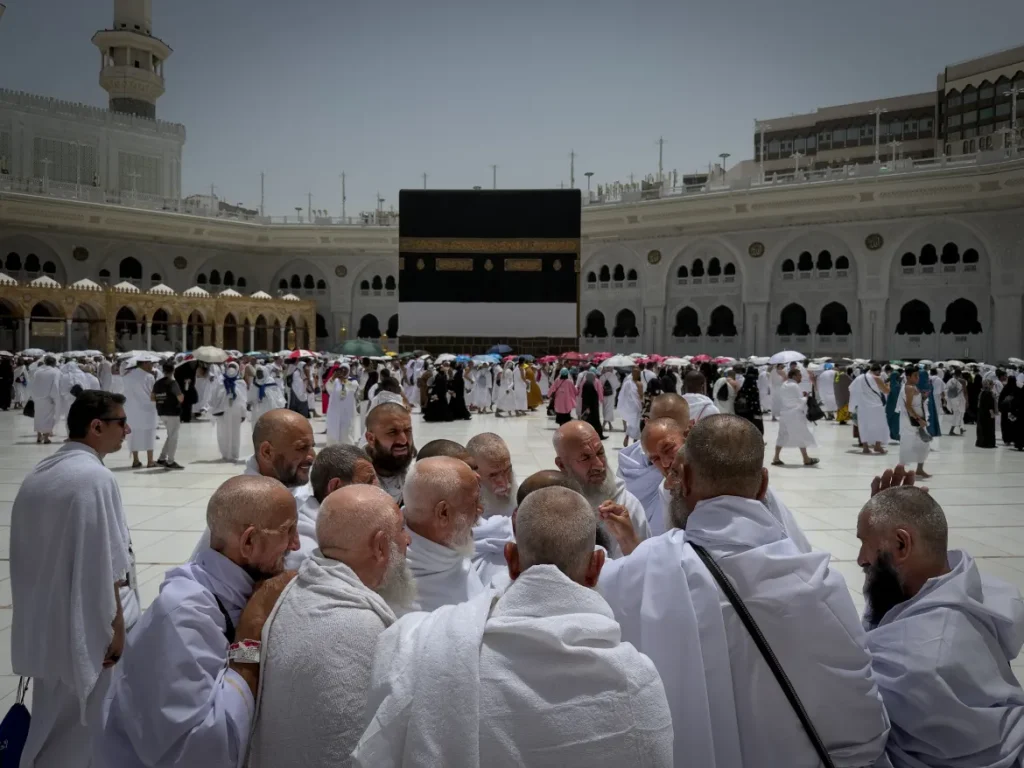
The sight of millions of Muslims dressed in simple white garments circling the Kaaba inside Masjid al-Haram once again demonstrates the extraordinary spiritual power of Hajj. Pilgrims describe the experience as life-changing, emotional, and transformative. For many, it represents the fulfillment of a lifelong dream.
The Beginning of the Sacred Pilgrimage
The Hajj pilgrimage begins during the Islamic month of Dhul Hijjah and continues through a series of rituals carried out over several days. Muslims who are physically and financially able are required to perform Hajj at least once in their lifetime.
Authorities in Saudi Arabia confirmed that more than 1.5 million international pilgrims had already entered the kingdom before the main rituals officially began. Additional domestic pilgrims from within Saudi Arabia are also participating, bringing the total number even higher.
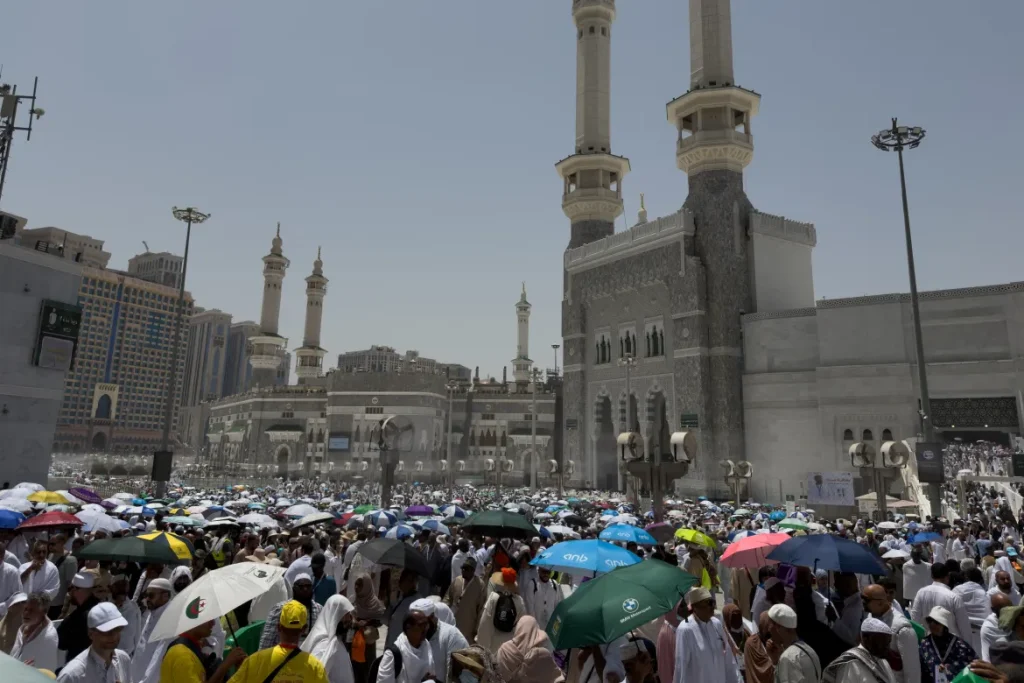
Pilgrims arriving in Mecca have already begun performing Tawaf, the act of circling the Kaaba seven times in worship and submission to Allah. The Grand Mosque is filled with worshippers from every race, language, and nationality, all united in prayer and remembrance of God.
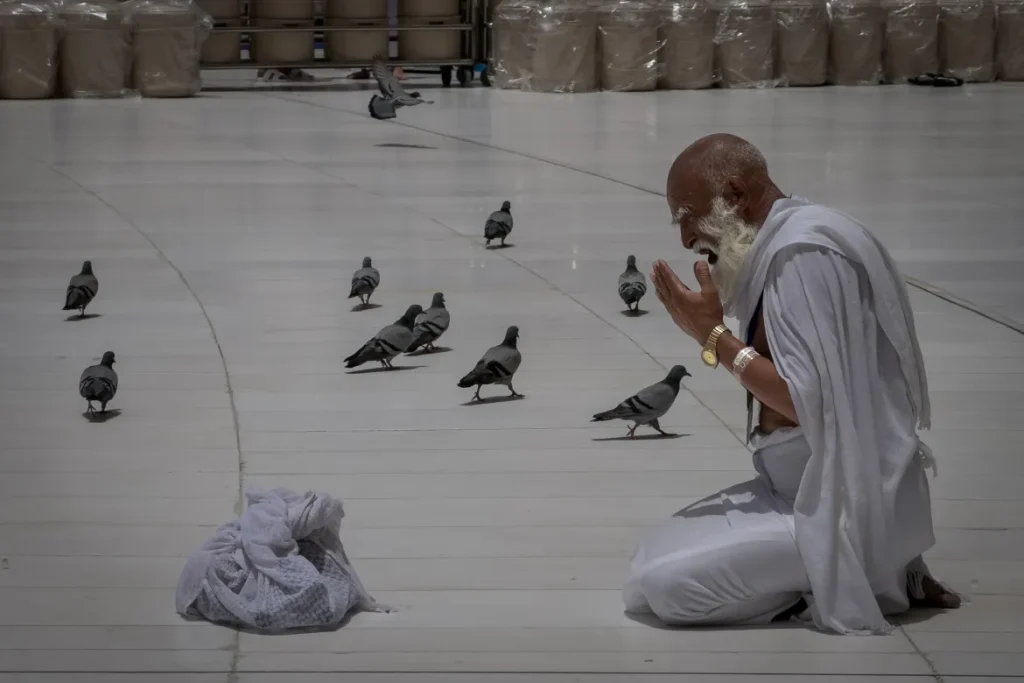
The emotional atmosphere is difficult to describe. Many pilgrims cry as they first see the Kaaba, considered the holiest site in Islam. Others pray silently, overwhelmed by the realization that they have finally reached the sacred destination they have dreamed about for years.
For elderly pilgrims especially, the journey often represents the culmination of decades of saving money and preparing spiritually. Families sometimes spend years planning the pilgrimage together. Some believers wait most of their lives for the opportunity to stand before the Kaaba and seek forgiveness from Allah.
Hajj Amid Rising Regional Tensions
This year’s Hajj takes place during a sensitive political moment in the Middle East. Recent tensions involving Iran, Israel, and the United States have raised fears of wider regional instability. Attacks, counterattacks, and threats affecting strategic waterways have also contributed to a growing global energy crisis.
The Strait of Hormuz, one of the world’s most important oil shipping routes, has become a major focus of international concern. Any disruption to energy supplies from the Gulf region can significantly affect oil prices and global economies.
Although a fragile ceasefire and ongoing diplomatic discussions have reduced immediate fears of escalation, uncertainty still remains. Governments across the world continue monitoring the situation carefully.
Despite these concerns, Saudi authorities have emphasized that the safety and security of pilgrims remain their highest priority. Thousands of security personnel, medical teams, emergency responders, and volunteers have been deployed across Mecca, Mina, Muzdalifah, and Arafat.
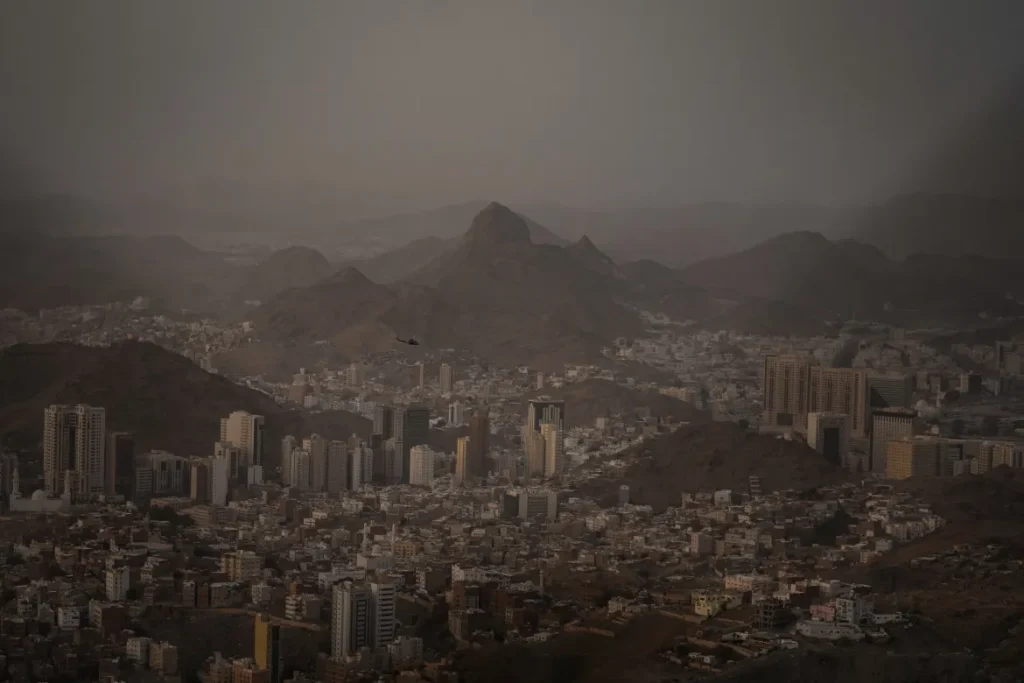
Helicopters patrol the skies above the holy sites while advanced surveillance systems monitor crowd movement to ensure smooth operations. Saudi Arabia has spent years improving Hajj infrastructure after past incidents involving overcrowding and extreme heat.
Pilgrims themselves appear determined not to let political tensions overshadow the spiritual importance of the pilgrimage. Many say they have entrusted their safety to Allah and remain focused on worship.
Extreme Heat and Physical Challenges
One of the greatest challenges facing pilgrims this year is the intense summer heat in Saudi Arabia. Temperatures in Mecca and surrounding holy sites have reached dangerous levels, creating difficult conditions for millions of worshippers performing physically demanding rituals outdoors.
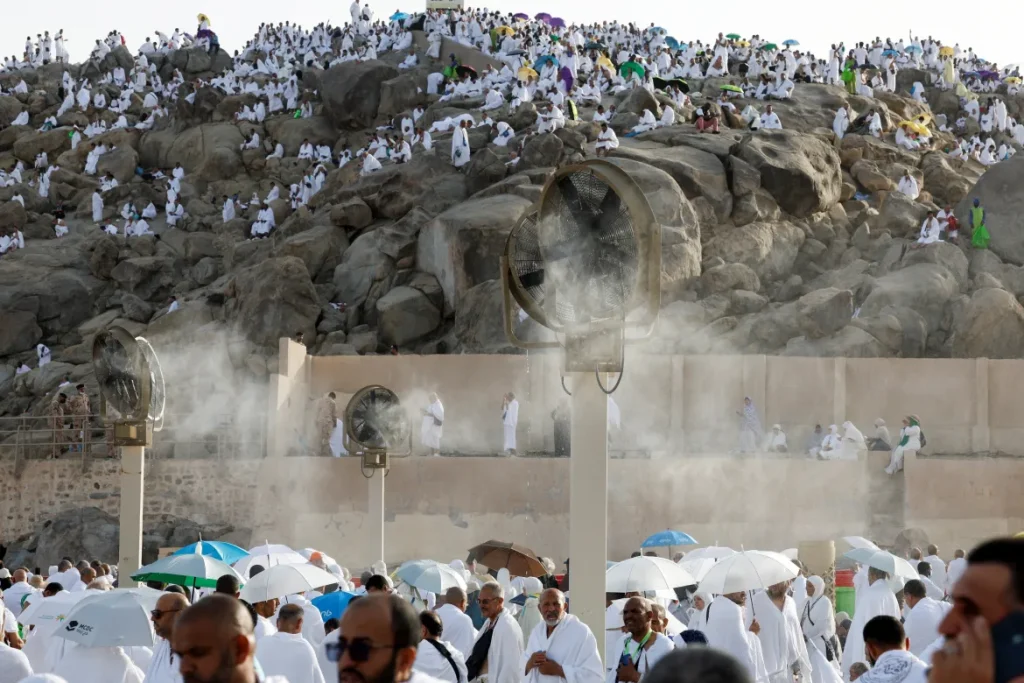
Pilgrims walking long distances under the sun often rely on umbrellas, handheld fans, cooling towels, and constant hydration to cope with the heat. Volunteers and medical teams have distributed water bottles, mist sprays, and refreshments throughout the pilgrimage zones.
Saudi authorities have expanded shaded areas and cooling systems around the holy sites to reduce heat-related illnesses. Emergency clinics and mobile medical units remain on high alert for cases of dehydration, heat exhaustion, and fatigue.
Despite the difficult conditions, pilgrims continue performing rituals with remarkable patience and determination. Many describe the hardship as part of the spiritual purification process associated with Hajj.
The physical challenges of Hajj are immense. Pilgrims often walk many kilometers daily in crowded conditions while carrying personal belongings and enduring long periods outdoors. Elderly pilgrims and those with medical conditions face additional difficulties.
Yet for many believers, the hardship strengthens the spiritual meaning of the journey. Muslims believe that patience, sacrifice, and perseverance during Hajj bring immense rewards from Allah.
The Spiritual Meaning of Hajj
Hajj is not simply a religious gathering; it is a profound spiritual transformation for millions of Muslims. The pilgrimage symbolizes humility, equality, forgiveness, and submission to God.
During Hajj, pilgrims wear simple white garments known as Ihram. These clothes remove distinctions of wealth, status, nationality, and social class. Kings, laborers, businesspeople, scholars, and farmers stand side by side before Allah as equals.
The rituals performed during Hajj commemorate important events from the lives of Prophet Ibrahim, Hajar, and Prophet Ismail. Muslims remember Ibrahim’s willingness to sacrifice his son in obedience to Allah and Hajar’s desperate search for water in the desert.
Pilgrims walk between the hills of Safa and Marwah to honor Hajar’s struggle, while the symbolic stoning ritual in Mina represents rejecting Satan and resisting temptation.
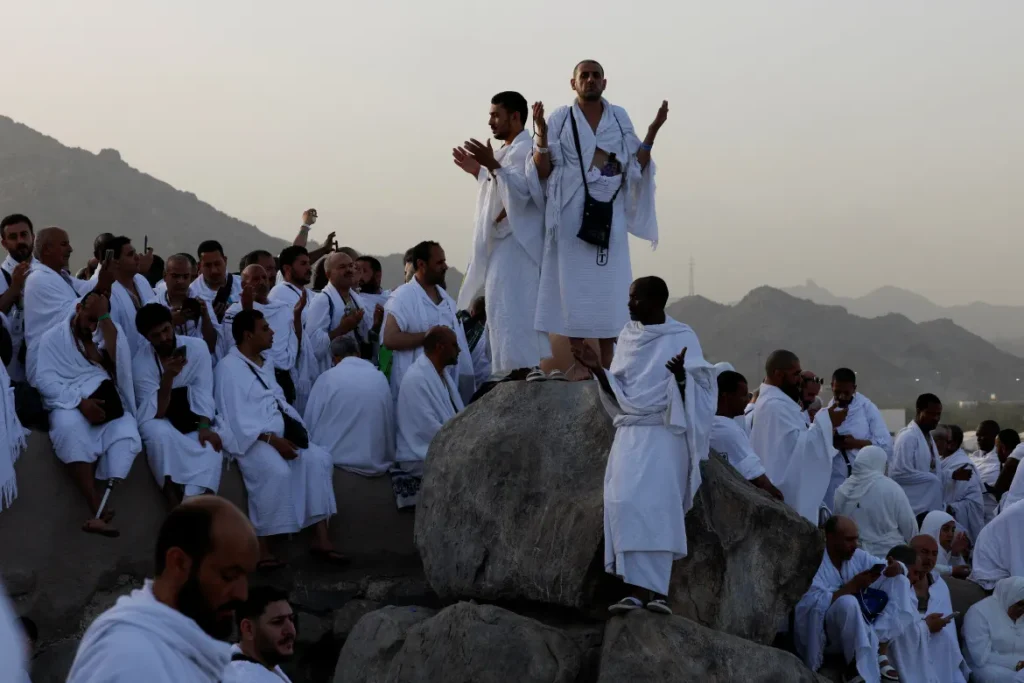
The Day of Arafat is considered the spiritual climax of Hajj. Pilgrims gather on the plain of Arafat and spend hours praying, seeking forgiveness, and reflecting on their lives. Many Muslims believe this day resembles the Day of Judgment, when humanity will stand before Allah.
For countless pilgrims, Hajj becomes a moment of emotional release and spiritual rebirth. Many return home feeling transformed, determined to live better lives and strengthen their relationship with God.
Pilgrims Share Emotional Experiences
Pilgrims from around the world have described their journeys as deeply emotional and life-changing experiences. Many speak of overwhelming gratitude after finally arriving in Mecca.
An Egyptian pilgrim expressed immense happiness and disbelief at reaching the holy city after years of waiting. She described feeling blessed and spiritually fulfilled while standing near the Kaaba.
Another pilgrim from the United States explained that Hajj felt like a complete reset for his life. He described witnessing extraordinary acts of kindness among pilgrims who help strangers with food, water, directions, and medical assistance.
These stories are common during Hajj. Despite language barriers and cultural differences, pilgrims often form strong bonds through shared worship and mutual support.
The spirit of generosity becomes visible everywhere. Volunteers distribute meals and drinks to strangers. Pilgrims assist elderly worshippers during rituals. Medical workers provide care around the clock. Families share food and shelter with others.
Many pilgrims say this atmosphere of compassion and unity is among the most beautiful aspects of Hajj.
Saudi Arabia’s Massive Hajj Preparations
Hosting Hajj is one of the largest logistical operations in the world. Saudi Arabia spends billions of dollars annually to manage transportation, accommodation, health services, crowd control, and infrastructure improvements for pilgrims.
The Saudi government has introduced advanced technology systems to monitor crowd movement and improve safety. Artificial intelligence, surveillance cameras, and digital mapping tools help authorities respond quickly to emergencies and prevent dangerous overcrowding.
Transportation systems have also been expanded significantly. High-speed trains, shuttle buses, and organized pedestrian routes help move millions of pilgrims between holy sites efficiently.
Healthcare services remain another major priority. Hospitals and clinics across Mecca are staffed with thousands of doctors, nurses, and emergency workers prepared to treat pilgrims throughout the pilgrimage.
Special attention has also been given to sanitation and food distribution. Millions of meals and liters of drinking water are supplied daily during Hajj.
Saudi authorities continue encouraging pilgrims to follow safety guidelines, remain hydrated, and avoid unnecessary exposure to extreme heat.
Economic Impact of Hajj
Hajj holds enormous economic importance for Saudi Arabia and the broader Muslim world. The pilgrimage generates billions of dollars annually through travel, hotels, transportation, food services, and retail activity.
Pilgrims often save money for years to afford the journey. Airlines increase flights to Saudi Arabia during Hajj season, while hotels in Mecca and Medina experience peak demand.
Businesses supplying food, clothing, prayer items, and travel services also benefit significantly during the pilgrimage period.
At the same time, global economic instability and rising travel costs have made Hajj more expensive for many Muslims. Inflation, higher fuel prices, and currency fluctuations have created financial challenges for pilgrims from lower-income countries.
Despite these difficulties, many Muslims continue prioritizing Hajj as one of the most important goals of their lives.
The Role of Faith During Global Uncertainty
This year’s Hajj highlights how faith continues to provide hope and stability during periods of global tension. While political conflicts and economic crises dominate headlines, millions of Muslims gathering in Mecca demonstrate the enduring spiritual connection shared across the Islamic world.
Pilgrims arriving from countries experiencing war, poverty, displacement, and hardship often describe Hajj as a source of peace and healing.
For some, the pilgrimage offers relief from personal struggles and emotional burdens. Others pray for peace in their countries and for an end to suffering around the world.
The sight of millions praying together in harmony sends a powerful message of unity and shared humanity. In a world often divided by politics, religion, race, and ideology, Hajj represents one of the largest peaceful gatherings on Earth.
Arafat: The Heart of Hajj
The Day of Arafat is widely considered the most important day of Hajj. Pilgrims gather on the plain of Arafat and spend the day in worship, reflection, and supplication.
Mount Arafat, also known as the Mount of Mercy, holds deep religious significance in Islam. Muslims believe Prophet Muhammad delivered his farewell sermon there during his final pilgrimage.
Pilgrims raise their hands in prayer, asking Allah for forgiveness, mercy, and guidance. Many spend hours crying and reflecting on their lives, relationships, and mistakes.
The emotional intensity of Arafat is difficult to capture fully. Muslims believe sincere prayers made on this day carry immense spiritual value.
After sunset, pilgrims travel to Muzdalifah, where they collect pebbles for the symbolic stoning ritual in Mina.
Mina and the Symbolic Rejection of Evil
One of the most recognized rituals of Hajj occurs in Mina, where pilgrims throw pebbles at large pillars representing Satan. This ritual commemorates Prophet Ibrahim’s rejection of Satan’s temptations.
The stoning ritual symbolizes resisting evil, temptation, sin, and negative influences in everyday life.
Although physically simple, the act carries deep spiritual meaning for pilgrims. Many reflect on personal weaknesses and renew their commitment to living righteous lives.
Saudi authorities have redesigned the Jamarat Bridge area over the years to improve safety and reduce crowding during the ritual.
The Global Diversity of Hajj
One of the most remarkable features of Hajj is its extraordinary diversity. Muslims from nearly every country in the world gather together regardless of race, nationality, language, or economic background.
Pilgrims can be seen speaking dozens of languages while wearing traditional clothing from different cultures. Yet despite these differences, the rituals of Hajj unite everyone in shared worship.
The pilgrimage demonstrates the global nature of Islam and reinforces the concept of the Muslim Ummah, the worldwide community of believers.
For many pilgrims, meeting Muslims from other countries becomes one of the most memorable aspects of the experience.
Media Attention and Global Focus
International media organizations continue closely covering this year’s Hajj due to both its religious significance and the surrounding geopolitical tensions.
Images of pilgrims circling the Kaaba, praying on Mount Arafat, and enduring intense heat have been shared worldwide.
The pilgrimage also reminds the international community of the central role religion continues to play in the lives of billions of people globally.
Environmental and Sustainability Concerns
Managing millions of pilgrims also creates major environmental challenges. Waste management, water consumption, transportation emissions, and energy use remain significant concerns during Hajj.
Saudi Arabia has introduced several sustainability initiatives aimed at reducing environmental impact. These include recycling programs, eco-friendly transportation systems, and expanded use of renewable energy technologies.
Authorities are also encouraging pilgrims to reduce waste and follow environmentally responsible practices during the pilgrimage.
The Emotional Return Home
For many Muslims, completing Hajj marks the beginning of a new chapter in life. Pilgrims often return home with a renewed sense of purpose, gratitude, and spiritual commitment.
Families and communities traditionally welcome returning pilgrims with celebrations and prayers. Many are given the honorary title “Hajji” or “Hajja” after completing the pilgrimage.
The emotional memories of standing before the Kaaba, praying at Arafat, and sharing worship with millions of fellow Muslims often remain with pilgrims forever.
Read More: Hajj 2026 Private Booking Deadline Extended Latest Update
FAQs
What is Hajj in Islam?
Hajj is the annual Islamic pilgrimage to Mecca in Saudi Arabia and is one of the five pillars of Islam. Every Muslim who is physically and financially able must perform Hajj at least once in their lifetime.
Why is the Kaaba important?
The Kaaba is considered the holiest site in Islam. Muslims around the world face the Kaaba during daily prayers, and pilgrims perform Tawaf by circling it during Hajj.
What is the significance of the Day of Arafat?
The Day of Arafat is the spiritual peak of Hajj. Pilgrims gather on the plain of Arafat to pray, seek forgiveness, and ask Allah for mercy and guidance.
How does Saudi Arabia manage millions of pilgrims?
Saudi Arabia uses advanced security systems, transportation networks, medical services, crowd management technology, and thousands of volunteers to ensure the safety and organization of Hajj.
Why is Hajj considered spiritually transformative?
Many Muslims believe Hajj purifies the soul, strengthens faith, and offers a chance for forgiveness and personal renewal. The physical and emotional challenges of the pilgrimage often create a deeply meaningful spiritual experience.
Conclusion
The beginning of Hajj 2026 stands as a powerful reminder of faith, resilience, and unity during a period of global uncertainty. More than 1.5 million Muslims have gathered in Mecca not for politics or power, but for worship, repentance, and spiritual renewal. Despite regional tensions, economic challenges, and extreme weather conditions, pilgrims continue to arrive with hearts full of devotion and hope. Hajj remains one of the most extraordinary gatherings in human history. It transcends nationality, language, race, and social status, bringing together Muslims from every corner of the world in a shared act of worship. The pilgrimage reflects the timeless spiritual values of patience, humility, sacrifice, compassion, and faith. As pilgrims continue performing the sacred rituals in Mecca, Mina, Muzdalifah, and Arafat, millions around the world watch with admiration and prayer. In a world often divided by conflict and uncertainty, Hajj offers a profound image of unity and peace that continues to inspire believers across generations.
